The Ultimate Guide to SaaS Customer Success in 2025
They say, "It's less expensive to keep a current customer than to find a new one." You've probably heard that before. In the context of successful SaaS customer interactions, this principle emphasizes engaging with customers, building strong connections, and providing value to retain customers and generate chances for upsells, cross-sells, and referrals.
The financial line of any company is significantly affected by this remark. Forbes reports that the cost of acquiring a new customer can be five to seven times higher than that of keeping an existing one.
Particularly in the realm of SaaS, this is the case. A software-as-a-service company thrives when its clients are satisfied, loyal, and able to get the most out of its products. Accordingly, the success of SaaS customers is an essential component of long-term company expansion. Whether you're new to SaaS or an experienced professional, this blog equips you with practical knowledge to navigate the ever-changing landscape of customer success and the best practices and key trends.
What is customer success?
Customer Success (CS) refers to a business strategy that focuses on assisting customers in reaching their goals by utilising your product or service. By bringing your customer's objectives in line with your company's, relationship-focused client management can set in motion win-win results. The end goal of any good Customer success strategy should be to decrease customer turnover, increase upsell opportunities, and decrease acquisition expenses.
Customer success has emerged as a powerful force in driving growth, driven by rising competition and the increasing reliance on recurring revenue models. Customer Success Index 2023 reports that despite tough economic times, 92% of organizations are keeping or growing their investment in CS.
Why is Customer Success important for SaaS?
In order to succeed, a SaaS company needs to provide both useful software and first-rate support to its clients.
According to Vendr, the average SaaS budget for medium-sized companies is $2.47 million, or $8,580 per employee. A lot of businesses still have a hard time putting their tools to use and calculating the return on investment (ROI) of all that money they've spent.
Cancellations occur when users never completely utilize a product, experience frustration due to user experience issues, or are unable to measure the results. Customer attrition and revenue loss occur as a result, forcing SaaS companies to spend more money on customer acquisition to compensate.
Companies may decrease customer turnover, increase customer happiness and retention, and raise revenue by focusing on customer success.
Example: Slack, despite being one of the most popular communication tools, saw an increase in churn when businesses didn't properly implement onboarding for their employees. Addressing this issue through enhanced customer success practices increased their retention by over 30%.
Evolution of Saas customer service with Chatbots
Automation, especially in the form of chatbots, is becoming more important in Saas customer service as technology progresses. There will be further changes to the customer care scene brought about by these AI-powered personnel.
The capacity of chatbots to comprehend and participate in substantial conversations will dramatically improve in 2025. An already crucial component of chatbot functionality, Natural Language Processing (NLP) will see even more improvements in 2025 that will enable these systems to understand context, tone, and intent with even more accuracy.
Key capabilities of advanced NLP in 2025:
- Improving the accuracy of handling more complicated inquiries.
- Going beyond answering basic questions to addressing complex problems.
- Interpreting context, tone, and intended with high precision.
Key Trends in SaaS Customer Success
There are no indications that the SaaS market is going to slow down or even cease. Indeed, it has been increasing and growing at an exponential rate. The numbers provide the evidence:
- With a cumulative annual growth rate (CAGR) of 18.7%, the SaaS market is expected to reach $908.21 billion by 2030. (Insights from Fortune Business, 2023)
- Spending on SaaS is expected to rise 17.7% in 2024, reaching $232 billion. (Gartner, 2023)
- By 2027, the SaaS segment's revenue is expected to reach $344 billion, growing at a rate of 7.89% each year. (Statista, 2023)
- By 2025, 85% of all corporate applications will be powered by SaaS, up from 70% in 2023. (2020, BetterCloud)
1. Increased Adoption of Vertical SaaS
First, there has been a surge in the use of vertical SaaS, which is still in its infancy within the SaaS sector. Consider the rise of SaaS startups like Veeva, Procore, and Toast. When it comes to the pharmaceutical business, Veeva provides cloud-based solutions that simplify clinical trials and drug development.
Vertical SaaS will likely see increased use in the years to come. When planning for your company's accounting, bookkeeping, customer relationship management, project management, and other digital needs, think about software applications and digital solutions that are designed with stakeholders in mind.
2. Low-Code and No-Code Platforms
The creation of websites and software has expanded greatly, but it has also altered regularly. The transition from traditional programming to no-code or low-code development began with traditional programming.
When it comes to software as a service, this method of coding has proven revolutionary. In case you've never heard of it, low-code development is a way to create apps by making use of pre-built components and UI templates. Appsmith, Retool, Mendix, Microsoft Power Apps, and Outsystems are among the top low-code platforms available.
You can streamline development and increase overall productivity with the sophisticated capabilities offered by these platforms. As its name suggests, no-code development, on the other hand, does not necessitate any coding whatsoever.
3. Conversational UI and Voice Control
Envision conducting business with clients in real time through digital audio or video platforms. Voice and conversational user interfaces on SaaS platforms have already made this a reality.
People who aren't familiar with it can say that voice and conversational UI make use of speech recognition and natural language processing (NLP). They make it possible for people to use their voices to control computers and other electronic gadgets.
4. Expansion of Micro-SaaS
Are you familiar with Micro-SaaS? It's a miniature version of a standard software as a service, just as the name suggests. Its specialization, agility, adaptability, focus on specialized markets, and low barrier to entry are some of its most recognizable features.
Micro-SaaS is a purpose-built, enterprise-level platform for SMBs. Picture it as the neighborhood corner store run by a mom and pop. Instead of aiming for the moon, this platform lets you zero in on a specific subset of the market.
Measure customer Success - Saas Customer success Metrics to track
1. Customer lifetime value
One of the most basic indicators that customer success teams can assess is customer lifetime value (CLV). The average customer lifetime value is a measure of the potential outlay of capital on a company's goods and services by that business.
This data helps businesses zero in on their ideal clients and learn how much they're worth. The growth of CLV allows the business to ascertain whether or not its offerings aid in the achievement of customer success. If CLV goes down, on the other hand, the customer success team needs to figure out where the CX is going wrong.
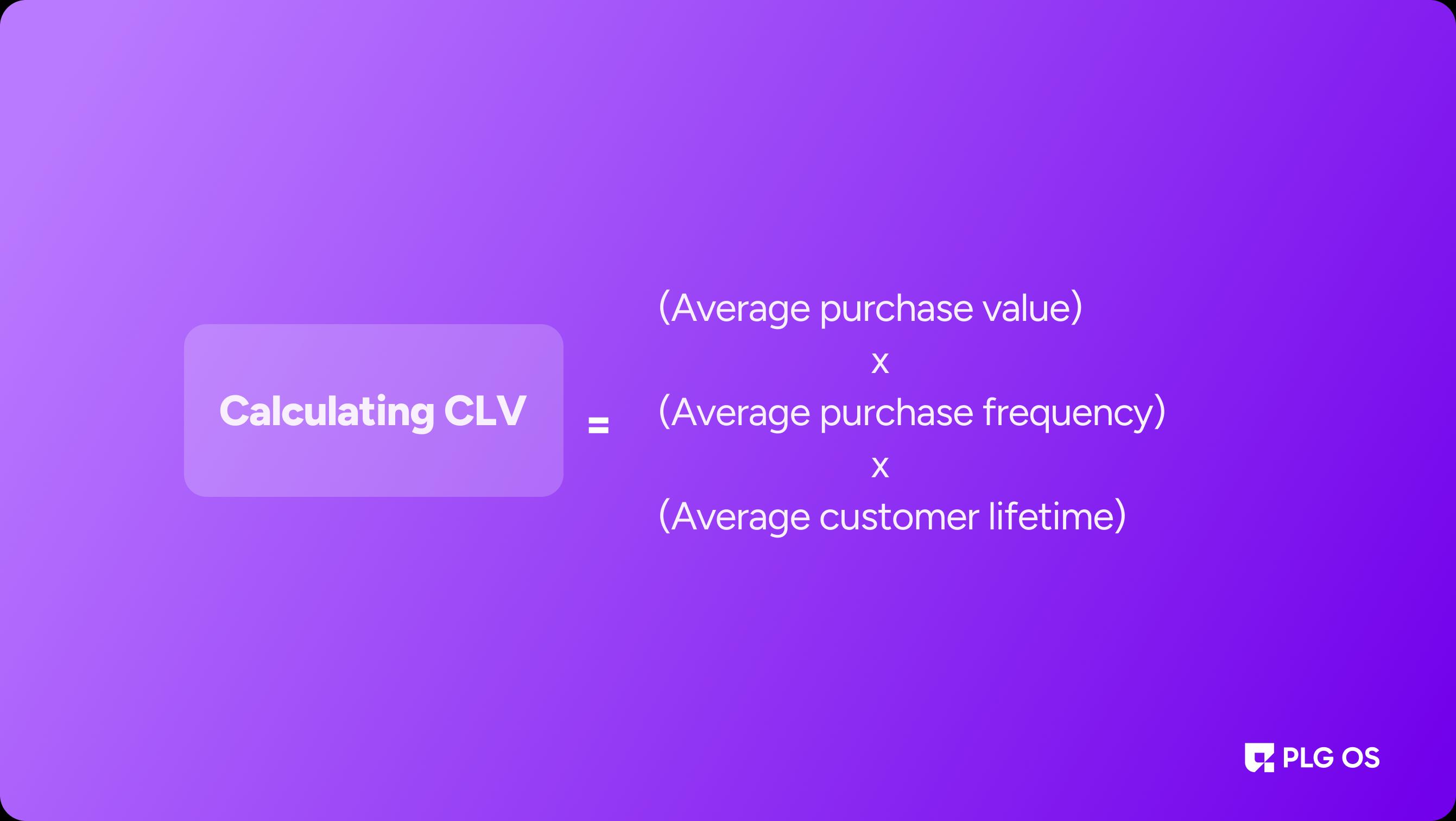
Example: If your SaaS product has a CLV of $5,000 and an average churn rate of 10%, you may need to reassess your strategies to increase CLV by reducing churn or increasing upsell opportunities.
2. Net promoter score
Customer sentiment about a company and its offerings can be better understood with the use of the net promoter score (NPS). One way to find out how happy customers are with a company's service is to look at this customer satisfaction measure. Customers who are satisfied are more inclined to buy from you again.
Customers are asked in this one-question poll, "How likely are you to recommend [Brand/Product/Service] to a friend or family?" As a response, consumers rate the following businesses and products on a scale from 1 to 10:
For example, Shopify consistently ranks high on NPS due to their efficient customer support, which has led to increased loyalty and referrals.
3. Customer churn rate
The customer churn rate is a useful metric for customer success teams since it shows what proportion of customers stop using a service or product. Some factors that can impact the rate of customer attrition are:
- Canceled subscriptions.
- Closed accounts.
- Loss of recurring revenue.
- Loss of recurring business or contract.
The churn rate is a good indicator of how well the customer success team is doing as a whole. Employees are less likely to leave or cancel plans if they keep in good standing with their contacts.
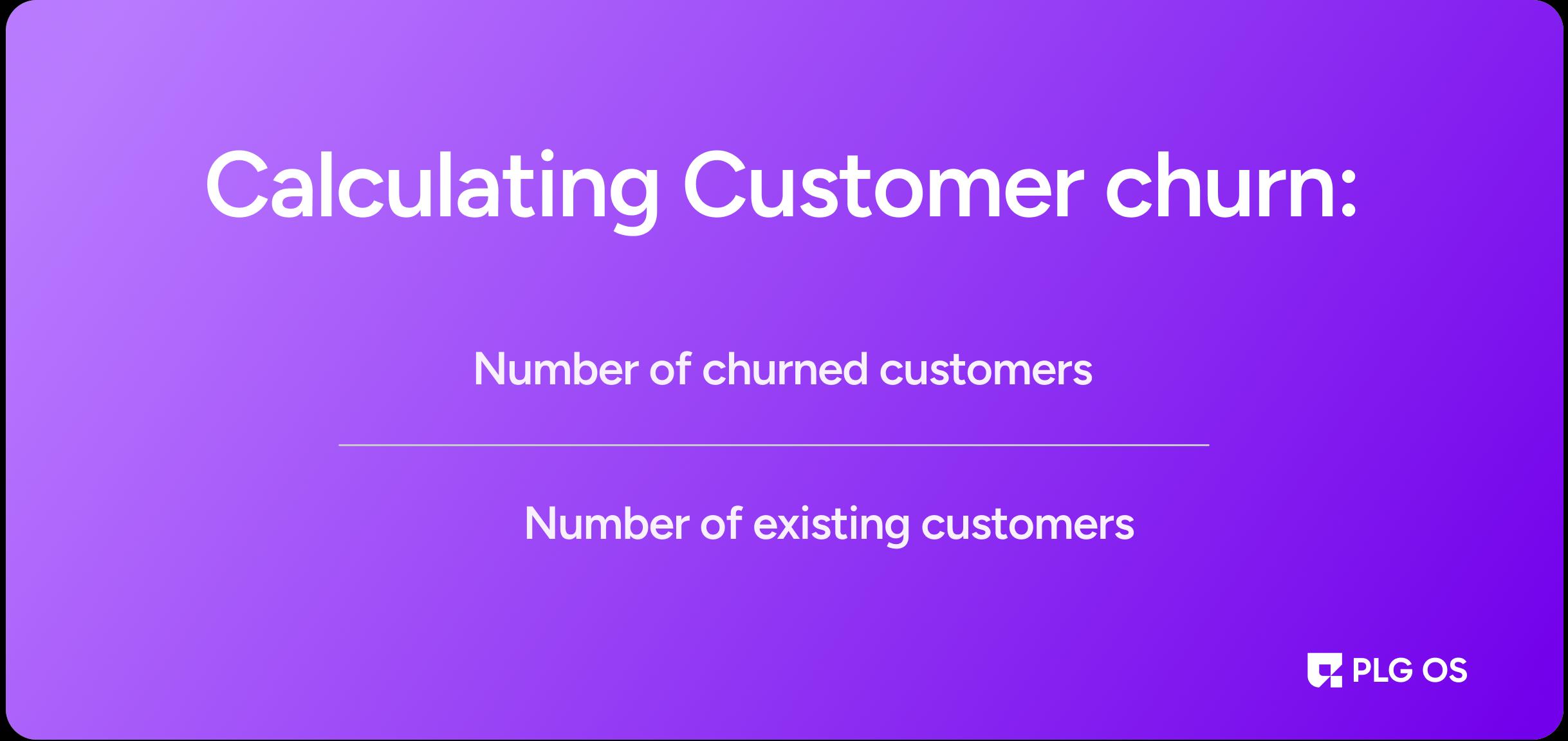
For Example: Dropbox employs data analytics to predict potential churn and actively engages customers who show signs of dissatisfaction.
4. Value of customer effort
How simple it was for a consumer to get in touch with the company for assistance, how long it took to complete a transaction, or how quickly they got a response to a question can all be revealed by the customer effort score (CES).
Saas customer success strategies for Saas managers can determine this score by surveying clients on the ease of getting the service they required. As can be seen in the table, both NPS and CES surveys consist of a single question on a scale from 1 to 7, where 1 indicates a strong disagreement and 7 indicates a strong agreement. Increasing this metric's score can help businesses enhance their Saas customer service, which in turn can lead to happier customers and improvements in other key performance indicators.
Example: Zendesk improved its CES by streamlining support tickets and reducing the time required for users to get help, making their support process more efficient.
5. First contact resolution rate
The customer success strategies for Saas team should review the customer care staff's first contact resolution rate after CES. Customers would rather have their issues resolved immediately, and the last thing they want is to be kept waiting for a response from customer care or support.
The proportion of consumers whose inquiries or service cases were resolved within the initial interaction is known as the first contact resolution rate. There is a positive correlation between a high percentage and a happy customer-business relationship.
For example, Salesforce has a first-contact resolution rate of 80%, ensuring that most customer inquiries are handled in one go.
6. Customer health score
Customers' perceptions of and engagement with a company's product or service are reflected in their customer health score. This statistic is commonly utilized by SaaS organizations and it ranks consumers according to their propensity to either remain loyal and grow with the company or to leave.
Company to company, these scores can be somewhat different. However, CSMs should schedule focus groups, send out periodic long-form surveys, examine other key performance indicators, and have regular conversations about customers' health.
Example: HubSpot uses a custom health scoring model to prioritize accounts at risk, enabling early intervention to prevent churn.
Best Practices for SaaS Customer Success
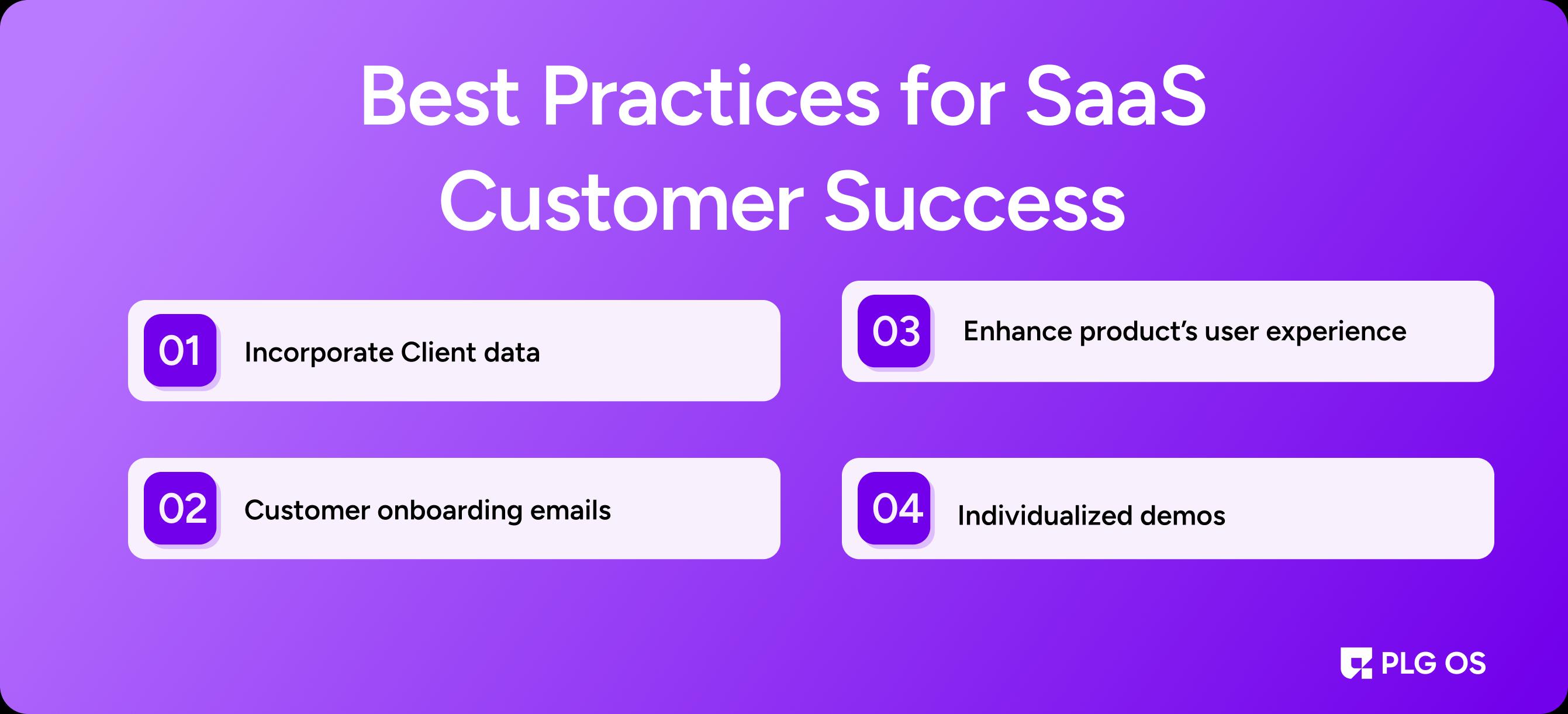
1. Use client data to create a personalised onboarding experience
The key to enhancing client success and retention is offering a personalised onboarding experience.
One effective strategy is to divide your user base into several groups and design a unique onboarding process for each.
A welcome survey is a great way to find out things like the user's occupation, position in the company, and why they're using your software. The next step is to develop an onboarding plan that takes into account their unique set of duties and tasks.
2. Incorporate extra value into customer onboarding emails
By giving new users or customers a structured introduction to your product or service, onboarding emails are vital for nurturing a positive connection with them.
This can be accomplished by setting up an automated email series that begins immediately upon registration. This is a great chance to welcome users with a heartfelt message or to send them instructional emails that walk them through the product's features.
3. Enhance your product's user experience using progressive disclosure
Showing just the most important elements upfront and giving access to additional features as needed is progressive disclosure in user experience.
Users are able to navigate the product without feeling overwhelmed, which is incredibly helpful for customer success teams.
It requires creating user interfaces that can extend to show more advanced navigation features in an intuitive way. Start with broad menu items so consumers may easily drill down to individual features without having to think too much.
4. Individualised demos can boost client lifetime value
Customer success managers can greatly benefit from using product demos to help users understand the product's value.
Invite clients to set up a live demo, for instance. After that, train your consumers to use your app in real life, address their job-to-be-done (JTBD) through personalised sessions, and show them how your solution differs from the competitors.
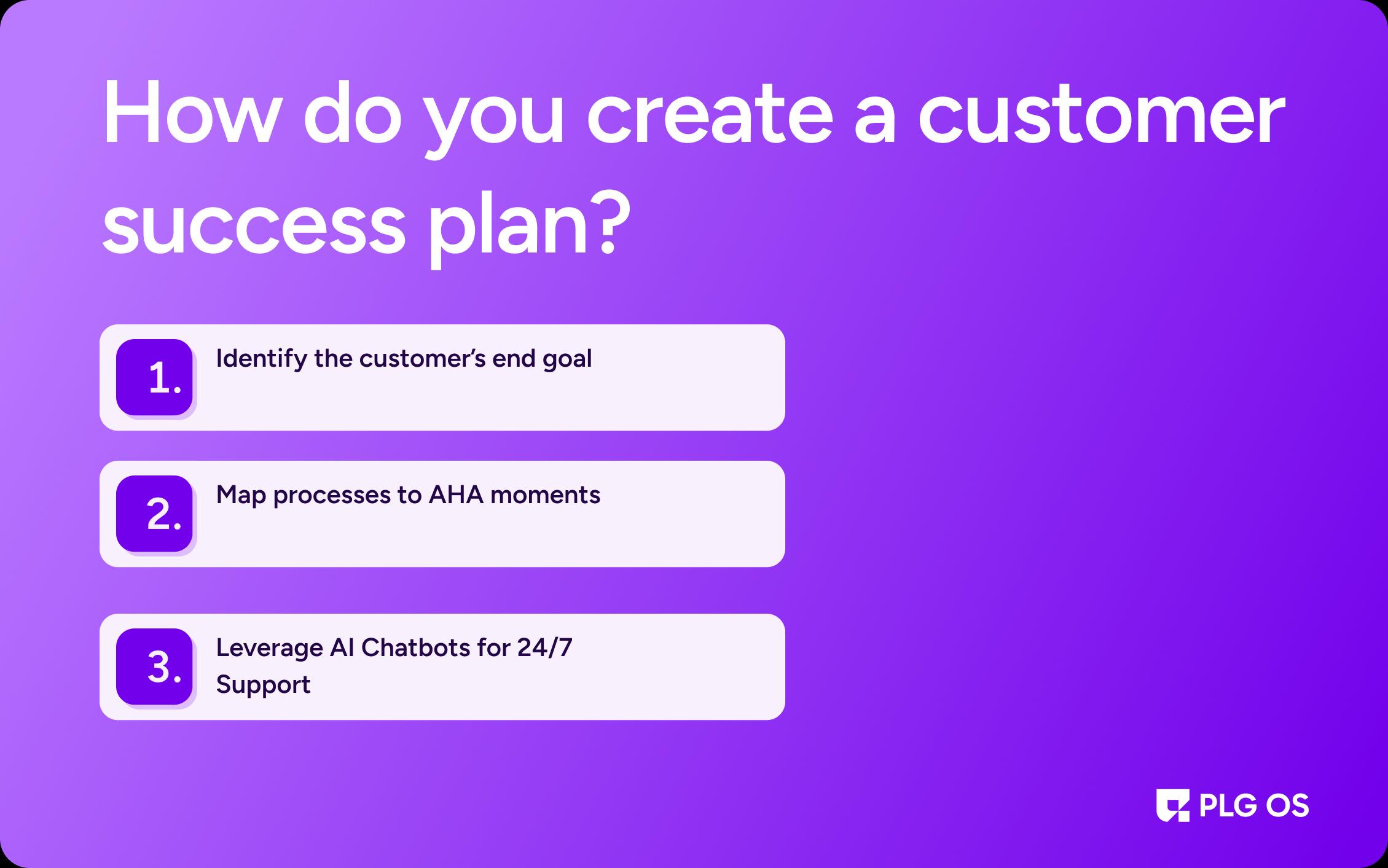
How do you create a customer success plan?
1. Identify the customer's end goal
In the end, it all boils down to assisting clients in reaching their end goal. So, before you can begin to optimise the experience for consumers, you need to determine what customer success strategies for Saas means for your users.
It doesn't matter if you conduct market research, surveys, or phone calls to gather consumer input; what matters is that you have a thorough grasp of your customers' goals. Finding out what your current and potential clients want can allow you to better provide them.
2. Map processes to AHA moments
In the client lifecycle, AHA moments play a crucial role. That sweet spot when your consumer finally understands the value of your solution—the point at which their loyalty skyrockets and they're more inclined to upgrade the next time an upsell prompt appears.
You can do wonders for retention by optimising your customer journey map to get consumers to this critical stage earlier and identifying potential AHA! moments. And there are several of them. Your tool changes from "nice" to "invaluable" the second a consumer has their AHA, thus you should be doing all in your power to make it happen.
3. Leverage AI Chatbots for 24/7 Support
Integrate an AI-powered chatbot to provide instant support and resolve common queries. Use chatbots to collect customer feedback, guide users through troubleshooting, and enhance engagement.
Best Tools for SaaS Customer Success
Appcues
Appcues is an excellent tool for customer success. Appcues is all about creating an amazing product experience, which is the winning strategy in the race for client loyalty.
The initial opportunity to create a successful product experience is during the onboarding process of new users.
PLG OS
AI-powered user experience components for onboarding, assistance, in-app feedback/surveys, gamification, and more are available on PLG OS, allowing businesses to speed up user acquisition. With Plgos, businesses can monitor important consumer KPIs, spot potentially dangerous people, and automate targeted marketing.
Custify
With Custify's Customer 360 functionality, you can examine customer data in depth to assess product adoption rates and overall usage. The data is presented on user-friendly dashboards where you can also see projections for revenue that is at risk, renewal possibilities, key performance indicators for the entire organisation, and much more besides.
Hook on to your customer success strategy with Plgos! Harness the power of AI, automation, and real-time insights to drive customer satisfaction and retention. Experience the future of SaaS customer success! Visit Plgos.com to get started.
FAQs on Saas Customer Success
1. What is SaaS Customer Success in 2025?:
SaaS Customer Success in 2025 focuses on using advanced technologies like AI, automation, and data-driven insights to enhance customer engagement, drive product adoption, and improve retention rates.
2. How do chatbots impact SaaS Customer Success?:
Chatbots provide instant, 24/7 customer support, helping SaaS companies resolve common queries quickly, while freeing up customer success teams to focus on more complex tasks and personalized solutions.
3. What are the key trends in SaaS Customer Success for 2025?:
Key trends include the use of AI for predictive analytics, automated workflows, personalized customer journeys, and enhanced onboarding experiences to drive long-term retention and satisfaction.
4. Why is customer retention important in SaaS?:
In SaaS, customer retention is crucial as it's more cost-effective to retain existing customers than to acquire new ones. Retained customers lead to more upsell opportunities, better lifetime value, and sustainable growth.
5. What tools can enhance SaaS Customer Success?:
Tools like Plgos, Gainsight, Zendesk, and Intercom provide automation, AI insights, and personalized support, helping SaaS businesses scale customer success efforts and improve user satisfaction.