Find your Product-Market Fit: Definition, Steps and Examples

In SaaS, launching a new product is exciting, but finding the right customers and making sure they genuinely need what you offer is what truly matters. This crucial stage is known as Product-Market Fit (PMF). Reaching PMF means that your product not only meets customer needs but also resonates with the market in a way that drives growth and long-term success. Let's explore what Product-Market Fit is, why it's so essential for SaaS businesses, and how to recognize, achieve, and improve it.
What is Product-Market Fit?
Product-Market Fit is the point at which a product satisfies a real need for a well-defined customer base. When a product achieves PMF, it means customers find value in it, use it regularly, and even recommend it to others. This stage is a turning point for any business, especially in SaaS, where it can mark the beginning of sustainable growth and customer loyalty.
A simple way to think of Product-Market Fit is this: Imagine you've launched a tool that helps small businesses manage their finances. If you have PMF, it means those small businesses see enough value in your tool to pay for it, use it consistently, and feel it genuinely solves a problem for them.
In SaaS, PMF isn't about attracting just anyone—it's about finding a specific market where your product solves a real problem. Reaching PMF can be challenging, but it's essential for building a lasting business.
Why Product-Market Fit Matters in SaaS
Ensures Customer Retention:
When customers feel that your product meets their needs, they're more likely to stick around, use it regularly, and renew their subscriptions. Retention is especially important in SaaS, where revenue depends on customers who subscribe month after month.
Drives Organic Growth:
When customers love your product, they're more likely to recommend it to others. This creates a cycle of organic growth, where happy customers bring in new customers without the need for heavy marketing.
Optimizes Resources:
PMF helps you avoid wasting time and money on markets or features that don't add value. It ensures you're focusing on areas that drive real engagement and satisfaction.
Improves Scalability:
Reaching PMF gives you a stable foundation on which to build. Once customers find value in your product, you can confidently invest in scaling, knowing there's a demand to support it.
In SaaS, PMF often acts as a gateway to growth. Without it, businesses can struggle to gain traction, leading to high churn rates and difficulty scaling.
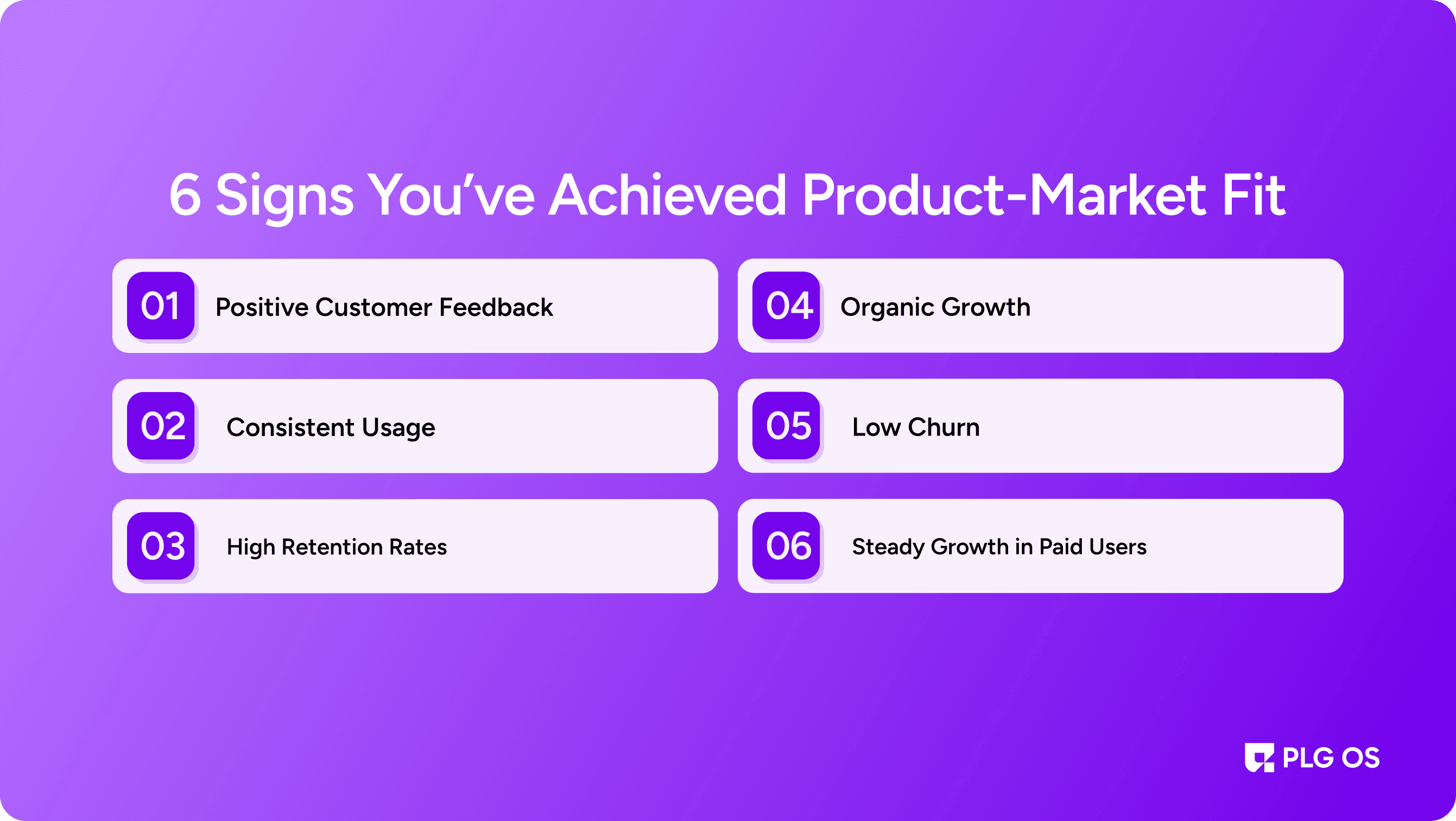
Signs That You've Achieved Product-Market Fit
Positive Customer Feedback:
If customers are giving you positive feedback, especially unsolicited, it's a good sign that they find value in your product.
Consistent Usage:
Regular, ongoing use of your product means that customers rely on it as part of their routine. Look at usage metrics to see if users keep coming back.
High Retention Rates:
When your customers are renewing their subscriptions without hesitation, it indicates that your product is meeting their needs.
Organic Growth:
If your customers are recommending the product to others or sharing it on social media, this is a clear sign that you're on the right track.
Low Churn:
A low churn rate means fewer people are leaving, which usually suggests they're happy with the product.
Steady Growth in Paid Users:
If more free users are converting to paid plans, it's a good sign that they see enough value to pay for your service.
Examples of Product-Market Fit in SaaS
Slack:
Slack focused on solving communication challenges for teams. By understanding the need for seamless team collaboration, they created a product that teams genuinely wanted to use. Once they achieved PMF, Slack grew rapidly as more companies started using and recommending it.
Dropbox:
Dropbox identified a need for simple file sharing. By solving the problem of easily accessible storage and file sharing, they found PMF among both individuals and businesses. Their focus on simplicity and convenience helped them gain widespread adoption.
Zoom:
Zoom achieved PMF by focusing on video conferencing quality, reliability, and ease of use. They quickly became a favorite in the professional world because they solved common issues other platforms struggled with.
These companies all reached PMF by understanding their customers' pain points and providing solutions that addressed them directly.
Steps to Achieve Product-Market Fit
1. Identify Your Target Audience
Start by defining who you're building your product for. Narrow down your audience to a specific group with particular needs. Understanding their challenges and goals will help you create a product that resonates with them.
2. Focus on Solving a Problem
To reach PMF, your product must solve a real problem for your target audience. Rather than focusing on fancy features, prioritize those that directly address customer pain points.
3. Gather Feedback Early and Often
Listening to customer feedback is crucial. Beta testing, surveys, and direct feedback sessions help you understand what customers like, what they don't, and where improvements can be made.
4. Be Willing to Pivot
If you find that your initial approach isn't resonating, don't be afraid to make changes. Successful SaaS companies often pivot to refine their product and find a better fit for their market.
5. Measure Your Success
Use metrics like churn rate, retention, and user engagement to gauge how well your product fits the market. These metrics provide insights into where adjustments may be needed.
6. Improve Based on Data
Once you have feedback and data, continue improving the product. Customer needs may evolve, so being responsive to changes helps maintain PMF over time.
Important Metrics to Track for Product-Market Fit
Retention Rate:
High retention means customers find ongoing value in your product.
Churn Rate:
A low churn rate indicates satisfaction and continued use.
Customer Satisfaction (CSAT):
Regularly asking customers about their satisfaction provides direct feedback.
Net Promoter Score (NPS):
NPS measures the likelihood of users recommending your product to others—a high NPS suggests PMF.
Product Usage:
Tracking how often key features are used can indicate if customers see value.
Challenges in Achieving Product-Market Fit
Misunderstanding Your Market:
It's easy to assume a market needs your product, but thorough research is essential to avoid costly mistakes.
Feature Overload:
Adding too many features can make the product overwhelming, leading to lower adoption.
Ignoring Feedback:
Customer feedback is a valuable tool. Ignoring it can prevent you from making necessary adjustments.
Slow Adaptation:
Markets change, and staying flexible is key. Sticking too rigidly to your original plan may prevent you from reaching PMF.
Conclusion
In SaaS, Product-Market Fit is the foundation for sustainable growth, customer loyalty, and business success. Achieving PMF means you've found a specific market that values your product, relies on it, and is willing to recommend it to others. This stage allows SaaS companies to focus on growth, confident that their product resonates with users. Reaching PMF is a journey, it requires research, flexibility, and a commitment to listening to customers.
By focusing on understanding and addressing real user needs, SaaS companies can create products that genuinely solve problems, resulting in loyal customers and a path toward long-term success.
PLG OS helps SaaS companies achieve and maintain Product-Market Fit by providing tools to track user engagement, gather customer feedback, and monitor essential metrics. With PLG OS, you can gain insights into what features resonate with users, identify areas for improvement, and personalize the user journey for stronger retention. By integrating PLG OS into your growth strategy, you can continuously refine your product based on real user data, ensuring that your product remains aligned with market needs. PLG OS helps you build a customer-centric product that drives loyalty, growth, and long-term success.