Gross Revenue Retention (GRR): Definition, Calculation and Strategies
While many startups prioritise customer acquisition, the true measure of a business's health lies in how well it retains existing revenue. Let's dive into why Gross Revenue Retention matters, how it's calculated, and what you can do to improve it.
What is GRR?
At its core, Gross Revenue Retention (GRR) is the percentage of recurring revenue you retain from current customers over a set period, without counting any expansion revenue like upsells. Unlike Net Revenue Retention (NRR), GRR provides a pure picture of retention, excluding the "buffer" of new revenue streams.
Calculating GRR
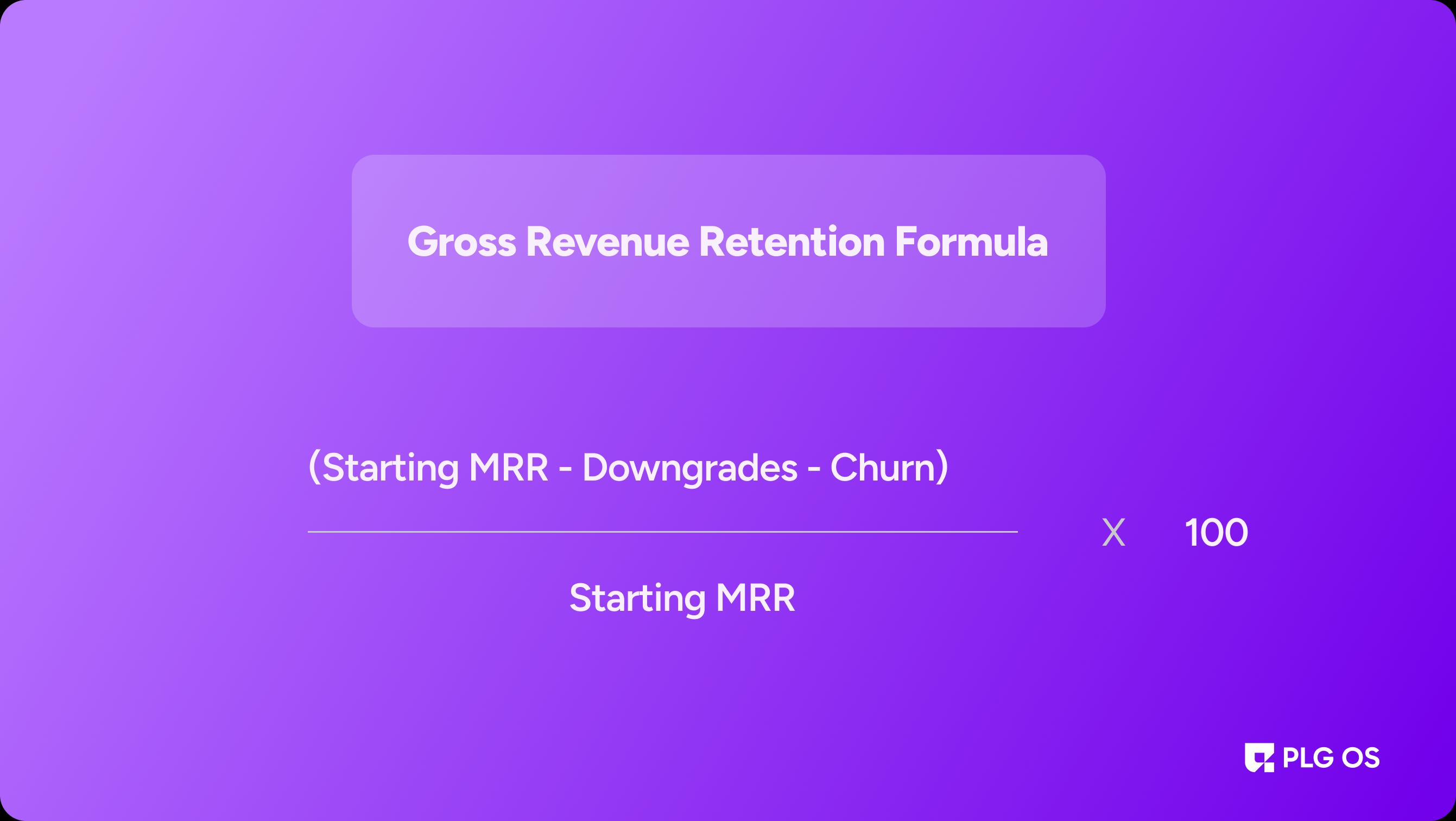
Here's Gross Revenue Retention formula in simple terms:
GRR = (Starting MRR - Churned MRR - Downgrade MRR) / Starting MRR x 100
Example:
If you begin with $100,000 Monthly Recurring Revenue (MRR), but lose $5,000 to downgrades and $10,000 to churn, your GRR would be 85%. This number reflects how solid your customer relationships are, highlighting satisfaction and stability.
Why does GRR Matters in SaaS
GRR goes far beyond mere revenue tracking. It's a critical indicator for investors, as a high GRR speaks to:
Product-market fit:
Your solution is genuinely valuable to users.
Effective customer success:
Your team keeps users engaged.
Sustainable growth:
Fewer resources are drained in replacing churned customers.
Beyond that, GRR directly affects valuation, as investors often assign higher values to companies with strong retention metrics.
Operational Impact
Your GRR also influences everyday operations. For example, if you have a lower GRR, you'll need more new customers to maintain steady revenue. This increases acquisition costs and can lead to unsustainable growth.
What's a Good GRR in the Industry?
The "ideal" GRR varies by market segment, but here's a general guide:
Enterprise SaaS:
Aiming for over 90% GRR is common, with best-in-class hitting 95%+ due to longer, more stable customer relationships.
SMB/Mid-Market SaaS:
Typically around 75-90%, due to factors like shorter sales cycles and lower switching costs.
For any SaaS company, improving GRR should be a key focus. Even a few percentage points can make a significant difference.
The Cost of Poor GRR: More Than Just Revenue
When GRR falls short, it doesn't just affect revenue; it can send shockwaves through the business. Here's how:
Higher Acquisition Costs:
To make up for churn, you'll need to bring in more new customers.
Team Morale:
Higher churn rates can demoralise your sales and customer success teams.
Investor Confidence:
Poor retention can make investors nervous about the company's future.
A poor GRR may also signal deeper issues like a misaligned market fit, ineffective onboarding, or product issues—all of which require resources to fix.
Key Strategies to Boost Your GRR
Increasing your GRR involves a multi-pronged approach, focusing on:
1. Customer Onboarding
Set the stage for a successful customer relationship:
Structured Plans:
Create structured, personalised onboarding plans.
Milestones:
Set milestones to help customers reach value points quickly.
Training Support:
Offer training resources and support, especially during the first 90 days.
2. Product Experience
A seamless, valuable product experience is essential:
Analysis:
Analyse feature usage and customer feedback regularly.
Quality:
Improve product quality, reliability, and ease of use.
Pain Points:
Address customer pain points proactively.
3. Customer Success Operations
Your customer success team should be a proactive force:
Health Checks:
Conduct regular customer health checks and strategic account planning.
Reviews:
Schedule business reviews and success workshops to keep customers engaged.
Goal Alignment:
Align customer goals with your product's value, ensuring they continue to see the benefit.
Monitoring GRR: Staying Ahead of Retention Risks
Managing GRR effectively means you need a reliable monitoring system. Here's how to keep GRR on track:
Segment-Specific Metrics:
Track GRR by customer segments to see which ones need more focus.
Customer Health Scores:
Implement a scoring system that factors in product usage, support tickets, and engagement levels.
Dashboards for Early Warning:
Use dashboards to alert your team of any signs of retention issues.
Key Indicators for a Healthy Customer Relationship
A few areas to monitor closely:
Product Usage:
Look for patterns in how (and how often) customers use your product.
Support Interactions:
Track ticket frequency and severity for early issue detection.
Feature Adoption:
Low adoption of key features could hint at potential churn risk.
Evolving GRR from Reactive to Proactive
As your SaaS grows, so should your GRR strategy. Moving from reactive to proactive retention involves:
Predictive Analytics:
Use data to anticipate customer behaviour and prevent churn.
Automated Interventions:
Set up automated responses to customer behaviour changes.
Customised Retention Strategies:
Tailor strategies to different customer segments and needs.
Building a strong GRR isn't a one-off task. It requires a commitment from every team member, from product to support, to create a customer-centric culture focused on retention.
Conclusion
Gross Revenue Retention (GRR) is an essential metric for any SaaS business committed to sustainable growth and customer satisfaction. A strong GRR reflects deep customer value, stable relationships, and effective retention strategies, providing a foundation for long-term success. Improving GRR not only reduces churn-related costs but also increases your appeal to investors by showcasing a loyal customer base that sees enduring value in your product.
With PLG OS, your company can take GRR to the next level. PLG OS offers comprehensive tools to track customer health, automate onboarding, and proactively manage engagement. By seamlessly integrating GRR-focused insights into daily operations, PLG OS helps your team anticipate churn risks, personalise outreach, and strengthen the customer journey—enabling you to drive better retention and sustained revenue growth.