Lead-to-Customer Conversion Rate: Everything you need to know
Understanding and improving lead-to-customer conversion rate is a cornerstone of sustainable growth. This metric is more than a number; it reflects your product's market fit and the effectiveness of your entire customer acquisition strategy. Let's break down what SaaS companies need to know to master their conversion rates and build a scalable growth engine.
1. What is Lead-to-Customer Conversion Rate in SaaS
Lead-to-customer conversion is the percentage of leads who become paying customers. While it may sound straightforward, in SaaS, this metric spans multiple stages and pathways, each with its own challenges.
Here's how you calculate Conversion rate:
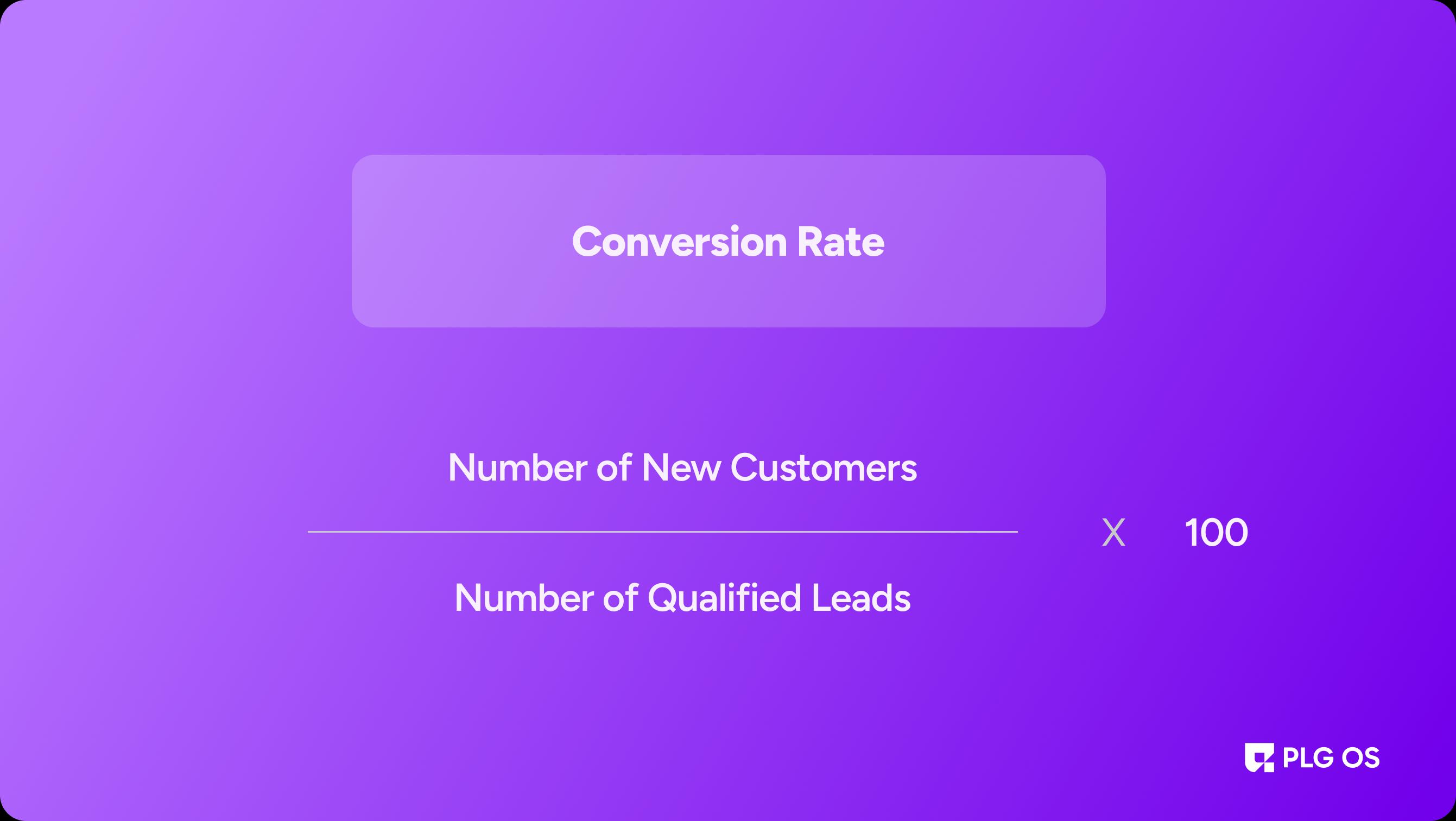
Unlike traditional models, SaaS companies must account for different conversion journeys, time frames, and lead qualification criteria, all tailored to their unique business and market.
2. The Modern SaaS Conversion Funnel
The SaaS conversion funnel has expanded beyond the classic marketing funnel, now including touchpoints, product experiences, and phased decision-making stages. Here's how it typically unfolds:
Initial Stages:
Users gain awareness and show interest.
Middle Stages:
Users evaluate and test the product, sometimes inviting team members.
Final Stage:
Users make the purchasing decision.
Each stage brings unique opportunities to optimise, helping nudge users closer to conversion.
3. Qualifying Leads in SaaS
Not all leads are alike. In SaaS, distinguishing between Marketing Qualified Leads (MQLs) and Product Qualified Leads (PQLs) is critical.
MQLs:
These leads show interest through traditional methods like downloading resources, attending webinars, or engaging with content.
PQLs:
PQLs go a step further by engaging with the product itself, making them high-value leads. Their first-hand experience with the product means they're more likely to convert.
4. The Role of Free Trials and Freemium Models
Free trials and freemium options are essential in SaaS, as they allow potential customers to test the waters before committing financially.
Trial Duration:
Make it long enough for users to experience the product's value but short enough to encourage action.
Feature Limits:
With freemium models, set strategic feature limitations. This gives users a taste of your product's potential while showcasing the benefits of upgrading.
5. Optimising the Trial-to-Paid Conversion Process
The trial period is make-or-break for conversions. Focus on these key areas to improve success:
Aha Moment:
Help users reach this moment quickly by offering streamlined onboarding, interactive tutorials, or guided workflows.
Maintain Engagement:
Consistent engagement during the trial is vital. Use emails, in-app messaging, and progress tracking to keep users active and engaged.
6. The Impact of Pricing on Conversion Rates
Pricing is a significant factor in conversion rates. Your pricing should align with the value your product offers and the expectations of your target audience.
Tiered Pricing:
Create levels that allow customers to start with basic features and upgrade as needed.
Clear Value:
Each tier should offer clear benefits, making the decision to upgrade a natural progression rather than a stretch.
7. Leveraging Data for Conversion Optimization
In SaaS, data isn't just valuable; it's essential. Here's what to monitor for better conversions:
User Engagement:
Track activity levels, feature usage, and time spent in the product.
Adoption Rates:
Identify how quickly and deeply users adopt key features.
Collaboration:
Team activity levels can indicate conversion potential.
Analyzing these metrics allows you to focus on high-potential leads, tailoring your approach to increase conversions.
8. Customer Success: A Crucial Player in Conversion
Customer success teams are instrumental in guiding leads through their journey, especially during trial or freemium periods.
Proactive Support:
Reach out to offer help, answer questions, and highlight value.
Goal Alignment:
Work with users to ensure the product meets their needs, building trust and encouraging conversion.
9. Finding the Balance Between Automation and Personal Touch
Automated and personal interactions each play a role in conversion.
Automation:
Use onboarding sequences, activity-based triggers, and regular check-ins.
Personal Assistance:
Offer human support at key decision points, like when users are ready to upgrade.
This hybrid approach maintains efficiency while preserving the human touch that can make a difference.
10. Overcoming Common Conversion Barriers
SaaS companies face specific conversion challenges. Addressing them head-on can significantly boost conversions:
Tech Challenges:
Ensure easy integrations and minimize setup complexity.
Clear Value:
Communicate your product's benefits clearly and effectively.
Pricing Concerns:
Make your pricing accessible and the value transparent.
Consider product tweaks, refined communication, and tailored support to reduce friction and make conversion smoother.
11. Measuring and Improving Conversion Success
Regular analysis is key to optimizing your conversion rate. Keep track of:
Conversion Metrics:
Conversion rates by source and segment
Time Metrics:
Time to conversion
User Patterns:
Adoption patterns
Engagement:
Engagement metrics
These insights will guide you in refining your strategy and optimizing both product and processes.
Looking Ahead: Trends Shaping SaaS Conversions
The SaaS landscape is always evolving. Stay tuned to emerging trends, such as:
AI-Driven Personalization:
Personalize the journey based on real-time data.
Predictive Analytics:
Identify and act on signals of conversion likelihood.
Enhanced Self-Serve Options:
Make self-service smoother for users to find answers and explore.
Conclusion
Improving your lead-to-customer conversion rate is vital for long-term SaaS success, as it directly influences revenue growth, customer acquisition costs, and overall business health. From understanding the journey from lead qualification to trial engagement, and from optimising pricing models to leveraging data-driven insights, mastering conversion tactics enables a scalable growth engine that's responsive to your customers' needs.
With PLG OS, you gain a suite of tools designed to streamline the conversion process, from personalised onboarding to tracking user engagement. PLG OS's analytics and automation features help you identify high-potential leads and support them effectively throughout their journey, ensuring they experience the value of your product quickly and stay engaged. By integrating PLG OS into your customer acquisition strategy, you can optimise conversion rates and drive meaningful, lasting growth.