Trial or Freemium? 5 Reverse Trial Hacks for Saas Business
Freemium or trial? For growth-oriented product companies, it's a perennial conundrum. Personally, I don't think so. A reverse trial allows you to experience both the positive and negative aspects.
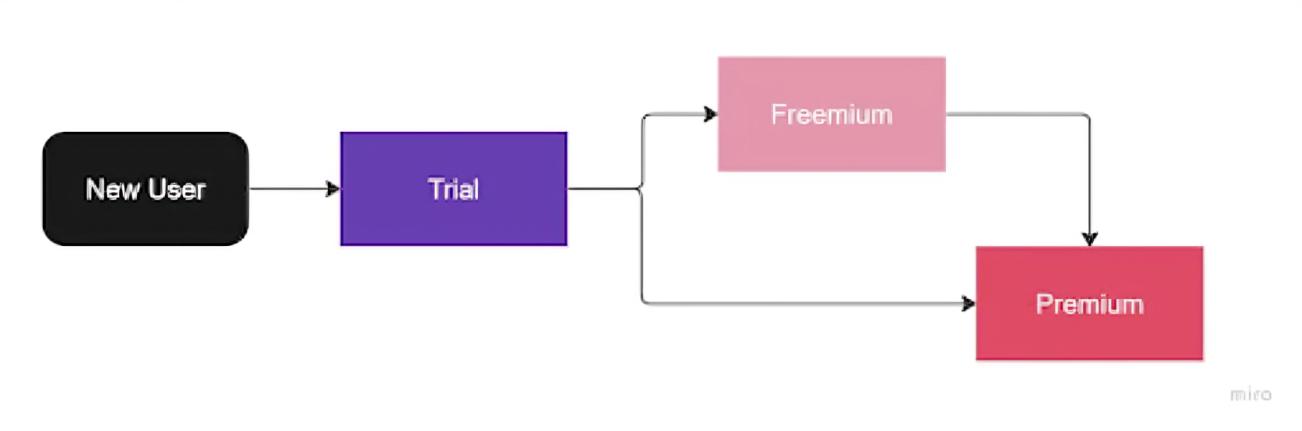
When a customer signs up for a reverse trial, they gain access to premium services while automatically switching to a freemium plan once the trial concludes. What is the outcome? You have the power to influence the trial's conversion rate and the freemium plan's reputation for product consumption.
Here you will find an explanation of what reverse trials are, how they work, and when they may not be the right choice for your product.
What’s a Reverse trial?
The "freemium trial" approach can be seen in its flipped form as a reverse trial. The key distinction is that new users immediately have access to the premium experience (without being requested or forced to insert payment details) before being asked to either start paying or degraded to a freemium experience with limitations:
The objective is to merge the freemium and trial models into one to achieve:
- Customers are more likely to love the premium service and make a purchase if they get all the benefits upfront.
- You can increase the likelihood of a future conversion by giving them the option to upgrade to the paid version once the trial ends.
Reverse Trial in Saas
To give customers a taste of the premium features that come with their subscriptions, SaaS businesses offer reverse trials. Advertising your product in this way allows you to keep customers even if they don't decide to upgrade right away.
However, when contrasted with other pricing schemes, how efficient are reverse trials? Some fascinating discoveries have been uncovered by OpenView's research. On average, reverse trials convert at a rate of 7–21%, which is greater than freemium models' 3–15%, and standard free trials' 8–25%. The option for consumers to fully experience the product's value before making a commitment, higher user engagement, and a more gradual transition to a premium plan are all aspects that contributed to this strong result.
A reverse trial for a software as a service? Quite mild. New users can try out the scheduling app's premium plan risk-free for 14 days. They will be reverted to the free version if payment is not made within the 14-day period.
Compared to a pricing plan that simply excludes customers who do not pay a premium, this technique allows the company to convert more people.
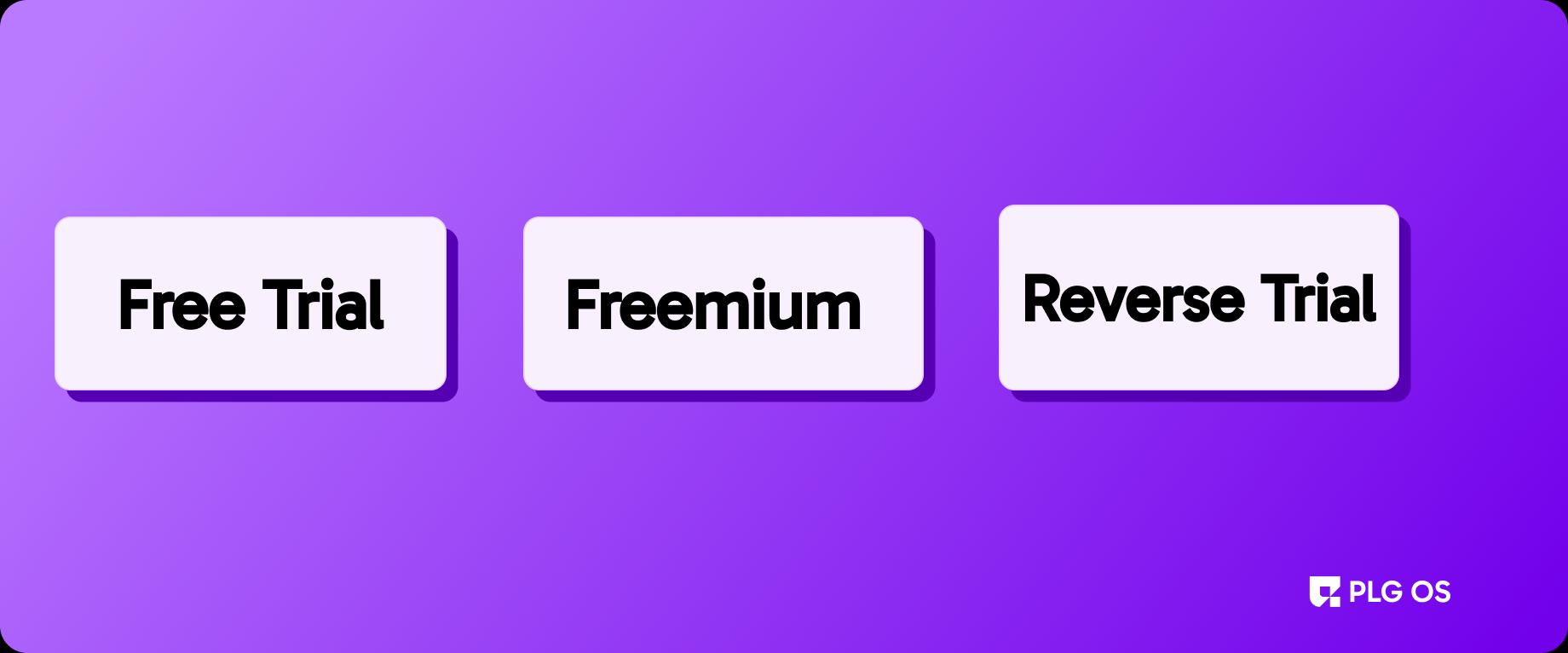
Free Trial model vs. Freemium model vs. Reverse Trial model
The Freemium Model
This payment plan offers what is universally loved: a free trial. The majority of software as a service platforms adopt the freemium payment model. With this business model, users can try out a lite version of a service or product for free. Showing your true worth in this way attracts users and expands your user base.
An efficient marketing tool is the free, but limited, version of a premium product. It enables your users to discover the platform and all of its features. Users who have used the product for a while and seen its value are more likely to upgrade to the premium version and pay for all the extra features.
Forever Free Plan:
Users are permitted to utilize a restricted version indefinitely, without any temporal limitations.
Feature Limitations:
Specific sophisticated functionalities are restricted for users with paid subscriptions.
User Growth Strategy:
Concentrated on the acquisition of a substantial user base while simultaneously promoting the upselling of premium features.
In-App Upsell Prompts:
Facilitate enhancements by highlighting premium functionalities.
Self-Service Model:
Users have the opportunity to engage with the product at their own discretion and at a tempo that suits them.
Community-Driven:
Frequently depends on user feedback to enhance both complementary and premium features.
Ad-Based Monetization (Optional):
Certain freemium models incorporate advertisements as a source of revenue.
Free Model
Numerous companies utilize the free trial payment model as a marketing tactic to provide prospective clients with limited yet time-limited access to their service or product. The duration of this promotion is typically one week, two weeks, or even a month. The top 27% of SaaS companies get 25% or more business from free trials. Users can get a feel for your service or product with these free samples before committing to a paid subscription.
Customers will be able to grasp the product's worth and applicability through this practical demonstration. In order to increase user engagement, attract new consumers, and turn them into paying subscribers or users, free trials are a great tool to deploy. With these additions, companies may highlight their wares and inspire trust in their customers.
Time-Limited Access:
Generally spans a duration of 7, 14, or 30 days.
Comprehensive Product Experience:
Users are afforded access to all functionalities throughout the duration of the trial period.
No Initial Payment Required:
In certain instances, a credit card is not necessary, whereas in others, it is mandated for the purpose of conversion.
Conversion-Oriented:
Designed to transform trial users into paying customers following their recognition of value.
Onboarding Assistance:
Structured onboarding processes designed to facilitate users in swiftly recognizing the value of the product.
Post-Trial Upsell:
Email follow-ups and discount offers to encourage conversion.
Reverse Trial Model
An example of customer-centric marketing is the "reverse trial," often known as a money-back guarantee, in which companies allow dissatisfied customers to return an item for a full or partial refund within a certain amount of time. In contrast to the usual free trials, customers can decide to receive their money back if they aren't satisfied with the items or service they've paid for.
Customers are more likely to make a purchase after hearing this strategy, which reduces the perceived risk. A company's commitment to its customers' requirements and product quality is demonstrated by reverse trials, which often leads to higher customer retention rates and brand loyalty. A key motivator for sales and helpful word-of-mouth referrals may be the feeling of trust it fosters.
A growing number of companies are seeing the benefits of freemium models, which enable customers to test out products before committing to a premium plan and help firms increase conversion rates.
Initial Comprehensive Access:
Users are afforded premium features from the outset.
Graceful Downgrade:
Following the conclusion of the trial period, users will transition to a complimentary plan rather than experiencing a complete loss of access.
Seamless Transition to Premium:
Motivates users to maintain their premium subscription after fully realizing its value.
Psychological Influence:
Users become accustomed to premium functionalities, thereby rendering the transition to a restricted version increasingly challenging.
Enhanced Retention Rates:
Sustains user engagement regardless of whether users choose to upgrade.
Hybrid Monetization:
Integrates components of both free trial and freemium models.
Enhanced Conversion Potential:
Users comprehend the value of the product prior to being solicited for payment.
So what’s the difference between free trial, freemium, and reverse trial?
- Users have full access to all functions during the free trial, but after a certain amount of time if they don't upgrade to the commercial version, they're cut off. By utilizing strategies such as credit card gating, free trial models are able to attract only highly-intent prospects, resulting in greater initial conversion rates.
- Freemium models, such as Slack's, provide a limited set of capabilities for free indefinitely. "Start now, upgrade as you go." is the equivalent of that.
- In case they decide not to subscribe, users can try out the entire product with a reverse trial, which, as previously said, restricts them to a free, limited version.
Successful Reverse Trial Examples

1. Canva
Canva offers new users the opportunity to experience any of its premium plans at no cost for a duration of 30 days. This provides users with access to sophisticated design tools, an extensive repository of stock photographs and videos, as well as additional functionalities. Upon the conclusion of the 30-day trial period, users will forfeit access to all premium features. However, rather than being excluded from the platform, they are relegated to the base version, which offers a restricted set of features. This engenders a sense of loss aversion that compels users to transition from a complimentary to a paid subscription.
2. Toggl
Toggl Track initially encountered difficulties due to users establishing multiple accounts in order to take advantage of its complimentary trial period. This prompted the company to implement a reverse trial strategy, which has demonstrated considerable success.
New users are granted complete access to the premium time monitoring features of Toggl Track for a duration of 30 days. Upon the conclusion of the trial period, users will be transitioned to a complimentary plan that offers a more restricted range of functionalities.
This methodology adeptly mitigates the exploitation of complimentary trials while simultaneously fostering sustained engagement. This approach enables Toggl Track to retain users who may require additional time to assess the comprehensive value of the premium features, thereby enhancing the probability of future conversions.
3. Miro
Miro lets users try out its premium tools, like advanced integrations, unlimited boards, and templates, for free during the trial. Afterward, users are shifted to the free plan with limited boards and features. Teams get a taste of how Miro improves collaboration, which drives upgrades for full access.
4. Grammarly
Grammarly's illustration indicates that it is not necessary to adhere to the conventional trial periods of 14 or 30 days, particularly if your product features an uncomplicated learning curve.
The company permits new users to access its sophisticated features for a duration of seven days, following which they will be automatically transitioned to the complimentary version.
The writing assistant seamlessly integrates with a variety of tools utilized within the workflows of its intended audience. Consequently, after having experienced this heightened level of efficiency and establishing a habitual reliance on the product, users who have downgraded will likely experience a sense of loss aversion, prompting them to seek an upgrade to the professional version.
Strategies for Successful Reverse Trial Conversions
1. Improved Conversion Rates
Reverse trials often demonstrate superior performance compared to freemium models with regard to conversion rates. Individuals who have engaged comprehensively with the product are more inclined to acknowledge its worth. According to research, the conversion rate from free to paid subscriptions for trial models is two to three times higher, thereby rendering reverse trials more efficacious in transforming users into paying customers.
2. Enhanced Product Adoption
Providing comprehensive access to products fosters increased user activity and engagement. This heightened degree of engagement enhances adoption rates by facilitating users' understanding of the product's value and potential.
3. Sustains User Engagement Following the Trial Period
In contrast to conventional free trials, which often result in user attrition, reverse trials effectively retain users by transitioning them to a freemium plan. This approach facilitates ongoing engagement and paves the way for potential future enhancements.
4. Enhanced Opportunities for Upselling and Cross-Selling
Upon users' comprehensive understanding of the product's functionalities, Software as a Service (SaaS) companies can seamlessly engage in upselling and cross-selling strategies, thereby enhancing revenue and extending customer lifetime value.
5. Enhanced Retention Rates
Engagement with the complete product enhances user commitment, thereby facilitating improved retention. As their needs develop over time, they are increasingly inclined to transition to a paid plan.
Is Reverse Trial Right for Your SaaS Product?
Compare SaaS free trial with freemium to decide if a reverse trial is best for your business. First, freemium programs convert more visitors into signups. Freemium strategies speed site visitors through the SaaS funnel. Customers are willing to try freemium plans because they have no usage days limit.
However, free trial products convert better to paid. They convert two to three times better than freemium apps. Because SaaS free trials build urgency. Potential clients must either pay for all features or abandon the product.
What about using both? The SaaS reverse trial weighs both plans. After the free trial, customers may cancel their account to avoid upgrading to the subscription tier. That would reduce your user base. This doesn't happen with reverse trials. Users downgrade to freemium. You can always improve them later to get higher ranks.
Conclusion
Reverse Trial Method is a potent tool for increasing SaaS conversions through the instillation of a feeling of value and urgency in customers through the provision of instant access to premium features. Building trust, demonstrating value, and encouraging long-term commitment can be achieved by letting potential buyers experience your product's full possibilities upfront. Further improvement of conversion rates can be achieved by combining this method with tailored onboarding, targeted upselling, and timely interaction. The Reverse Trial Method is a powerful tool for converting leads into paying clients since it connects free trials with paid subscriptions.
FAQs
1. What is the Reverse Trial Method in SaaS?
The Reverse Trial Method gives users immediate access to premium features for a limited time before transitioning them to a free or basic version if they don’t upgrade.
2. How does the Reverse Trial Method boost conversions?
It allows users to experience the full value of the product upfront, increasing the likelihood of them subscribing to retain premium features.
3. What types of SaaS products benefit from Reverse Trials?
SaaS products with clear value propositions and scalable premium features, such as productivity tools, design software, and CRM systems.
4. How long should a Reverse Trial last?
Typically, 7 to 14 days work well, but the duration can vary based on the product complexity and user engagement patterns.
5. What happens after the Reverse Trial ends?
Users are downgraded to a free or basic plan with an option to upgrade to a paid plan at any time.