What is a Sales Qualified Lead (SQL)?
In the fast-paced world of SaaS (Software as a Service), identifying the right opportunities is crucial for driving growth and ensuring sales efficiency. A Sales Qualified Lead (SQL) is a prospective customer who has been assessed and deemed ready to move forward in the sales process. These leads have demonstrated significant interest in your product or service and have been evaluated by both marketing and sales teams.
While they share similarities with Marketing Qualified Leads (MQLs), SQLs represent a more advanced stage in the customer journey. Unlike MQLs, who have shown initial interest, SQLs have met specific criteria, indicating they are closer to making a purchase decision. This allows sales teams to focus on leads that are most likely to convert into paying customers.
The Importance of SQLs for SaaS Businesses
SQLs are essential because they allow businesses to focus their efforts on leads that have a higher probability of converting. But there are many other reasons why SQLs play a critical role in the success of SaaS companies.
1. Efficient Resource Allocation
For SaaS businesses, efficient use of resources is vital. By focusing on SQLs, sales teams can allocate their time and energy toward leads with the greatest potential. This targeted approach ensures that efforts are not wasted on unqualified leads, allowing sales professionals to maximize their productivity.
2. Shortened Sales Cycle
Because SQLs are further along in their decision-making process, the time it takes to convert them into paying customers is often shorter. This reduced sales cycle means that SaaS companies can generate revenue faster, helping them grow more quickly and sustainably.
3. Higher Conversion Rates
One of the primary benefits of focusing on SQLs is improved conversion rates. Since these leads have already been qualified and have shown strong interest, they are more likely to become paying customers than leads at earlier stages. This results in higher success rates and a more efficient sales process overall.
4. Stronger Alignment Between Sales and Marketing
The process of defining what qualifies as an SQL fosters better collaboration between marketing and sales teams. By working together to create clear criteria, both teams can ensure they are aligned in their goals, leading to more cohesive strategies and improved overall results.
5. Enhanced Customer Experience
When sales teams engage with SQLs at the right time and with the appropriate messaging, it improves the customer experience. Prospective buyers feel understood, and their needs are addressed promptly, increasing the likelihood of a positive interaction and conversion.
6. Predictable Revenue Growth
With a steady flow of well-qualified SQLs, SaaS businesses can develop more predictable revenue streams. This consistency makes it easier to forecast future growth and scale operations in a structured manner.
7. Scalable Growth
As a SaaS company refines its SQL criteria and processes, it creates a scalable system for continuous growth. By fine-tuning how SQLs are identified and nurtured, businesses can generate a steady pipeline of high-quality leads, driving sustainable success over time.
How SQLs Drive SaaS Business Growth
SQLs contribute directly to the growth of SaaS businesses in several key ways:
1. Focused Sales Efforts
SQLs allow sales teams to concentrate on high-potential leads, making it easier to close deals. By eliminating time spent on leads that are less likely to convert, sales professionals can focus their attention on nurturing SQLs, which improves overall sales effectiveness.
2. Improved Lead Nurturing
When you know what characteristics make a lead an SQL, you can create more targeted nurturing campaigns. This ensures that leads are moving through the funnel efficiently, receiving personalized content and engagement that speaks to their specific needs.
3. Higher Customer Lifetime Value (CLV)
SQLs that convert are often a better fit for your product or service, leading to longer, more fruitful customer relationships. These well-qualified leads are more likely to engage with your offering over time, resulting in a higher lifetime value and greater returns on your customer acquisition efforts.
4. Reduced Customer Acquisition Costs (CAC)
Focusing on SQLs not only increases conversion rates but also reduces customer acquisition costs. With fewer resources wasted on unqualified leads, your sales and marketing investments become more efficient, allowing you to allocate budget to higher-impact activities.
5. Faster Time-to-Value
SQLs are typically more prepared to use your product and derive value from it quickly. This means that once they convert, they can become satisfied, loyal customers sooner, leading to improved retention rates and lower churn.
6. Data-Driven Decisions
Tracking SQL metrics provides valuable insights that can inform your ideal customer profile and overall go-to-market strategy. By analyzing patterns and performance data, SaaS companies can refine their SQL criteria and improve lead scoring models over time.
7. Expansion Opportunities
A well-qualified SQL has a higher chance of becoming a long-term customer, and with that comes opportunities for upselling or cross-selling additional products or services. SQLs are more likely to grow their usage of your solution, driving revenue growth and deeper customer relationships.
Identifying and Qualifying SQLs
To effectively manage SQLs, it's important to follow a structured process for identifying and qualifying them:
Define Your Ideal Customer Profile (ICP):
Start by clearly defining the characteristics of your best-fit customers. This may include factors like company size, industry, geographic location, or business needs.
Establish SQL Criteria:
Develop a set of criteria that a lead must meet to be considered an SQL. These criteria could include budget, decision-making authority, specific needs your product can address, and the lead's purchase timeline.
Use Behavioral Signals:
Look for actions that signal high interest in your product, such as requesting a demo, engaging with key content like case studies, or attending webinars.
Leverage Technology:
Use CRM systems and marketing automation tools to track and score leads based on their interactions with your brand. This helps ensure that you're only advancing leads that meet the defined SQL criteria.
Conduct Qualification Calls:
Have your sales development team conduct initial qualification calls to further vet leads before passing them to the sales team
Measuring SQL Performance
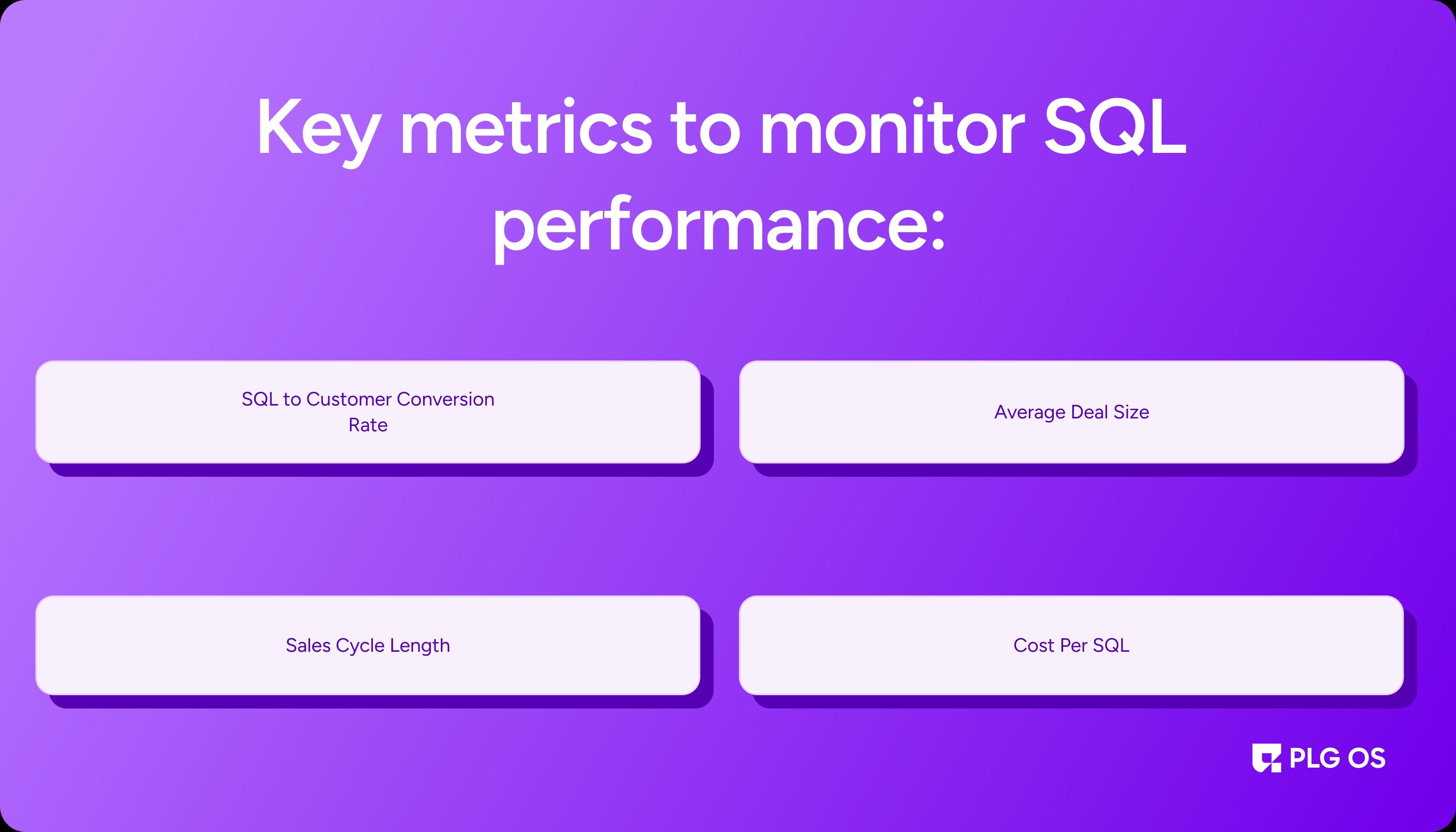
Tracking the performance of your SQL process is essential for continuous improvement. Here are some key metrics to monitor:
SQL to Customer Conversion Rate:
The percentage of SQLs that convert into paying customers.
Average Deal Size:
The average revenue from converted SQLs.
Sales Cycle Length:
The time it takes to convert an SQL into a customer.
Cost per SQL:
The resources invested in generating each SQL.
Overcoming SQL Challenges
Managing SQLs effectively comes with its own set of challenges, such as defining criteria that strike the right balance, maintaining quality as you scale, and ensuring timely follow-ups. Implementing best practices, such as regular reviews of SQL criteria, continuous team training, and automating routine tasks, can help address these challenges.
Conclusion: SQLs as a Growth Engine
Mastering the process of identifying and managing SQLs is key to sustainable growth for SaaS businesses. By refining your SQL criteria, focusing on high-quality leads, and using data-driven decisions, companies can unlock new opportunities for revenue and growth.
PLG OS provides tools that enhance user onboarding, engagement, and retention, making it easier to convert leads into SQLs. With PLG OS, businesses can track user behavior, identify sales-ready leads, and engage them with tailored features to increase the likelihood of conversion, driving long-term customer loyalty and sustainable growth.