The Importance of Annual Recurring Revenue (ARR) in Subscription-Based Businesses
In the fast-paced world of subscription-based businesses, understanding your financial health is key to staying ahead. One of the most critical metrics in this space is Annual Recurring Revenue (ARR). ARR doesn’t just reflect how much revenue you're generating each year—it highlights your company's growth potential, customer value, and long-term sustainability. In this article, we’ll break down why ARR is so important, how to calculate it, and what you can do to maximize its impact on your business.
What is Annual Recurring Revenue (ARR)?
Annual Recurring Revenue (ARR) represents the value of your subscription-based revenue over a calendar year. For companies relying on recurring subscriptions, such as SaaS businesses, ARR is the backbone of predictable income. It essentially shows how much you’ll earn annually from your customer base, providing a solid foundation for forecasting and business planning.
Unlike one-time transactions, ARR allows businesses to predict future income based on existing subscriptions, making it easier to manage cash flow and plan for growth. ARR encompasses various revenue streams, such as monthly or annual subscriptions, and provides a clear picture of your company's revenue performance over time.
How to Calculate ARR
The basic formula for calculating ARR is as follows:
ARR = (Total value of yearly subscriptions) + (Total value of monthly subscriptions * 12)
However, in practice, ARR can be more nuanced. Here are additional components you may need to consider when calculating ARR:
New ARR:
Revenue from newly acquired customers.
Expansion ARR:
Additional revenue from existing customers through upgrades or cross-sells.
Contraction ARR:
Revenue lost from customers downgrading their subscriptions.
Churned ARR:
Revenue lost from customers canceling their subscriptions.
A more refined formula that includes these factors looks like this:
ARR = Previous ARR + New ARR + Expansion ARR - Contraction ARR - Churned ARR
It’s essential to exclude one-time fees, such as setup or professional services fees, to ensure ARR reflects only recurring revenue. By focusing solely on the income generated from subscriptions, you get a clearer picture of your business's recurring financial health.
Why is ARR Important?
ARR is invaluable because it provides several key insights for subscription-based businesses:
1. Predictable Revenue
- ARR provides a clear view of your company’s expected future income, helping you plan and budget more effectively.
2. Growth Indicator
- An increasing ARR signals positive business growth, while a decline may indicate underlying issues.
3. Business Valuation
- Investors and analysts often use ARR to assess the value and potential of subscription-based businesses.
4. Cash Flow Management
- ARR helps manage cash flow and plan for future investments or expenses.
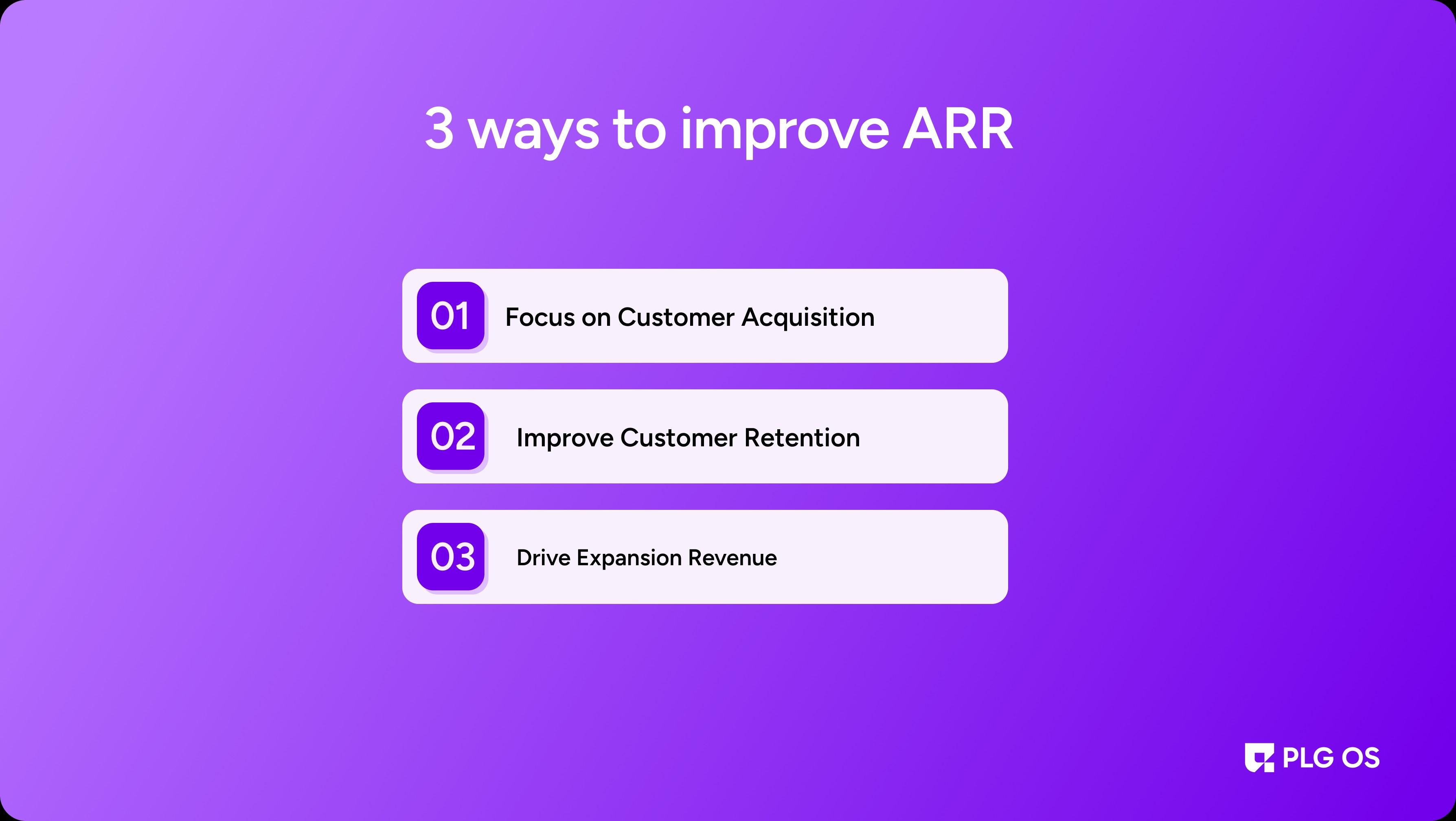
Three Ways to Improve ARR
1. Focus on Customer Acquisition
Acquiring new customers is the most direct way to grow ARR. However, the key is not just attracting more users but targeting the right ones who will stay long-term and contribute significant revenue. Here are some strategies to consider:
Targeted Marketing:
Focus your efforts on high-value customers who are more likely to have a higher lifetime value.
Optimize Sales Funnels:
Streamline the customer journey to convert leads into long-term subscribers.
Competitive Pricing:
Offer annual subscriptions at discounted rates to encourage longer-term commitments.
2. Improve Customer Retention
Retaining customers is often more cost-effective than acquiring new ones. A strong retention strategy can significantly reduce churn, directly benefiting ARR. Here’s how to enhance customer retention:
Smooth Onboarding:
Help new customers quickly realize the value of your product through an excellent onboarding experience.
Proactive Support:
Reach out to customers before they encounter issues, offering help or guidance that prevents churn.
Customer Success Programs:
Assign customer success managers to engage with key accounts and ensure they achieve their goals.
3. Drive Expansion Revenue
Getting your existing customers to pay more over time, through upgrades or additional purchases, is a powerful way to grow ARR. Consider these strategies to drive expansion revenue:
Tiered Pricing:
Offer higher-value tiers with more features to encourage customers to upgrade.
Cross-Selling and Upselling:
Develop add-ons or complementary products that enhance the customer experience.
Usage-Based Pricing:
Charge customers based on their usage, so as their engagement increases, so does your ARR.
Conclusion: ARR as a North Star Metric
ARR is more than just a number—it’s a guiding star for your business. By keeping a close eye on ARR, you can predict growth, improve customer relationships, and drive sustainable success. Combine ARR with other key metrics like Customer Acquisition Cost (CAC) and Customer Lifetime Value (CLV) for a comprehensive view of your business health.
Maximizing ARR involves leveraging the right tools, and PLGOS shines in this regard. With components like seamless onboarding, customer engagement tools, feedback mechanisms, and data-driven insights, PLGOS enhances the customer experience (CX) and drives ARR growth.