Understanding Customer Lifetime Value: Calculation and Its Importance
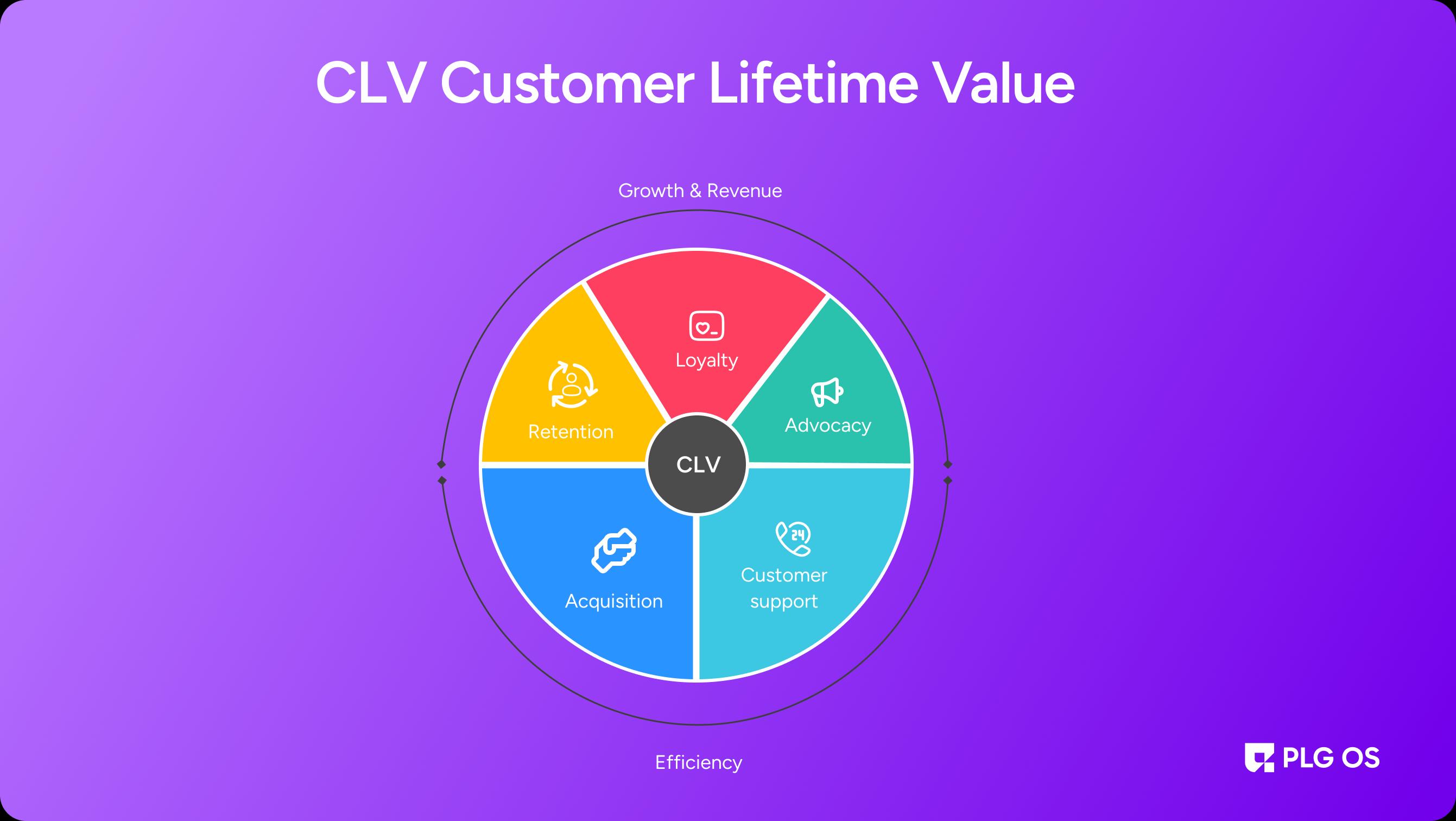
Customer Lifetime Value (CLV) is a prediction of how much profit a customer will bring to your business over the entire time they're with you. It's more than just the money from a single transaction—it's about the total revenue a customer generates during their relationship with your brand.
CLV looks at a few key factors:
- How often your customers buy from you
- The average amount they spend
- How long they stick around
- The cost it took to acquire and serve them
Why Does CLV Matter?
Understanding CLV isn't just a nice-to-have. It's a must for businesses looking to thrive. Here's why:
Profitability Insights:
CLV helps you understand which customer segments bring in the most revenue over time—not just in the short term.
Smarter Acquisition:
With CLV in mind, you can make more informed decisions on how much to spend to acquire new customers.
Better Retention:
CLV underscores the value of keeping your customers around. Retaining is often cheaper than acquiring.
Personalized Marketing:
Knowing the CLV of different customer groups helps you craft marketing that resonates and drives long-term engagement.
Informed Product Development:
CLV can point you in the right direction for creating products that attract and retain high-value customers.
Competitive Advantage:
Companies that use CLV to guide decisions often have an edge over those who focus only on short-term metrics.
How to Calculate CLV
It can be as simple or as complex as your business needs. Here's a basic formula to start:
CLV = (Average Purchase Value x Average Purchase Frequency x Average Customer Lifespan) - Customer Acquisition Cost
Let's break it down:
Average Purchase Value:
How much a customer spends on average per purchase
Average Purchase Frequency:
How often they buy from you
Average Customer Lifespan:
How long they stay loyal to your brand
Customer Acquisition Cost (CAC):
How much it costs to acquire a new customer
For example, if a customer spends $100 per transaction, buys 4 times a year, stays for 3 years, and it costs you $50 to acquire them:
CLV = ($100 x 4 x 3) - $50 = $1,150
For more accuracy, you can refine this with factors like churn rate, profit margins, and discount rates.
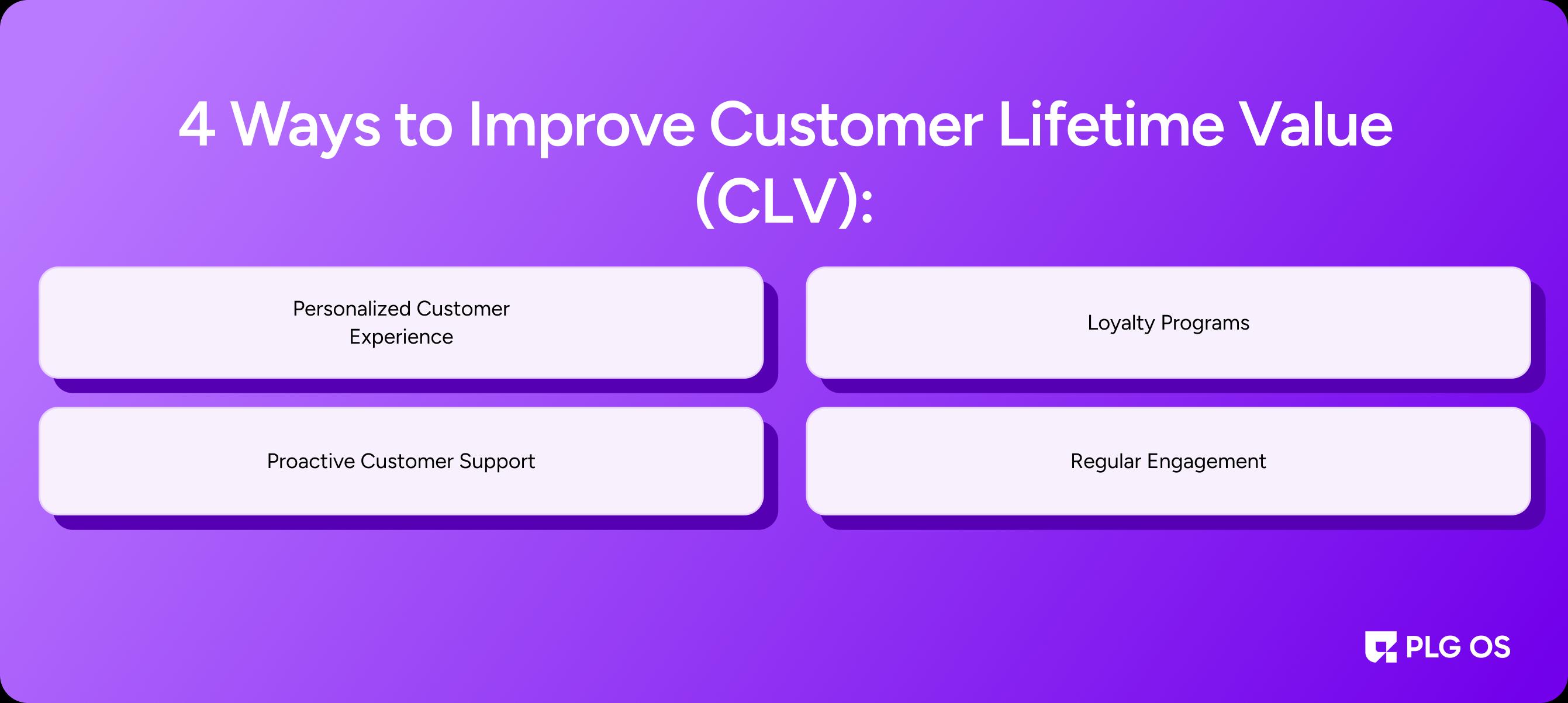
4 Ways to Improve Customer Lifetime Value (CLV)
Boosting CLV doesn't happen overnight—it requires consistent efforts across different areas of your business. Here are four effective strategies to enhance CLV:
Personalized Customer Experience
Tailoring the customer journey based on user behaviour and preferences keeps customers engaged longer. Offering personalized recommendations, targeted discounts, and content tailored to individual interests can drive repeat purchases.
Loyalty Programs
Implementing rewards systems that incentivize repeat purchases fosters long-term loyalty. Giving customers points for purchases, referrals, or social engagement encourages them to stay connected with your brand.
Proactive Customer Support
Providing timely and effective customer service can prevent churn and build trust. Use automated tools like chatbots for quick queries and offer proactive solutions to common pain points.
Regular Engagement
Keep customers engaged with post-purchase follow-ups, email marketing, and re-engagement campaigns. These efforts can encourage customers to come back, increasing both their lifetime value and brand loyalty.
How CLV Can Shape Your Marketing Strategy
Once you understand CLV, it becomes a powerful tool for decision-making. Here are four ways CLV can inform your marketing strategies:
Customer Acquisition Spending:
Knowing your CLV helps you set realistic budgets for acquiring new customers. If your CLV is $1,000, you can confidently spend up to $200 on acquiring a customer, ensuring a solid return on investment.
Segmentation and Personalization:
CLV helps you identify high-value customers so you can tailor your marketing efforts. For instance, if certain customers are more profitable, you can create targeted campaigns to attract similar prospects or develop retention strategies for these segments.
Retention Marketing:
Since retaining customers is more cost-effective than finding new ones, CLV highlights where to focus retention efforts. By understanding your most valuable customer segments, you can develop loyalty programs and retention campaigns that keep these customers coming back.
Product Development and Pricing:
CLV insights help shape product roadmaps and pricing strategies. If you know what products high-CLV customers love, you can prioritize developing more of those features. Similarly, you can set pricing that maximizes long-term revenue while ensuring customer satisfaction.
Wrapping It Up: CLV as Your Guiding Light
Customer Lifetime Value isn't just another metric—it's a mindset shift. By focusing on CLV, you move beyond short-term gains and start building strong, enduring customer relationships that lead to sustainable growth.
Remember, CLV is dynamic. Customer behaviors evolve, markets shift, and your offerings change. Continuously assessing and refining your CLV is key to staying ahead.
PLG OS helps boost CLV by making it easier to engage and retain customers. With its fully customisable features like onboarding, in-app feedback, and loyalty programs, it helps you understand your customers better and keep them around longer. By focusing on what matters most, PLG OS makes sure your customer relationships are built for the long haul.