What Is Customer Retention & Why Does It Matter?
Customer retention refers to a company's ability to keep its existing customers over time. If you're running a Software as a Service (SaaS) company, one key metric you’ll want to keep an eye on is your Customer Retention Rate (CRR). But what does that mean, and why is it so important? Let’s break it down.
What Is Customer Retention Rate?
Customer Retention Rate is the percentage of customers who stick with your service over a certain period. It’s a clear indicator of customer loyalty and the value they find in what you offer. A high retention rate means your customers are happy and see ongoing value in your product. On the flip side, a low rate might indicate issues with your product, service, or user experience.
How to Calculate Customer Retention Rate
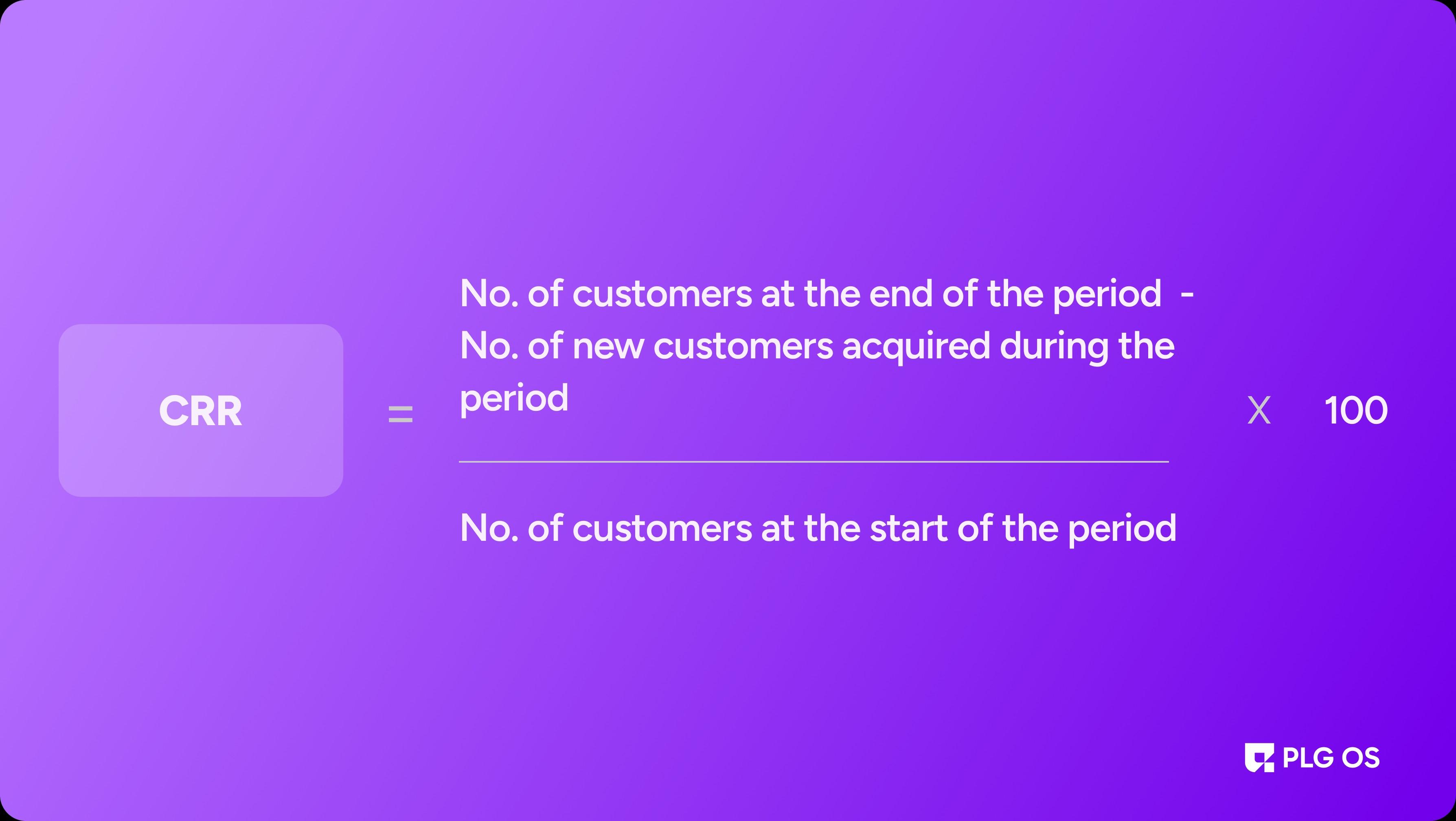
Calculating CRR is straightforward with this formula:
CRR = ((E - N) / S) × 100
Where:
E = Number of customers at the end of the period
N = Number of new customers acquired during the period
S = Number of customers at the start of the period
For example, if you start a quarter with 100 customers, gain 20 new ones, and end with 105 customers, your calculation looks like this:
CRR = ((105 - 20) / 100) × 100 = 85%
This means you retained 85% of your customers over that quarter. The time frame for measuring CRR can vary—some companies track it monthly, others quarterly or annually, depending on their customer lifecycle.
Why Is Customer Retention Rate Important for SaaS Companies?
Understanding your CRR is crucial for several reasons:
1. Cost-Effective Growth
Retaining existing customers is generally much less expensive than acquiring new ones.
2. Predictable Revenue
High retention rates lead to stable, predictable income, making financial planning easier.
3. Increased Customer Lifetime Value
The longer a customer stays, the more valuable they become to your business.
4. Opportunities for Upsells and Cross-Sells
Loyal customers are more likely to explore additional products or upgrade their plans.
5. Indicator of Product-Market Fit
A high retention rate usually means your product is meeting customer needs effectively.
6. Word-of-Mouth Marketing
Happy, long-term customers are more likely to refer friends and colleagues to your service.
7. Competitive Advantage
In a crowded market, high retention rates can give you a significant edge over competitors.
How to Improve Your Customer Retention Rate
Boosting your CRR isn’t a one-size-fits-all solution; it requires a multi-faceted approach. Here are several strategies to consider:
1. Optimize Onboarding
First impressions matter. Make sure your onboarding process is smooth and engaging, helping new users quickly see the value of your product. Consider:
- Interactive tutorials and walkthroughs
- Personalized onboarding based on user roles or goals
- Setting up early wins to showcase your product’s benefits
2. Provide Exceptional Customer Support
Responsive and helpful customer support can turn at-risk customers into loyal advocates. Make support accessible:
- Offer multiple channels (chat, email, phone)
- Provide self-service options like FAQs and knowledge bases
- Use feedback to continuously improve support processes
3. Implement a Customer Success Program
Be proactive in helping customers achieve their goals. Consider:
- Assigning customer success managers to key accounts
- Regularly checking in to ensure they’re getting value
- Providing resources and best practices
4. Continuously Add Value
Keep your product fresh and relevant by regularly updating it. This includes:
- Maintaining a product roadmap informed by customer feedback
- Frequently releasing new features and improvements
- Effectively communicating updates to your customers
5. Personalize the Customer Experience
Use data to tailor experiences for each user. You might:
- Adjust in-app experiences based on user behavior
- Segment email communications for more relevant messaging
- Offer personalized recommendations for features or add-ons
6. Build a Community
Creating a sense of community among users can foster loyalty. You can:
- Establish user forums or discussion boards
- Host webinars or user groups
- Share customer success stories to inspire others
7. Implement a Loyalty Program
Reward long-term customers to encourage continued use. This might include:
- Discounts or free months for contract renewals
- Exclusive features or early access for loyal customers
- A tiered loyalty program with increasing benefits
8. Use Predictive Analytics to Prevent Churn
Identify at-risk customers before they leave by monitoring:
- Usage patterns and engagement metrics
- Setting up alerts for declining activity
- Developing targeted interventions for those at risk
9. Gather and Act on Customer Feedback
Show customers you value their opinions by regularly collecting and acting on feedback. This can be done through:
- Surveys (like NPS or CSAT)
- Customer advisory boards
- Closing the feedback loop by communicating how their suggestions have been implemented
10. Optimize Your Pricing and Packaging
Make sure your pricing aligns with the value you offer. Consider:
- Regularly reviewing your pricing strategy
- Offering flexible plans to meet changing needs
- Implementing usage-based pricing to align costs with customer value
11. Focus on Customer Education
Help customers become experts in using your product by providing:
- A comprehensive knowledge base
- Regular training webinars
- An online academy or certification program
12. Streamline the Renewal Process
Make it easy for customers to renew their subscriptions by:
- Implementing automatic renewals (with customer consent)
- Sending timely renewal reminders
- Offering incentives for early renewals
Measuring the Impact of Your Retention Efforts
As you work on improving your CRR, track the impact of your efforts by monitoring additional metrics such as:
- Churn Rate: The percentage of customers who leave during a given period.
- Net Revenue Retention: Changes in revenue from existing customers over time.
- Customer Lifetime Value: Total revenue you can expect from a customer throughout their relationship with your company.
- Expansion Revenue: Additional revenue from upsells and cross-sells.
Conclusion: Retention as a Growth Strategy
By focusing on retention, you secure your existing revenue and lay the groundwork for sustainable growth. For SaaS startups, improving customer retention is key to long-term success, and PLGOS can make that process simpler and more effective. By offering tools like personalized onboarding, customer success workflows, and predictive analytics, PLGOS helps you keep customers engaged and satisfied. These features work together to reduce churn, increase customer loyalty, and improve your overall retention rate, all while driving steady growth for your business.
By implementing these strategies and regularly measuring your progress, you can enhance your retention rate, boost customer lifetime value, and set your SaaS company on a path to long-term success. Ultimately, your most loyal customers won’t just stick around—they’ll become your strongest advocates, driving organic growth and solidifying your place in the market.
With PLGOS, you’re not just retaining customers—you’re building lasting relationships that lead to higher lifetime value and predictable, recurring revenue.