What is NPS? Your Guide to Understanding Net Promoter Score

Net Promoter Score (NPS) is a widely used metric that measures customer loyalty and satisfaction. Developed by Fred Reichheld, Bain & Company, and Satmetrix in 2003, NPS has become a standard in customer experience measurement across various industries, including SaaS.
The NPS is based on a single question: "On a scale of 0-10, how likely are you to recommend our product/service to a friend or colleague?" This simple yet powerful question helps gauge customer sentiment and predict business growth.
How is NPS Calculated?
The NPS calculation process involves these steps:
- Survey your customers with the NPS question.
- Categorize respondents based on their scores.
- Calculate the percentage of Promoters and Detractors.
- Subtract the percentage of Detractors from the percentage of Promoters.
Promoters (score 9-10): Loyal enthusiasts who will keep buying and refer others. Passives (score 7-8): Satisfied but unenthusiastic customers who are vulnerable to competitive offerings. Detractors (score 0-6): Unhappy customers who can damage your brand through negative word-of-mouth.
The formula is:
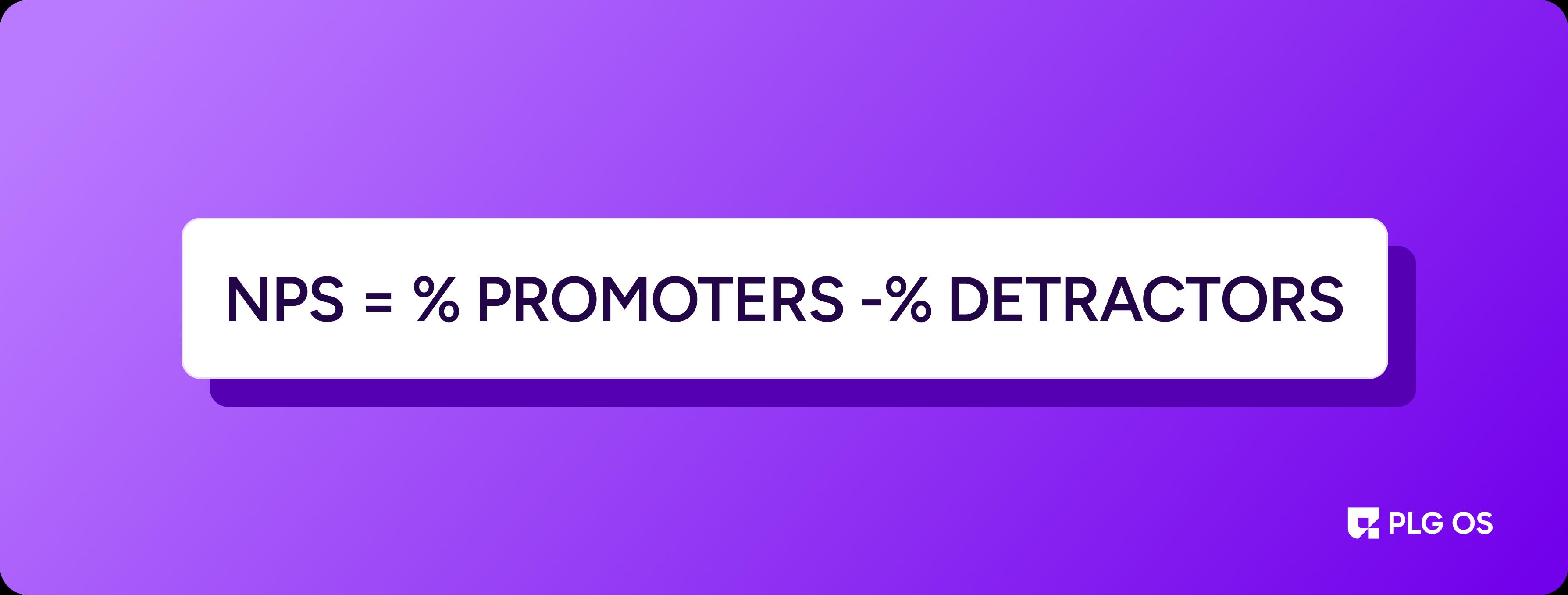
For example, if you have:
- 60 Promoters
- 30 Passives
- 10 Detractors
Your NPS would be: (60% - 10%) = 50
What is a Good NPS?
Determining a "good" NPS can be tricky as it varies by industry, company size, and geography. However, here are some general guidelines:
- Any positive score (above 0) is considered 'good.'
- +50 is considered 'excellent.'
- +70 is considered 'world-class.'
For SaaS companies specifically, the average NPS is around +30. Top-performing SaaS companies often score between +50 and +70. Comparing your NPS to benchmarks is just a starting point. The most valuable comparison is against your historical NPS scores, showing improvement over time.
Importance of NPS in a SaaS Startup
For SaaS startups, NPS is crucial for several reasons:
1. Predictor of Growth
NPS has been correlated with revenue growth. Promoters are more likely to renew subscriptions, upgrade plans, and recommend your product to others.
2. Customer Retention Insights
A low NPS can signal potential churn issues, allowing proactive measures to improve retention.
3. Product Development Guidance
Feedback collected alongside the NPS question can provide insights for product improvements and new feature development.
4. Competitive Benchmark
NPS allows you to benchmark your customer satisfaction against competitors in your industry.
5. Simplicity and Actionability
The simplicity of NPS makes it easy to implement and understand across your organization.
Implementing NPS in Your SaaS Startup
To effectively use NPS in your SaaS startup:
Regular Surveys:
Conduct NPS surveys consistently, typically quarterly or bi-annually.
Follow-Up Questions:
Include an open-ended follow-up question asking why the respondent gave that score.
Timely Action:
Act on feedback, especially from Detractors.
Closed-Loop Process:
Follow up with respondents to show you're listening and taking action.
Segment Analysis:
Analyze NPS across different customer segments for granular insights.
Trend Tracking:
Monitor how your NPS changes over time.
Company-Wide Visibility:
Share NPS results across the company to foster a customer-centric culture.
Conclusion
For SaaS startups, where customer retention and word-of-mouth referrals are crucial for growth, NPS can be a powerful tool for guiding strategic decisions and fostering a customer-centric culture.
While NPS shouldn't be the only metric you track, its simplicity, actionability, and proven correlation with business growth make it an essential component of any SaaS startup's toolkit.
PLG OS helps you optimise your NPS by providing tools to collect real-time feedback, analyse customer sentiment, and take proactive steps to improve satisfaction. With features like in-app surveys and predictive analytics, PLG OS ensures you're always in tune with your customers' needs, helping boost loyalty and reduce churn.