7 Bad Customer Experience Examples [+ How to Fix Them]
![7 Bad Customer Experience Examples [+ How to Fix Them]](/_next/image?url=https%3A%2F%2Fquest-media-storage-bucket.s3.us-east-2.amazonaws.com%2Fwebsite-assets%2FBlog92Image1.png&w=3840&q=75)
Ever had a frustrating interaction with a company that made you swear never to return? You’re not alone. Bad customer experiences, long wait times, confusing websites, or robotic support are deal-breakers for today’s consumers.
In a world where customers expect speed, personalization, and effortless interactions, even one bad experience can cost you business. The good news? Every poor CX issue has a fix.
Let’s break down 7 common customer experience mistakes, from clunky checkouts to ignored feedback, and show you exactly how to turn them into growth opportunities. Let’s dive in!
How Do You Define Bad Customer Service?
Bad customer service is a massive disappointment for customers; it refers to service that exceeds their expectations. It emerges when customers feel neglected, undervalued, or angry due to a company's failure to address their demands or concerns. Examples of unpleasant or unsatisfactory customer encounters range from an impolite interaction with a store clerk to lengthy wait times for service without explanation. According to Forbes, 58% of customers are willing to pay more for better service.
How Can a Bad Customer Service Encounter Impact Your Business?
A poor customer service experience can have far-reaching consequences for a company's success. Aside from driving away loyal consumers and harming a brand's reputation, the presence of unhappy customers owing to bad service can exacerbate the situation in various ways:
- Customer Loss: Poor product or service quality, combined with a negative experience, drives potential and existing customers away in pursuit of better treatment.
- Brand Reputation Damage: Dissatisfied customers are more inclined to share their unfavorable experiences, especially if they believe there is inadequate customer service. They express their dissatisfaction with friends and family and on obvious platforms like social media or community forums. This expands the scope of their displeasure and exposes businesses to public scrutiny.
- Employee Motivation: Dealing with customer complaints without effective customer service tactics can be stressful for staff, resulting in burnout and lower job satisfaction. This impacts motivation, resulting in errors, absenteeism, and increased turnover, all of which hinder the efficiency of customer service operations.
- Decrease in Profits: Profits fall as consumers depart, and the higher cost of obtaining new customers significantly impacts the bottom line.
- Negative Online Reviews and Feedback: Dissatisfied customers frequently vent online, which can turn off potential customers and hurt the company's credibility with negative reviews and unpleasant remarks.
- Higher Resolution Costs: Resolving difficulties after the service has failed frequently necessitates more resources than preventing the problem in the first place. Businesses may need to offer refunds, rebates, or freebies to placate irate customers, which can drastically increase the cost of customer care operations.
- Legal and compliance risks: In extreme circumstances, mainly when customer service failures result in consumer rights or privacy violations, organizations may face legal action. Upset customers are more inclined to take legal action to seek compensation or justice, perhaps resulting in regulatory penalties and legal fees for the company.
- Barrier to Customer Acquisition: Prospective customers may be discouraged from engaging with the business if they read or hear firsthand tales of poor service experiences from previous customers. This can significantly influence a company's capacity to acquire new consumers, increasing client acquisition expenses and affecting total growth.
7 Bad Customer Experience Examples and Solutions
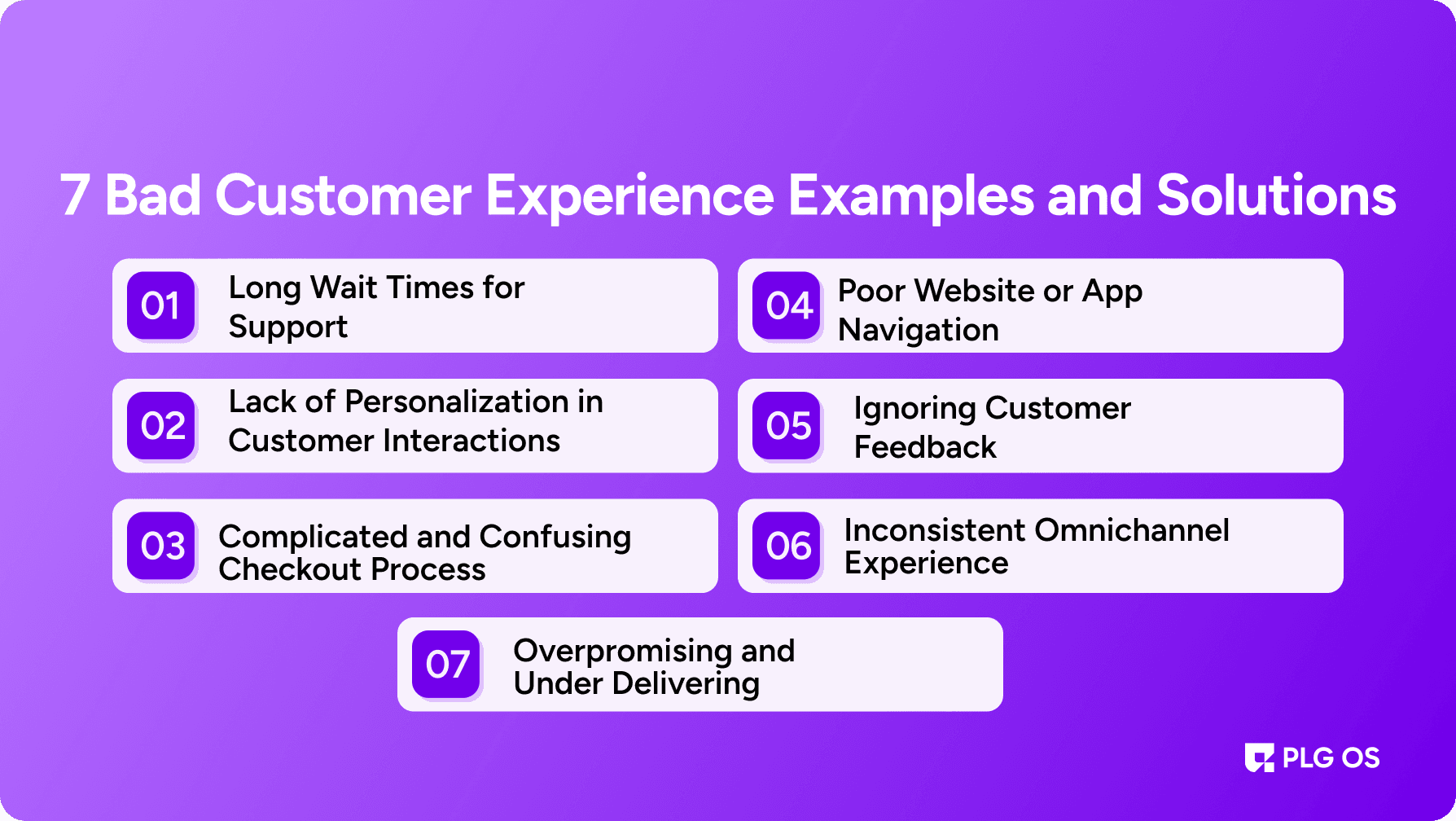
1. Long Wait Times for Support
The Problem:
Customers hate waiting, whether it's on the phone, live chat, or email.According to Gartner, 75% of businesses will prioritize customer experience over price and product, while PwC reveals that 86% of buyers are willing to spend more for a better experience. Long response times make them feel unimportant, frustrated, and more likely to switch to a competitor.
The Fix:
- Implement AI chatbots for quick answers to common questions.
- Optimize your support team’s workflow with automation and ticket prioritization.
- Offer self-service options like FAQs and knowledge bases to reduce dependency on live support.
- Set clear expectations by providing estimated wait times.
2. Lack of Personalization in Customer Interactions
The Problem:
Customers dislike generic responses, repeated questions, and feeling like just another ticket number. They expect businesses to remember their past interactions and preferences.
The Fix:
- Use a CRM system to track past purchases, interactions, and preferences.
- Leverage AI-driven recommendations to personalize offers and communication.
- Train customer support teams to review past interactions before responding.
- Segment customers based on behavior to send targeted marketing messages.
3. Complicated and Confusing Checkout Process
The Problem:
A complex, time-consuming, or buggy checkout process can lead to abandoned carts and lost revenue. Customers want a fast, hassle-free purchasing experience.
The Fix:
- Simplify the checkout flow by reducing unnecessary steps.
- Enable guest checkout to prevent account creation friction.
- Offer multiple payment options (credit cards, digital wallets, BNPL).
- Use progress indicators to show how many steps remain.
4. Poor Website or App Navigation
The Problem:
If customers can’t easily find what they need on your website or app, they’ll leave and go to a competitor. Slow loading times, broken links, and a cluttered layout all contribute to a frustrating experience.
The Fix:
- Conduct regular UX audits to identify navigation pain points.
- Improve website speed by optimizing images, reducing scripts, and using a CDN.
- Ensure mobile-friendliness, as most users browse on their phones.
- Use clear, intuitive menus and a powerful search function.
5. Ignoring Customer Feedback
The Problem:
Not responding to customer complaints, reviews, or feedback; whether positive or negative gives the impression that your business doesn’t care.
The Fix:
- Actively monitor reviews and social media mentions to catch issues early.
- Respond to complaints professionally and offer solutions promptly.
- Collect feedback proactively through surveys, polls, and feedback forms.
- Implement customer suggestions where possible and communicate the changes.
6. Inconsistent Omnichannel Experience
The Problem:
Customers interact with businesses across multiple channels (website, social media, phone, email, chat). If the experience is inconsistent or disconnected, it creates frustration.
The Fix:
- Use an omnichannel platform to sync customer data across all touchpoints.
- Ensure messaging and branding remain consistent on all platforms.
- Allow customers to switch channels seamlessly (e.g., start on chat, move to phone).
- Train teams to provide uniform responses regardless of the channel.
7. Overpromising and Under Delivering
The Problem:
When companies promise fast shipping but delay orders, advertise premium features that don't exist, or promise 24/7 support but fail to deliver, it damages trust.
The Fix:
- Be transparent about timelines, product capabilities, and limitations.
- Communicate proactively if delays or issues arise.
- Set realistic expectations rather than making false claims.
- Always deliver more than promised when possible.
Final Thoughts
Customer expectations are at an all-time high. A single negative experience can result in the loss of a consumer, while a positive one can convert them into a devoted advocate.
Businesses can establish a customer-friendly, seamless experience that fosters loyalty and long-term success by identifying and resolving pain points such as sluggish support, poor website navigation, lack of personalization, and complex processes.
Are you prepared to enhance your customer experience? Begin by conducting an analysis of your weaknesses, implementing modifications, and consistently refining your strategy in response to customer feedback. Book a call with us today!
FAQs
1. What is a poor customer experience?
A poor customer experience happens when a business fails to meet customer expectations, leading to frustration, confusion, or dissatisfaction.
2. How does bad CX affect a business?
Bad CX can lead to customer churn, negative reviews, and lost revenue, ultimately damaging a brand’s reputation.
3. What are common signs of poor CX?
Long wait times, difficult navigation, lack of personalization, ignored feedback, and overpromising without delivering are key red flags.
4. How can businesses improve customer experience?
By streamlining processes, offering self-service options, personalizing interactions, and actively listening to feedback.
5. Why is customer experience so important?
Great CX drives loyalty, increases retention, and turns customers into brand advocates, fueling long-term business success.