Go-to-Market Strategy: A Complete Guide for your SaaS Startup
In the fast-paced SaaS world, creating a valuable product is only half the battle, you need a strategic go-to-market (GTM) plan to get it in front of the right audience. Your GTM strategy shapes how you present your product, reach your market, and ultimately succeed in a competitive landscape. Whether you're launching a new SaaS product or expanding into fresh markets, a solid GTM strategy is key to driving growth and capturing attention.
What is a Go-to-Market Strategy?
A go-to-market strategy is a roadmap for how you'll introduce your product to the market and create a competitive advantage. For SaaS companies, this strategy must account for the unique nature of a subscription-based business. Unlike traditional one-time sales, SaaS requires you to keep delivering value to retain and grow your customer base over time. A SaaS GTM strategy not only targets new customers but also ensures continued engagement and customer retention.
Why a GTM Strategy is Vital for SaaS
In a saturated SaaS market, simply building a good product isn't enough. Even the best solutions can struggle without proper positioning and distribution. SaaS businesses rely on a subscription model, which means ongoing customer acquisition, engagement, and retention are critical for growth. An effective GTM strategy helps you achieve the following:
Optimize Customer Acquisition Costs (CAC):
Efficiently reach your target audience without overspending.
Enhance Customer Lifetime Value (CLV):
By targeting the right customers and retaining them, you maximize revenue.
Stand Out from Competitors:
A clear GTM plan helps highlight your product's unique advantages, making it easier for potential customers to choose you.
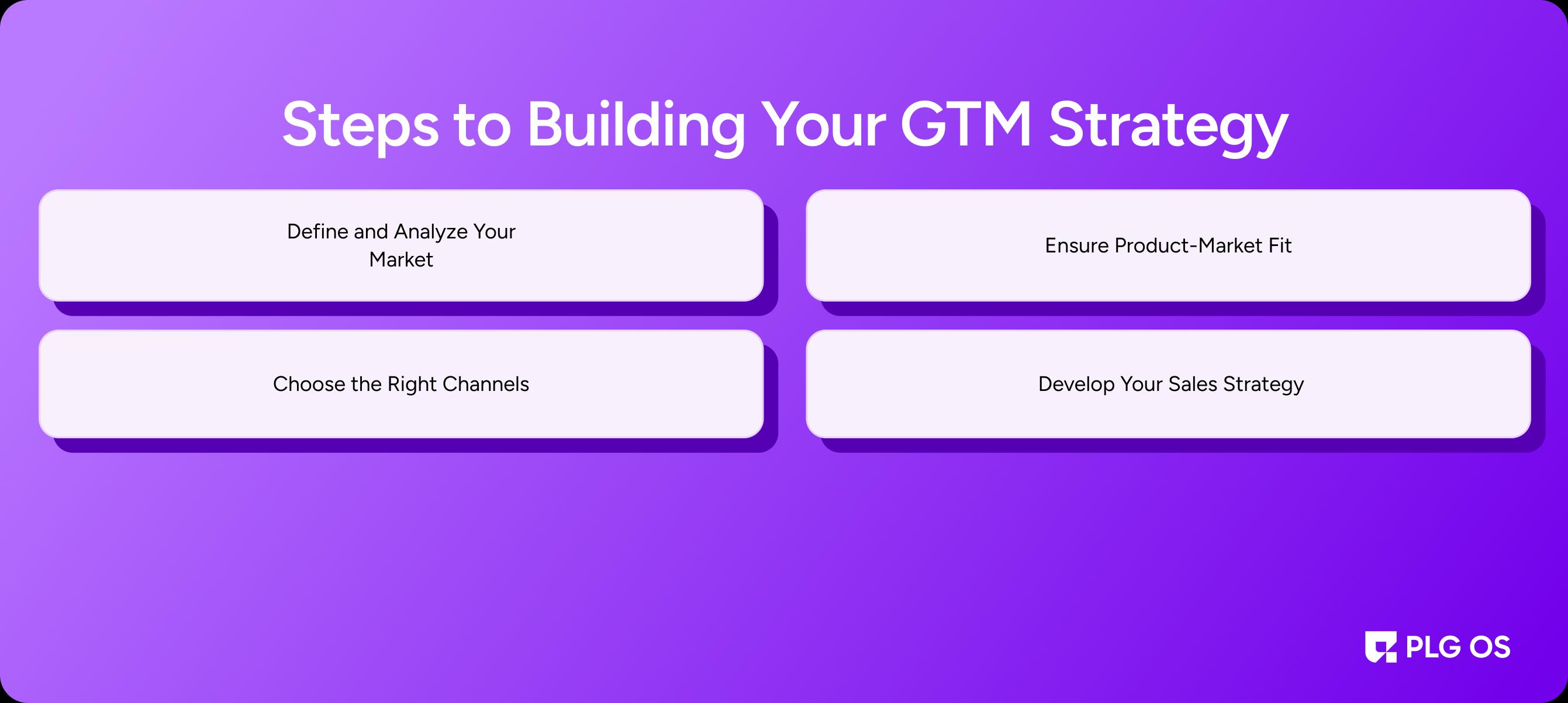
Steps to Building Your GTM Strategy
1. Define and Analyze Your Market
Start by defining and analyzing your target market. This helps you understand who you're selling to and the competitive landscape. Focus on:
Market Segmentation:
Group customers by distinct needs, pain points, and potential value.
Market Opportunity:
Estimate your total addressable market (TAM) and assess growth opportunities.
2. Ensure Product-Market Fit
A strong product-market fit is crucial for a successful GTM strategy. Make sure your product meets the core needs of your target customers by defining a clear value proposition, competitive positioning, and pricing strategy.
3. Choose the Right Channels
Your GTM strategy should leverage the best channels to reach your audience. Consider both direct channels (e.g., sales teams, self-service models) and indirect channels (e.g., partner networks, affiliates).
4. Develop Your Sales Strategy
Design a sales approach tailored to your audience. Whether it's product-led growth (PLG), sales-led growth, or a hybrid, ensure that your sales model aligns with your customer journey.
Implementing Your GTM Strategy
Marketing Execution
Your marketing plan should align closely with your GTM strategy, focusing on content that educates, engages, and converts:
Content Marketing:
Share educational articles, case studies, and thought leadership to build authority.
Demand Generation:
Drive leads through campaigns, account-based marketing, and social media engagement.
Sales Enablement
Equip your sales team with the tools and resources they need to close deals effectively, such as CRM systems, sales automation tools, and customer engagement platforms.
Measuring GTM Success
Customer Acquisition Cost (CAC):
How much it costs to acquire each customer.
Customer Lifetime Value (CLV):
The total revenue a customer brings over their lifetime.
Churn Rate:
The rate at which customers leave your service.
Common GTM Challenges and Solutions
Long Sales Cycles:
Address with lead scoring, targeted content, and streamlined follow-ups.
High Acquisition Costs:
Optimize marketing channels and conversion rates to bring down CAC.
Poor Differentiation:
Refine your messaging and focus on the unique benefits of your product.
Adapting Your GTM Strategy
The SaaS landscape is constantly changing, so your GTM strategy should evolve to meet new challenges. Regularly review your strategy and adjust based on customer feedback, market shifts, and performance data.
Future Trends in GTM Strategy
The future of GTM in SaaS will be heavily influenced by digital transformation and customer experience:
Digital Channels and Automation:
AI, data analytics, and virtual selling will play a larger role in GTM strategies.
Customer-Centric Approaches:
Personalized experiences, self-service options, and community engagement will continue to be essential for customer satisfaction.
Conclusion
A solid go-to-market strategy is the backbone of any successful SaaS business. By deeply understanding your market, crafting a clear value proposition, and aligning your sales and marketing efforts, you create a framework that not only attracts new customers but also fosters lasting relationships. A well-executed GTM strategy enables you to position your product effectively, control acquisition costs, and maximize customer lifetime value, setting the stage for sustainable growth in a competitive landscape.
PLG OS can amplify your GTM efforts by providing a suite of tools designed to streamline onboarding, boost activation, and increase customer retention. With features that support personalized engagement, automated progress tracking, and real-time analytics, PLG OS helps SaaS companies enhance user experience at every stage. By integrating PLG OS, you can create tailored customer journeys that highlight your product's value from the first interaction, ultimately driving adoption and growth in line with your GTM goals.