How to Skyrocket Customer Lifetime Value in 2025
In 2025, it’s not just about getting more customers—it’s about keeping them and making every interaction count. That’s where Customer Lifetime Value (CLV) steps in as your ultimate growth hack. Consider CLV the secret sauce behind brands that scale effortlessly without blowing up their budgets. If you’ve been chasing one-time sales, it’s time to flip the script.
This year, it’s all about building deeper connections, increasing value per customer, and turning casual users into lifelong fans. Ready to stop the churn and start skyrocketing your CLV? Let’s dive into the strategies that work.
Why Is Customer Lifetime Value Important, and What Is It?
The definition of client lifetime value is the sole appropriate starting point. What a business hopes to earn from a customer throughout their relationship is their Customer Lifetime Value (CLV).
Customer lifetime value is determined by the size of their initial investment and their frequency of purchases, total spending, and level of brand loyalty. According to Forbes, there’s a 5–20% probability that you’ll sell your product or service to a new consumer, whereas the chance of selling it to an existing client is about 60–70%. Retention is a lot cheaper than acquisition.
Why is this important? You can make better selections when you know your CLV. Is it worth spending £100 on a consumer buying only from you once for £50? No, it is not worth it. That upfront cost becomes much more reasonable when the client's anticipated annual spending is £500.
A company's bottom line is directly affected by the data-driven decisions made by businesses focusing on growing CLV.
How is CLV Calculated?
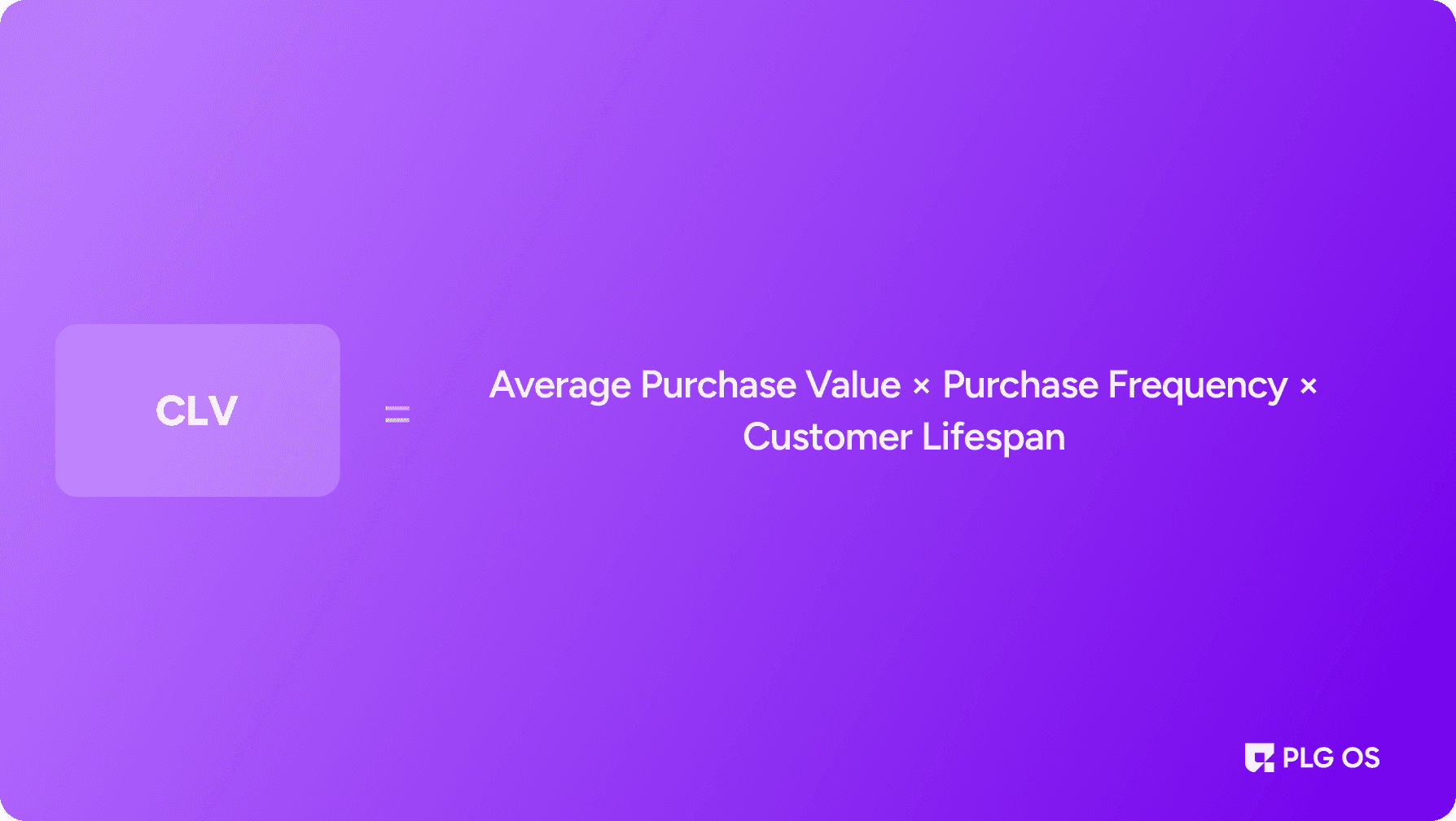
The basic formula to calculate customer lifetime value looks like this:
CLV = Average Purchase Value × Purchase Frequency × Customer Lifespan
Significance of Customer Lifetime Value (CLV) in Marketing
The importance of Customer Lifetime Value (CLV) in marketing is significant, as it offers a comprehensive comprehension of the long-term value of customers to a business. Key reasons for the importance of CLV in marketing include:
- CLV facilitates the more efficient allocation of marketing budgets. Businesses can optimise their expenditures to attract and retain high-value customers, guaranteeing a superior return on investment, by comprehending which customers are most valuable over time.
- Marketers can more accurately segment their audience and target customers with the highest potential value by understanding the CLV. This results in marketing campaigns that are more effective and personalised.
- Customer Lifetime Value (CLV) underscores the significance of customer retention. Profits increase by 25% to 95% when customer retention rates are increased by 5%. The cost of retaining an existing customer is frequently less than that of acquiring a new one. Understanding consumers' lifetime value can result in retention strategies that are more focused and effective.
- A high CLV indicates customers who make substantial contributions to the revenue over time. Sustainable business growth and profitability can be achieved by prioritising the enhancement of CLV.
- Customer lifetime value (CLV) data can offer valuable insights into the preferences and requirements of the most valuable customers, thereby directing product development and innovation to develop offerings that satisfy these customers' needs.
- Businesses are motivated to establish and sustain long-term relationships with their consumers by emphasising customer lifetime value (CLV). This encourages loyalty and trust.
- Businesses are motivated to optimise customer experiences by the value of customers over their tenure, as positive experiences can significantly impact CLV.
6 Strategies to Skyrocket Customer Lifetime Value
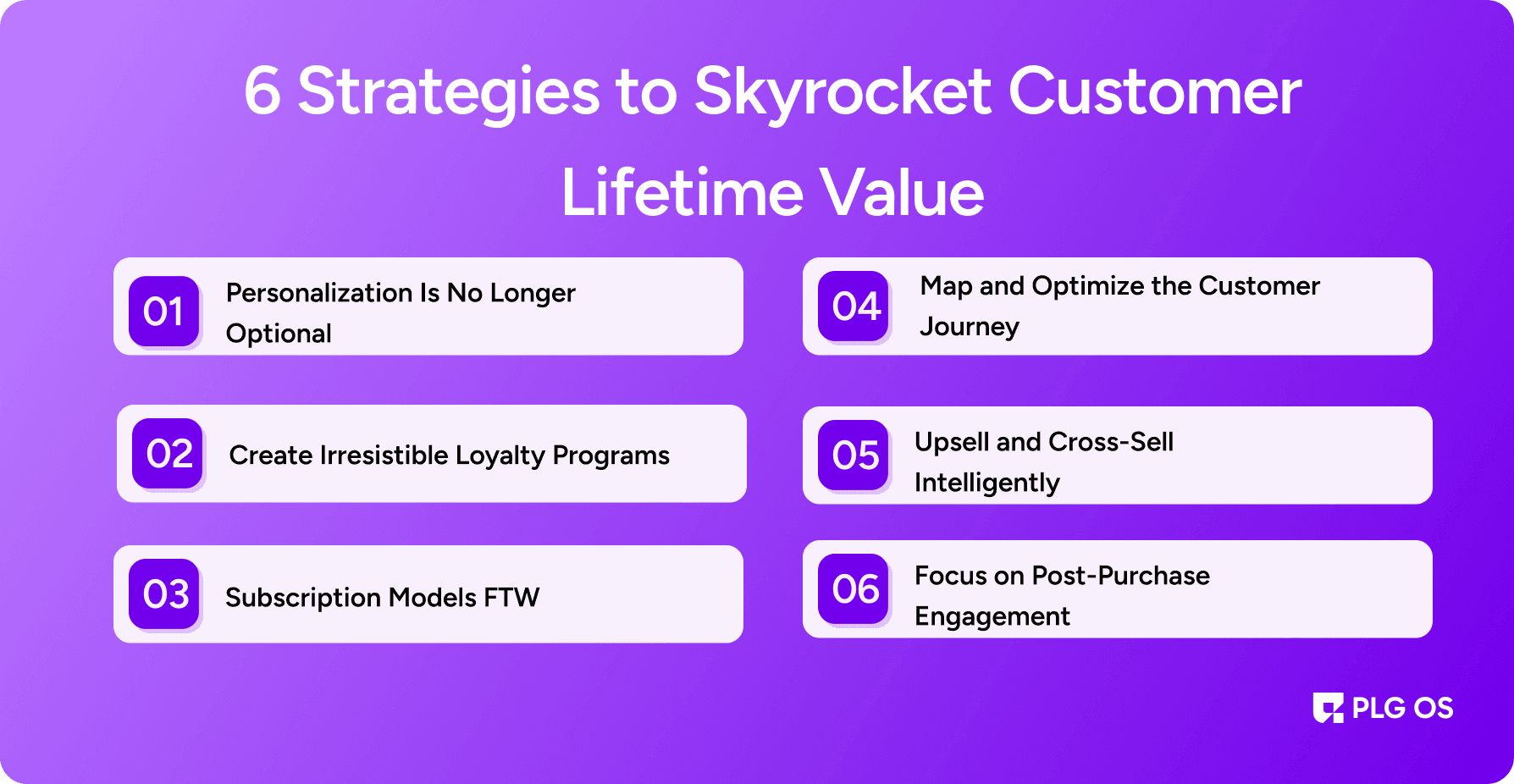
Strategy #1: Personalization Is No Longer Optional
In 2025, customers expect you to know them. Generic emails and broad offers? They’re a thing of the past.
Here’s how to level up personalisation:
- Use AI to track customer behaviour, preferences, and purchase history.
- Send hyper-personalized emails based on past purchases.
- Show dynamic product recommendations on your website.
- Personalised push notifications that don’t feel creepy.
Example: Netflix’s entire success is based on intelligent content recommendations. You should aim for that level of personalisation in your e-commerce or service flow.
Strategy #2: Create Irresistible Loyalty Programs
Loyalty programs are one of the most effective ways to keep customers returning and spending more.
But in 2025, the basic "points-for-purchases" won’t cut it.
Make your loyalty program irresistible:
- Offer tiered rewards (the more they spend, the better it gets).
- Include experiential perks—early access, exclusives, and birthday gifts.
- Gamify it: let users unlock badges or achievements.
- Let them redeem points for real value, not just discounts.
Pro tip: Make your rewards shareable. If customers can flaunt their rewards on social media, that’s free marketing with higher CLTV potential.
Strategy #3: Subscription Models FTW
Want predictable revenue and loyal customers? Offer a subscription model—even if you’re not a traditional business.
How to implement it:
- Bundle your products into monthly packages.
- Offer replenishment subscriptions (think skincare, supplements, etc.).
- Provide exclusive digital content or coaching for a fee.
- Let users customise their subscriptions based on preferences.
Why it works: Subscriptions turn occasional customers into consistent buyers. They increase purchase frequency, reduce churn, and create habits around your brand.
Strategy #4: Map and Optimize the Customer Journey
Every click, tap, and scroll tells a story. To increase CLTV, you need to know your customer's journey from start to finish and find out where they’re getting stuck or dropping off.
Here’s how to do it:
- Use tools like Hotjar, Google Analytics, or PLG OS to track behaviour.
- Identify drop-off points in your funnel (cart abandonment, poor onboarding, etc.).
- Collect customer feedback at key stages.
- Continuously A/B test and improve every touchpoint.
2025 Tip: Create proactive onboarding flows—especially for SaaS or app businesses—to guide users to that "aha moment" faster.
Strategy #5: Upsell and Cross-Sell Intelligently
Don't just sell once—sell smart. Strategic upsells and cross-sells can significantly boost revenue per customer.
What’s the difference?
- Upsell: Sell a higher-end version of the product (e.g., iPhone 15 Pro instead of iPhone 15).
- Cross-sell: Offer complementary products (e.g., phone case with the iPhone).
2025 approach:
- Use AI to make data-driven product pairings.
- Offer time-sensitive deals post-purchase.
- Use in-app popups or checkout suggestions that feel helpful, not pushy.
- Let customers “build their bundle” and save.
Bonus tip: Always test your offers. Small changes in pricing or timing can dramatically improve results.
Strategy #6: Focus on Post-Purchase Engagement
The relationship shouldn’t end after checkout. That’s where it begins.
Post-purchase experience ideas:
- Send thank-you emails with a surprise coupon.
- Offer tutorials or unboxing guides.
- Invite them to your brand community or Facebook group.
- Ask for reviews—and reward them for it.
Why it works: Customers who feel cared for after they’ve paid are likelier to return, refer others, and become advocates.
Final Thoughts: It's All About Long-Term Love
CLV is like a relationship. You can’t just charm someone on the first date and disappear. You’ve got to keep showing up, listening, improving, and delivering value.
In 2025, skyrocketing your customer lifetime value isn’t about one big tactic. It’s about creating a brand people want to stay with for the long haul.
So here’s your challenge:
- Take a deep look at your user journey.
- Start small, fix one friction point, send one helpful message, and launch one mini loyalty perk.
- Track your results.
Overtime? You’ll see CLV climb. And your business? It’ll scale without needing a thousand new customers every month. Book a call today to know more!!
FAQs
What is Customer Lifetime Value (CLTV)?
It’s the total revenue a business can expect from a customer over the entire relationship.
Why is CLTV important in 2025?
CLTV helps businesses focus on long-term growth by retaining customers and increasing revenue per customer.
How can personalization boost CLTV?
Tailored experiences make customers feel valued, increasing their loyalty and repeat purchases.
Are loyalty programs still effective in 2025?
Yes, especially when they offer real value, tiered rewards, and exclusive perks.
What’s the role of subscriptions in increasing CLTV?
Subscriptions create steady income, reduce churn, and build customer habits around your brand.