Pendo vs Userlane: Top Alternatives for SaaS Growth

The SaaS world has evolved faster than anyone could have predicted. A decade ago, companies could win customers with slick sales demos and clever marketing. Today, it’s all about the product. Customers expect software that guides them, teaches them, and delivers value before they ever speak to sales.
That’s why product-led growth (PLG) has become the playbook for modern SaaS. And with PLG comes the need for tools that help you understand how users behave, guide them inside your product, and connect those insights to growth.
Two names you’ll often hear in this space are Pendo and Userlane. They both promise better onboarding, better adoption, and better retention. But here’s the truth: just comparing Pendo vs Userlane is missing the bigger picture. The real question is whether either tool is built for the way SaaS companies grow today.
Pendo vs Userlane debate
Every SaaS team, no matter the size, is wrestling with the same three challenges:
- How do we onboard new users quickly?
- How do we turn free trials into paying customers?
- How do we keep customers engaged so they expand and don’t churn?
Pendo and Userlane promise to help solve these problems. Pendo leans heavily on analytics and surveys. Userlane focuses on step-by-step in-app walkthroughs. Both add value. But when you look closer, neither one is truly aligned with the product-led growth era.
That’s why the Pendo vs Userlane comparison matters. It’s not just about features. It’s about whether the tools you pick today will help you win tomorrow.
What is Pendo
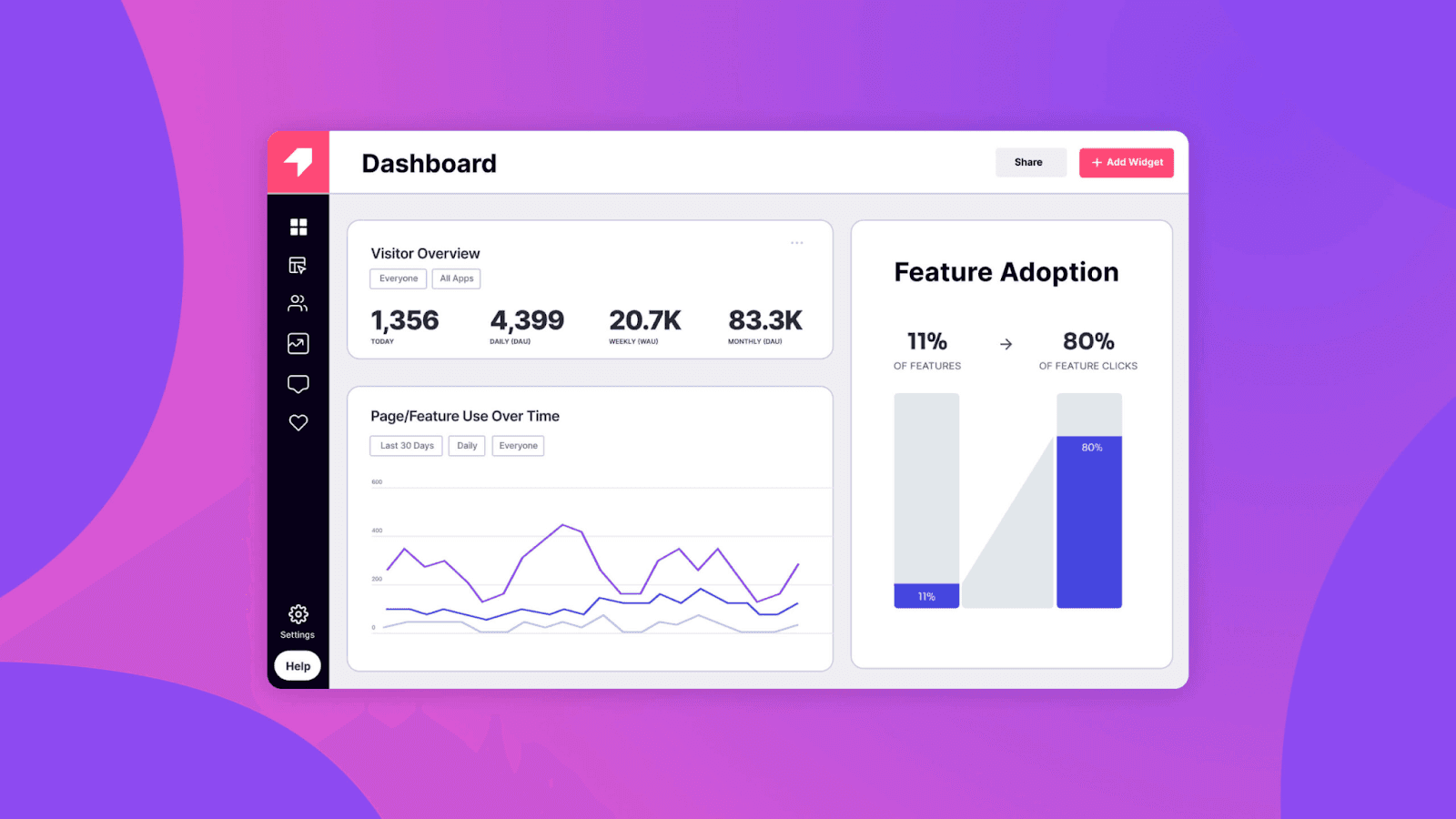
Pendo is one of the most recognized names in the product analytics and adoption space. It’s built to give product managers, success teams, and executives a detailed view of how customers use their software.
Where Pendo shines:
- Advanced analytics and usage tracking
- Built-in in-app surveys and feedback loops
- Strong enterprise integrations
Where Pendo struggles:
- High cost makes it inaccessible for many startups
- Complex to set up and master
- Can feel bloated if you only need a few core features
For large enterprises with teams of product managers and analysts, Pendo can be a fit. But for scrappy SaaS companies trying to drive growth, it can feel like using a rocket ship when you just need a fast car.
What is Userlane
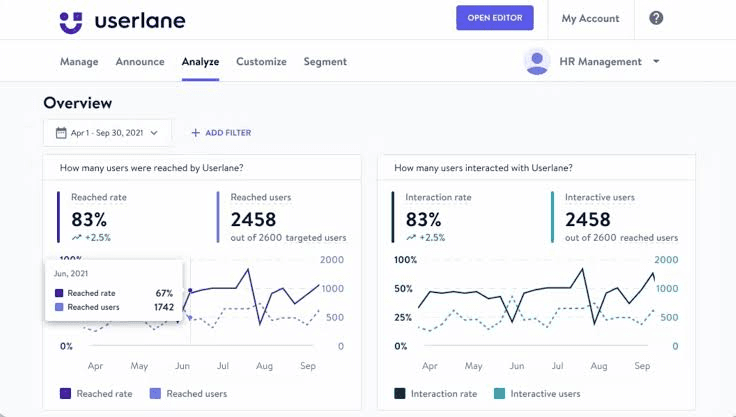
Userlane takes a very different approach. Instead of trying to be everything at once, it focuses mainly on in-app user guidance. If you want to build step-by-step walkthroughs to help users learn your product quickly, Userlane delivers.
Where Userlane shines:
- Easy to create and maintain walkthroughs
- Great for onboarding and employee training
- Simpler to adopt compared to Pendo
Where Userlane struggles:
- Limited analytics compared to Pendo
- Doesn’t cover the full customer lifecycle
- Mostly useful for onboarding, less so for expansion or retention
Userlane is attractive if onboarding is your single focus. But for SaaS companies aiming to drive revenue through PLG, it’s too narrow.
Pendo vs Userlane comparison
Let’s compare Pendo vs Userlane side by side across the areas that matter most.
Analytics and insights
Pendo delivers deep analytics, funnel analysis, and feature usage tracking. It’s built for data-driven product teams. Userlane, on the other hand, provides only surface-level engagement metrics.
Winner: Pendo, but at the cost of complexity and price.
Onboarding and guidance
Userlane was built for onboarding. Its step-by-step flows are easier to set up than Pendo’s tooltips and guides.
Winner: Userlane, but only for the onboarding stage.
Pricing and accessibility
Pendo is expensive. Userlane is cheaper but still high relative to its narrower feature set. Both feel out of reach for many early-stage SaaS companies.
Winner: Neither. Both struggle here.
Scalability
Pendo is built for large enterprises. Userlane is more SMB-friendly but doesn’t scale into a full growth system.
Winner: Depends on your company size, but both leave gaps.
Alignment with PLG
This is the big one. Pendo was built before PLG was mainstream. Userlane is onboarding-first, not PLG-first. Neither feels like the ideal fit for a product-led growth strategy.
Winner: Neither.
The bigger problem with Pendo and Userlane
Here’s the truth no one likes to admit:
Both Pendo and Userlane are useful, but they were built for a SaaS world that doesn’t fully exist anymore.
- Pendo comes from the analytics-heavy, enterprise-first mindset.
- Userlane comes from the training and onboarding angle.
But PLG is about more than analytics or onboarding. It’s about uniting product, growth, and revenue into one operating system. That’s where both tools fall short.
This is why so many SaaS leaders are searching for:
- Pendo alternatives
- Userlane alternatives
- Best alternatives to Pendo
- Tools better than Pendo or Userlane
And that search is leading more teams toward modern solutions like PLG OS.
PLG OS: A Better SaaS Tool Alternative to Pendo/Userlane
PLG OS isn’t just another product adoption tool. It’s a product-led growth operating system. Instead of focusing on one piece of the puzzle like analytics or walkthroughs, it gives you the full picture and the tools to act on it. 58% of B2B SaaS companies have already implemented a product-led growth strategy.
With PLG OS, you can:
- Track how users move through your product and where they drop off
- Spot revenue opportunities like expansion or upsell triggers
- Automate onboarding and engagement playbooks
- Align your product, sales, and success teams on one system
The result? Instead of juggling multiple tools and stitching them together, you get one platform built for the way SaaS companies grow today.
Why PLG OS is better than Pendo
91% of companies with a PLG motion plan to increase their investment in PLG initiatives. If you’re looking for Pendo alternatives, here’s why PLG OS stands out:
- It’s purpose-built for product-led growth, not retrofitted with it.
- It’s accessible and affordable, especially for scaling SaaS companies.
- It gives you not just data but actionable playbooks that drive activation, conversion, and expansion.
- It scales with you, from startup to enterprise, without forcing you to switch tools.
Why PLG OS is better than Userlane
If you’re evaluating Userlane alternatives, here’s where PLG OS shines:
- Userlane handles onboarding, but PLG OS covers the entire customer lifecycle.
- PLG OS provides analytics and revenue insights that Userlane doesn’t.
- Instead of stopping at product guidance, PLG OS turns adoption into growth.
So, which is better, Pendo or Userlane
If we look strictly at the Pendo vs Userlane question, the answer depends on what you need.
- If you’re a big enterprise with deep analytics needs and a large budget, Pendo could work.
- If you just want simple onboarding flows, Userlane is easier to use.
But if your goal is to grow with a product-led strategy, neither one is truly the right fit. That’s why more SaaS companies are moving toward solutions like PLG OS, which bring everything together into a single growth engine.
Final thoughts
The debate around Pendo vs Userlane is really about something bigger. Both are solid tools, but they were built for a SaaS world that has shifted.
Today, SaaS growth isn’t about just collecting analytics or building walkthroughs. It’s about creating a product-led system where your product itself drives revenue.
That’s why the smartest companies aren’t asking “Pendo vs Userlane, which is better?” anymore. They’re asking: What’s the better alternative that actually supports PLG?
And increasingly, the answer is PLG OS.
If you’re serious about scaling your SaaS through product-led growth, don’t just pick between Pendo and Userlane. Step into the future with a platform designed for exactly that.
FAQs
1. What is the difference between Pendo and Userlane?
Pendo focuses on analytics and feedback for product teams, while Userlane specializes in in-app onboarding and guided walkthroughs.
2. Which is better, Pendo or Userlane?
It depends on your needs. Pendo is better for analytics-heavy enterprises, while Userlane is ideal for simple onboarding flows.
3. Are there alternatives to Pendo and Userlane?
Yes, modern alternatives like PLG OS provide a complete product-led growth platform combining analytics, onboarding, and revenue playbooks.
4. Why choose PLG OS over Pendo or Userlane?
PLG OS is purpose-built for PLG, offering actionable insights, scalable playbooks, and full lifecycle growth tools in one platform.
5. Can PLG OS replace both Pendo and Userlane?
Yes, it unifies analytics, onboarding, and expansion tools, eliminating the need for separate platforms and simplifying product-led growth.
If you want, I can also expand these FAQs with slightly longer answers to make them more engaging and improve SEO. Do you want me to do that?