Top 5 Pendo Alternatives in 2025

If you're here, chances are you're already familiar with Pendo. It's one of the more recognizable names in the world of user onboarding tools, product analytics tools, and product experience software. But as with any software, it’s not one-size-fits-all. Whether you're a startup, a scale-up, or an enterprise on a mission to build better product experiences, it pays to know your options. This blog dives into the top 5 Pendo competitors' tools that offer similar features, sometimes more flexibility, and often better pricing. If you're hunting for the best Pendo alternatives, bookmark this article.
What is Pendo?
Pendo is a product experience platform that helps customers learn about your product and shows you how they use it. The platform allows you to capture consumer feedback while they use your application and provides insights into how customers interact with your product. Depending on user demand, this data type can help you prioritize product upgrades and improvements.
Pendo primarily aims to show how customers use and perceive your product through product analytics and feedback channels. Pendo also includes in-app teaching and coaching features to help clients learn how to utilize your product efficiently.
Limitations of the Pendo Platform
Pendo provides tiered pricing plans based on the functionality your organization needs. The company's website does not include pricing for higher tiers. However, Capiche evaluations show that pricing starts at $2,000-$5,000 per year for a single product, and around $12,000 per year for the lower-tier bundle. Todd Olson, Pendo's CEO, stated in a comment on ProductHunt that bundles start at roughly $99 per month.
1. It was not designed for employee-facing adoption use cases.
Pendo was initially developed to design and analyze product experiences for customer-facing apps. While it now provides features for organizations to increase adoption of their internal IT software investments (think CRM, ERP, and HCM), it was not intended for this use case.
Other DAPs on the market, such as PLG OS, WalkMe, and Apty, were designed with both use cases in mind and offer more complete feature sets for digital enablement and IT teams driving internal software adoption.
2. The analytics are not actionable
Pendo's core strength lies in its sophisticated product analytics. However, it falls somewhere between a product analytics platform and an in-app guidance platform, failing to achieve perfection.
One of the reasons for this is that the analytics are not actionable. Pendo users cannot target certain user groups (identified by Pendo Analytics) with tailored in-app instructions and experiences. You cannot initiate specific in-app guided experiences based on certain in-app occurrences. Additionally, Pendo's analytics are only updated once each hour.
3. It is incompatible with desktop apps
As previously stated, Pendo was not designed for internal-facing applications. That means it concentrated on SaaS (web) and mobile applications. However, many sectors rely on desktop apps for compliance and security.
4. Limited in-app guidance and user onboarding features
Pendo initially gained market share as a product analytics and use platform for product teams. It then developed Pendo Guides, an in-app guide content editor. Compared to other prominent DAPs, Pendo features fewer onboarding UX and in-app help widgets.
A DAP like PLG OS has in-app guidance features such as product tours, step-by-step flows, user onboarding checklists, hotspots, tooltips, self-help wikis, and more.
Comparing the Best Pendo Alternatives by Use Case
Many teams explore Pendo alternatives for several key reasons:
High pricing at scale:
Pendo’s pricing model can become expensive for growing teams or startups with limited budgets.
Limited flexibility:
Customizing onboarding flows and in-app guidance often requires additional effort or compromises.
Steep learning curve:
Teams without a strong technical background may find it challenging to set up and maintain.
Analytics-heavy focus:
While Pendo offers great analytics, it may lack depth in areas like personalized UX, experimentation, and cross-team workflows.
Not built for end-to-end PLG:
Pendo’s feature set is not fully aligned with the needs of modern product-led growth (PLG) strategies.
Lack of integrated GTM tools:
It doesn't provide native tools to bridge product usage data with go-to-market teams (like sales or success).
Need for more agile tools:
Startups and mid-market SaaS companies often require lighter, faster, and more adaptable platforms.
Top 5 Pendo Alternatives in 2025
1. PLG OS – All-in-One Platform for Product-Led Growth
Overview
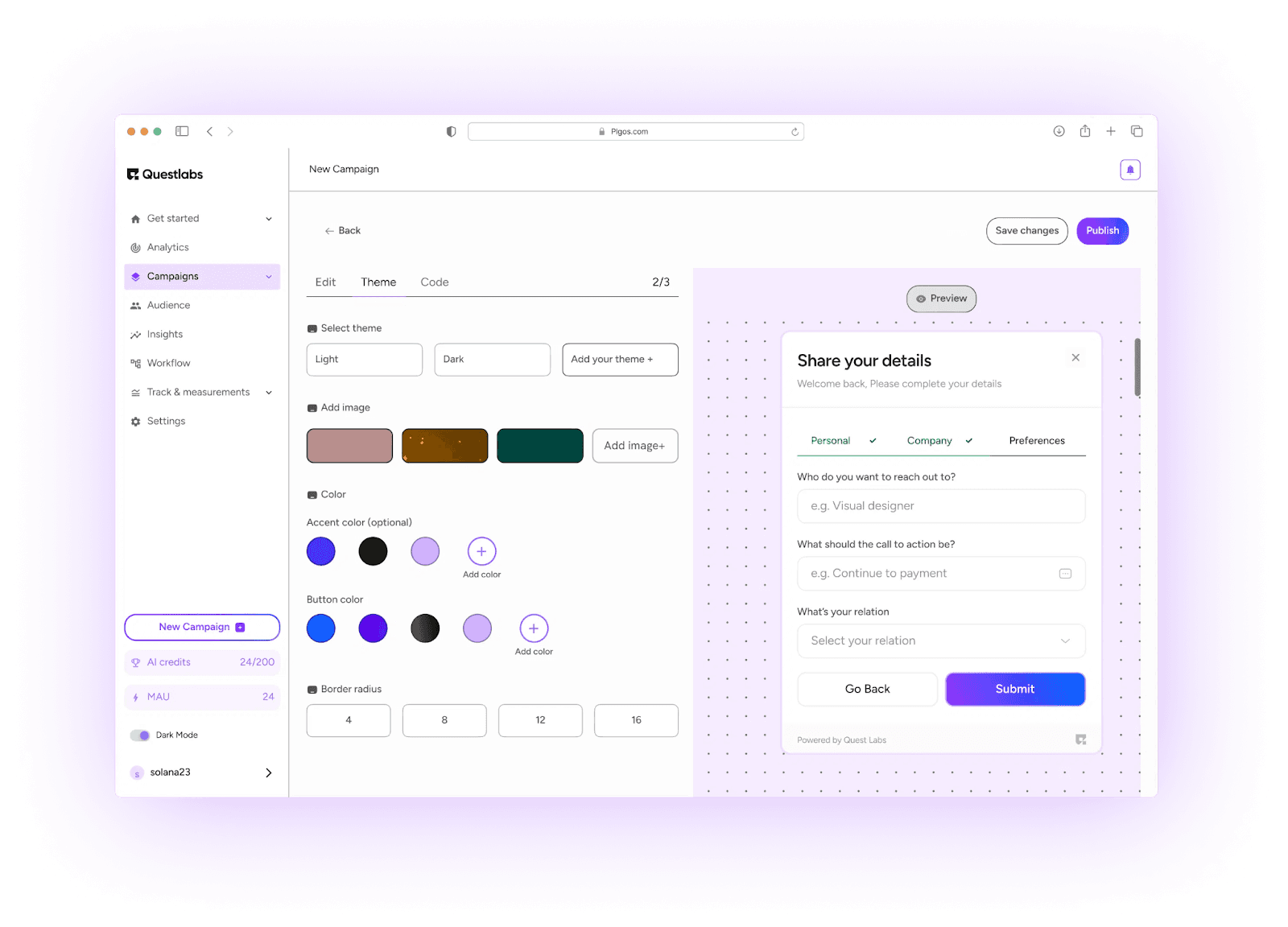
PLG OS is not just an alternative to Pendo—it’s a complete product-led growth operating system. Designed for modern SaaS companies, PLG OS combines user onboarding tools, product analytics tools, and go-to-market workflows into a single, scalable suite. 63% of customers consider the onboarding period when deciding to subscribe to a service or purchase a product.
Key Features
- Pre-built onboarding journeys for activation and expansion
- Real-time product usage analytics with AI-driven insights
- Segmentation and personalization capabilities
- PLG CRM to align product data with GTM teams
- NPS, surveys, and in-app communication tools
Why It’s a Top Alternative to Pendo
PLG OS offers a broader product vision by addressing the full lifecycle of user activation, retention, and growth. Unlike Pendo, which emphasizes analytics and feature usage tracking, PLG OS is designed to operationalize your entire PLG motion.
Ideal For
Product-led SaaS companies seeking a unified solution to drive activation, engagement, and expansion.
Final Verdict
PLG OS is a powerful, modern platform that’s ideal if you’re looking for more than just onboarding and analytics—it’s designed for teams committed to a PLG strategy from day one.
2. Appcues – Best for No-Code Onboarding and In-App Messaging
Overview
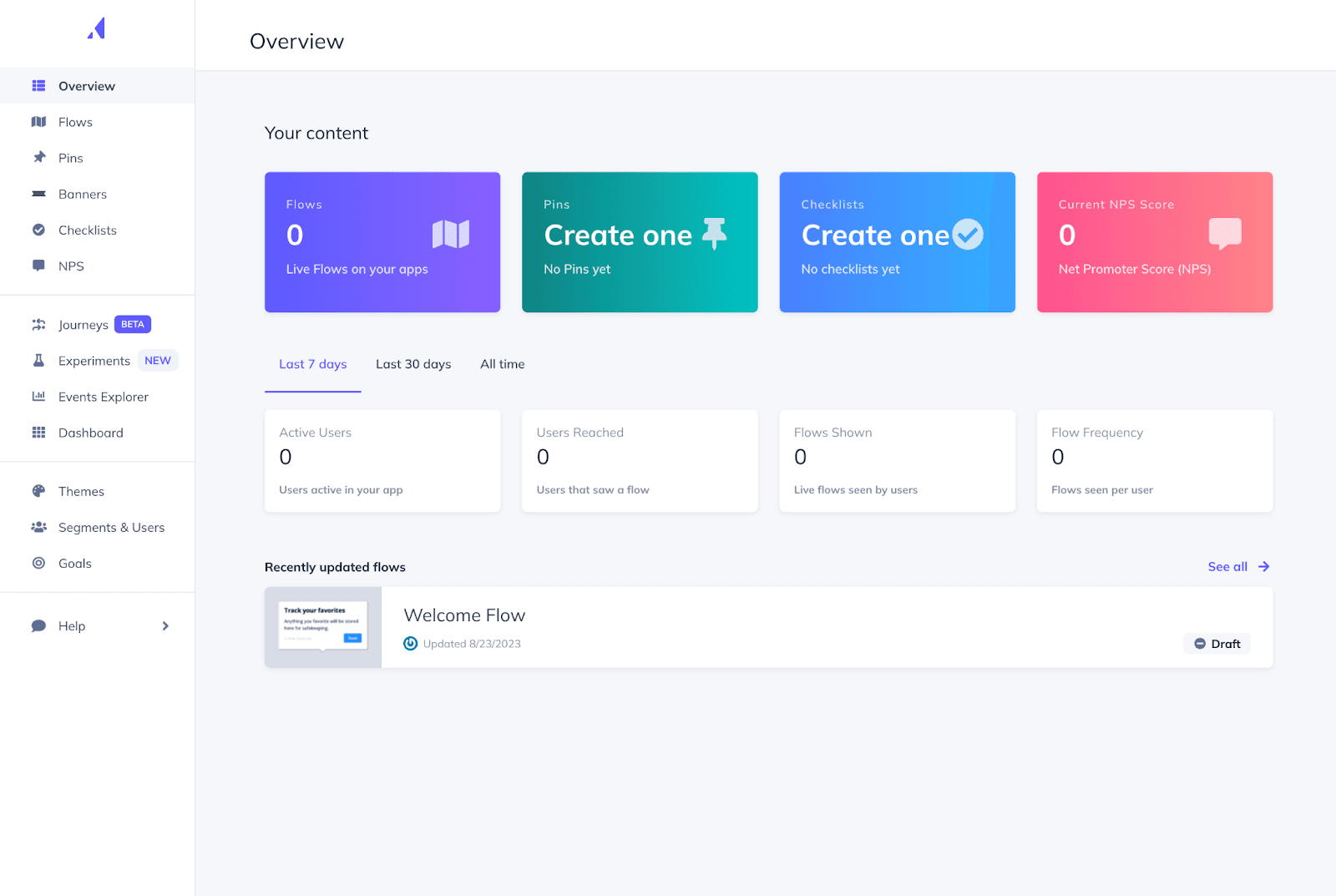
Appcues is a leading user onboarding tool that allows teams to build engaging, personalized product experiences without relying on engineers. It focuses on guiding users through onboarding, feature discovery, and activation flows.
Key Features
- Drag-and-drop UI builder for modals, hotspots, and tooltips
- User segmentation and targeting
- A/B testing for in-product experiences
- Integration with analytics platforms like Segment and Mixpanel
Why It’s a Strong Pendo Competitor
Appcues stands out with its easy-to-use interface and fast implementation. If you’re short on engineering bandwidth, Appcues is ideal for creating effective in-app flows without code. 97% of companies say good user onboarding is necessary for effective product growth.
Ideal For
Startups and mid-market SaaS teams focused on rapid user activation and improving onboarding UX.
Final Verdict
Appcues is one of the best Pendo alternatives for product teams that prioritize speed and simplicity over depth in analytics.
3. WalkMe – Enterprise-Grade Digital Adoption Platform
Overview
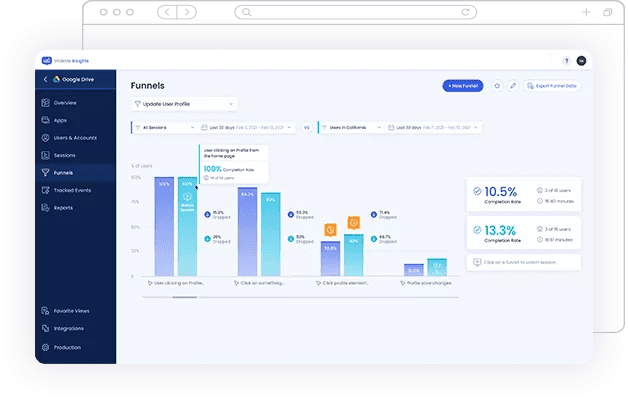
WalkMe is designed for enterprise clients looking to improve the usability of complex software environments, both customer-facing and internal. It helps businesses guide users through intricate workflows and streamline digital processes. 84% of companies working to improve customer experience saw an increase in revenue.
Key Features
- Visual workflow builder for user journeys
- Onboarding flows for web and desktop apps
- Advanced behavioral analytics
- Employee onboarding for enterprise tools like Salesforce, SAP, and Workday
Why It’s a Relevant Pendo Alternative
Unlike Pendo, which primarily targets product teams, WalkMe is focused on digital adoption for both customers and employees. It’s especially valuable for internal digital transformation efforts.
Ideal For
Large enterprises managing digital change across multiple platforms and teams.
Final Verdict
WalkMe may be more than what early-stage or product-led startups need, but for enterprise businesses, it’s a capable and powerful alternative to Pendo.
4. Userpilot – Affordable and Feature-Rich for Mid-Sized SaaS
Overview
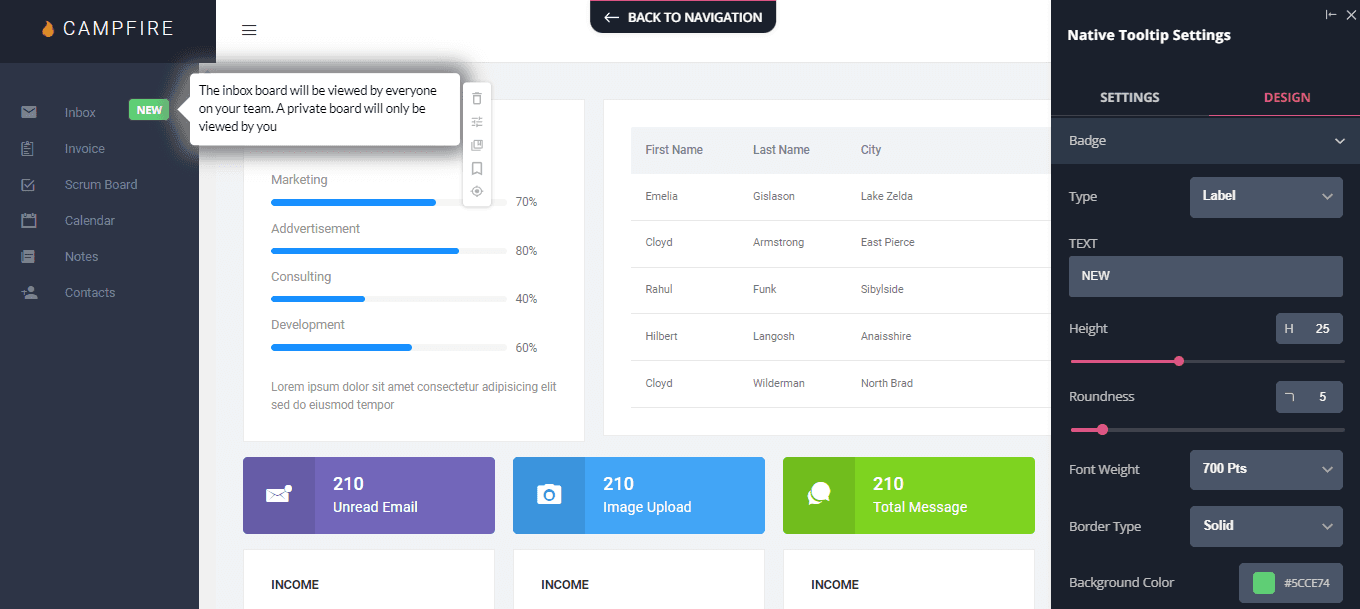
Userpilot offers a great balance of features and affordability, focusing on in-app experiences, user feedback, and behavior analytics for SaaS companies looking to scale.
Key Features
- No-code onboarding flows with personalized experiences
- Behavior-driven triggers and segmentation
- Surveys and NPS tools
- Product usage analytics and funnel reports
Why It Competes Well with Pendo
Userpilot delivers many of the same features as Pendo but with a more intuitive interface and lower cost of entry. It’s ideal for teams that need value and functionality without enterprise-level pricing.
Ideal For
SaaS teams that want a full-featured product experience software tool without a steep learning curve.
Final Verdict
Userpilot is a fantastic mid-market solution for teams looking for a flexible, easy-to-use alternative to Pendo that offers real ROI and faster deployment.
5. Mixpanel – Best for Advanced Product Analytics
Overview
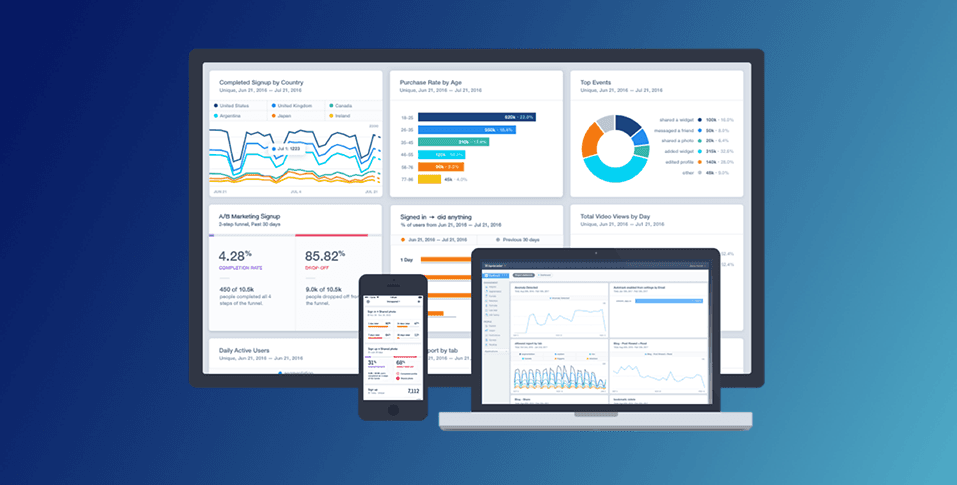
Mixpanel is one of the most well-known product analytics tools in the market. It allows teams to dig deep into product data, build user cohorts, and evaluate feature engagement with precision.
Key Features
- Retention, funnel, and cohort analysis
- Advanced data segmentation and visualization
- Predictive analytics and machine learning models
- Custom dashboards and team collaboration
Why It’s a Solid Pendo Alternative
While Mixpanel doesn’t offer onboarding or in-app guidance features, it excels in data-driven decision-making. For product managers and data analysts, it provides more granular insights than Pendo.
Ideal For
Teams with a strong analytics culture that want deep insight into product usage and user behavior.
Final Verdict
Mixpanel is a strong Pendo competitor if your primary goal is analyzing behavior, retention, and engagement—rather than managing user experiences.
Comparing the Best Pendo Alternatives by Use Case
To make things easier, here’s a breakdown of the top tools based on specific goals:
| Use Case | Recommended Tool |
|---|---|
| End-to-end PLG strategy | PLG OS |
| No-code onboarding and tooltips | Appcues |
| Enterprise digital adoption | WalkMe |
| Cost-effective product experience | Userpilot |
| Advanced data analytics | Mixpanel |
The Top 5 Pendo Alternatives
| Tool | Ideal For | Strength | Free Plan |
|---|---|---|---|
| PLG OS | All-in-one product-led growth | Integrated PLG strategy | Yes |
| Appcues | No-code onboarding and UX flows | Simplicity and speed | Yes |
| WalkMe | Enterprise onboarding | Digital adoption at scale | No |
| Userpilot | Growing SaaS products | Cost-effective depth | Yes |
| Mixpanel | Deep analytics and data tracking | Advanced analytics | Yes |
Final Thoughts
There’s no one-size-fits-all tool for onboarding, analytics, and product experience. Pendo is a strong platform, but it's not the only one worth considering. The landscape of Pendo alternatives has matured significantly, offering more flexibility, better usability, and clearer ROI across various business sizes. To truly enhance user onboarding experiences, it's crucial to proactively collect user feedback through app surveys. This qualitative data, combined with quantitative insights from Google Analytics, provides actionable insights that directly inform improvements for accelerating feature adoption.
If you’re building a product-led organization or scaling your SaaS, you need tools that adapt, evolve, and grow with you. Whether you're launching onboarding flows, measuring engagement, or driving retention, choosing the right platform matters.
For a future-proof, all-in-one approach to growth, PLG OS deserves serious consideration. Built with the modern product team in mind, it bridges the gap between data, onboarding, and action—so your team can do more with less.
Frequently Asked Questions
What is the best free Pendo alternative?
PLG OS, Mixpanel, Userpilot, and Appcues all offer free plans with varying feature sets.
Which Pendo competitor is best for startups?
Appcues and Userpilot are great for fast onboarding. PLG OS is ideal if you're building a full product-led growth strategy from the start.
Is there a cheaper alternative to Pendo with similar features?
Yes. Userpilot and PLG OS provide comparable features at a more affordable price.
What tools should I use with Mixpanel if it lacks onboarding?
Mixpanel pairs well with Appcues or PLG OS to cover onboarding and in-app guidance.