What is User Onboarding? How to Achieve a Successful Onboarding

User onboarding is the process of introducing new users to your product and guiding them through their initial experience. It's designed to help users understand the value of your product, learn how to use its key features, and achieve their first success. Effective onboarding sets the stage for long-term user engagement and retention.
Why is User Onboarding Important?
First Impressions Matter:
Onboarding is often a user's first interaction with your product. A positive experience can set the tone for their entire journey with your SaaS.
Reduces Time-to-Value:
Good onboarding quickly demonstrates your product's value, encouraging users to stick around and explore further.
Decreases Churn:
Users who understand how to use your product and see its value are less likely to abandon it.
Increases User Activation:
Effective onboarding guides users to take key actions that lead to long-term engagement.
Boosts Customer Satisfaction:
When users can easily navigate and use your product, their satisfaction levels increase.
Lowers Support Costs:
Well-onboarded users typically require less support, reducing your customer service overhead.
Steps to Achieve Successful User Onboarding
Know Your Users:
Understand your users' goals, pain points, and what success looks like for them. This knowledge should inform your entire onboarding process.
Set Clear Expectations:
From the start, communicate what users can achieve with your product and how it will benefit them.
Keep It Simple:
Don't overwhelm users with too much information. Focus on the core features that deliver immediate value.
Use Progressive Disclosure:
Introduce features gradually as users need them, rather than all at once.
Provide Interactive Guidance:
Use tooltips, walkthroughs, or product tours to guide users through key actions.
Personalize the Experience:
Tailor the onboarding process based on user roles, goals, or other relevant factors.
Celebrate Milestones:
Acknowledge when users complete important steps or achieve goals to boost motivation.
Offer Multi-Channel Support:
Provide help through various channels (in-app, email, chat) to cater to different user preferences.
Use Email Sequences:
Send targeted emails to guide users through the onboarding process and re-engage those who've dropped off.
Gather and Act on Feedback:
Regularly collect user feedback on the onboarding process and iterate based on insights.
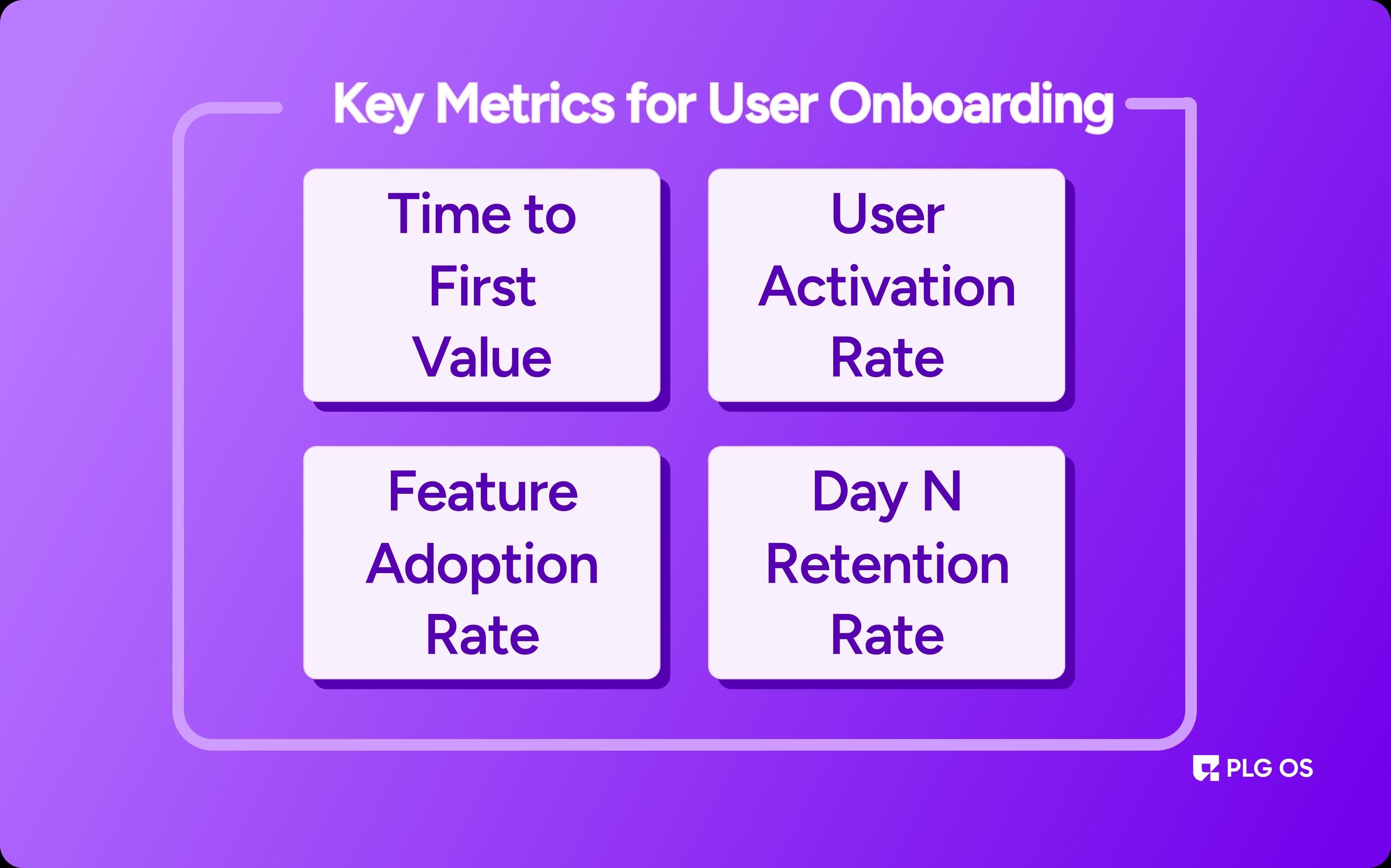
4 Key Metrics for User Onboarding
1. Time to First Value (TTFV)
This metric measures how long it takes a new user to experience the core value of your product. The quicker users reach this "aha moment," the more likely they are to stick around.
How to measure: Track the time from sign-up to when a user completes a key action that demonstrates your product's value.
Example: For a project management tool, this could be creating their first project or task.
2. User Activation Rate
Activation rate shows the percentage of new users who complete all the steps in your onboarding process and reach a predefined activation point.
How to measure: (Number of users who completed onboarding / Total number of new users) x 100
Example: If 80 out of 100 new users complete all onboarding steps, your activation rate is 80%.
3. Feature Adoption Rate
This metric indicates how many users are engaging with specific features of your product during and after onboarding.
How to measure: (Number of users who used a specific feature / Total number of users) x 100
Example: If 60 out of 100 users use your product's reporting feature within the first week, the feature adoption rate for that feature is 60%.
4. Day N Retention Rate
This shows the percentage of users who return to your product on the Nth day after sign-up. It helps you understand how well your onboarding process encourages continued usage.
How to measure: (Number of users active on day N / Number of users who signed up N days ago) x 100
Example: If 100 users signed up 7 days ago and 40 of them are still active on day 7, your Day 7 retention rate is 40%.
Conclusion
User onboarding isn't a one-time event—it's an ongoing process that evolves with your product and user base. By focusing on creating a smooth, value-driven onboarding experience and continuously measuring and improving it, you set the foundation for user success and, by extension, the success of your SaaS product.
PLG OS makes onboarding even smoother by offering personalized onboarding tools, in-app guides, and real-time feedback. With these features, you can keep users engaged from day one, reduce churn, and help them see success faster. The best part? They can be integrated in less than 30 seconds!
Remember, the goal of onboarding isn't just to familiarize users with your product's features. It's about quickly demonstrating how your product can solve their problems and make their lives easier. When done right, effective onboarding can turn new users into loyal customers and enthusiastic advocates for your brand.