7 Best Customer Success Tools in 2025 (for Startups to Enterprises)
Keeping customers happy and engaged is no longer merely a desirable feature. Whether you're a startup striving to make your first sales or a large enterprise managing thousands of users, it's essential for any growing business. But here’s the thing: managing customer success isn’t easy. Without the right tools, managing customer success can become a challenging task.
That’s where customer success software steps in. These days, the best tools don’t just help you keep tabs on your customers; they help you understand them, anticipate their needs, and turn happy users into loyal fans. If you’re wondering which platforms can actually move the needle in 2025, you’ve come to the right place.
Let’s check out the 7 best customer success tools from startups to enterprises that will help you retain customers, boost growth, and create experiences your users won’t stop talking about.
What is a customer success tool?
Customer success tool, also known as customer success management software (CSM), is a technology used by businesses to provide quick and personalized help to their customers in order to boost retention and improve overall customer experience (CX). Increasing customer retention by just 5% can boost profits by 25% to 95%.
Customer success technologies enable teams to be proactive by offering data and insights to stay ahead of problems. Businesses may utilize CSM technologies to reduce customer churn and boost interactions that build long-term loyalty by incorporating features such as workflow automation, bespoke dashboards, self-service choices, and more.
What are the different kinds of customer success tools?
To assist firms in meeting their objectives, customer success software is available in a variety of formats. Several versions include:
- Customer communication software, such as social media care tools, enables teams to better communicate with customers through social media, live chat, AI agents, and other omnichannel mediums.
- Customer education platforms highlight content such as onboarding guides, interactive tutorials, and product walkthroughs to encourage learning and adoption.
- Customer Support: Tools enable teams to handle client interactions, track issues, and give self-service options such as knowledge bases.
- Customer feedback and analytics: Solutions such as customer feedback tools can collect customer sentiment via surveys, track user behaviour, and monitor usage in order to handle customer turnover proactively.
Must-Haves for Every Customer Success Tool in 2025
No matter what your business size or customer success goals are, there are a few key features every customer success tool should have to truly make a difference.
1. Easy to Adopt
Your customer success team is busy enough—they don’t have time for complicated software or endless training sessions. The ideal tool should be intuitive and work smoothly from day one, letting your team focus on what really matters: helping customers succeed.
2. True No-Code Experience
Most customer success managers aren’t developers—and that’s a good thing. The tools you choose should embrace a no-code approach, meaning your team can set up workflows, create reports, and manage tasks without writing a single line of code. This saves time and avoids bottlenecks.
3. Powerful Analytics and User Identification
Knowing exactly who’s using your product and how is essential. Look for tools with strong analytics and user-identification features that link accounts to emails or phone numbers and allow detailed segmentation. This insight helps target the right users with the right content and measure success clearly.
4. Rock-Solid Data Security
Customer trust depends on it. Your tool must have top-notch security—think encryption, two-factor authentication, and more—so sensitive customer info stays safe, keeping users confident and engaged. By 2025, 70% of customer success teams will use AI-powered tools for churn prediction and customer health scoring.
7 Best Customer Success Tools in 2025
1. Gainsight
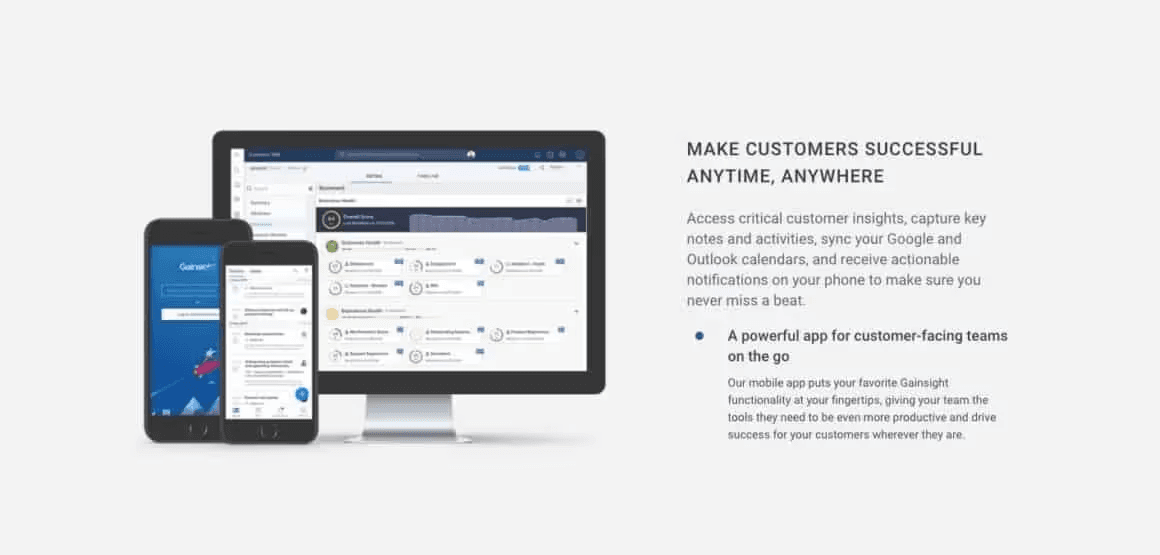
Best for: Enterprises and mature SaaS companies
If you're in the SaaS space and haven't heard of Gainsight, you’re probably new to the customer success scene. Known as one of the most comprehensive customer success platforms, Gainsight offers everything from health scoring and playbooks to lifecycle management and product experience analytics.
What makes it powerful in 2025 is its AI-driven forecasting and automation capabilities. Gainsight has recently added deeper integrations with CRMs and product analytics platforms, helping teams align more closely across departments.
Key Features:
- Customer Health Scores
- Automated Success Playbooks
- Journey Orchestration
- In-app engagements
- Executive Dashboards
Why Choose Gainsight: It’s a powerhouse built for scale. If you’re an enterprise that wants granular visibility into customer behavior, a customizable tech stack, and automation to scale your customer success efforts, this is the tool for you.
Ideal Use Case: Enterprises, B2B SaaS companies, and customer success teams managing high-value accounts.
2. Totango
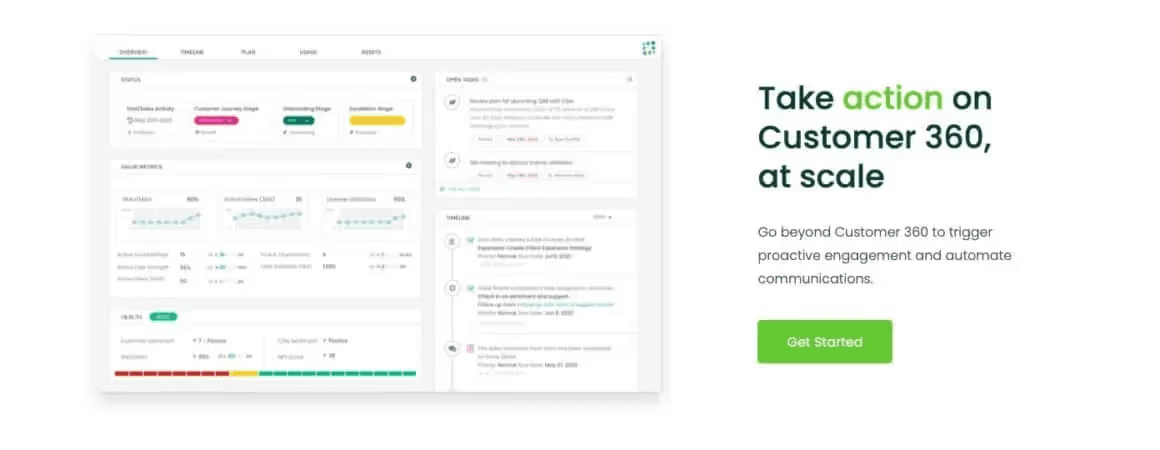
Best for: Modular flexibility and fast-growing businesses
Totango remains a strong contender in 2025 thanks to its modular design. You can build out your customer success strategy at your pace with "SuccessBLOCs"—prebuilt modules focused on things like onboarding, adoption, renewal, and churn mitigation.
The real value is how Totango allows both large companies and startups to avoid tech bloat while still having a flexible, scalable solution.
Key Features:
- Modular SuccessBLOCs
- Task automation and reminders
- Customer journey tracking
- Native integrations with tools like Salesforce, HubSpot
Why Choose Totango: Its modular setup makes it one of the most flexible customer success software options available today.
Ideal Use Case: Mid-size SaaS companies, scaleups, and those looking to evolve from spreadsheets to something more sophisticated without overcommitting.
3. PLG OS
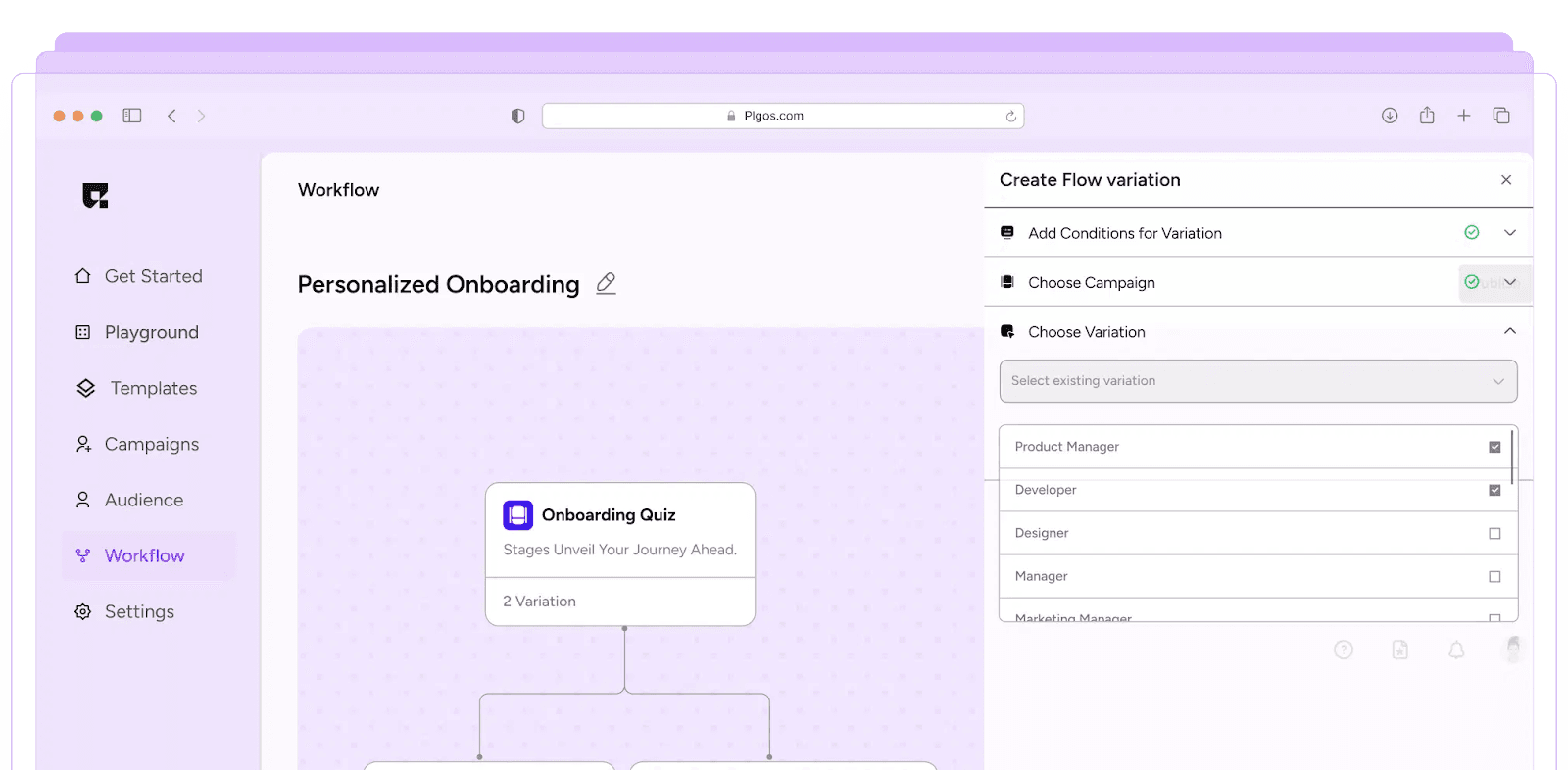
Best for: Product-Led Growth companies
This isn’t your traditional customer success tool—and that’s what makes it exciting.
PLG OS (Product-Led Growth Operating System) sits at the intersection of customer success, product analytics, and growth. Instead of just tracking customer health or usage, PLG OS helps teams uncover product-qualified leads, measure product adoption across the user journey, and create data-informed playbooks for expansion and retention. 80% of customer success software buyers prioritize no-code or low-code solutions to speed up implementation and reduce dependency on IT teams.
In 2025, the rise of PLG models has made tools like PLG OS indispensable.
Key Features:
- End-to-end user journey mapping
- Segmented product usage insights
- PLG-focused GTM dashboards
- Cross-functional alignment tools
Why Choose PLG OS: It’s not just a tool—it’s a methodology. If your SaaS company is leaning into PLG, this tool helps you operationalize that model effectively, while aligning CS, product, marketing, and sales.
Ideal Use Case: Startups and mid-sized companies using freemium or trial-based acquisition, looking to scale with product-led strategies.
4. ChurnZero
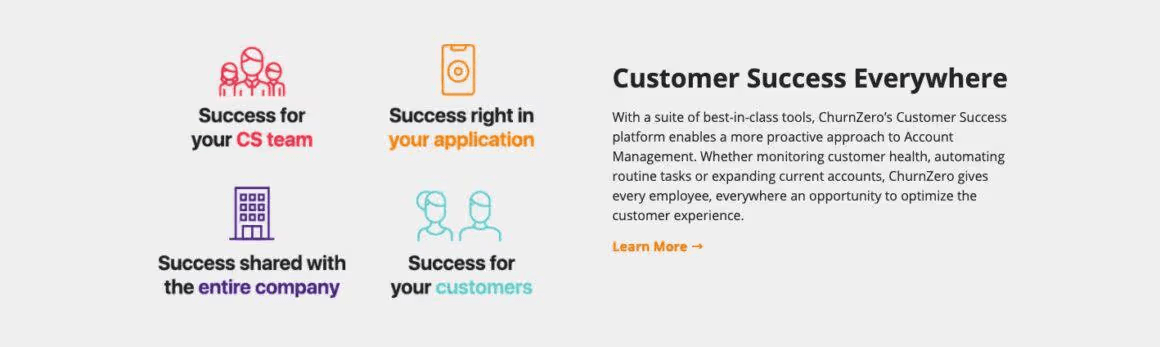
Best for: Proactive churn prevention and automation
ChurnZero is built for customer success teams that want to act fast and smart. With powerful real-time alerts, customer behavior tracking, and built-in automation, it gives CS teams a major leg-up when it comes to reducing churn.
In 2025, ChurnZero's expanded integration ecosystem and AI-based churn prediction make it a top customer success tool for teams that want to drive action, not just analysis.
Key Features:
- Real-time customer behavior tracking
- In-app customer communication
- Onboarding automation
- AI-powered churn prediction
Why Choose ChurnZero: It combines data insight with actionable workflows to help you proactively engage at-risk customers.
Ideal Use Case: SaaS companies of all sizes that want to reduce churn and enhance onboarding.
5. Custify
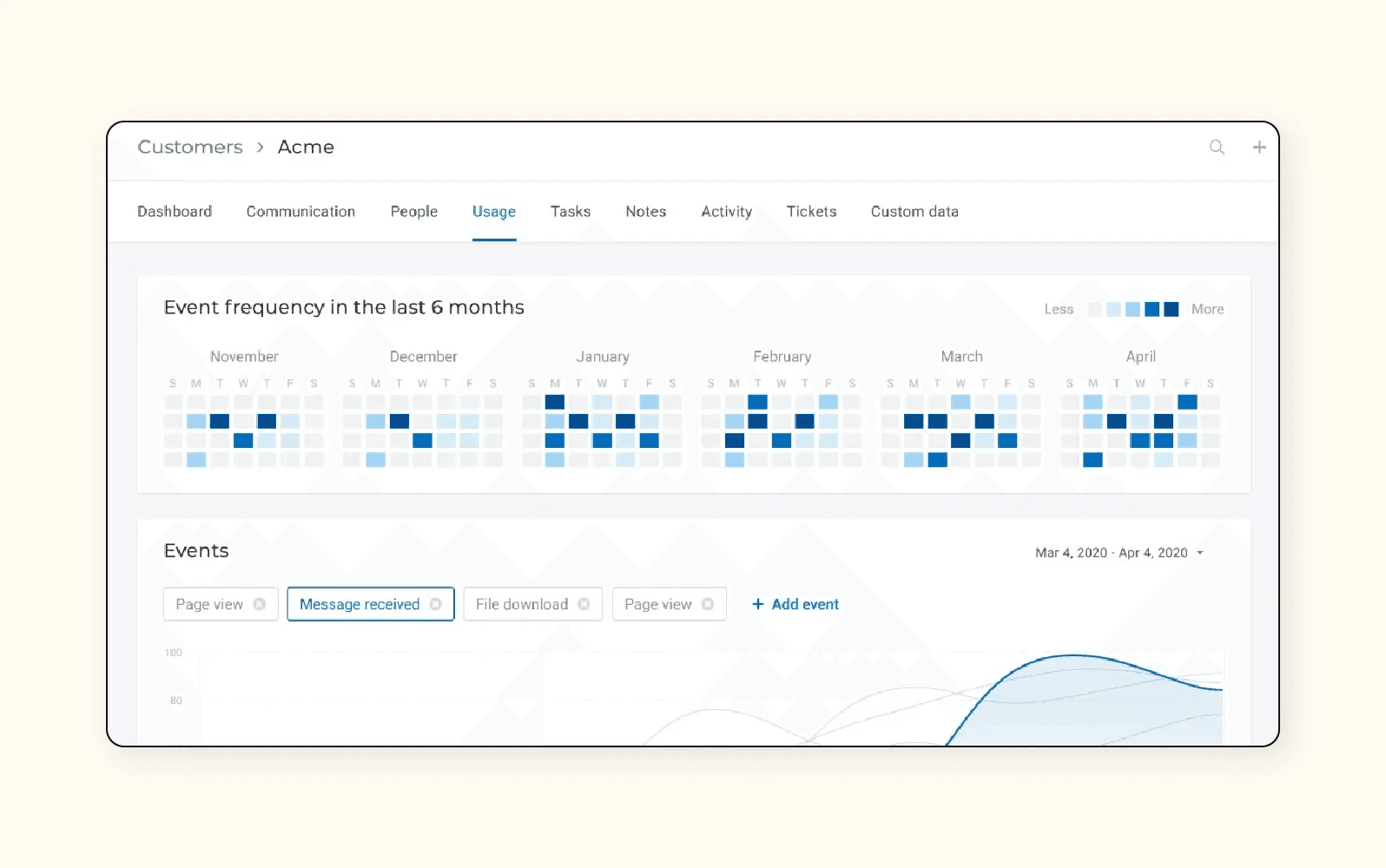
Best for: Growing startups and SMBs
Not every startup can afford or even needs the complexity of Gainsight or Totango. Enter Custify—a lightweight yet powerful customer success platform designed specifically for smaller teams.
Custify stands out in 2025 for its simple UX, fast implementation, and ability to provide deep insights into customer health and lifecycle stages.
Key Features:
- Customer health scores
- Lifecycle management
- Customer segmentation
- Integration with Intercom, Pipedrive, HubSpot
Why Choose Custify: It’s affordable, efficient, and offers just enough to help startups mature their customer success function without overwhelming them.
Ideal Use Case: Startups and SMBs that need a quick-to-deploy customer success solution that scales with them.
6. Userflow
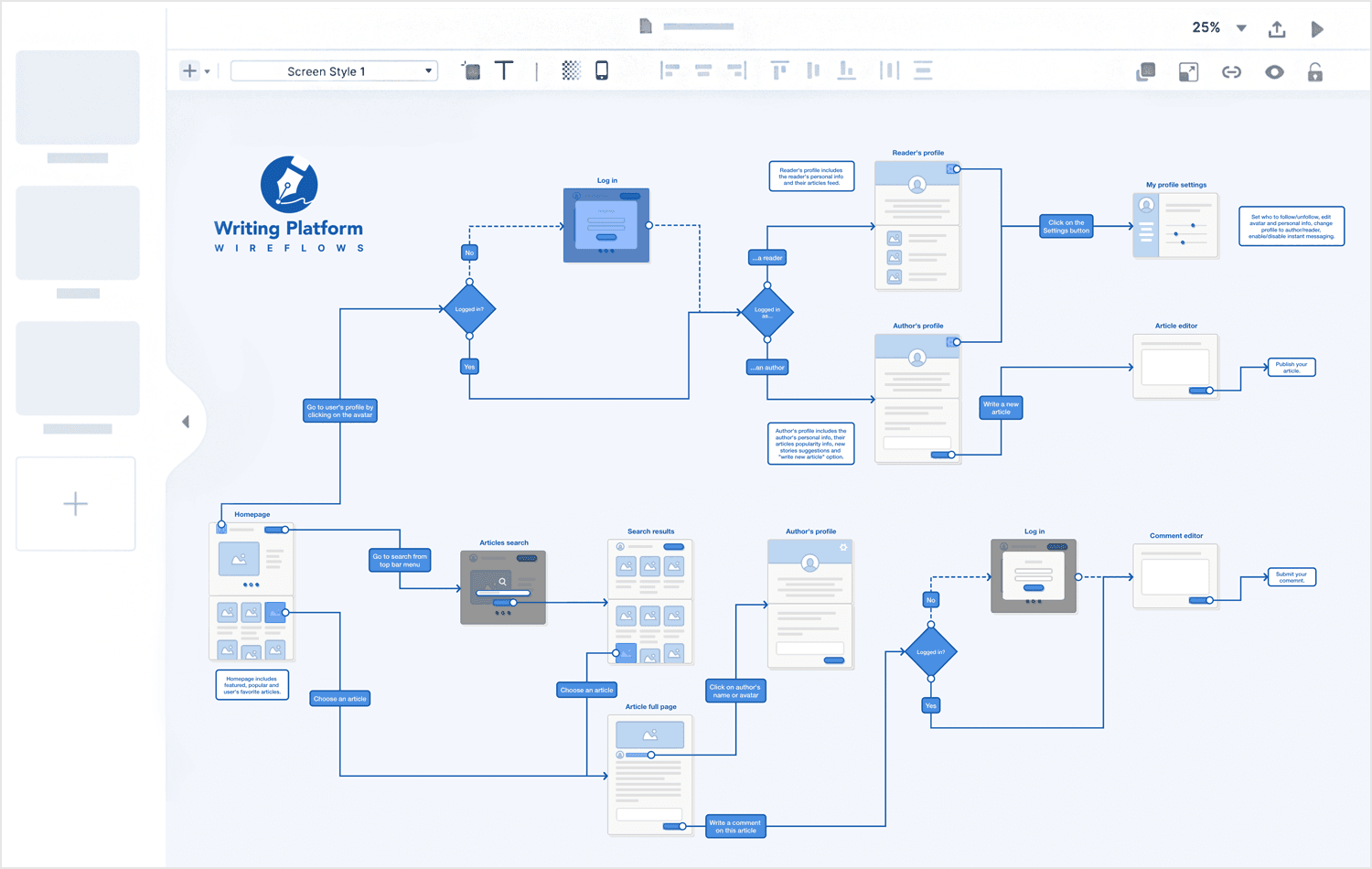
Best for: Customer onboarding and in-app experiences
Often, customer onboarding tools are considered separate from CS platforms. But in 2025, onboarding has become an inseparable part of the customer success journey—and Userflow is leading the charge.
Userflow allows you to build interactive in-app onboarding flows, checklists, and tooltips without writing a single line of code. It’s fast, agile, and perfect for both product and CS teams.
Key Features:
- No-code onboarding flow builder
- Customizable checklists and tooltips
- Contextual surveys
- Multi-language support
Why Choose Userflow: First impressions matter. If you want customers to find value from day one, Userflow makes it incredibly easy to craft and test onboarding journeys.
Ideal Use Case: Startups, product-led companies, and anyone investing in better activation experiences.
7. ClientSuccess
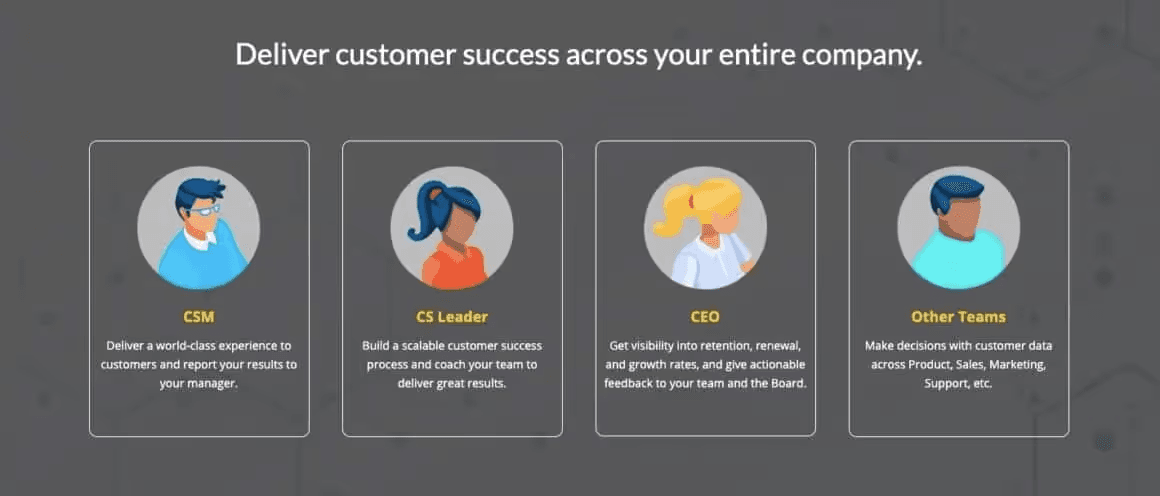
Best for: Account management and customer lifecycle tracking
ClientSuccess delivers what its name promises—a platform designed to help customer success and account management teams stay on top of renewals, upsells, and customer relationships.
In 2025, it shines with its strong focus on relationships over transactions. The clean interface, emphasis on timelines, and renewal management make it one of the best tools for customer retention.
Key Features:
- Success cycles
- Renewal and expansion tracking
- Real-time alerts and notifications
- NPS and sentiment tracking
Why Choose ClientSuccess: If you’re a relationship-driven business where account managers play a big role, this tool centralizes all that effort in one place.
Ideal Use Case: Mid-sized to large B2B SaaS companies with account-based customer success strategies.
Choosing the Right Tool: A Quick Comparison
| Tool | Best For | Key Features | Ease of Use | Scalability | Integrations | Ideal Company Size |
|---|---|---|---|---|---|---|
| Gainsight | Large enterprises and mature SaaS companies | Customer health scoring, automated playbooks, AI forecasting, journey orchestration, executive dashboards | Moderate learning curve due to extensive features | Highly scalable for global teams and complex use cases | Salesforce, Zendesk, Marketo, Jira, product analytics tools | Large enterprises, B2B SaaS |
| Totango | Growing businesses wanting modular flexibility | Modular SuccessBLOCs for onboarding, adoption, renewal, churn mitigation; automation; customer journey tracking | User-friendly with modular setup for quick adoption | Scales well from startups to large teams | Salesforce, HubSpot, Zendesk, Slack | Scaleups and mid-sized companies |
| PLG OS | Product-led growth companies | User journey mapping, PLG dashboards, product adoption analytics, cross-team alignment tools | Easy for product and CS teams to adopt | Designed for high-growth startups and mid-sized firms | Integrates with product analytics and CRM systems | Startups and mid-sized SaaS |
| ChurnZero | Proactive churn prevention | Real-time behavior tracking, in-app messaging, onboarding automation, AI churn prediction | Intuitive and action-focused UI | Suitable for all company sizes, especially SaaS | Salesforce, HubSpot, Zendesk, Intercom | Small to large SaaS businesses |
| Custify | Startups and SMBs | Customer health scores, segmentation, lifecycle management, NPS surveys | Very easy to use with quick setup | Good scalability for growing startups | Intercom, Pipedrive, HubSpot | Startups and small to medium businesses |
| Userflow | Customer onboarding and product adoption | No-code onboarding flow builder, tooltips, checklists, contextual surveys | Very user-friendly, no coding required | Scales well with product growth | Segment, Mixpanel, HubSpot, Intercom | Startups and PLG companies |
| ClientSuccess | Account management and renewal focus | Success cycles, renewal tracking, NPS tracking, real-time alerts | Moderate ease of use, built for account managers | Scales well for mid to large B2B SaaS teams | Salesforce, Gainsight, Zendesk, Slack | Mid-sized to large B2B SaaS companies |
Final Thoughts
Customer success is no longer optional—it’s mission-critical.
The best customer success tools in 2025 aren’t just focused on managing accounts or reducing churn. They’re intelligent, agile platforms that unify customer data, drive proactive engagement, and align internal teams with user outcomes. Whether you're just getting started with a few dozen users or managing a global customer base, there’s a solution out there designed to help you deliver real, measurable value.
If you’re aiming to grow your business in today’s competitive SaaS market, investing in the right SaaS customer success tools could be the best decision you make this year.
So, what’s next?
Start small. Focus on your biggest customer success challenge—be it onboarding, churn, or engagement—and choose a tool that solves that pain point. Customer success isn’t just a function. It’s the future of sustainable growth.
FAQs
Q. What is the best customer success software for startups?
A: Tools like Custify, Userflow, and PLG OS are built with startups in mind, offering affordable, agile, and scalable solutions.
Q. Which customer success tools are best for enterprises?
A: Gainsight, Totango, and ClientSuccess are ideal for enterprises needing comprehensive features, team collaboration, and lifecycle management.
Q. How do customer onboarding tools fit into a customer success strategy?
A: Onboarding is the first critical step in the customer journey. Tools like Userflow ensure users find value quickly, setting the stage for long-term retention.
Q. Are there customer success tools that work well with PLG strategies?
A: Absolutely. PLG OS is designed specifically for product-led growth companies, offering insights into user behavior and helping align teams across the customer journey.
Q. How do I choose between so many options?
A: Identify your business size, main challenges (like churn or onboarding), and key integrations. Then, compare platforms using trials and customer success tools comparison sites to find your best fit.