Customer Onboarding Automation for Your Saas Startup
A potential customer finally decides to do business with you. They sign up and are ready to get started. But then they hit a long, complex onboarding process that feels like an obstacle course. Forms, manual approvals, unclear next steps. Frustration builds. And before you know it, they churn before even getting started.
This is where customer onboarding automation comes in. It transforms onboarding from a time-consuming, manual process into a smooth, efficient, and engaging experience. The result? Higher retention, happier customers, and a stronger bottom line.
Automation has many advantages, such as allowing users to onboard whenever it is most convenient for them, freeing up resources for firms to focus on more critical tasks, and eliminating the need for humans to repeatedly send the same welcome email. It's simple to adopt and benefits everyone involved. With the help of software as a service (SaaS) solutions like PLG OS, any team can automate their onboarding procedures without worrying about technical coding.
What Is Automated Customer Onboarding?
Automated customer onboarding uses technology to lead new customers through their first encounters with a product or service, eliminating the need for manual intervention at each step. It streamlines the onboarding process by automating tedious, repeated processes with intelligent, individual responses.
Automation solutions allow businesses to manage customer service duties such as scheduling calls, sending welcome emails, and verifying information without relying on customer service workers to do it manually. While lowering operational workload, we aim to make client onboarding faster, more consistent, and more enjoyable.
Importance of user onboarding automation
Recently, the efficacy of automated client onboarding processes has become increasingly obvious. 55% of customers say that they will stop using a product or service that they don't understand. Automation helps businesses save time and money while reducing customer turnover and increasing customer happiness.
It allows for the onboarding of customers to be more streamlined, precise, and easy to use. Businesses may boost customer satisfaction and retention with the help of automated customer onboarding processes.
Automating your onboarding processes can help you overcome:
Enhanced efficiency and precision:
Automated processes ensure data correctness across all departments, facilitate smooth onboarding experiences, and streamline communications.
Enhanced contentment for customers:
Reduced consumer frustration directly results from the improved convenience and enjoyment of automated onboarding.
Reduced operating expenses:
Because the procedure requires less manpower and overhead, the onboarding costs are lower.
Faster onboarding processes:
You can satisfy client expectations more rapidly with automated workflows since they drastically reduce the time and effort needed to complete onboarding processes. Delays and complexity are both reduced.
Challenges of Manual Customer Onboarding
Manual customer onboarding automation can be a difficult and complex process for businesses, with numerous obstacles that impede efficiency and customer pleasure. Here are some of the most major challenges related to manual onboarding:
1. Time Consuming Processes
Manual onboarding frequently entails a number of stages that take a significant amount of time to accomplish. From acquiring information to confirming documents and dealing with clients, each task requires focus. This might result in lengthy onboarding periods and dissatisfied new customers who demand prompt and efficient service.
2. Higher risk of human error
Human mistake is an unavoidable danger in manual procedures. Data entry errors, missing conversations, and inaccurate documentation can all lead to serious problems later on. Such errors can risk compliance, cause delays, and negatively impact the overall client experience.
3. Inconsistent Experience
With manual onboarding, the quality and consistency of the client experience might vary greatly depending on the staff engaged. Customers may become confused and dissatisfied if different team members follow different methods or provide varying degrees of help.
4. Poor tracking and reporting
Manual onboarding methods frequently lack adequate tracking systems, making it difficult to assess progress and performance. Without data-driven insights, businesses may struggle to identify areas for improvement or evaluate the efficacy of their onboarding initiatives.
5. Inefficient resource allocation
With time-consuming manual processes, teams may find themselves pushed thin, diverting attention away from vital company tasks. This improper resource distribution might reduce productivity and limit growth potential.
6. Limited scalability
As organizations grow, scaling manual onboarding becomes more difficult. The same resources that were effective for a smaller customer base may not be sufficient if the number of new clients grows. This limitation might result in bottlenecks, affecting service quality and client retention.
How to automate the customer onboarding process
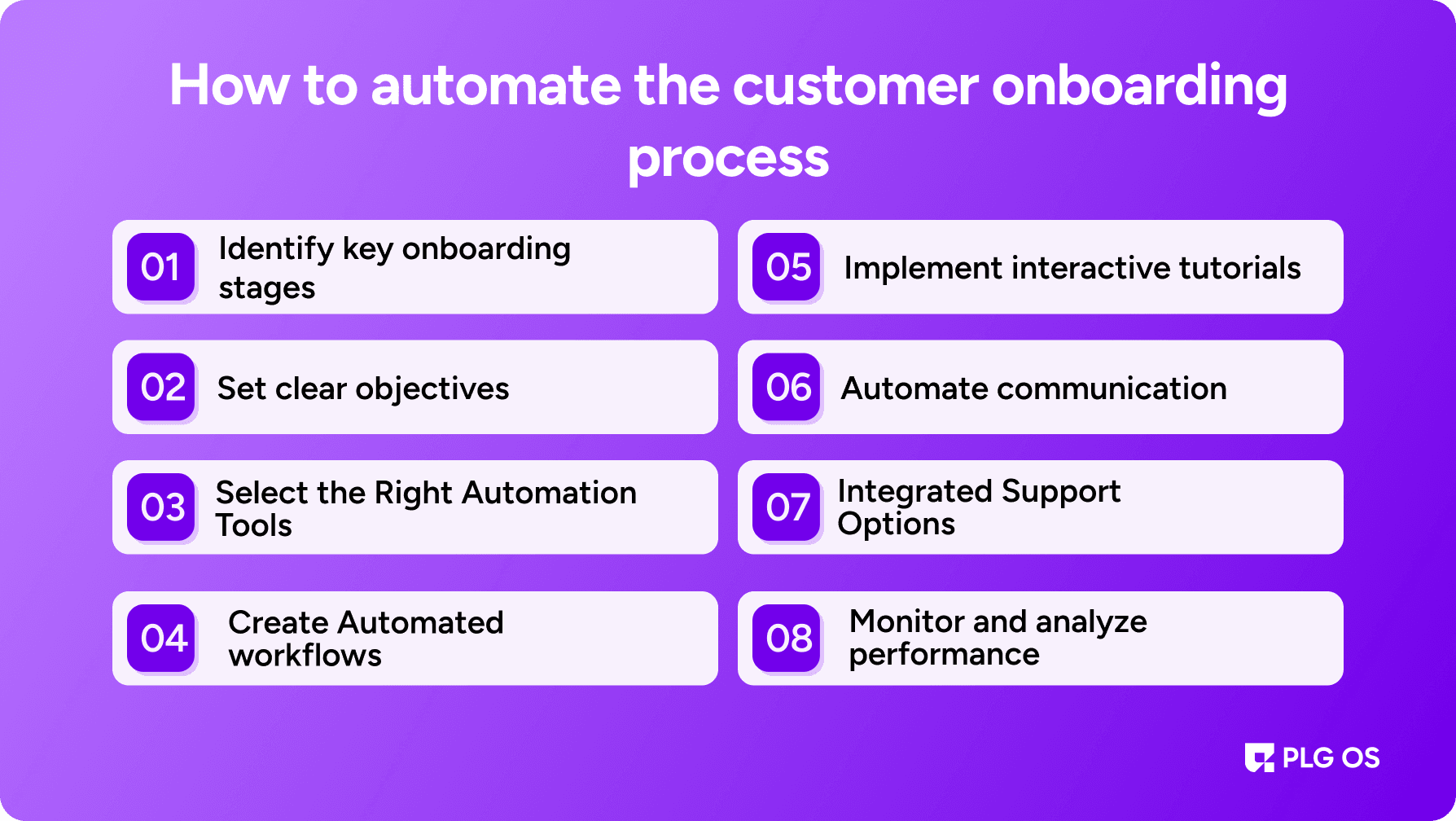
Automating the customer onboarding process can simplify operations, improve the client experience, and ultimately increase retention rates.77% of B2B clients say that technology has dramatically transformed their company’s expectations of how companies should interact with them. Here's a step-by-step strategy for efficiently automating customer onboarding:
1. Identify key onboarding stages
Begin by outlining the customer onboarding automation path. Determine the critical steps, including account creation, initial training, and follow-up interactions. Understanding each process will allow you to understand where automation can be most useful. 97% of companies say good user onboarding is necessary for effective product growth.
Trello – Trello automates its onboarding by walking users through the board, list, and card system with an interactive tutorial. It highlights key features like adding team members and setting deadlines, ensuring users quickly understand its functionality.
2. Set clear objectives
Set precise goals for your onboarding process. Determine what success looks like, whether it's shorter onboarding times, increased user engagement, or higher customer happiness. These goals will shape your automation strategy.
Monday.com – Monday.com focuses on activation goals like creating the first workflow. It uses automated prompts and checklists to ensure users reach key milestones, improving product adoption.
3. Select the Right Automation Tools
Choose tools that are appropriate for your specific business needs. CRM software, onboarding platforms, and email marketing automation solutions can all help to streamline the process. Look for solutions that provide bespoke processes, analytics, and integrations with your current systems.
PLG OS – PLG OS is an all-in-one customer engagement platform, it offers every ux component a startup needs to activate a new user in their platform. Instead of looking at 10 different places to get all your user experience needs
4. Create Automated workflows
Create automated workflows to guide consumers through the onboarding process. For example, you can set up triggers that send welcome letters when an account is created or provide customers access to tutorials when they check in for the first time. Make sure these routines are simple to follow and user-friendly.
ClickUp – ClickUp automates onboarding by setting up default workspaces and sending step-by-step email guides based on user interactions. Automated task assignments introduce users to key features in real-time.
5. Implement interactive tutorials
Include interactive tutorials and guided walkthroughs in your onboarding process. Use resources such as in-app messaging, tooltips, or videos to assist customers in navigating your product. Automation can give individualized content based on user behavior, which improves the learning experience.
Loom – Loom offers an automated video tutorial series upon sign-up, where users receive personalized guidance on how to create and share their first video. Interactive pop-ups suggest next steps based on user behavior.
6. Automate communication
Set up automated communication to keep consumers informed during the onboarding process. Use tailored emails to deliver reminders, updates, and follow-ups at critical times. Consistent communication can help decrease confusion and develop a relationship to your brand.
Mailchimp – Mailchimp automates its onboarding emails based on user engagement. If a user hasn’t set up their first campaign, they receive targeted tips and reminders to guide them through the process.
7. Integrated Support Options
Ensure that consumers have access to support resources when onboarding. Automate the integration of support channels like FAQs, live chat, and knowledge bases. Provide immediate access to support to address consumer inquiries quickly, hence enhancing overall satisfaction.
Miro – Miro provides in-app chat, a searchable knowledge base, and AI-powered suggestions when users get stuck. Their self-service help center is automatically presented based on common user issues.
8. Monitor and analyze performance.
After you've implemented your automated onboarding process, analyze performance metrics on a regular basis to evaluate its success. Monitor critical performance measures such as onboarding completion rates, time to first value, and customer feedback. Use this data to fine-tune and optimize your automation strategy over time.
Mixpanel – Mixpanel tracks onboarding success by analyzing user behavior, identifying drop-off points, and optimizing the onboarding flow based on data-driven insights.
Tools for Automated Customer Onboarding Process
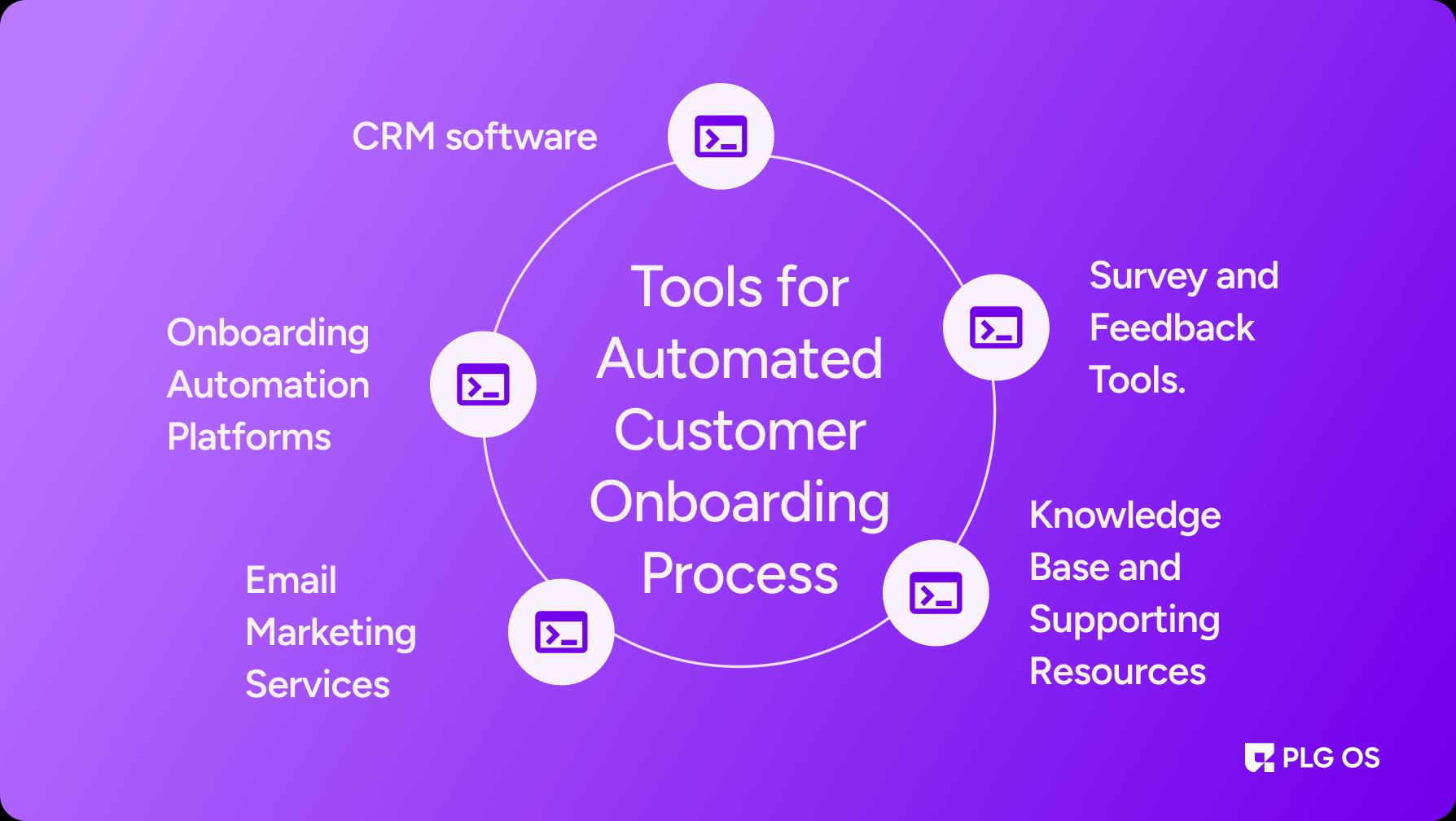
Implementing an effective customer onboarding process is critical for improving the user experience and guaranteeing long-term client retention. Fortunately, a range of tools and resources are available to help streamline the process and increase overall efficiency.
1. Customer Relationship Management (CRM) software
CRM tools like Salesforce, HubSpot, and PLG OS may dramatically improve the onboarding process. These solutions help firms store and manage consumer data, measure interactions, and automate communication. CRM software's customized workflows ensure that new clients receive timely updates and personalized onboarding experiences.
2. Onboarding Automation Platforms
Dedicated customer onboarding automation systems like WalkMe, Userlane, and Whatfix offer interactive training and workflows within apps. These systems assist users in navigating your product successfully, improving their learning experience and eliminating the need for extended support during onboarding.
3. Email Marketing Services
Email marketing technologies such as Mailchimp and SendGrid enable automated contact throughout onboarding. Businesses can create welcome emails, progress reports, and follow-up messages to keep customers informed and interested. This regular communication promotes trust and improves the onboarding process.
4. Survey and Feedback Tools
Collecting customer input is critical to enhancing the onboarding process. SurveyMonkey, Typeform, and Google Forms allow businesses to effortlessly generate and distribute surveys. Gathering feedback from new clients helps identify pain spots and areas for improvement, resulting in a more efficient onboarding process.
5. Knowledge Base and Supporting Resources
Creating a robust knowledge base utilizing systems such as Zendesk or Confluence gives customers self-service help choices. FAQs, articles, and video lessons can help clients locate answers fast, decreasing the need for direct support and improving the onboarding experience.
Final Thoughts: Make Onboarding Effortless
Customer onboarding automation is critical for firms that want to increase efficiency, improve user experience, and build long-term client relationships. Organizations may expedite their onboarding processes by using the correct tools and resources, resulting in timely communication and targeted support. Automating crucial stages of onboarding not only eliminates the possibility of human error, but also ensures that all clients receive a consistent experience.
Automating customer onboarding isn’t just about saving time, it’s about creating a seamless, engaging experience that sets the tone for a long-term customer relationship.
When done right, onboarding automation leads to:
- Happier customers who feel guided and supported.
- Higher retention because users see value quickly.
- More productive teams who focus on meaningful interactions instead of manual tasks.
If you’re still relying on outdated, manual onboarding processes, now is the time to make the shift. Your customers will thank you for it. Book a call with us to start your automation journey today!
If your onboarding runs as an implementation project with the customer's team, see our comparison of customer onboarding software for B2B SaaS. If the slow step is getting the customer's existing data into your product, our list of data onboarding tools covers importers that map and validate their files.
FAQs
1. What is customer onboarding automation?
Customer onboarding automation is the use of digital tools and workflows to streamline the process of welcoming and guiding new customers, reducing manual effort and improving efficiency.
2. What are the key benefits of automating onboarding?
Automation speeds up the process, ensures consistency, reduces workload for teams, lowers churn rates, and provides data-driven insights to improve customer experience.
3. What tools can be used for onboarding automation?
Popular tools include PLG OS, Salesforce, Mailchimp, Userpilot, Intercom, and Zendesk, depending on your specific needs.
4. How can I personalize automated onboarding?
You can segment users based on their industry, role, or goals, send tailored emails, provide interactive product tours, and offer AI-powered chat support.
5. How do I measure the success of my onboarding automation?
Key metrics include time to first activation, drop-off rates, customer engagement levels, and feedback from users on their onboarding experience.