5 Common onboarding challenges [Top effective employee onboarding strategies]
Welcome Aboard! But Wait… Is Your Onboarding Working?
Just picture yourself, all pumped up for your first day on the job. You log in with a sense of excitement, eager to dive in, only to be confused—issues accessing tools, unclear instructions, and no real guidance on what to do next. Frustrating, right? That’s exactly how new users feel when their first interaction with a product is poorly managed.
While this might sound like an employee onboarding nightmare, the same principles apply to customer onboarding. If users face friction, confusion, or a lack of direction from the start, their excitement quickly turns into frustration—and that’s bad news for retention. But here's the good part: onboarding doesn’t have to be overwhelming. With the right strategies, you can transform the customer journey into an engaging, seamless, and empowering experience that sets the tone for long-term success.
Here, are the most common onboarding challenges and effective employee onboarding strategies to enhance your customer engagement.
What are customer onboarding challenges?
New customers can learn more about your product or service and the benefits of working with you through a multi-stage process called customer onboarding. As an added bonus, it makes teamwork easier by letting your customer success team in on what your consumers want and how you can achieve it.
Customers of software as a service (SaaS) companies are usually walked through a long list of steps during the standardized onboarding process that get them up and running with the product. Typically, these activities are customized over a series of steps. An important "a-ha" moment occurs during effective onboarding when users obtain a firm grasp of your product's basics and complete an early-stage objective, demonstrating the software's potential worth.
Naturally, your customer success platform, business specialization, and client base should all inform how you design your onboarding process. Bear in mind that you'll need to intelligently adapt these definitions to your needs in order for them to be beneficial. Consequently, you should be able to locate a client onboarding framework that suits your business by following the following best practices.
Why is customer onboarding important?
As customer experience improves and clients seek better service, an onboarding process becomes standard and expected. Lack of personal calibration with customers can damage your organization irreparably.
72% of business leaders are implementing personalization initiatives without considering customer needs (2023 CX Trends Report). The State of Customer Engagement Report found that 66% of customers will leave if their experience isn't individualized. Business and customer perspectives differ, creating a service gap. A well-planned onboarding experience that emphasizes those elusive customer goals (which even customers don't know) is the easiest approach to fix this.
Here are the benefits of standardized onboarding process:
- Reducing customer churn
- Increasing customer lifetime value
- Freeing up high-touch support issues so CSMs can focus on driving customer outcomes and increasing ROI
- Lowering the number of support requests and escalations
- Reducing the time and resources needed to maintain accounts
- Reducing time spent putting out fires
Top common onboarding challenges in SaaS businesses
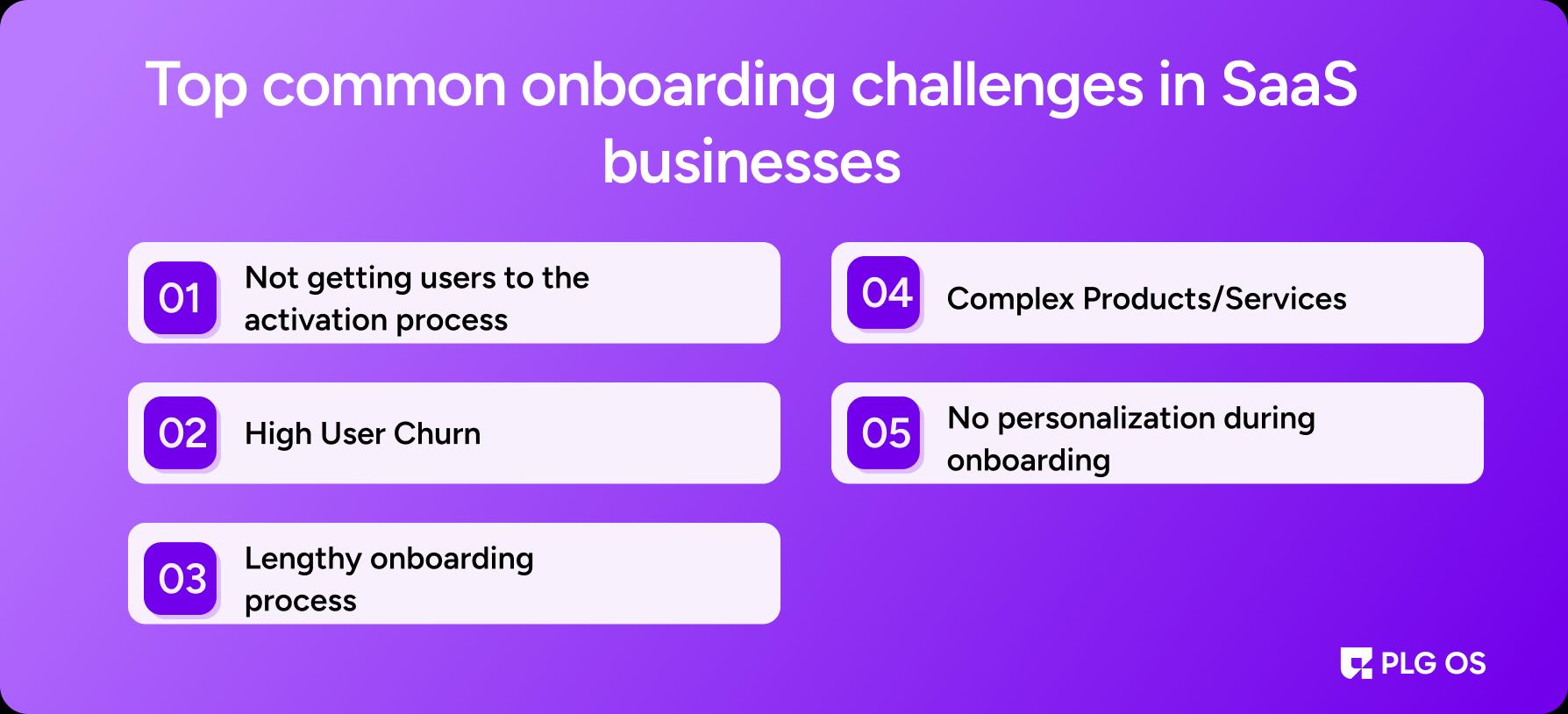
SaaS businesses face common onboarding challenges that can impact employee retention and productivity. Studies suggest the importance of onboarding in employee retention and this can be achieved through solutions to onboarding problems. Let’s see some common onboarding challenges.
1. Not getting users to the activation process
First things first: users aren't going to go through with the onboarding process if they don't feel like they're getting anything out of it.
The ripple effect on income is plain to observe in the following graph. A critical metric for any SaaS, MRR, increases by 34% with a 25% increase in activation.
| Metric | MRR increase after 1 Year if metric increases 25% |
|---|---|
| Acquisition | 25% |
| Activation | 34% |
| Revenue | 25% |
| Retention | 31.07% |
| Referrals | 7.445% |
Source: Fairmarkit
Then why don't users activate their accounts? Several things might play a role:
- Mismatch in expectations. You should meet what users expect.
- A customer's experience can greatly affect their activation. If the user interface is hard to use, it might stop them from getting any benefits.
- If your product doesn’t have a needed feature for your main users, it can seriously hurt its usage.
- Giving users too much detail and making things too complicated. Products should clearly show their value and make it easy for users to benefit from them.
High User Churn
Onboarding also faces the significant problem of churn. Some degree of churn is inevitable, of course. But a significant user churn rate upon activation indicates that something is amiss, and you must investigate the cause.
One common cause is an insufficient match between the product and the market. To get the information you need to make a rational decision, use a basic PMF survey.
Lengthy onboarding process
The sophisticated features of B2B software are usually designed to meet the unique requirements of businesses. Although it may be essential to thoroughly onboard new users to cover all software features, the process might be daunting.
In many cases, business consumers are short on time. Time is money, and busy professionals may not always have it to devote to an extensive onboarding process.
A long onboarding process is a major problem for business-to-business software since it causes users to be frustrated, less engaged, and eventually churn more frequently.
Complex Products/Services
Complex product/service is another common onboarding challenge. It might be challenging for service representatives to adequately communicate the features and benefits of a complex product or service to consumers during onboarding.
Create a feedback loop that your clients may continue to use when they are onboard to reduce confusion. If they are able to articulate their problems in detail, your team will have a wealth of information to work with.
Expert Advice: Show freshly onboarded consumers live demonstration films of your product in action. Not only will it be useful for them to have access to as they gain experience, but it can also assist them understand tools that appear complicated.
No personalization during onboarding
One common error that many SaaS companies do is that they do not personalize the onboarding process.
When people download their apps from various PLG companies, they are asked to provide personal information. Most of the time, they do this to learn more about their target demographics, but they don't really use this information within the app.
After registering and watching the onboarding of 1,000 users, research revealed:
- In terms of industry, role, use-case, or aims, 52% of SaaS startups failed to capitalize.
- Just 35% of tools really asked users to set goals and then used that data to make their experience more tailored to them.
How to overcome customer onboarding challenges
A standardized onboarding process guarantees clarity and engagement is the first step in overcoming client onboarding issues. Build trust by tailoring the journey to the individual, giving them clear directions, and being there for them when they need it.
The importance of onboarding in employee retention applies to customers too. Effective employee onboarding strategies create lasting relationships, reduce churn, and enhance satisfaction, setting the foundation for long-term success.
Create contextual onboarding experiences for different user types
Not everyone will use your product the same way. The challenges your new user needs to address will determine which features are appealing. Trying to establish a general onboarding method can hinder true interactions.
Instead, contextual onboarding can deliver user-type-specific prompts, checklists, and platform instructions.
Canva segments new users and provides contextual onboarding with welcome surveys:
Canva can make personalized recommendations once the new user chooses the profile that matches their description. Its guided tours can assist them start their first project with feature walkthroughs suited to that use case.
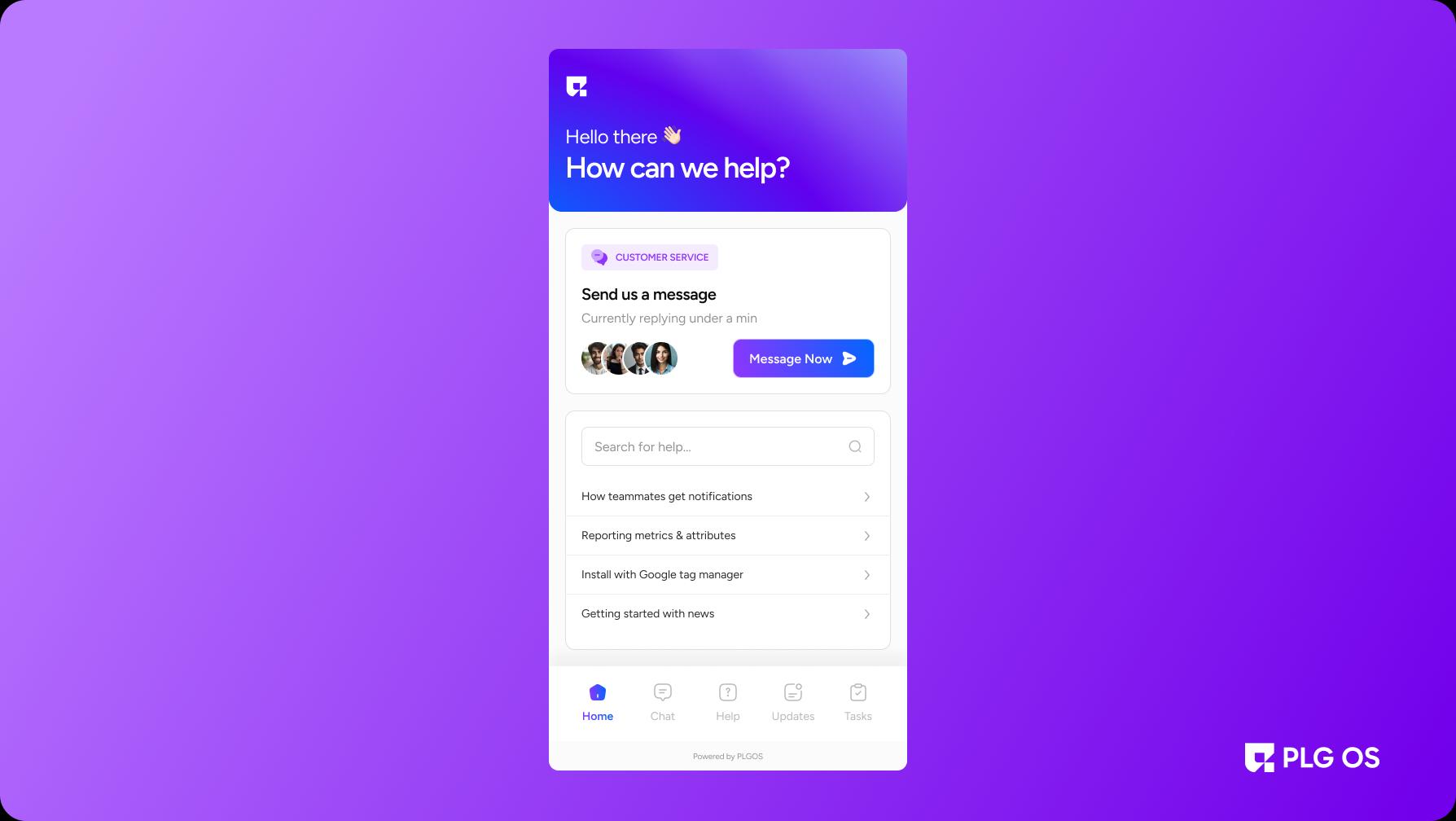
Product teams may utilize a digital adoption platform like PLG OS to develop contextual onboarding flows for specific user cohorts to deliver personalized, outcome-driven experiences that help users discover your product's value, overcome learning curves, and generate business outcomes.
Help users discover relevant features with in-app messaging
There is a significant time and energy investment required to build and release a new feature. Users must be aware of their location and usage for them to be of any use to you.
Keep in mind that your product is being used by your customers to complete a task.
They'll use the elements that are essential for accomplishing their goals. You, as the product manager, are responsible for assisting them in this endeavor by drawing their attention to the appropriate features.
This shouldn't be done at random; rather, you should use segmentation to learn about the unique needs of different user groups so that you can tailor your feature recommendations to them.
For example: PLG OS provides chatbot solutions to help new users navigate difficulties in their user onboarding journey.
Providing feedback during onboarding
Imagine beginning a new job with absolutely no communication whatsoever, no feedback, no check-ins, and nothing but guessing. Difficult, isn't it? The key to success is providing frequent feedback during the onboarding process.
Assuring and guiding new employees is crucial. A quick “You’re doing great!” or “Here’s how you can improve” boosts confidence and engagement. Make feedback timely, constructive, and two-way—let them share their thoughts too!
Confusion into clarity and doubt into motivation, all it takes is a simple check-in. When employees are made to feel valued and appreciated right from the start, they are more inclined to remain, advance, and succeed. Are you prepared to provide a wow-worthy onboarding experience?
The Future of Onboarding: Trends & Innovations
Gone are the days of boring PDFs and endless HR forms. The future of onboarding is smarter, faster, and way more engaging!
AI-Powered Onboarding Assistants:
Imagine having a 24/7 virtual buddy guiding new hires through training, answering FAQs, and personalizing their learning journey.
Gamification & Interactive Learning:
Think onboarding quests, leaderboards, and rewards that make learning fun instead of a snooze-fest.
Virtual Reality (VR) Experiences:
A remote hire can “walk” through the office, meet their team, and experience company culture—all from their couch!
Automated & Adaptive Onboarding:
No more one-size-fits-all. Smart systems tailor onboarding based on role, experience, and learning speed.
Onboarding isn’t just about getting started, it’s about creating an exciting, memorable, and seamless journey. The future is here, and it’s game-changing! Tools like PLG OS can help you in making your onboarding journey easier.
Key Takeaway
An organized onboarding process is more than a formality; it is the bedrock of a successful employee relationship. Greater productivity, employee engagement, and retention are the results of an organization's investment in the onboarding process. Users are more likely to remain, advance, and make significant contributions when they are accepted, encouraged, and given the resources they need to succeed.
Then why sit around? Use what you've learned and go out into the world!
Want to build product experiences code-free? Book a demo call with our team and get started!
FAQs
Why is onboarding important for new employees?
Onboarding sets the foundation for success by helping new hires feel welcomed, informed, and prepared to excel in their roles.
How can I prevent information overload during onboarding?
Break down the onboarding process into smaller, manageable chunks and pace the delivery of information over a few weeks.
What role does feedback play in onboarding?
Regular feedback helps new hires understand their progress, clarify expectations, and feel supported, ensuring they stay engaged and confident.
Can technology improve the onboarding experience?
Absolutely! Tools like AI assistants, gamification, and virtual reality can make onboarding more interactive, efficient, and personalized.
How does a strong onboarding process impact employee retention?
A structured, engaging onboarding experience fosters connection, reduces turnover, and increases job satisfaction, leading to better retention.