Common Challenges in Gamification Onboarding for SaaS (and How to Overcome Them)
Gamification in SaaS onboarding sounds like a magic bullet—add points, badges, leaderboards, and voilà, engaged users! But in reality, it's not that simple. While gamification can be a powerful tool to boost user engagement, retention, and learning, it comes with its own set of challenges.
From users feeling overwhelmed to companies struggling to balance fun with functionality, gamification in onboarding can sometimes backfire if not done right. The global gamification market is expected to demonstrate a CAGR of 12.9% between 2021-2025. Let us see some of the most common challenges SaaS companies face when implementing gamified onboarding and how to solve them.
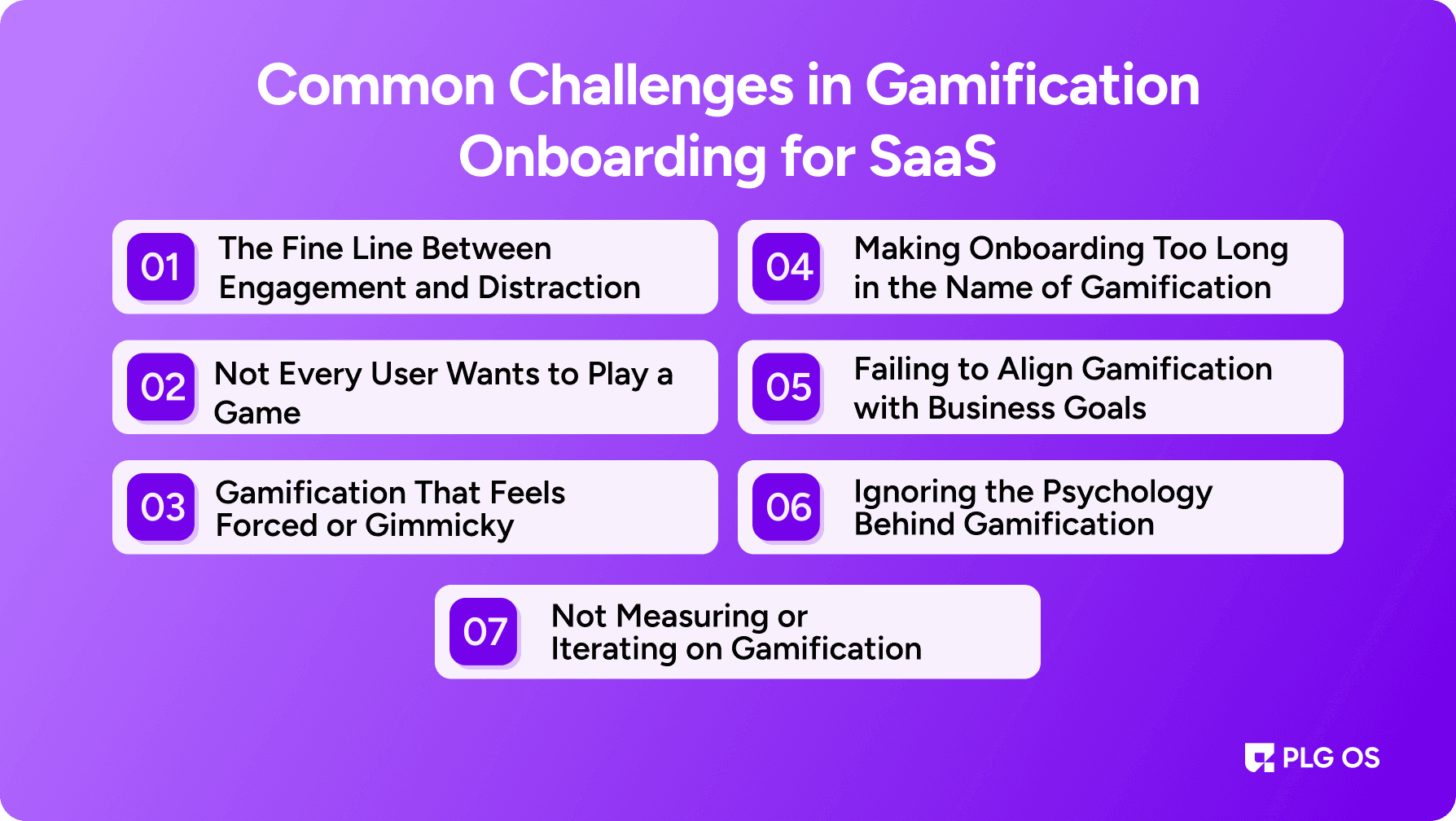
1. The Fine Line Between Engagement and Distraction
Gamification should enhance onboarding, not hijack it. A common mistake SaaS companies make is going overboard with game mechanics—so much so that users get lost in the "game" and forget why they signed up in the first place.
The Problem
Too many flashy elements—badges popping up every second, excessive animations, or an overwhelming number of levels—can be distracting rather than helpful. Users may start engaging with gamified elements without actually learning how to use the product.
The Solution
Keep it simple. The best gamified experiences guide users towards the right behaviors, not just any behaviors. Focus on key actions that help users get value from your product. For example, instead of awarding points for every click, reward users when they complete meaningful steps, like setting up their profile or integrating your tool with their existing workflow.
Example: Slack's onboarding doesn’t bombard users with too many gamification elements. Instead, it subtly guides them with friendly messages and small celebratory moments when they complete important setup steps.
2. Not Every User Wants to Play a Game
Gamification assumes that users enjoy earning points, unlocking achievements, and competing on leaderboards. But guess what? Not everyone cares about these things.
The Problem
Different users have different motivations. Some might love competition, while others prefer a more straightforward, step-by-step learning process. Over-relying on gamification can alienate users who find it unnecessary or even annoying.
The Solution
Make gamification optional or customizable. Instead of forcing every user into the same gamified onboarding flow, allow them to choose how they want to proceed. For example:
- Offer a "guided walkthrough" for users who prefer a structured approach.
- Provide "challenges" and "badges" for users who enjoy gamification.
- Allow users to opt out of gamification entirely if they prefer a no-frills experience.
Example: Duolingo offers gamification elements like streaks, leaderboards, and badges, but users can still progress at their own pace without engaging in these features.
3. Gamification That Feels Forced or Gimmicky
Ever used a product where the gamification just felt… unnecessary? Like getting a "Beginner Badge" for simply logging in? That’s forced gamification.
The Problem
If gamification doesn’t feel natural or valuable, users will see right through it. Instead of motivating them, it can come across as a cheap trick to make an otherwise boring process seem fun.
The Solution
Gamify the right things, actions that are actually beneficial for the user. Instead of giving out random points and badges, focus on rewarding progress in a meaningful way.
Do this:
- Reward users for completing core onboarding tasks that will help them succeed with your product.
- Use progress tracking to show users how close they are to achieving key milestones.
- Provide real incentives, like unlocking advanced features or gaining access to exclusive content.
Don’t do this:
- Award points just for clicking random buttons.
- Overuse animations that don’t add value.
- Create leaderboards for things that don’t matter.
Example: Trello keeps its gamification simple. As users complete onboarding tasks, they see immediate progress in their workflow, making learning the tool rewarding without unnecessary gimmicks.
4. Making Onboarding Too Long in the Name of Gamification
Nobody signs up for a SaaS product hoping to spend an hour “unlocking levels” just to learn how to use it.
The Problem
Some companies get so caught up in creating an elaborate gamified experience that onboarding becomes too long and tedious. Users just want to get started, but instead, they’re stuck earning meaningless achievements before they can actually use the product.
The Solution
Make gamification support onboarding, not slow it down. Break onboarding into bite-sized, interactive experiences that users can complete quickly.
- Use progress bars instead of long "quests."
- Offer skip buttons for experienced users who don’t need hand-holding.
- Focus on quick wins—let users experience value within minutes.
Example: Notion allows users to explore the tool at their own pace while offering subtle gamified elements (like checklists) that make learning feel rewarding without dragging out the process.
5. Failing to Align Gamification with Business Goals
Gamification should drive users toward valuable actions, like setting up their account, inviting team members, or integrating with other tools.
The Problem
If the gamification elements aren’t aligned with business goals, they can create a disconnect. Users may engage with game mechanics without actually progressing toward retention-driving behaviors.
The Solution
Tie gamification to meaningful milestones that impact both the user and the business.
- Instead of rewarding users for simply logging in, reward them for completing key actions like setting up integrations or using the product in a real scenario.
- Use progress tracking to encourage users to complete their profile, invite teammates, or explore key features.
Example: Asana uses task completion streaks and project milestones to encourage continued engagement—actions that benefit both users and the company.
6. Ignoring the Psychology Behind Gamification
Good gamification is based on behavioral psychology. If you don’t understand what actually motivates users, you risk designing a system that falls flat.
The Problem
Many SaaS companies throw in gamified elements without considering why users should care. Simply adding badges or points won’t automatically make onboarding effective.
The Solution
Leverage proven psychological principles:
- Progress and completion bias – People are more likely to finish tasks when they see how close they are to completion (e.g., progress bars).
- Loss aversion – Users are motivated to avoid losing something they’ve earned (e.g., streaks, exclusive rewards).
- Social proof – People like to see what others are doing (e.g., showing how many users have completed an onboarding step).
Example: LinkedIn’s profile completion bar taps into progress bias, encouraging users to finish filling out their profiles.
7. Not Measuring or Iterating on Gamification
Gamification isn’t a set-it-and-forget-it strategy. If you’re not tracking how users interact with it, you won’t know if it’s working.
The Problem
Many SaaS companies implement gamification without analyzing whether it’s driving meaningful engagement. If users are ignoring it or finding it frustrating, it’s a wasted effort.
The Solution
Track key metrics to see if gamification is helping or hurting your onboarding process:
- Completion rates – Are users actually finishing onboarding?
- Time to first value (TTFV) – How quickly are users reaching the “aha” moment?
- Drop-off rates – Are users abandoning onboarding at certain stages?
- Feature adoption – Are gamified elements leading users to explore and adopt key features?
Use A/B testing to experiment with different gamification strategies and optimize based on user behavior.
Example: Duolingo continuously tests and tweaks its gamification mechanics to keep users engaged while ensuring learning remains the priority.
How PLG OS Can Help with Gamification Elements
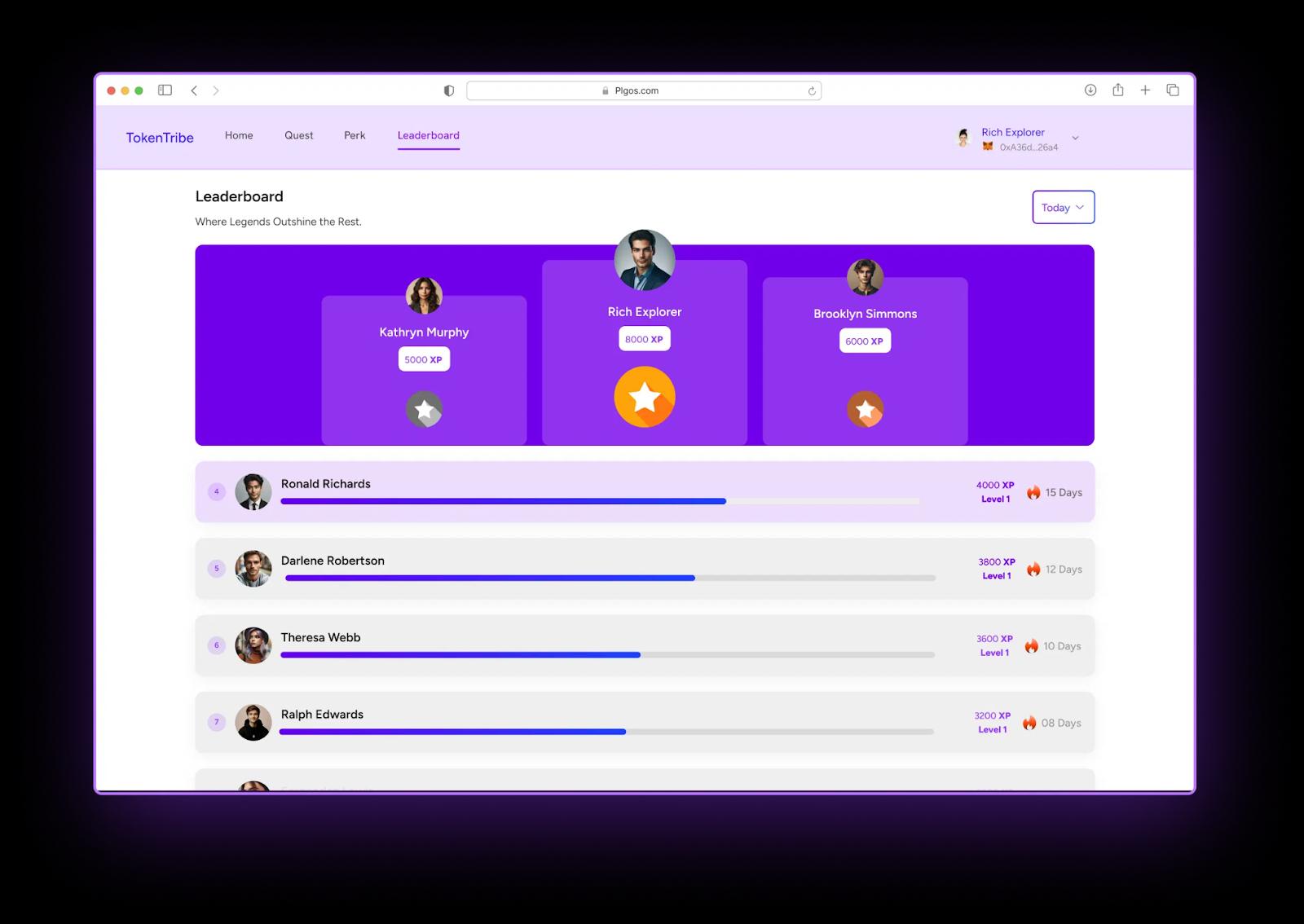
If implementing effective gamification feels overwhelming, PLG OS can provide the structured framework you need. PLG OS is built to help SaaS companies drive Product-Led Growth (PLG) by optimizing onboarding experiences and user engagement through intelligent workflows and gamified elements.
1. Seamless Gamification Integration
PLG OS allows you to add gamification mechanics—such as progress tracking, achievement badges, and rewards—without disrupting the core onboarding experience. It ensures that gamification feels natural rather than forced.
2. Data-Driven Gamification Strategies
Instead of guessing what works, PLG OS provides data insights to optimize gamification elements based on user engagement. You can track how different users interact with onboarding steps and adjust gamification elements accordingly.
3. Personalization for Different User Types
Not all users are motivated by the same gamification techniques. PLG OS helps you segment users and offer personalized onboarding experiences, ensuring that those who enjoy gamification engage with it while others can follow a more direct onboarding flow.
4. Optimized Time-to-Value (TTV)
With intelligent onboarding workflows, PLG OS ensures that gamification enhances rather than hinders user activation. Features like interactive walkthroughs, guided tutorials, and milestone-based rewards help users experience value faster.
Final Thoughts
Gamification can be a powerful onboarding tool—if done right. The key is to keep it purpose-driven, user-centric, and aligned with business goals. Avoid unnecessary distractions, focus on meaningful engagement, and continuously optimize based on user behavior.
With platforms like PLG OS, you can take the guesswork out of gamification, ensuring that your SaaS onboarding not only delights users but also drives long-term product adoption and retention.
Want to level up your onboarding with smart gamification? Start your journey today by booking a call with us!
FAQs
1. How does gamification improve SaaS onboarding?
Gamification makes onboarding more engaging by using elements like progress bars, badges, and rewards to encourage users to complete key actions, reducing drop-off rates and improving feature adoption.
2. What are common mistakes in gamified onboarding?
Overloading users with too many game mechanics, making onboarding too long, using forced or gimmicky rewards, and failing to align gamification with user goals are common pitfalls.
3. How can I make gamification appeal to all users?
Offer personalized onboarding experiences—some users enjoy gamification, while others prefer a straightforward approach. Let them choose between interactive tutorials, guided walkthroughs, or challenge-based progress.
4. How do I measure if gamification is working?
Track metrics like onboarding completion rates, time to first value (TTFV), user engagement with gamified elements, and feature adoption to assess effectiveness. A/B testing can help refine the approach.
5. How can PLG OS help with gamified onboarding?
PLG OS provides data-driven onboarding workflows, smart gamification integration, and A/B testing capabilities to ensure gamification enhances user activation without being a distraction.