From clicks to quests (5 Gamification strategies for user engagement)
Want to make your users stick around longer and keep them coming back for more? Let’s see the magic of gamification.
It's not only about adding fun things; it's about understanding what motivates people: competition, prizes, and progress. Whether you're creating an app, designing a website, or managing a business, using gamification can help increase participation. Gamification isn’t just for video games anymore—it’s a powerful tool for reshaping how brands and businesses connect with their audience.
Get ready! We will discuss how gamification can boost user involvement, how to implement it, and the best tips to follow.
What is Gamification Saas?
The gamification industry is projected to have an astounding 27.99% growth, reaching a staggering $123.87 billion by 2030. But why has gamification grown so popular in fields like education, marketing, business, and SaaS UX/UI design?
So, what is gamification?
"Gamification" refers, in its simplest form, to enhancing non-game products and services with game mechanics and design aspects.
Compelling players to accomplish objectives aligning with their personal and internal drives keeps them hooked to the game. By studying what motivates consumers to take action and providing them with features like point systems, badges, or even fundamental progress indicators, gamification brings this same concept to non-game products. The result is an engaging product that consumers can't get enough of.
Gamification in software as a service (SaaS) is a way to keep users interested and make them want to use the product again and again. Customer engagement systems incorporate gaming mechanics like levels, medals, checklists, and leaderboards to keep customers returning for more.
Examples of early gamification methods include McDonald's Monopoly, frequent flyer miles, and loyalty stamp cards. Astute marketers saw the potential of this approach long before digital became the norm.
For example, Starbucks
Customers can earn redeemable points for "free" food and drinks through Starbucks' gamified rewards program for quite some time. Customers are guaranteed to keep returning to Starbucks because of the rewards program, which makes the price of a coffee more manageable.
Why does gamification SaaS matter?
There are benefits to gamification on digital platforms. You might wonder, "If it's so great, why don't more people do it?" As we've discussed, some digital goods don't work well. Implementing the best gamification strategies for user engagement can also double as effective gamification strategies for clients, driving both retention and satisfaction.
Some tools, especially those very serious and consequential, prefer not to use gaming to keep users engaged. This applies to both their user base and their approach to customer success.
It can create confusion in a tool that usually works well.
But if your product:
- Has a relaxed group of users who have daily jobs.
- Is used by a team or individuals who can fight against one another.
- Could use a bit more fun in the training process.
You must start gamifying your SaaS program. Now, let's discuss the reasons behind this.
There are three key reasons why any product that meets the conditions should start using gamification:
1. Gamification increases customer involvement
First and foremost, gamification in SaaS helps to boost user involvement. Adding fun features to non-game settings brings in new users and keeps current ones engaged with the product.
2. Gamification encourages users
Gamification motivates users by giving rewards, keeping track of scores, and sending messages like ‘Congrats!’ This pushes them to work harder and find out what happens next.
Gamification encourages curiosity, growth, and purpose, allowing for positive reinforcement.
3. Gamification encourages competition
You likely already know this:
People usually work better when there is friendly competition.
This happens because people become creative and focus more when they are trying to win an involved game against others.
Gaming features like leaderboards, high scores, runs, and updates motivate users by making the experience fun and engaging, helping them achieve more.
Different types of Gamification Methods
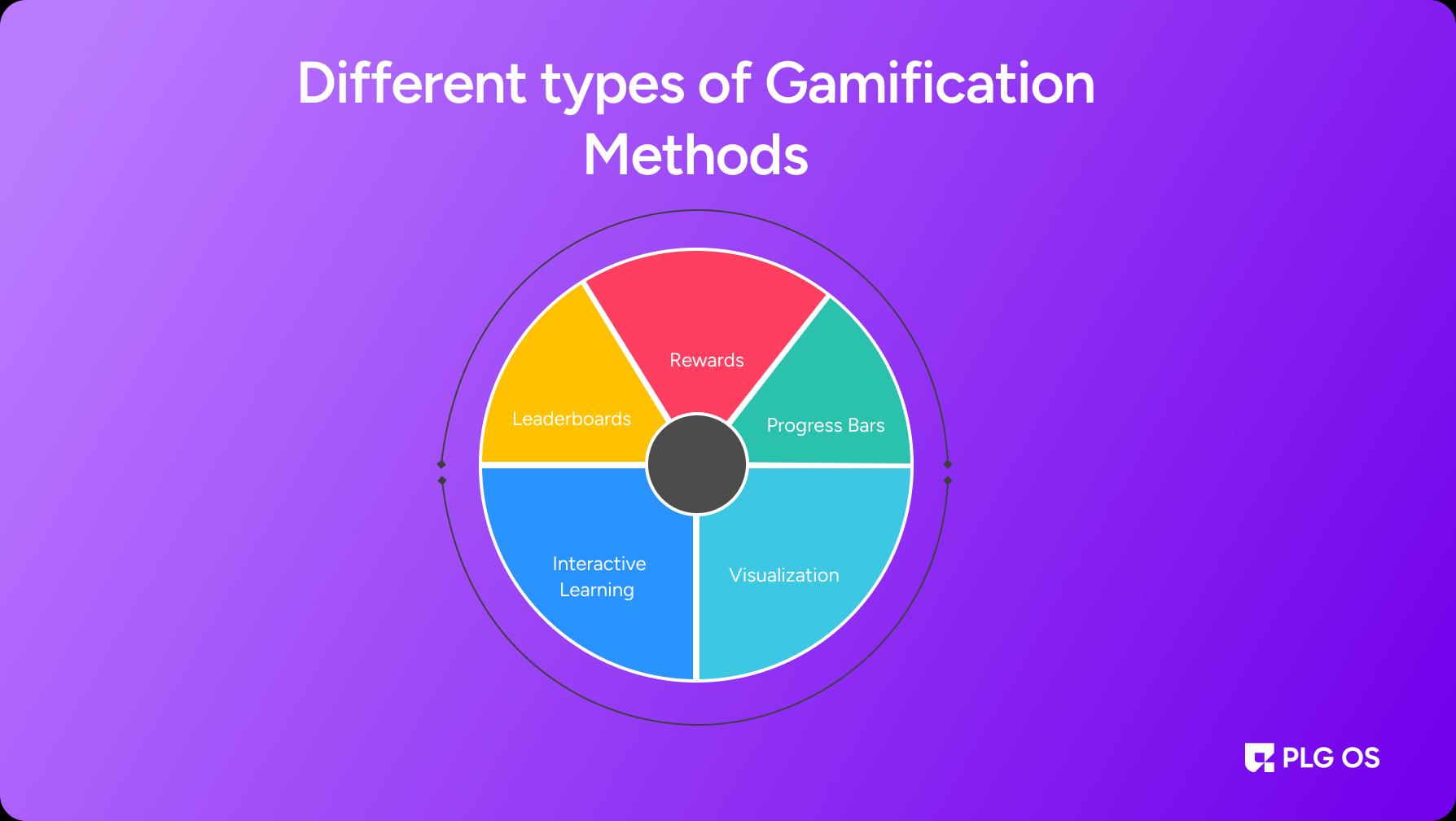
Businesses employ various game mechanics to increase product success and user engagement while developing SaaS products. They may improve the experience and make their product more engaging for users by including these gaming features.
The following are examples of popular gamification tools:
- Leaderboards
- Progress Bars
- Rewards, Incentives, and Recognition
- Interactive Learning
- Visualization
Let's examine these strategies in greater detail to see how prominent SaaS companies implement them on their platform.
How Gamification Transforms the SaaS Customer Experience
Hubspot offers a comprehensive list of certification programs for all users called Hubspot Academy. Staff members can gain marketable skills in various areas through certification programs, including software, content marketing, sales enablement, email marketing, and more. These credentials can help your team members succeed by expanding their knowledge and skill sets.
Badges are a great way for Hubspot to show that you've finished their certification programs. A badge and certification will be awarded for each completed course and quiz. They may show off their achievements on social media, brag about it in Slack groups, and even show it off to their bosses thanks to these badges. This public acknowledgment cultivates a feeling of pride and inspiration.
PLG OS: Inspiring Better Performance and Positive Culture with Gamification Culture
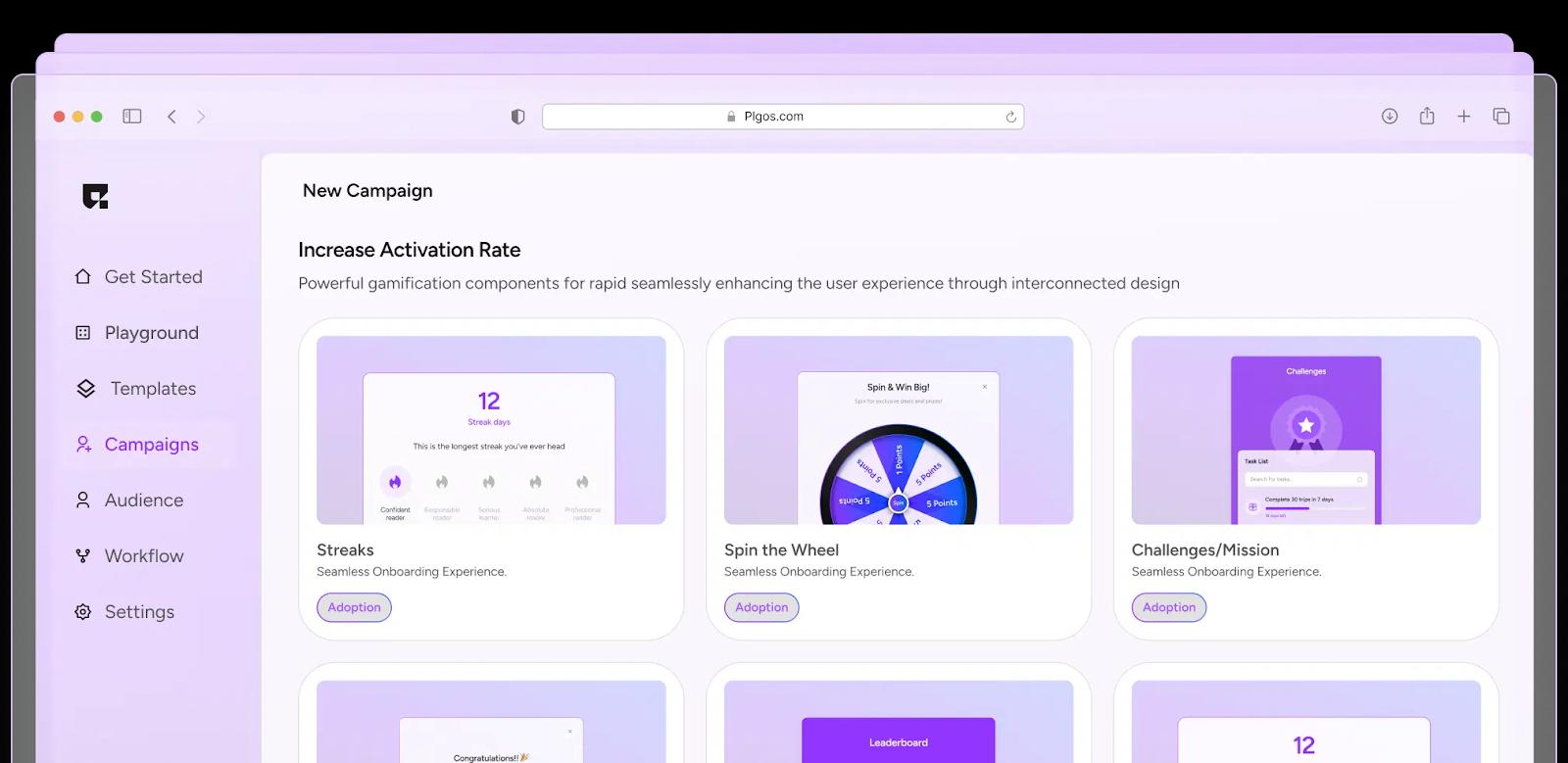
Saas gamification platforms like PLG OS may do wonders for morale and productivity in the office. A complete gamification platform, PLG OS uses a mix of leaderboards, recognition, and rewards to increase data transparency and performance while motivating staff to surpass their goals exponentially.
Apt for software as a service, PLG OS's contests and associated leaderboards let users concentrate on reaching the goal while keeping an eye on the top and bottom scorers. Together, these factors create an atmosphere of friendly rivalry amongst teammates and a feeling of urgency to reach the goal.
In addition, the team has something to work for, thanks to the automated achievement celebrations and badges! For instance, the team will inform everyone on social media about the player responsible for winning a new deal.
Staff members feel more valued and appreciated when their efforts are publicly acknowledged with milestones, user growth, and accomplishments.
What are some gamification strategies for user engagement?
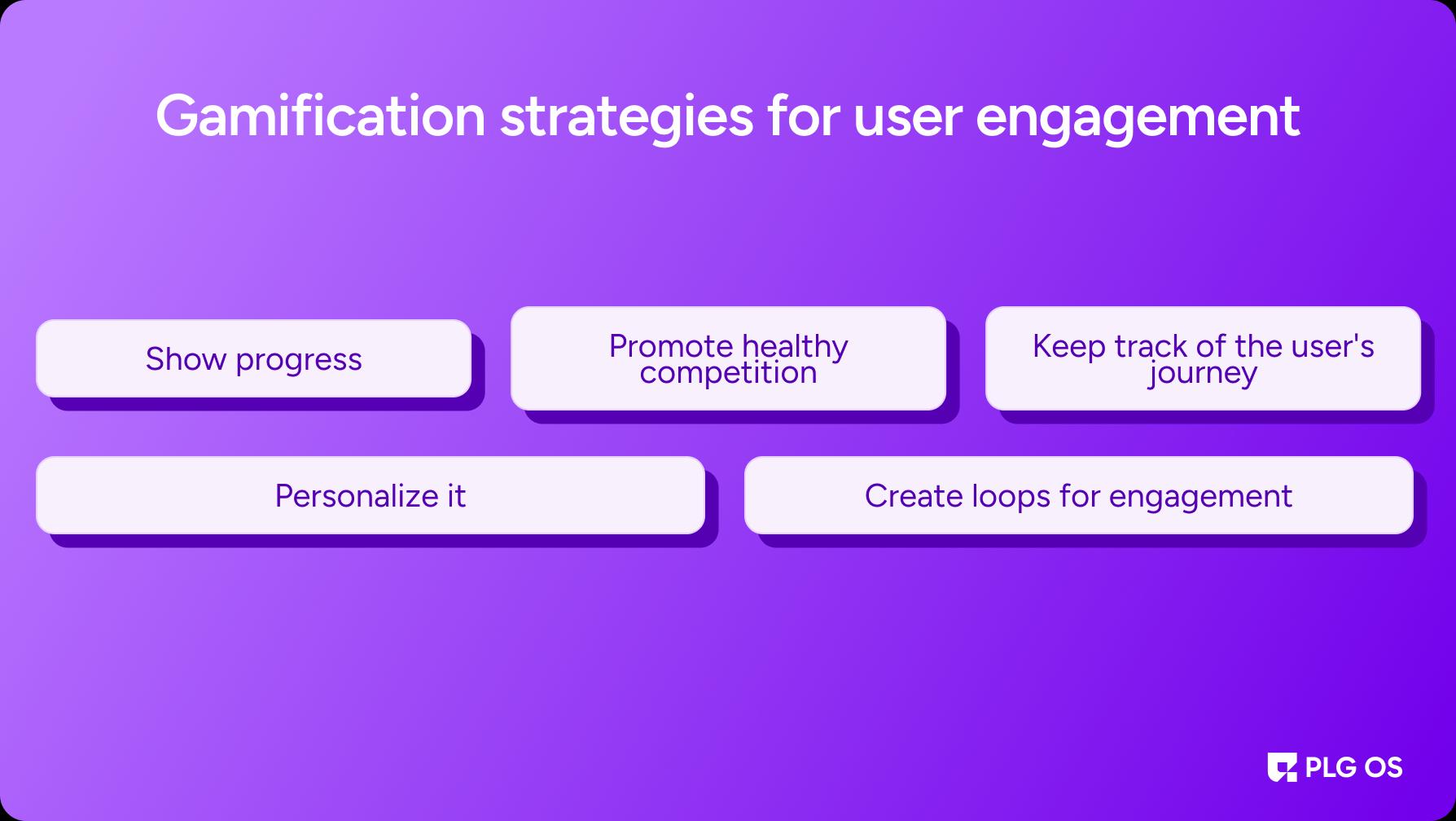
Implementing gamification on websites is beneficial. But what is the secret to effectively incorporating gaming elements? Let's examine how other SaaS firms have implemented gamification strategies and benefit from their examples.
1. Show progress
Every one of us has a fundamental need to feel that our lives are getting better. Earlier, we covered how this might be represented using various visual aids such as progress bars, checklists, and leveling systems.
By doing so, you can urge continual involvement by communicating the user's progress and the tasks that still need to be completed.
Example: FullStory
The setup flow of FullStory is top-notch. The user will not be overwhelmed as it walks them through each step of the process. The user interface makes it easy to see the progress the user has made and the remaining time to begin using the program.
2. Promote healthy competition
The power of healthy rivalry to propel oneself forward is well-known. One way to encourage active participation and boost customer loyalty is to display points, badges, and leaderboards in gamification.
In addition to encouraging participation, this method fosters an exciting and interesting group of people to hang out with.
Example: Reddit
As users engage more with Reddit groups and receive more positive comments, they can level up and earn badges that represent their achievements. Because of this, Reddit has become such a popular platform, and users even engage in activities like farming karma points and collecting badges to show off.
3. Keep track of the user's journey
An extra dose of warmth and positive feelings, like celebrating a user's milestone, can make your platform more engaging.
You need to know the user's journey state and the exact touchpoint to add celebrations for onboarding completion, interactive flows for feature adoption, or rewards for customer retention.
Because it gives an intuitive map for determining when the best time to gamify the experience is, user journey mapping is essential for determining the most successful touchpoints for gamification.
Example: Kontentino
Upon successfully completing the onboarding process, Kontentino will send you a celebratory letter and instruct you on how to write a blog post, which will increase product adoption.
4. Personalize it
Customization enhances the value, particularly when it comes to gamification.
According to Richard Bartle, researcher at the University of Essex, there are four types of gamers (and can hugely influence your gamification strategies):
Killers:
Who are competitive and want to outdo everyone.
Achievers:
Who follow personal goals and want to optimize their performance.
Explorers:
They’re always trying to learn every aspect of the game.
Socializers:
Don’t care as much about the tasks or goals as socializing with others (e.g., sharing on social media platforms).
Example: Stripo
After new users finish the tutorial, Stripo sends them an invitation to join up and have access to their template library, which makes them feel valued and encourages them to continue.
5. Create loops for engagement
To keep users engaged, an engagement loop can be defined as an experience that prompts them to do something and then keeps rewarding them for doing it.
One method of gamification is to incentivize users to repeat an action by paying them with points or trophies whenever they complete it.
Example: Facebook
An outstanding illustration of this is Facebook's "top fan" badges to incentivize people to interact with certain pages. More people may feel pressured to engage with postings and like them to be recognized as a "top fan" because of this.
How does PLG OS gamification help your business?
PLG OS use game-like features to increase user involvement and speed up growth. PLG OS adds game-like features to make using the product more enjoyable and engaging. This helps keep users coming back and encourages them to use it more quickly.
Main Features of PLG OS Gamification:
Progress Bars & Milestones:
Users can see their progress with bars or milestones, which help them feel successful as they hit new stages in their journey.
Rewards and badges:
Rewards and badges motivate users to keep using the product by recognizing achievements like finishing training, meeting goals, or sharing with others.
Challenges & Leaderboards:
Adding friendly competition like leaderboards or team challenges motivates users to put in extra effort and strive for the top position, making the experience more enjoyable.
Personalized Quests:
PLG OS gives users custom tasks based on their actions, making the experience fun and pushing them to keep exploring.
Why does it work?
Gamification takes advantage of our enjoyment of making progress, competing, and being recognized. PLG OS uses psychology to make boring chores feel like a game. This helps keep users loyal, boost conversions, and increase usage.
Key Takeaway
Incorporating gamification tactics into your business strategy goes beyond simply making work more enjoyable. It can improve customer engagement, satisfaction, and retention, which leads to your company's growth.
Gamification strategies, including as leaderboards, personalized experiences, and engagement loops, make the journey more pleasurable and rewarding for users of gamification SaaS platforms.
Ready to turn users into loyal fans? Supercharge your product with PLG OS gamification and watch engagement skyrocket!
FAQs
1. What is gamification?
Gamification is using game-like elements (e.g., points, rewards, challenges) in non-game contexts to engage users and motivate them to take specific actions.
2. How does gamification increase user engagement?
It taps into users' natural desire for rewards, progress tracking, and competition, making their experience more interactive and enjoyable.
3. Can gamification be used in any industry?
Yes! Gamification is widely used in industries like fitness, education, retail, social media, and more to boost user interaction.
4. What are standard gamification features?
Points, badges, leaderboards, challenges, rewards, and progress bars are common features used in gamification strategies.
5. Does gamification improve retention rates?
Yes! Gamification encourages frequent engagement, improving retention and fostering long-term user loyalty.