6 Gamification Strategies to Boost SaaS User Engagement
Ever wondered why users can’t stop scrolling, tapping, or coming back to certain apps? It’s not magic. It’s a smart design powered by game mechanics. From Duolingo’s streaks to Fitbit’s badges, the most engaging apps use gamification to turn ordinary actions into addictive experiences. And here’s the good news: you don’t need to build a game to make your app feel like one. With the right strategy and the right tools like PLG OS, you can boost retention, drive engagement, and keep users hooked. Let’s dive into the 6 game strategies that can transform your product from functional to irresistible.
Why Game Mechanics Matter More Than You Think
89% of people say a gamified system makes them feel more productive and motivated. Gamificationstrategies are essential engagement tools in this environment. They're rooted in behavioral psychology and designed to
- Trigger reward responses
- Encourage repetition
- Drive emotional connection
- Build a loop of progress, challenge, and achievement
This is why the best apps feel like games, even if they’re not.
If you don't utilize app gamification techniques, you risk losing out on user retention, lifetime value, and product growth. Motivating users through well-designed loyalty programs creates a sense of progress, purpose, and excitement. In a fitness app, for instance, allowing users to earn rewards for daily goals not only improves customer experience but significantly increases engagement and long-term retention.
Game Mechanic #1: The Progression Loop
“You’re 87% towards your next badge.”
That little line of copy is deceptively powerful. It’s tapping into the progression loop, a core mechanic in games that gives users a sense of advancement.
Why it Works
We’re hardwired to complete tasks and chase closure. When you show users that they’re close to the finish line, they’ll often take that extra step, even if they weren’t planning to.
How to Use It
- Visualize progress bars, levels, or achievements
- Break down onboarding into stages and show completion
- Unlock new features as users level up
PLG OS in Action
With PLG OS, you can design data-driven onboarding and activation journeys that show real-time progress — triggering nudges, tooltips, or checklists based on user actions. You don’t need to guess where drop-offs are happening; PLG OS pinpoints them and lets you build loops that pull users back in.
Game Mechanic #2: Variable Rewards
“Sometimes you get 10 points. Sometimes you unlock a surprise feature. You never know.”
This unpredictability keeps people coming back. Companies using gamification improve customer retention by up to 27%.
Why it Works
Coined by psychologist B.F. Skinner, variable rewards are at the heart of addictive behaviors — from slot machines to social media likes.
When users don’t know what they’ll get, they keep playing. It creates a loop of curiosity, surprise, and dopamine.
How to Use It
- Introduce surprise perks (e.g. “You’ve unlocked a mystery box!”)
- Offer randomized discounts, badges, or content
- Rotate weekly challenges or limited-time events
PLG OS in Action
Use PLG OS’s segmentation engine to deliver personalized, variable rewards. Trigger rewards based on behavior, not guesswork. This ensures that every surprise feels tailor-made for your user, boosting retention and emotional investment.
Game Mechanic #3: Leaderboards and Social Proof
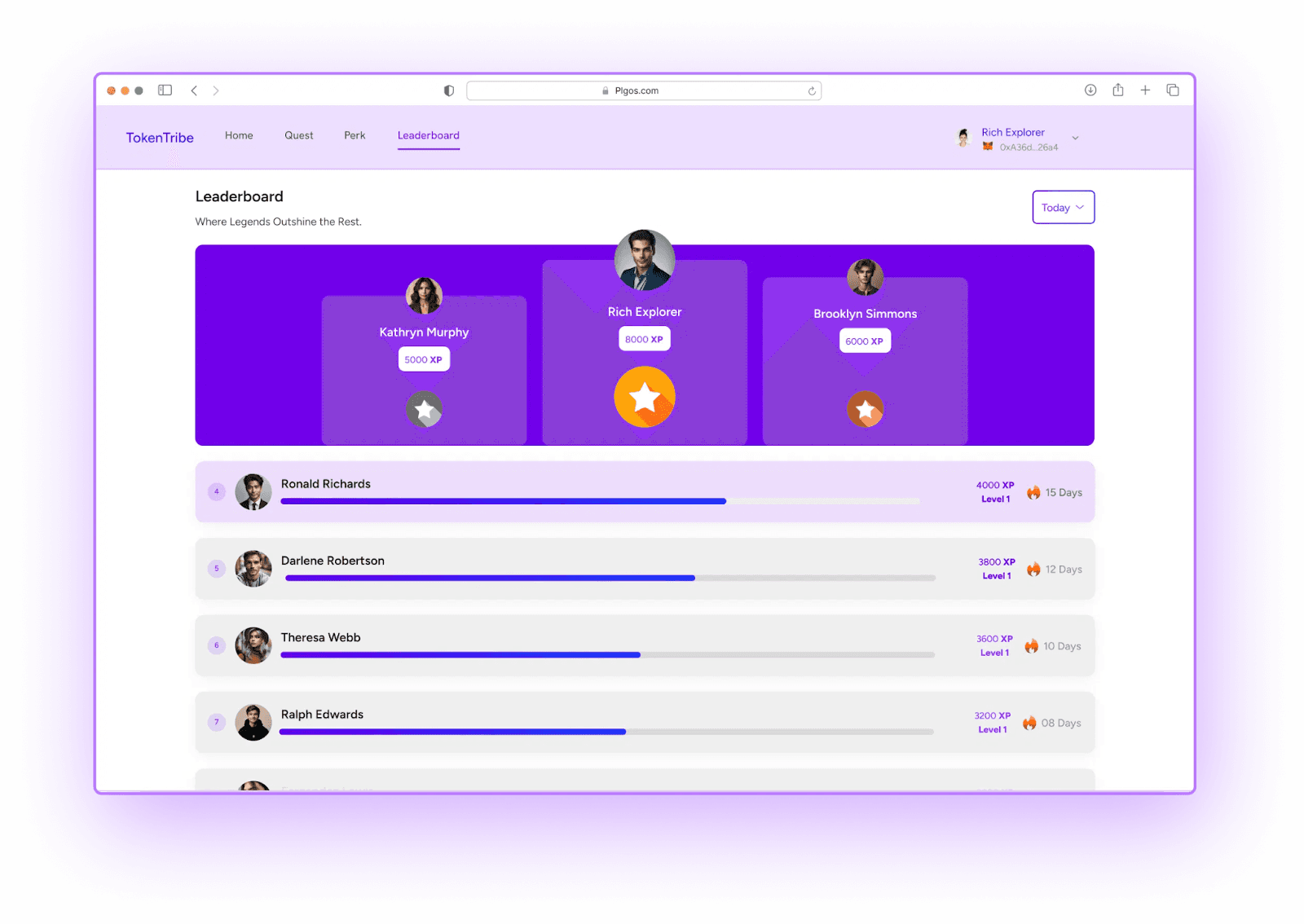
“You’re ranked #8 among your peers this week. Beat them by completing one more task!”
Humans are social creatures. We crave recognition — and sometimes, a little competition.
Why it Works
Leaderboards tap into status-driven motivation. When users see others achieving something, they either want to join the success or beat the leaderboard.
It’s one of the oldest yet most effective engagement strategies for apps.
How to Use It
- Create weekly or monthly leaderboards
- Let users see progress of peers in public communities
- Add achievement badges users can show off
PLG OS in Action
With PLG OS, you can integrate achievement systems and community-driven growth loops that amplify social proof. Show your users that others are active and thriving — and they’ll want in.
Game Mechanic #4: Daily Quests and Habits
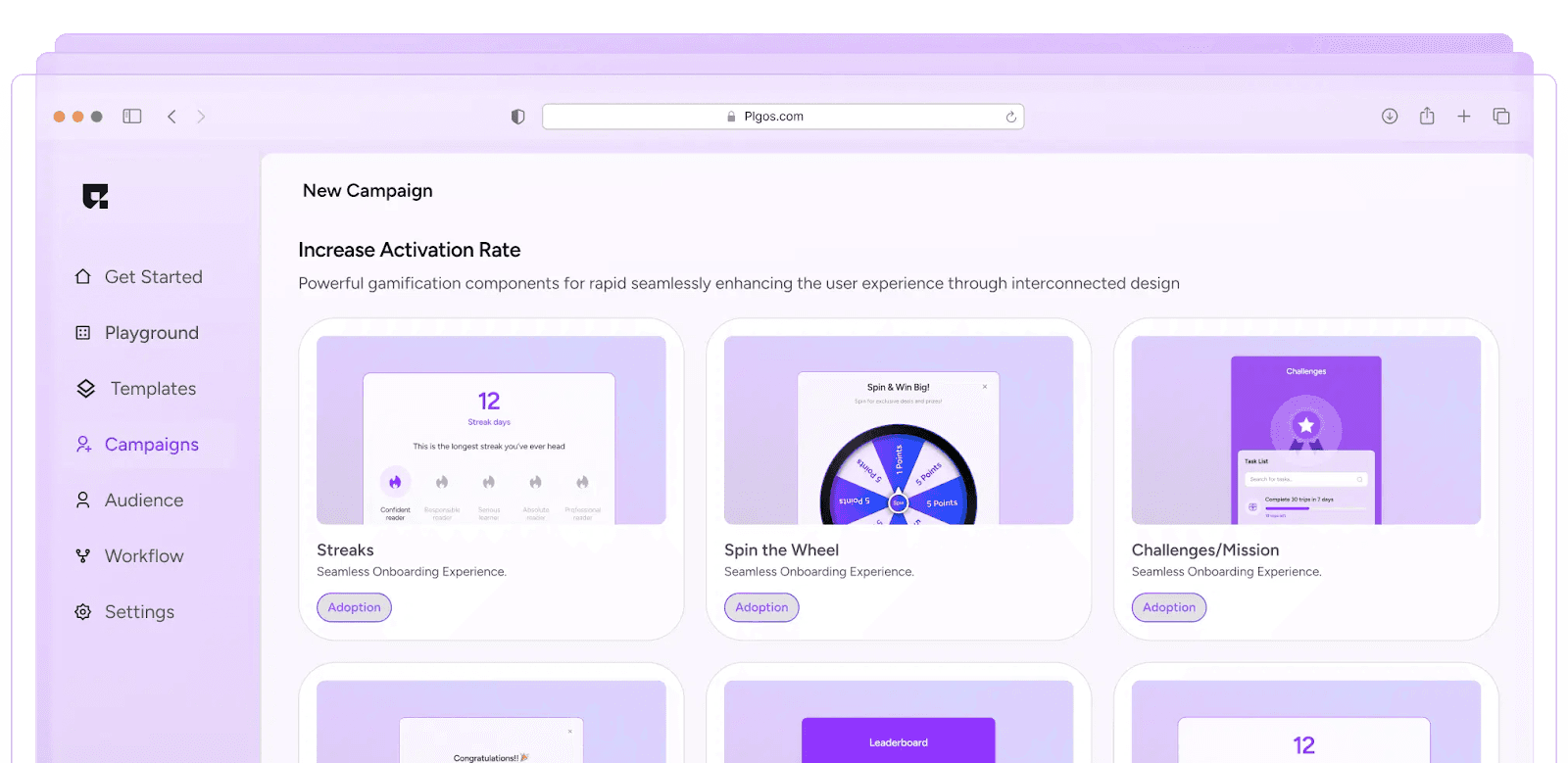
“Come back tomorrow and win a streak bonus!”
Ever wonder why you open Duolingo daily — even if you’re not actively learning? That’s daily quests at work.
Why it Works
This mechanic leverages habit-forming loops. Repeating a simple action every day builds a subconscious connection. Add a reward to that loop, and it becomes addictive.
How to Use It
- Introduce daily goals or login rewards
- Offer “streak” bonuses for consistency
- Encourage journaling, check-ins, or reflections
PLG OS in Action
PLG OS’s automation layer lets you create daily task reminders, streak-based incentives, and habit nudges. Keep your users engaged without overwhelming them — just the right nudge at the right time.
Game Mechanic #5: Unlockables and Scarcity
“Only 20 users will get access to this feature today. You’re #19.”
FOMO is real. And game designers have been using it forever.
Why it Works
Scarcity triggers urgency. Limited-time, limited-access, and unlockable content fuel both exclusivity and desirability. It also makes users feel special — like they’re part of an elite club.
How to Use It
- Gate features behind achievements
- Introduce limited-time offers or drops
- Offer early access to power users
PLG OS in Action
You can configure smart gating with PLG OS. Identify power users, early adopters, or churn risks, and unlock experiences accordingly. Whether it’s a new beta feature or a VIP offer, you control access based on real-time data, not guesswork.
Game Mechanic #6: Storytelling and Narrative Arcs
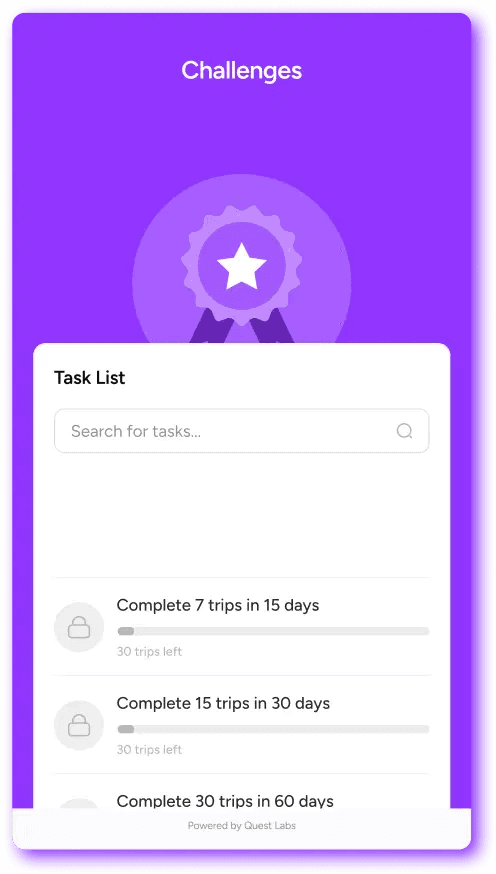
“Your journey started here. You've conquered 3 challenges. Up next: The Final Boss.”
Not every app needs to feel like a fantasy novel, but every great app tells a story.
Why it Works
Narratives create emotional context, purpose, and progression. Users are more likely to stick if they feel like they're moving through a journey, not just using a tool.
How to Use It
- Design onboarding as a guided narrative
- Break features into “missions” or “chapters”
- Celebrate milestones as key plot points
PLG OS in Action
Use PLG OS to map user journeys with storytelling layers. You can build flows that reveal features over time, guide users through onboarding like an adventure, and personalize the arc based on usage behavior. This isn’t onboarding — it’s a quest.
The Hidden Layer: Gamification in User Experience UX
Here’s the truth: gamification isn’t just about adding badges and leaderboards. 70% of Forbes Global 2000companies use gamification to boost engagement and retention.
It’s about designing experiences that feel rewarding, challenging, and emotionally satisfying.
Every time a user:
- Feels progress
- Gets surprised
- Feels socially validated
- Builds a habit
- Chases exclusivity
- Moves through a story
…you’ve won.
That’s gamification in user experience, done right.
Real-World Gamification Examples That Nail It
Let’s look at how the pros do it.
1. Duolingo
- Uses streaks, XP, leaderboards, and achievements.
- Makes language learning feel like a video game.
2. Notion
- Gamifies onboarding with checklists and progress.
- “Unlocks” advanced features as you explore.
3. Fitbit
- Badges, daily challenges, streaks.
- Transforms fitness tracking into a game.
4. Headspace
- Streaks, calming animations, and session goals.
- Makes mental health feel encouraging, not clinical.
5. Khan Academy
- Badges, missions, and mastery tracking.
- Turns education into an achievement-driven quest.
Each of these uses gamification strategies rooted in real behavior science, not gimmicks.
Using PLG OS to Implement Game Mechanics
The best part?
You don’t need a dev army or a year-long roadmap to gamify your product.PLG OS gives you the building blocks to design, launch, and scaleproduct-led growth motions powered by game mechanics.
Here’s what you can do with it:
- Track real-time user actions and create gamified flows around them
- Launch progress-based onboarding and activation experiences
- Automate habit loops and streak reminders
- Design reward systems and unlockable experiences
- Add social proof and leaderboard-style recognition
- Create narrative journeys that guide users toward “aha!” moments
Whether you're a founder, product manager, or growth marketer, PLG OS becomes your gamification engine, without bloating your dev backlog.
Final Thoughts: Gamify With Purpose
Game mechanics for user engagement aren’t about turning your app into a game. They’re about tapping into what makes humans tick.
And when done well, they lead to:
- Higher activation
- Longer retention
- Deeper emotional connection
- Increased virality
It’s time to stop thinking like a feature factory and start thinking like a game designer.
With platforms like PLG OS, building gamified, habit-forming experiences is no longer a nice-to-have — it’s your growth advantage.
Start small. Think smart. And always build with delight in mind.
Frequently Asked Questions
What are some common gamification strategies?
Some of the most effective gamification strategies include progression loops, variable rewards, daily quests, leaderboards, unlockables, and storytelling arcs.
How can gamification improve user retention?
Gamification taps into core human motivators like achievement, curiosity, and social validation, making apps more sticky and habit-forming — which are powerful user retention techniques.
What tools help with app gamification techniques?
Platforms like PLG OS help you integrate gamification into your product by automating flows, tracking behavior, and designing scalable engagement strategies for apps.
Can gamification work for B2B apps?
Absolutely. Even in B2B, users are still humans. Whether it’sgamification in user experience or social proof-driven engagement, the principles apply across the board.