6 Onboarding gamification examples that work
The old-fashioned way of onboarding can be dull. A deluge of information, including lengthy documentation and training films, can make new employees feel overwhelmed, if not outright uninterested. What if, however, the onboarding process could be lively, participatory, and entertaining? Gamification is useful in this context.
Gamification is the secret sauce that turns a dull onboarding process into an engaging, memorable experience. Competition, prizes, and storytelling can all help new hires learn more quickly, remember more, and feel more connected to the company immediately.
So, how do you do it? Here are six onboarding gamification examples that actually work, plus tips on how you can implement them in your organization.
What is Gamification?
To motivate users in non-game environments, gamification incorporates characteristics that are similar to games. Points and levels are features that appeal to our shared human psychology and provide a strong incentive. Consequently, this improves the app's usability, boosting users' happiness and loyalty!
Any app can benefit from a gamified onboarding experience because gamification ideas are founded on shared behavioral psychology. Of course, the blueprint varies per sector, but if you can figure out what works for your specialty, you can achieve phenomenal success!
What does "gamified onboarding" mean?
A great way to get people interested in the most important part of the customer journey is to use games during training. Poor training is the main reason why users leave, so it's important to make the experience fun. Making parts of user training into games makes the whole process a lot more fun. With game-like onboarding features like progress bars and tasks, you can also make setting up a new app fun instead of a chore!
If you are choosing software for this, our list of gamification onboarding platforms separates tools for gamified product onboarding from learning platforms for gamified employee onboarding.
Why does gamified onboarding work?
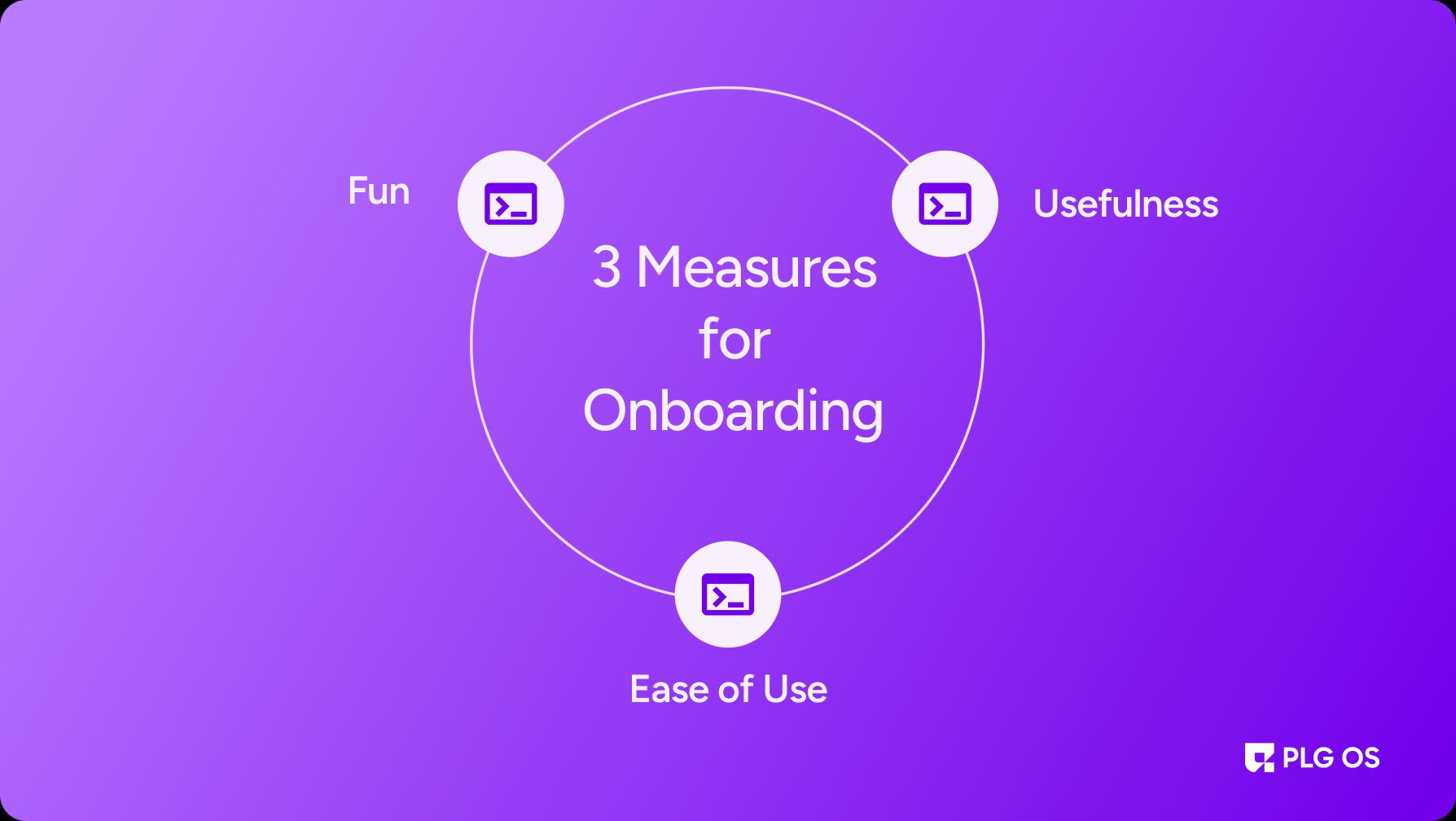
Your onboarding is judged based on 3 simple measures:
1. Usefulness – Do users get value from the experience?
2. Ease of use – Can users get to the value intuitively?
3. Fun – Are users satisfied and enjoying the app?
Usefulness
According to research, gaming makes things seem more useful, which is the best way to tell if someone wants to be engaged! There are several reasons why this is true. One popular gamification onboarding tool is the ability to set goals. And there's a good reason for that: letting users set their own goals is both engaging and personalized, and almost 60% of people like companies that know them and how they act.
Ease to use
Using gamification to help with training makes the customer journey easier. For example, progress bars let users know how much time they have left until the end of training. In the world of science, this is known as "lowering the cognitive load." Basically, this means that being interested takes less brain work! That's because the ideas behind gaming are simple. You do something and get something in return. For sure, that's the clearest thing I can say!
Fun
It's simple: people love games. It's not true that computer gamers play games by themselves at home. In fact, almost 82% of people who use the internet are gamers! This is because games are fun, and our natural tendency is to look for fun things to do.
Advantages of gamified onboarding
Faster time to value
The time to value number tells you how long it takes for new customers to see how your product or service helps them. It seems that people are more likely to keep using a product if they quickly see how useful it is.
To get a great time to value, gamification in training is the best way to go. It speeds up the "Aha!" moment and gets your people going. Users don't have to go through a boring process to fill out their information. Instead, your app can start giving them prizes and fun features right away. In turn, this cuts down on the "time to value," which makes people want to stay!
Higher retention
So, adding things like badges and progress bars to make training more like a game makes the process more fun. Also, it's easier to understand. In general, this makes it harder to give up! This is clear from the fact that people keep using the best Android apps longer. It's now used by 70% of the world's top 2000 companies!
Interactive experiences are more memorable
Making the hiring process more fun is what gamification is all about. For the most part, gaming asks people to do something in order to get something back. That and this interactive stuff helps us remember!
6 Onboarding gamification examples
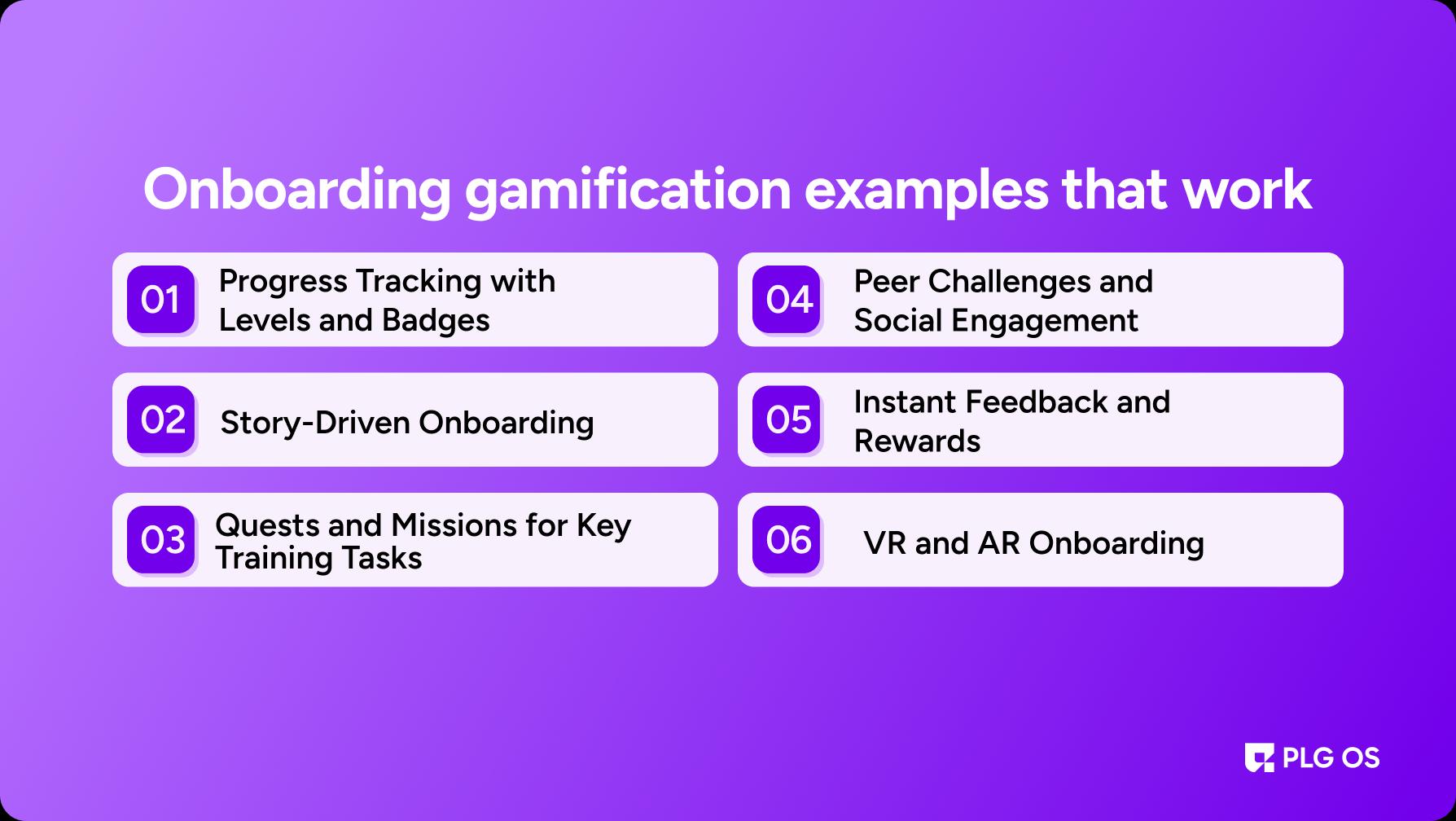
1. Progress Tracking with Levels and Badges
Imagine starting a new job and being welcomed with a “New Hire Quest” instead of a 100-page handbook. Sounds fun, right?
How It Works
New employees progress through different levels as they complete onboarding tasks. They earn badges or points for finishing modules, attending training sessions, and completing challenges.
Why It Works
- Creates a clear roadmap of what’s expected.
- Gives employees a sense of accomplishment with every milestone.
- Encourages healthy competition if a leaderboard is involved.
Example: Deloitte Leadership Academy
Deloitte uses gamification in its leadership training program, awarding badges for course completion. This approach increased engagement and made learning feel like a personal achievement rather than a requirement.
How to Apply It: Use tools like PLG OS, TalentLMS, or even a custom internal system to create levels and badges for onboarding tasks.
2. Story-Driven Onboarding (Narrative-Based Learning)
Let’s face it, new hires are often bombarded with policies and procedures that feel irrelevant at first. But what if you introduced them to your company through a story?
How It Works
Instead of a traditional training manual, onboarding follows a choose-your-own-adventure style journey. Employees navigate through different scenarios where they make decisions and learn from the outcomes.
Why It Works
- Makes learning more immersive and less intimidating.
- Helps new hires connect emotionally with company values and culture.
- Encourages critical thinking rather than passive reading.
Example: Marriott’s My Marriott Hotel Game
Marriott created a gamified training simulation where employees manage a virtual hotel, learning about operations in a realistic and engaging way.
How to Apply It: Create an interactive onboarding experience using tools like BranchTrack, Articulate Storyline, or even a simple PowerPoint-based interactive game.
3. Quests and Missions for Key Training Tasks
Why assign mundane training sessions when you can send employees on epic quests?
How It Works
Onboarding is divided into missions where employees complete specific tasks like learning about company policies, meeting team members, or setting up software. Each mission earns them points or rewards.
Why It Works
- Transforms boring tasks into exciting challenges.
- Encourages self-paced learning with clear objectives.
- Boosts retention because employees are actively participating.
Example: Salesforce Trailhead
Salesforce uses a gamified learning platform where users complete trails (missions) on different topics, earning badges and rankings along the way.
How to Apply It: Convert training tasks into missions using tools like Trello, Microsoft Teams, or custom-built platforms.
4. Peer Challenges and Social Engagement
A big challenge in onboarding? Making new hires feel connected to their team. A great way to do this? Friendly challenges!
How It Works
New employees take part in team-based challenges that encourage collaboration and learning. This could be:
- A scavenger hunt to find information about the company.
- A trivia contest about company history and culture.
- A collaborative project that helps them learn their role.
Why It Works
- Helps employees build relationships faster.
- Encourages healthy competition and engagement.
- Turns onboarding into an interactive social experience rather than a solo task.
Example: LinkedIn’s Employee Onboarding Program
LinkedIn uses peer-based learning challenges to help new hires network with colleagues and understand the company culture.
How to Apply It: Use Slack, Microsoft Teams, or Discord to run interactive challenges and encourage teamwork.
5. Instant Feedback and Rewards
Nobody likes waiting weeks for feedback. Instant recognition makes a huge difference in engagement.
How It Works
- Employees earn real-time feedback when they complete training tasks.
- Rewards like gift cards, virtual points, or even fun office perks keep them motivated.
- Digital leaderboards show progress, encouraging participation.
Why It Works
- Employees feel valued and motivated to continue learning.
- Encourages healthy competition while ensuring everyone stays on track.
- Rewards create a positive association with onboarding.
Example: Google’s Internal Training Programs
Google gamifies learning by offering immediate feedback, badges, and incentives, keeping employees engaged.
How to Apply It: Use tools like PLG OS, Kahoot, or Google Forms to give instant feedback and track progress.
6. Virtual Reality (VR) and Augmented Reality (AR) Onboarding
For companies with complex environments (think retail, healthcare, or tech), immersive training with VR or AR can be a game-changer.
How It Works
- VR simulations train employees in realistic environments without actual risks.
- AR overlays provide on-the-job guidance through mobile devices.
- Employees interact with virtual scenarios instead of just reading about them.
Why It Works
- Provides hands-on learning in a risk-free environment.
- Makes onboarding exciting and memorable.
- Improves knowledge retention because employees experience the lessons rather than just reading them.
Example: Walmart’s VR Training Program
Walmart uses Oculus VR headsets to train employees in handling customer interactions, emergencies, and operational tasks in a simulated store environment.
How to Apply It: If you’re in retail, healthcare, or manufacturing, VR-based onboarding can be a game-changer. Tools like Oculus for Business or Microsoft HoloLens can help.
Final Words
Getting the onboarding gamification right is vital because onboarding is a critical phase in the process. This is why PLG OS and similar gamification tools are so useful. Plus, our program comes with the support and guidance of our knowledgeable staff in addition to a user interface with more than 20 interactive features!
If you want new hires to feel excited about joining your company, gamification is the way to go. So, what’s stopping you? Start gamifying your onboarding today by booking a call with us and turn your new hires into engaged, high-performing team members from day one!
FAQs
1. What is onboarding gamification?
Onboarding gamification is the use of game-like elements—such as points, badges, challenges, and rewards—to make the employee onboarding process more engaging, interactive, and enjoyable.
2. Why should companies gamify their onboarding process?
Gamification makes onboarding more engaging, memorable, and effective, helping new hires retain information, feel motivated, and integrate into the company culture faster.
3. What types of companies can benefit from onboarding gamification?
Any company can use gamification, but it’s especially effective for tech firms, startups, retail, sales, and customer service roles, where engagement and training efficiency are crucial.
4. Do I need expensive tools to implement gamified onboarding?
Not necessarily! You can start with simple tools like PLG OS, Trello, Kahoot!, Google Forms, or Slack before investing in more advanced solutions like VR or AI-driven platforms.
5. How do I measure the success of a gamified onboarding program?
Track engagement levels, completion rates, retention of new hires, and feedback from employees to see how well gamification improves the onboarding experience.