10 Gamification Trick That SaaS Giants Use to Hook You
Ever wonder why you can’t stop returning to your favorite SaaS tool? It’s not just you, it’s gamification at work! Imagine turning your to-do list into a game where every task you complete unlocks rewards, badges, and even a spot on a leaderboard. SaaS giants know how to keep you hooked with this addictive little trick. Let’s dive into the gamification hack that keeps you returning for more!
What is Gamification?
Contrary to common belief, gamification is enhancing channel user retention by utilizing game mechanics. Accurate gamification implementation can significantly contribute to increased customer satisfaction and loyalty. Things become incredibly entertaining when game features are incorporated into non-gaming pursuits.
Another important factor in reducing expenses and increasing revenue is using gamification for consumer involvement. Approximately 70% of the world's 2000 largest organizations utilize gamification. For quite some time, gamification has been present in our daily lives. Applying this identical method to your firm will yield measurable benefits.
Why is Gamification Important?
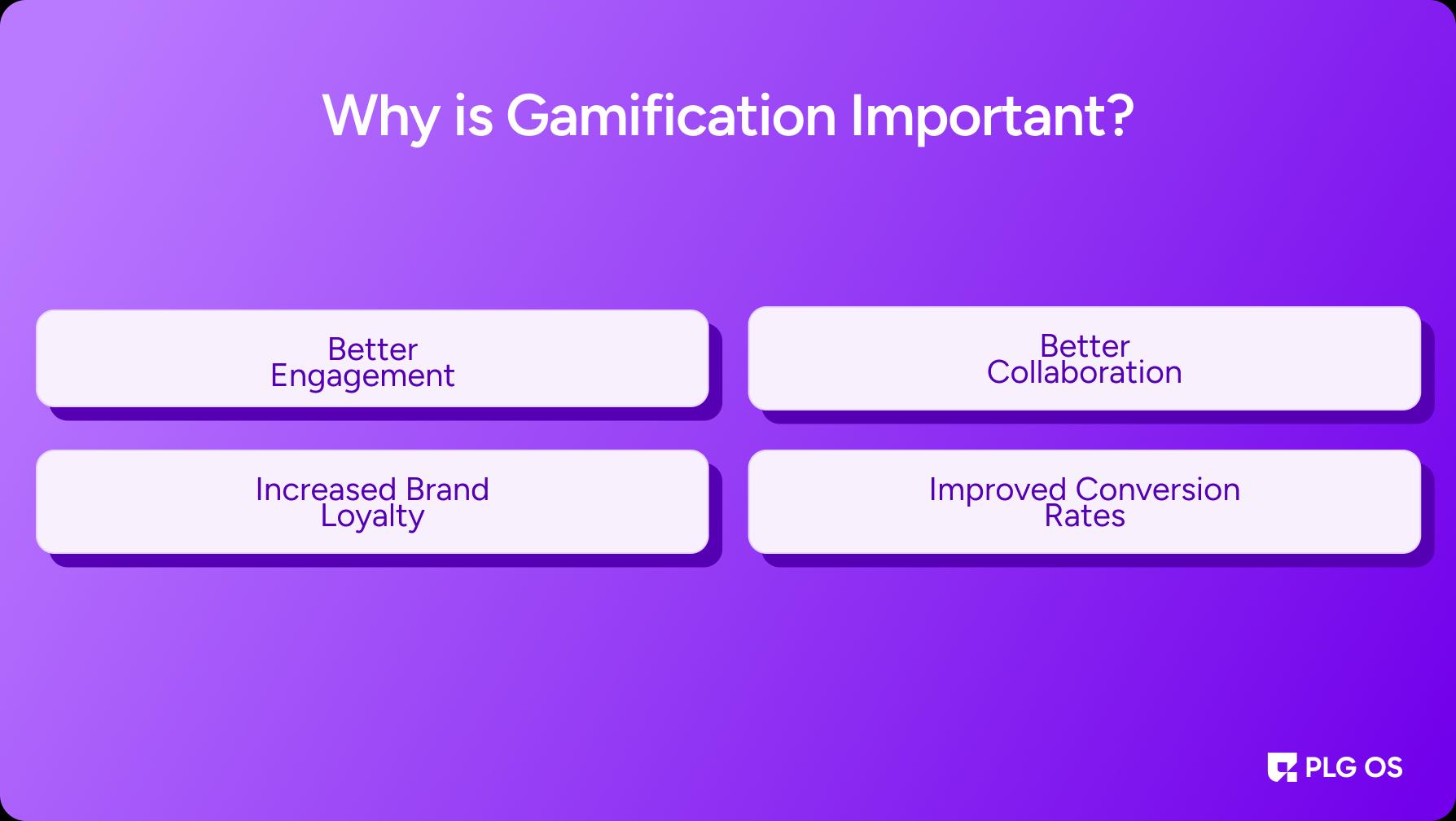
On average, businesses see a sevenfold increase in profits when they use gamification to engage their customers. This strategy has the potential to increase their engagement with your brand significantly. The following are a few of the most salient arguments in favor of gamification:
Better Engagement
One way gamification might help boost engagement is by using game mechanics. The best way to figure out what to do next is to encourage exploration and engagement through game methods. Participation and interaction will propel people to a greater position on the world stage.
People nowadays may not have the mental bandwidth to fully absorb and implement new ideas due to the rapid pace of modern living. Users are prone to forgetting the details of your brand or company when you bombard them with information about it on a frequent basis. Users discover a delightful method to engage with brands when implementing user engagement games.
Better Collaboration
Brands and users may work together more effectively via gamification. Brands' efficiency is enhanced, particularly when it comes to informing consumers about items, by this. Consequently, gamification can be a powerful tool for establishing and sustaining a cohesive team dynamic.
There will be many ways of communicating when competition is always present. Customers may contact you more frequently to find out more information about the brand as a result. Maintaining an informed clientele and encouraging a healthy learning environment are both helped by an upbeat and healthy environment.
Increased Brand Loyalty
It is fantastic for your brand's reputation when leads become consumers. Furthermore, if these individuals turn into devoted patrons, it can greatly contribute to expanding your brand. A crucial strategy for acquiring new clients is to foster brand loyalty.
Consumers are more likely to be engaged and driven by gamified material. Loyalty to the brand also grows with time. A professional image is created when a company enjoys devoted clientele. Customers are likely to remain loyal if you show them you value them with little gifts. Consequently, your investment will consistently yield returns.
Improved Conversion Rates
Conversion rates can be boosted by gamification, which is rather surprising. Conversion rates are crucial in digital marketing, especially when driving company expansion. Since gamified content doesn't feel like advertising, people are more engaged with it.
Your customers are likely to encounter several promotional postings as they navigate the internet. After a while, they can get bored. However, if the advertising content offers something new and exciting, they are more likely to be intrigued. Gamification and interactive content significantly enhance lead generation and customer engagement.
10 Gamification Trick That SaaS Giants Use
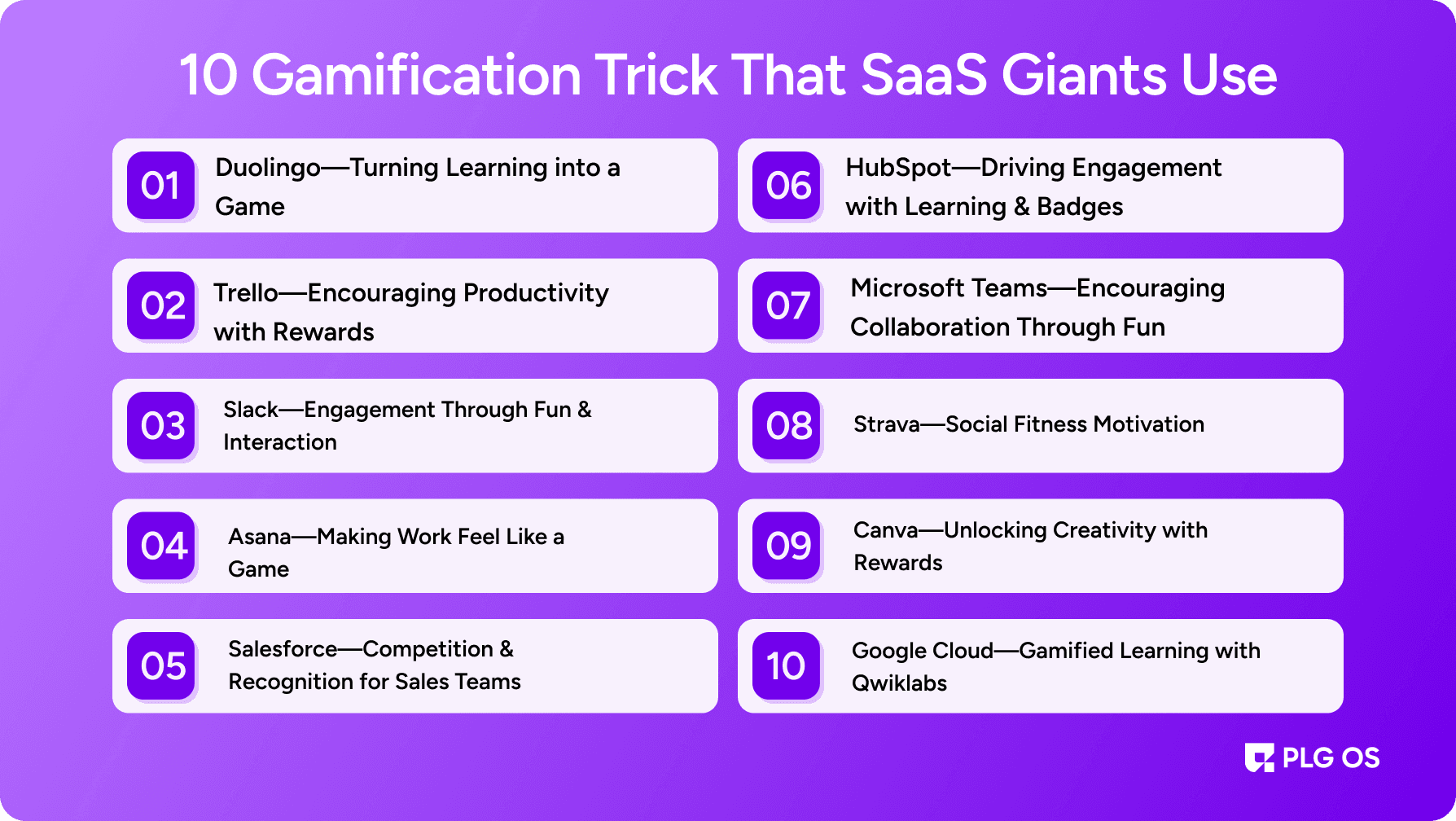
SaaS giants use psychological factors like competition, rewards, and social approval to keep people interested. Gamification changes the brain's reward system so that even the most boring jobs feel rewarding. This can happen when you get a new badge, move up a leaderboard, or keep up a streak.
Do you want to make a SaaS product that everyone loves? Follow these businesses' lead and make your site's use into a game!
1. Duolingo—Turning Learning into a Game
Gamification Tactics:
Streaks, XP points, leaderboards, and in-app rewards.
How it works:
By giving users with XP points for daily streaks, Duolingo makes learning a language very addicting. The fear of 'losing your streak' keeps students returning every day.
2. Trello—Encouraging Productivity with Rewards
Gamification Tactics:
Visual task completion, progress tracking, and team collaboration badges.
How it works:
Trello has a simple kanban board system that makes moving jobs from 'To Do' to 'Done' feel like a big deal. This keeps people motivated to keep working.
3. Slack—Engagement Through Fun & Interaction
Gamification Tactics:
Emoji reactions, Slackbot challenges, and team engagement metrics.
How it works:
Slack gets people involved in the workplace by letting teams reward each other with emoji replies and use Slackbot to set daily reminders. This keeps conversations lively and useful.
4. Asana—Making Work Feel Like a Game
Gamification Tactics:
Task completion animations, achievement celebrations, and project milestones.
How it works:
Asana gives users flying unicorns and happy animations as prizes for finishing tasks. This makes even the most boring work feel like it's worth it.
5. Salesforce—Competition & Recognition for Sales Teams
Gamification Tactics:
Leaderboards, badges, and real-time performance tracking.
How it works:
Sales teams like to compete, and Salesforce uses this to its advantage by putting salespeople on leaderboards and giving them badges for doing better than their peers.
6. HubSpot—Driving Engagement with Learning & Badges
Gamification Tactics:
Certification badges, achievement tracking, and progress dashboards.
How it works:
Gamification is used by HubSpot Academy to get people to finish classes and get certification badges that they can show off on LinkedIn. This makes learning a professional achievement.
7. Microsoft Teams—Encouraging Collaboration Through Fun
Gamification Tactics:
Praise badges, engagement analytics, and team challenges.
How it works:
Microsoft Teams makes it easier for people to work together by letting managers send praise badges, and interaction analytics get everyone on the team to talk to each other and participate.
8. Strava—Social Fitness Motivation
Gamification Tactics:
Leaderboards, activity badges, and progress tracking.
How it works:
Strava turns working out into a social game where users fight with their friends, earn badges, and try to move up the leaderboards. This keeps them motivated to stay active.
9. Canva—Unlocking Creativity with Rewards
Gamification Tactics:
Design challenges, progress badges, and premium unlocks.
How it works:
Canva gives users awards for making many designs, encouraging them to try out new features and share their work.
10. Google Cloud—Gamified Learning with Qwiklabs
Gamification Tactics:
Skill badges, cloud quests, and real-world challenges.
How it works:
Google Cloud makes cloud learning fun with Qwiklabs. Users earn skill badges for finishing labs, which keeps them interested in learning all the time.
What SaaS apps will benefit from adding gamification elements?
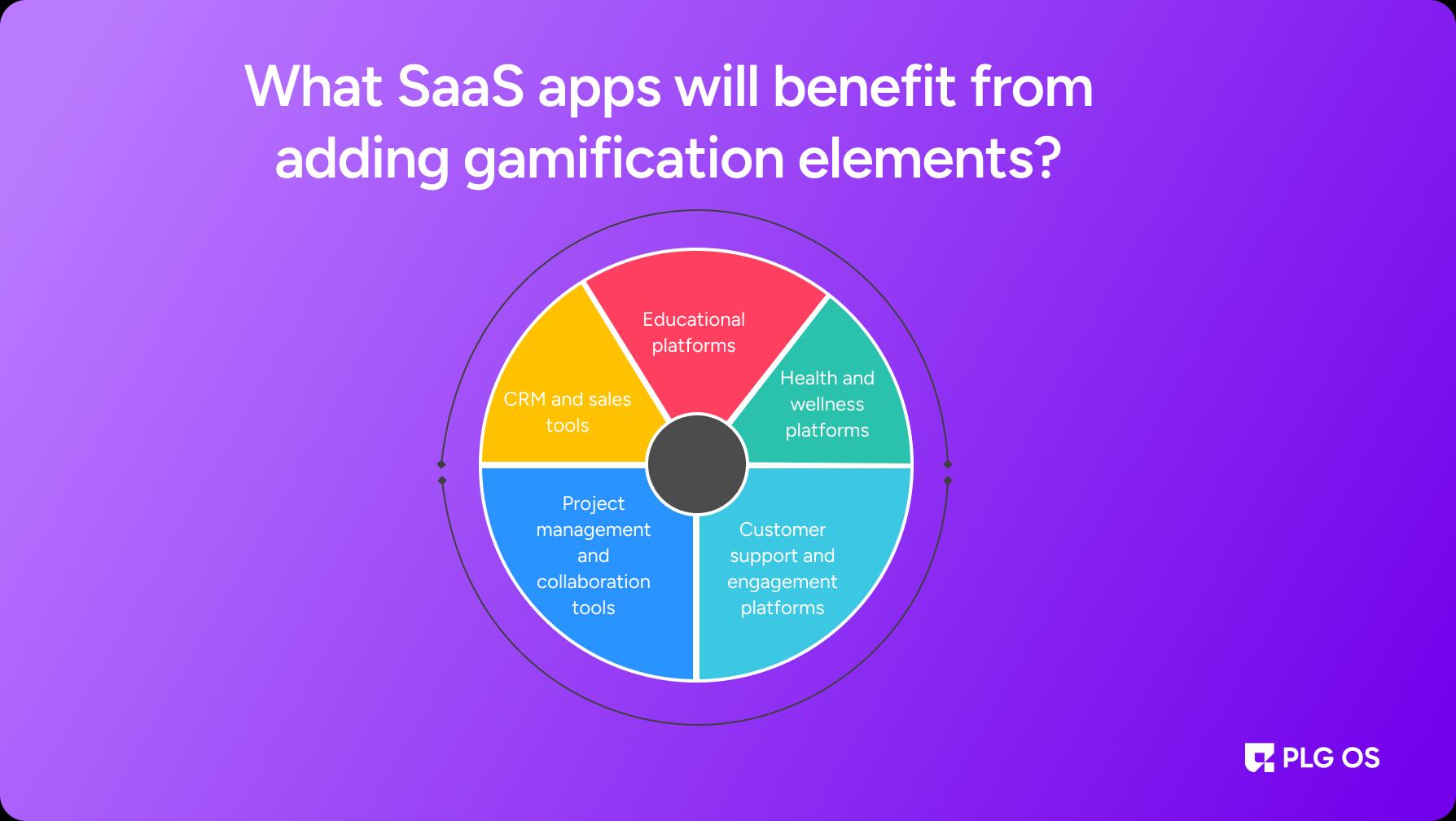
Not all categories of SaaS products will derive identical advantages from gamification aspects. Let us examine the areas in which they can genuinely effect change:
Educational platforms
Gamification can enhance engagement and enjoyment in learning for platforms that provide training, courses, or professional development. Incorporating badges, points, leaderboards, or progress tracking enhances the likelihood of users completing courses and retaining material.
CRM and sales tools
Sales teams frequently excel through competitiveness and accomplishment. Gamification can incentivize sales professionals by monitoring and rewarding actions such as finalizing transactions, achieving sales objectives, or conducting customer follow-ups. Incorporating it into your SaaS UX/UI design can enhance productivity and promote healthy competition.
Project management and collaboration tools
These solutions can leverage gamification to promote team participation, task fulfillment, and punctual project delivery. Incentivizing teams for achieving milestones or finishing projects ahead of time can enhance productivity and foster team cohesion.
Customer support and engagement platforms
Gamification can motivate customer support representatives to enhance their service by incentivizing rapid response times, favorable customer feedback, or a substantial volume of resolved cases. Furthermore, it has the potential to enhance employee happiness.
Health and wellness platforms
By using challenges, rewards, and tracking progress, these apps can motivate users to reach their health and fitness goals, leading to long-lasting healthy habits and better physical health.
Boost User Engagement with PLG OS Gamification
Want to skyrocket user engagement? PLG OS Gamification turns your product into an addictive experience! With interactive challenges, rewards, and progress tracking, you can keep users hooked, encourage product adoption, and drive long-term retention. Whether it's leveling up onboarding or motivating users to explore new features, gamification makes engagement effortless and fun.
Spin the Wheel:
Give users a chance to win exciting rewards, discounts, or exclusive perks, keeping them excited to engage with your platform.
Leaderboards:
Create a competitive edge by ranking users based on activity, motivating them to stay active and climb higher.
Streaks:
Reward consistency! Users who engage daily build a streak, unlocking special bonuses and fostering long-term platform loyalty.
And the best part? PLG OS makes gamification super easy to integrate, so you can boost engagement without the hassle. Ready to turn engagement into a game? Let PLG OS help you keep users coming back for more! Get started today!
FAQs on SaaS Gamification
1. Why do SaaS companies use gamification?
SaaS companies use gamification to boost user engagement, increase retention, and make their platforms more enjoyable by incorporating rewards, challenges, and interactive elements.
2. What are some common gamification techniques in SaaS?
Popular techniques include leaderboards, badges, progress tracking, streaks, achievement celebrations, and in-app rewards.
3. How does gamification improve user retention?
Gamification taps into the brain’s reward system, creating a sense of accomplishment and motivation that keeps users coming back.
4. Can gamification work for all types of SaaS products?
Yes! Whether it's learning apps, project management tools, or sales platforms, gamification can enhance user experience across industries.
5. Is gamification just about rewards and points?
No, it’s also about creating a fun, interactive experience that encourages users to complete tasks and stay engaged over time.