What is User Experience (UX)? Is it Still Relevant in 2024?

User experience, or UX, encompasses every aspect of a user's interaction with a company, its services, and its products. In the SaaS world, UX reflects the overall feeling users have when interacting with your software—from its intuitiveness to the emotional impact it leaves behind. It’s more than just a well-designed interface; it’s about providing meaningful, seamless, and relevant experiences.
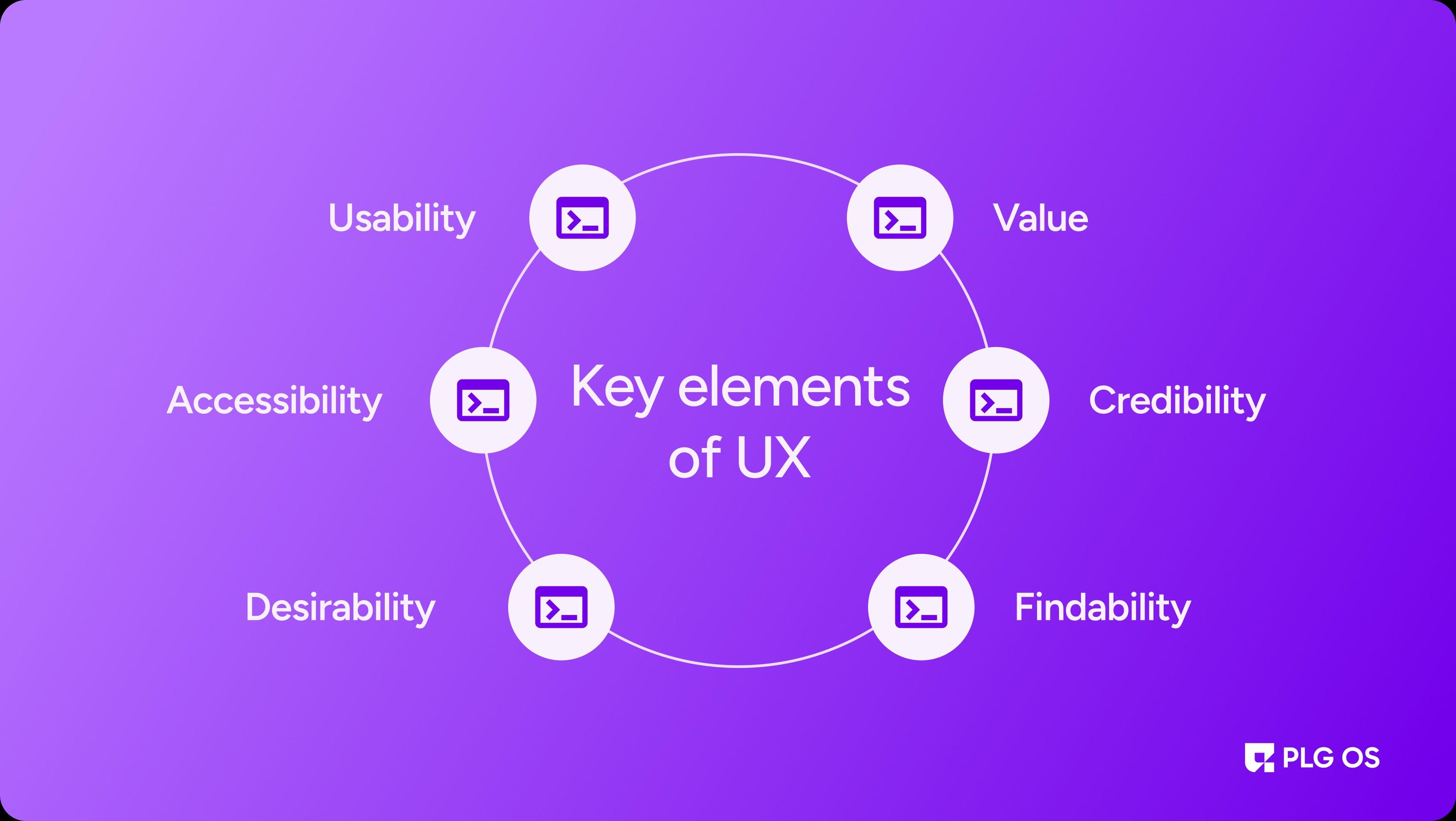
Key elements of UX include:
- Usability: How easy and efficient is your product to use?
- Accessibility: Does your product work for everyone, regardless of their abilities?
- Desirability: Is your product attractive and enjoyable to interact with?
- Value: Does your product meet users' needs and expectations?
- Credibility: Does your product and company inspire trust and confidence?
- Findability: Can users easily find what they need?
These elements work together to create a product experience that doesn’t just function—it resonates with your users. UX is about more than making things look appealing; it's about designing a product that people want to use and return to repeatedly.
In a fast-paced SaaS landscape, creating exceptional UX can help differentiate your product from the competition. But is UX still relevant in 2024? The answer is a resounding yes. As technology evolves, user expectations are continually rising, making it essential for SaaS businesses to prioritise UX to stay ahead. Let's explore why investing in UX is crucial for every SaaS company.
Why Should Every SaaS Company Prioritize UX?
User experience can make or break a SaaS business, especially in an industry where competition is fierce, and users have the power to switch to a competitor with just a few clicks. Here's why focusing on UX is crucial:
1. Customer Retention
In a subscription-based business model, customer retention is everything. You’re not just looking for one-time buyers—you need users to stick around, renew their subscriptions, and engage long-term. A smooth, enjoyable UX can significantly reduce churn rates, as users are less likely to leave a product that consistently meets or exceeds their expectations.
2. Competitive Advantage
There are likely dozens of SaaS products offering similar features to yours. What sets you apart? Often, it’s the experience users have while interacting with your software. A superior UX can be the deciding factor for customers choosing between you and a competitor. By offering a frictionless, pleasant, and engaging user journey, you can gain an edge in a crowded market.
3. Increased User Adoption
A well-designed, intuitive UX leads to faster onboarding and higher user adoption rates. When users can quickly understand your product and derive value from it, they’re more likely to stick with it. A clunky or confusing UX, on the other hand, might cause users to abandon the product before they’ve fully explored it.
4. Reduced Support Costs
When your product is easy to use, users need less support. This means fewer tickets for your customer service team, saving your company time and money. Users are empowered to find answers themselves, reducing frustration and allowing your team to focus on more complex issues.
5. Higher Customer Lifetime Value (CLV)
A positive user experience can turn first-time users into loyal customers. Satisfied users are more likely to upgrade, purchase additional features, and stick around for the long haul. The better the experience, the longer customers will stay with your product, increasing their lifetime value and contributing to long-term business growth.
6. Word-of-Mouth Marketing
People talk about experiences, especially great ones. A seamless and enjoyable UX encourages users to share their experiences with others, driving organic growth through word-of-mouth and referrals. This is particularly important in the SaaS space, where trust and recommendations can be significant decision drivers.
7. Improved Brand Perception
Great UX doesn’t just benefit your product; it strengthens your overall brand. A well-designed, user-friendly product fosters trust and positive feelings toward your brand, enhancing your reputation in the marketplace.
8. Data-Driven Insights
UX research, like usability testing and user feedback, provides valuable insights into user behavior. These insights can inform product development, marketing strategies, and customer engagement efforts, helping your business grow in alignment with user needs.
9. Reduced Development Costs
Addressing UX during the early stages of product development can prevent costly redesigns later. By prioritizing UX, you can ensure that features are designed with the user in mind, reducing the need for fixes after launch.
10. Increased Productivity (for B2B SaaS)
In a B2B context, user productivity is a key selling point. Good UX can improve user efficiency and reduce the time it takes for users to complete tasks, making your product more valuable to organizations.
How is UX Different from UI?
While UX and UI (user interface) are often used interchangeably, they are distinct concepts. Understanding the difference is crucial for creating a product that not only looks good but feels good to use.
User Experience (UX):
User Experience (UX) refers to the overall experience a user has with your product. It includes all interactions and touchpoints throughout the user journey and focuses on how users feel, how well the product meets their needs, and how easily they can accomplish their goals.
User Interface (UI):
User Interface (UI) is more specific, focusing on the visual and interactive elements of your product. It’s the design of screens, buttons, icons, typography, and layout—basically, the “look and feel” of your software.
Key differences:
Scope:
UX is broad and holistic, while UI is a component of UX.
Focus:
UX looks at the overall experience, while UI focuses on visual touchpoints.
Timing:
UX often comes first, establishing the foundation for UI design.
Skills:
UX requires an understanding of human behavior, while UI requires strong visual design skills.
Measurement:
UX is measured by user satisfaction and behavior, while UI success is judged by visual appeal and usability.
Think of UX as the structure and foundation of a house. UI is the decor—the paint, furniture, and fixtures that make the house look inviting.
What Can a Bad User Experience Do?
Neglecting UX can have serious consequences for your SaaS business. Poor user experience can lead to:
High Churn Rates:
Frustrated users are quick to cancel subscriptions.
Negative Brand Perception:
Bad experiences lead to poor reviews, damaging your brand reputation.
Increased Support Costs:
A confusing UX increases support tickets, straining resources.
Reduced User Adoption:
Difficult-to-use products see low engagement and fewer conversions.
Lost Revenue:
Poor UX results in abandoned purchases and lower customer lifetime value.
Decreased Productivity:
In a B2B setting, poor UX can reduce user productivity, impacting the perceived value of your product.
Wasted Development Resources:
Fixing UX problems post-launch can drain resources.
Competitive Disadvantage:
In a market with better UX options, customers will flock to competitors.
Reduced Employee Morale:
Continuous negative feedback can demoralize teams.
Missed Opportunities:
Poor UX hides the full value of your product, limiting user engagement.
Strategies for Improving UX in SaaS
Improving UX is an ongoing process that requires constant testing, iteration, and feedback. Here are some strategies:
User Research:
Regularly conduct user research to understand your audience's needs and pain points.
Usability Testing:
Continuously test your product with real users to identify UX issues.
Personalization:
Use data to create personalized experiences that cater to individual user preferences.
Consistent Design::
Maintain a consistent design language across your product to reduce cognitive load.
Performance Optimization:
Ensure your product is fast and responsive.
Accessibility:
Make your product accessible to users of all abilities.
Onboarding:
Streamline onboarding to help users quickly grasp the value of your product.
Feedback Loops:
Create channels for user feedback and use this data to improve UX.
Mobile Optimization:
Ensure your product works seamlessly on all devices.
Emotional Design::
Consider the emotional impact of your design choices to foster positive connections with users.
The Future of UX in SaaS
As technology advances, the field of UX will continue to evolve. Here are some trends shaping the future of SaaS UX:
AI-Driven Personalization:
AI will enable hyper-personalized user experiences
Voice and Gesture Interfaces:
These technologies will become more prevalent in SaaS design.
Augmented and Virtual Reality:
AR and VR will open new possibilities for immersive SaaS experiences.
Predictive UX:
Advanced analytics will create predictive interfaces that anticipate user needs.
Ethical UX:
There will be a greater focus on ethical design, prioritizing user privacy and digital well-being.
Conclusion: UX as a Cornerstone of SaaS Success with PLGOS
In today’s competitive SaaS landscape, a great user experience is essential. At PLGOS, we focus on enhancing user experience through our suite of components—such as intuitive onboarding, gamification, feedback surveys, and chatbots—that work together to create seamless interactions. By implementing these features, SaaS companies can not only meet but exceed user expectations, leading to higher retention and more referrals.
Every interaction with your product is an opportunity to delight your users, and our solutions empower you to design engaging and user-friendly interfaces that keep them coming back. By investing in these UX improvements, you can unlock your SaaS company’s full potential and drive sustainable growth. Let PLGOS be your partner in transforming user interactions into positive experiences that fuel your success.