A Guide to Seamless User Onboarding Strategies in 2025
Acquiring and maintaining customers is critical, but one important statistic many organisations may ignore when measuring performance is customer lifetime value, or CLV. This marketing metric allows you to assess the overall value that each client provides to your organisation through engagement and repeat business.
Maximising your client lifetime value is critical to rise above the competition and maintain your position in the spotlight. The following explains this measure and some ideas for increasing client lifetime value through a strong user onboarding.
What is User Onboarding and Why Does It Matter?
User onboarding is how new users get familiar with an application. User onboarding includes the first application experience, online or offline training, goal setting, and the organization's customer lifetime success process. 74% of enterprise organizations have a dedicated customer onboarding team.
Why does it Matter?
User onboarding is essential for introducing new users to a product. Companies prioritizing the onboarding process may help their users become skilled more rapidly. The proliferation of SaaS apps has significantly lowered consumer switching costs. They are significantly more likely to churn if they don't get benefits soon; therefore, assisting customers in accelerating their time to value is critical to customer churn prevention.
User onboarding is crucial for startups because it drives early acceptance among new users, whilst for enterprises, it guarantees that workers and users of existing, more prominent applications can efficiently navigate and use the platform to its maximum potential.
Why Should Businesses Care About Customer Onboarding Best Practices?
Make a Good First Impression
Showing clients what your product can achieve immediately, instead of making them guess, will ensure they don't regret buying it.
Reduces Return On Investment (ROI)
With thorough onboarding that guides customers through the process, you may significantly shorten the time to reach time-to-value.
Reducing Customer Attrition
Knowing how to utilize and comprehend the capabilities of your product reduces customer dissatisfaction.
Promotes Product Uptake
Customers become familiar with your product and its capabilities during the onboarding process. Customers stop being hesitant and use your product religiously; it becomes an integral part of their life and works seamlessly with what they already have.
Game-Changing Strategies For User Onboarding Process
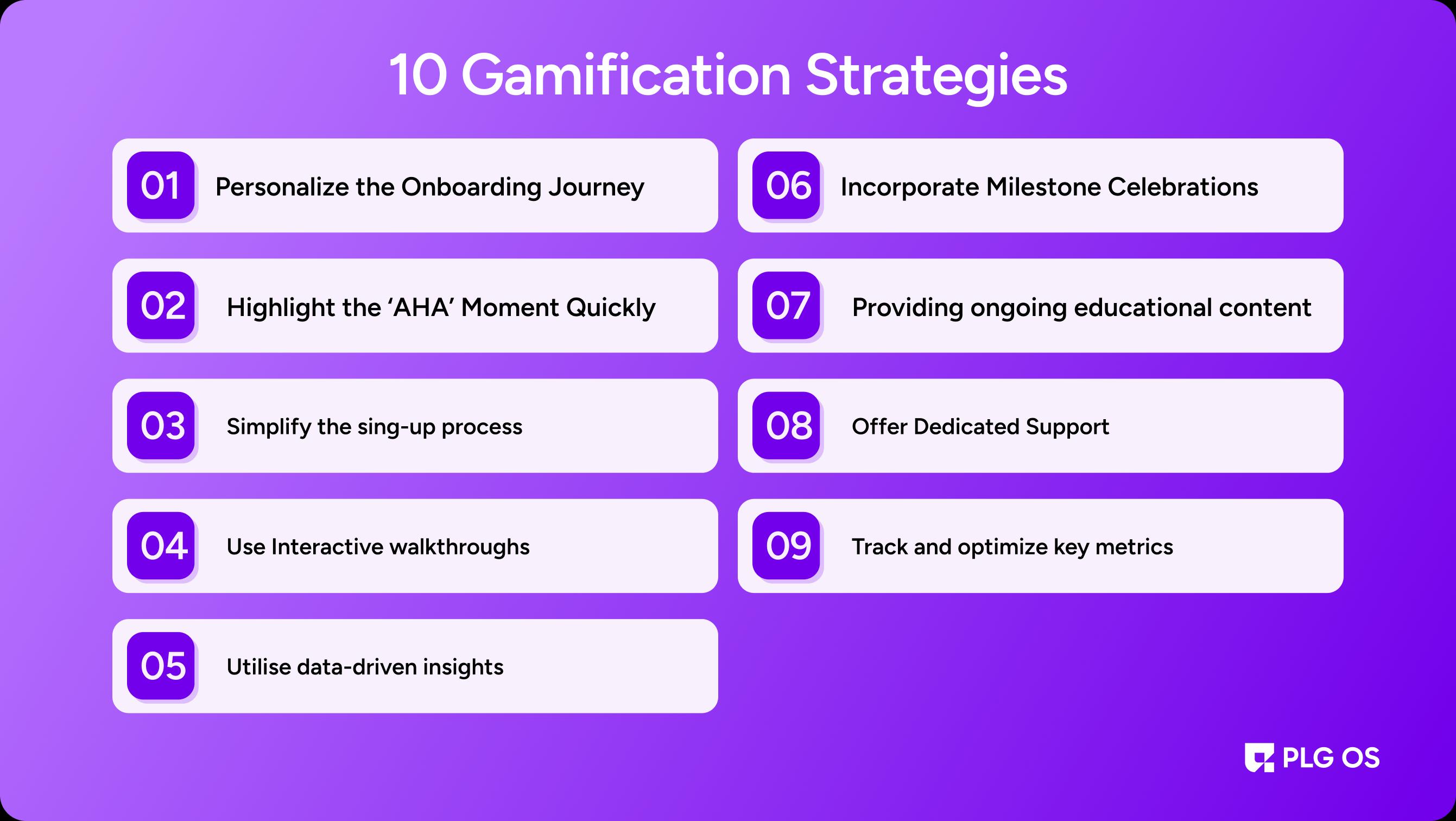
Personalize the Onboarding Journey:
Each person is unique, and your onboarding process should reflect this. Personalising the experience to individual requirements and tastes can make people feel recognised and appreciated. Use data from sign-up forms or behavioural insights to provide a personalised welcome message or promote features relevant to their goals.
Highlight the 'Aha' Moment Quickly:
The sooner users see the core value of your product, the better. Identify the feature or benefit that will make them go, 'Wow, this is exactly what I needed!' and prioritise showcasing this early in their journey. A quick win creates excitement and encourages further engagement.
Simplify the sign-up process:
Nobody enjoys a complex sign-up procedure. Remove superfluous steps and focus on what is genuinely important. Allow users to get started quickly, maybe through single sign-on or the opportunity to skip non-essential forms and return to them later.
Use interactive walkthroughs:
Consider onboarding as a guided tour of your product. Interactive walkthroughs are similar to having a friendly guide demonstrating how to explore and use the most useful features. Keep it basic, straightforward, and focused on resolving their issues.
Utilise data-driven insights:
Your users' behaviour speaks loudly. Analyse their behaviour to improve your onboarding flows continually. Are people falling out at a certain step? Adjust that step. Ensure that the onboarding process changes to match user expectations better.
Incorporate Milestone Celebrations:
Everyone appreciates appreciation! Small milestones, such as finishing their profile or testing a crucial function, can let users celebrate their success. Recognise these moments with positive remarks, medals, or awards to keep motivation up.
Provide ongoing educational content:
Onboarding does not end with the initial engagement. Provide ongoing learning opportunities through tutorials, helpful emails, and interesting webinars. The more informed people are, the more likely they are to remain around and learn more.
Offer Dedicated Support:
Make help easily accessible during onboarding by using an AI chatbot or a dedicated support team. Quick, quick support ensures consumers are not left feeling trapped or irritated.
Track and optimise key metrics:
To determine success, consider indicators like retention, time-to-value, and feature uptake. Use these data to fine-tune and optimise your onboarding procedure, creating a seamless, delightful experience for everybody.
Key Metrics and Best Practices for Onboarding
Retention Rate
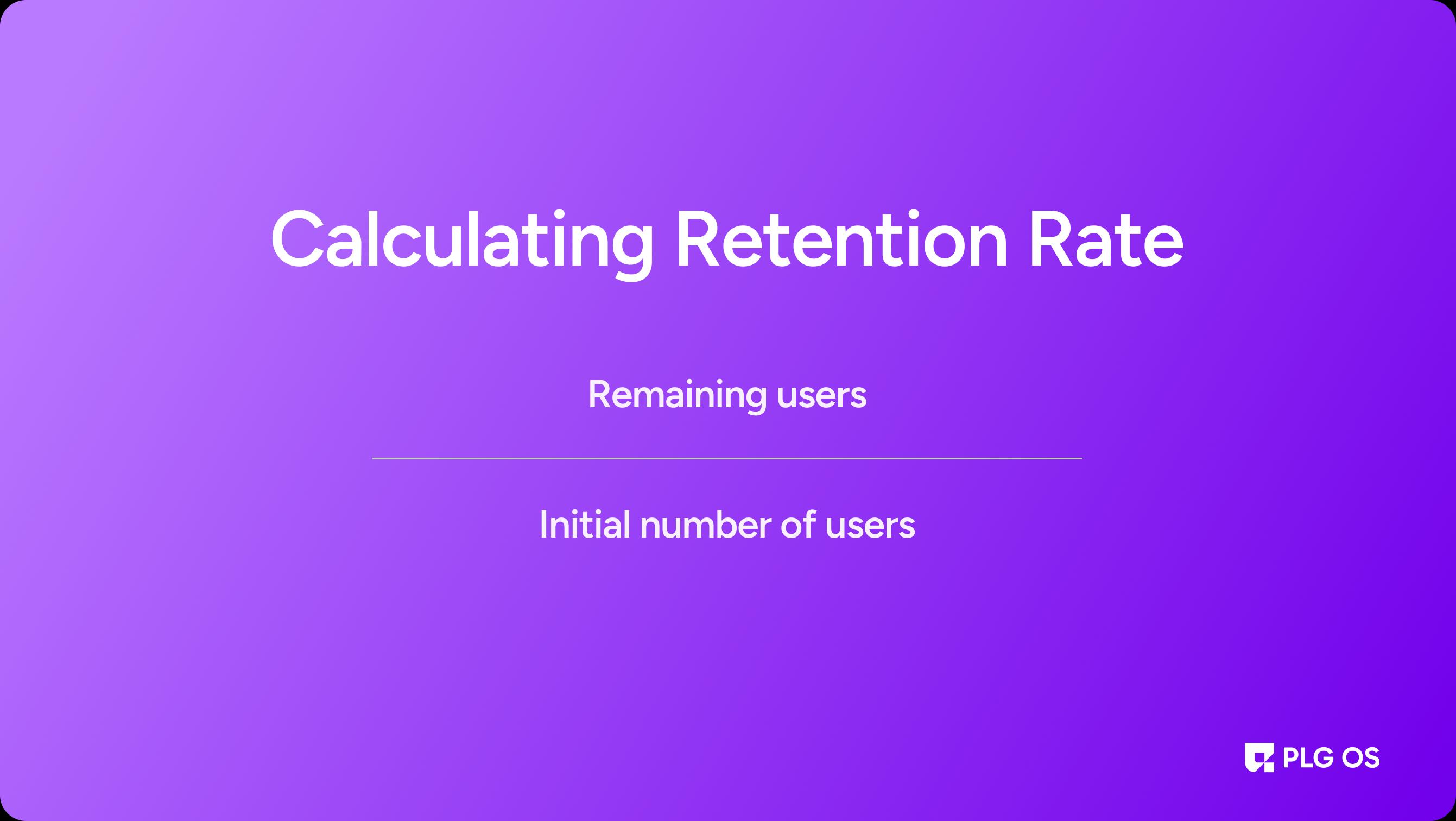
The retention rate measures how many customers your product manages hold on for a specific period of time. As onboarding is a critical component of retention rate optimization, monitoring this statistic will reveal the efficacy of your efforts.
How to Measure:
Retention rate = remaining users/initial number of users
Engagement rate
A group's engagement rate is the proportion of its members who sustain the use of your product.
How to Measure:
Engagement rate = Active users in a cohort/Users in a cohort
Free trial conversion rate
Simply put, the free trial conversion rate is the proportion of trial users that go on to become paid subscribers.
Free trial conversion rate = Users who convert/Free trial users
Completion rate
The percentage of users who successfully complete your onboarding process is known as the completion rate.
Completion rate = Users who finished onboarding/Users in that onboarding cohort
Time to value (TTV)
You can measure the time it takes for customers to acquire value from your product (also termed the aha moment) by looking at how long it takes from the start of onboarding to that point.
TTV = The amount of time it takes for users to get to their first aha moment
Avoiding Common Pitfalls in Onboarding
Overloading Users with Information:
The Problem: Bombarding new users with too much information at once can overwhelm and confuse them, leading to frustration or abandonment. Solution: Break the onboarding process into bite-sized steps.
Neglecting Personalization:
The Problem: A one-size-fits-all onboarding approach fails to address the unique needs and goals of different users. Solution: Leverage data like user roles or preferences to tailor the onboarding experience.
Ignoring User Feedback:
The Problem: Overlooking user feedback during onboarding can result in unresolved pain points and missed opportunities to improve. Solution: Implement feedback loops through surveys or quick polls.
Lack of Clear Success Metrics:
The Problem: Without defining and tracking success metrics, it's hard to determine if your onboarding efforts are effective. Solution: Identify key performance indicators (KPIs).
Complex or Unintuitive User Flows:
The Problem: A complicated or confusing onboarding flow can deter users from exploring your product further. Solution: Simplify and streamline the process.
Failing to Deliver Value Quickly:
The Problem: Users are likely to churn if they don't see value in your product within the first few interactions. Solution: Highlight your product's core benefits early.
Final Words
Instead of seeing client onboarding as a necessary evil, businesses could see it as a chance to impress their customers. After all, it establishes the standard that clients will be held to when they engage with your company.
Businesses should prioritise developing customer onboarding strategies that capture customers' attention from the initial point of contact in order to ensure client engagement, retention, and long-term success. Luckily, you may now succeed by following our shared best practices for customer onboarding.
Frequently Asked Questions
How do you create a customer lifetime value (CLV)?:
By delivering consistent value, personalizing experiences, and ensuring customer satisfaction, you can build strong relationships that drive repeat purchases and long-term loyalty.
How do you increase the value of your customers?:
Focus on upselling, cross-selling, loyalty programs, personalized offers, and improving overall customer experience to enhance the value customers bring to your business.
What influences the lifetime value of a customer?:
Factors include purchase frequency, average order value, customer retention rates, and overall satisfaction with your product or service.
How to increase value beyond current CLV?:
Offer subscription models, introduce tiered rewards programs, and deepen engagement through personalized content and proactive support.
How can I improve my CLV?:
Enhance customer experience, ensure timely follow-ups, offer value-added services, and reduce churn by addressing pain points effectively.
What is the difference between CLV and CAC?:
CLV measures the total revenue a customer brings over their lifetime, while CAC (Customer Acquisition Cost) is the expense incurred to acquire a new customer.
How to calculate CLV?:
Use the formula: CLV = (Average Purchase Value × Purchase Frequency × Customer Lifespan) – CAC.
Is higher CAC better?:
Not necessarily. A higher CAC is acceptable if it results in a proportionally higher CLV, ensuring a healthy return on investment (ROI).