6 Effective SaaS Platforms for Building User Journey Automation
Your customers aren’t following your funnel anymore. They’re hopping between devices, testing your product at midnight, ghosting your sales emails, returning a week later, and making buying decisions in ways no traditional funnel ever predicted. The era of predictable “step-by-step” marketing is dead.
What thrives in 2025? Intelligent user journey automation.
Not the cookie-cutter kind that just drips emails or sends reminders, but dynamic, behavior-driven journeys that adapt in real time. Journeys that feel human—even when powered by machines. Journeys that onboard, convert, and retain users without your team burning out.
And the secret weapon behind this? A new wave of SaaS automation tools designed to make customer experiences seamless, scalable, and profitable.
Let’s dive into the 6 most effective SaaS platforms for building automated customer journeys
What is a SaaS Customer Journey Map?
A SaaS customer journey map is a visual and detailed representation of every stage your customer goes through, the touchpoints they interact with, and the challenges they face before ultimately making a purchase. 86% of buyers say they will pay more for a better customer experience, making customer experience automation tools critical for growth.
Here’s how it breaks down:
Stages:
These are the key phases a SaaS customer experiences—from realizing they have a problem, searching for possible solutions, and comparing options, to finally deciding whether to make a purchase. In simple terms, the SaaS user journey typically includes four stages: awareness, consideration, evaluation, and decision.
Touchpoints:
These are the specific interactions or channels that guide a customer from one stage to the next. Touchpoints can include blog posts, SEO-driven web content, whitepapers, webinars, or even direct sales calls.
For example, imagine Prospect A is struggling to manage customer data and relationships. They start searching online for solutions and come across your blog post, “How to Strengthen Customer Relationships and Boost Sales.” The post not only addresses their problem but also introduces your CRM product as a potential solution. Here, Prospect A is in the awareness stage, engaging with a blog post (a touchpoint) that positions your product as a helpful answer to their challenge.
What is Customer Journey Automation?
Customer Journey Automation is the process of using technology—primarily SaaS automation tools—to design, manage, and optimize every step a customer takes with your brand, without requiring constant manual effort. Companies using user journey automation see a 451% increase in qualified leads compared to those relying on manual processes.
In simple terms, it’s about automating how you guide customers from their first interaction with your brand to becoming loyal, repeat users, while ensuring their experience feels personalized and seamless.
Instead of manually sending emails, nudging leads, or tracking behavior, customer journey automation:
- Maps each stage of the journey (awareness, consideration, evaluation, decision, onboarding, retention).
- Automates touchpoints like emails, in-app notifications, SMS, chat prompts, or retargeted ads.
- Personalizes actions based on behavior and data (for example, a user who abandoned a free trial might get a targeted email sequence, while an active user could be nudged toward an upgrade).
- Provides analytics so businesses can refine and improve their customer experience continuously.
Think of it as creating automated customer journeys that feel human—anticipating user needs and nudging them toward the right next step, all powered by software.
Why User Journey Automation Is More Than Just “Marketing Automation”?
Before we dive into tools, let’s clear one misconception: user journey automation is not just sending scheduled emails. It’s about orchestrating every interaction—website, product, email, support, and beyond—so users experience a cohesive, personalized path to success. Automated customer journeys can improve customer retention rates by 30–50%, significantly boosting recurring revenue.
The benefits?
- Higher activation and retention rates through SaaS tools for user onboarding
- Faster revenue growth by shortening time-to-value
- Seamless scalability, as you don’t need to manually nurture every lead
- Rich behavioral insights to improve your product and marketing
In short, it’s not about “less work for marketers,” it’s about smarter growth at scale. And with the right platforms, you can build automated customer journeys that feel human, not robotic.
The 6 Best SaaS Platforms for Building Automated Customer Journeys
Now let’s get into the real meat: the SaaS automation tools that are actually delivering results in 2025. These platforms aren’t just well-known—they’re innovative, scalable, and designed for real impact.
1. PLG OS – The Growth Engine for Product-Led Companies
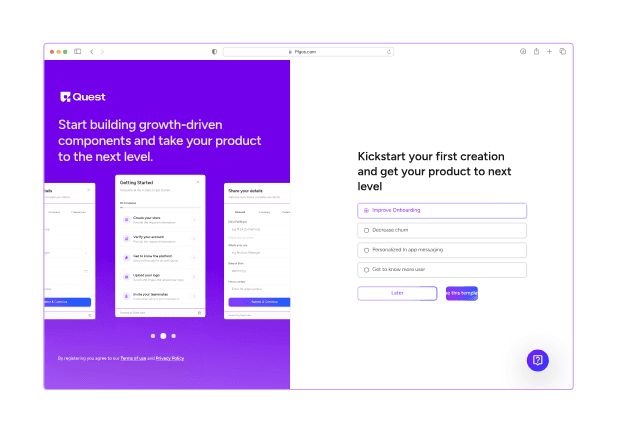
If you’re a SaaS company (or even a product-first brand), PLG OS should be your first stop. Unlike most customer experience automation tools, PLG OS doesn’t just help you automate—it helps you grow organically by aligning every touchpoint with your product-led growth (PLG) strategy.
What makes it different?
Product-led growth blueprinting:
PLG OS helps businesses map the entire customer lifecycle, from trial to paid conversion, with behavior-driven triggers.
Automated customer success journeys:
Onboard, nurture, and upsell users using real-time product data, not guesswork.
Data unification:
Instead of cobbling together CRMs, analytics, and engagement tools, PLG OS consolidates it all into a single command center.
AI-driven recommendations:
Suggests next steps for users (and your team) to reduce churn and boost expansion revenue.
For SaaS brands struggling to turn signups into active, paying users, PLG OS is a lifesaver. It’s the only tool on this list built specifically for SaaS tools for user onboarding and customer retention, which makes it the best-kept secret in the best SaaS for marketing automation category.
2. HubSpot Marketing Hub – Still the All-in-One Giant
It’s hard to talk about SaaS platforms for marketing without mentioning HubSpot. While it’s not the most cutting-edge on this list, its customer journey automation capabilities are robust—especially for businesses that want one system for everything (CRM, email, ads, reporting).
What HubSpot does well:
- Drag-and-drop journey builder for automated workflows
- Personalization across channels (email, chat, social)
- Deep integration with CRMs and sales pipelines
- Powerful analytics for attribution and campaign ROI
However, HubSpot can feel bloated (and expensive) for smaller teams. It’s perfect for mid-to-large businesses that want a centralized growth platform.
3. ActiveCampaign – The Personalization Powerhouse
If your primary goal is creating automated customer journeys that feel tailored to each user, ActiveCampaign is a top contender.
Why it stands out:
- Advanced segmentation based on behavior, preferences, and engagement
- Conditional content that dynamically changes based on user actions
- Multi-channel automation (email, SMS, chat, and site tracking)
- Affordable scalability for startups and growing teams
For businesses looking to maximize customer experience automation tools without the enterprise-level complexity, ActiveCampaign strikes the right balance.
4. Intercom – Where Conversations Drive Journeys
While Intercom started as a chat tool, it’s evolved into a SaaS automation tool that drives user engagement and onboarding.
Intercom is ideal if:
- You want real-time, personalized onboarding flows (guided tours, chatbots, targeted messages).
- You prioritize human-like engagement alongside automation.
- You value proactive support automation, such as nudging users before they churn
Its strength lies in combining support, sales, and marketing automation, making it one of the most versatile customer experience automation tools for SaaS products.
5. Klaviyo – Best for E-Commerce SaaS Journeys
While many SaaS automation tools cater to B2B, Klaviyo shines for e-commerce and D2C brands that want to build automated customer journeys spanning email, SMS, and in-app notifications.
Why Klaviyo is worth considering:
- Pre-built templates for abandoned carts, re-engagement, and post-purchase flows.
- Powerful data syncing with Shopify, WooCommerce, and other platforms.
- Predictive analytics for personalized recommendations
For any brand selling products or subscriptions online, Klaviyo is a best SaaS for marketing automation when it comes to driving retention and lifetime value.
6. Customer.io – For Developers Who Want Total Control
Customer.io is a SaaS platform for marketing teams that prefer customization over plug-and-play solutions. Unlike HubSpot or ActiveCampaign, it’s developer-friendly and highly flexible.
Key benefits:
- Event-based triggers for hyper-specific user journey automation.
- APIs for full customization of data, logic, and messaging.
- Multi-channel orchestration across email, SMS, push, and in-app
- Ideal for complex products that need custom workflows beyond standard templates
If you have a technical team and want SaaS tools for user onboarding that match your product’s complexity, Customer.io is your platform.
How to Choose the Right SaaS Automation Tool for Your Business
Not every tool is right for every business. When evaluating, ask yourself:
Are you product-led or sales-led?:
If product-led, start with PLG OS—it’s built for exactly that.
Do you need simplicity or flexibility?:
Tools like HubSpot offer simplicity; Customer.io offers flexibility.
What channels matter most?:
If you need SMS and e-commerce flows, Klaviyo leads the pack.
What’s your growth stage?:
Startups might prefer affordable, nimble tools like ActiveCampaign, while enterprises lean toward HubSpot or Intercom.
Why PLG OS Stands Out in 2025
Among all these tools, PLG OS is the one you’re least likely to see on every “top 10 list”—but it’s also the most future-ready. Here’s why:
- It’s built for customer journey automation in the SaaS space, not retrofitted like others.
- It focuses on user activation and retention, the two biggest revenue levers for SaaS growth.
- It eliminates tech bloat by replacing multiple disjointed systems.
- It’s scalable for both startups and enterprises, unlike most niche PLG tools.
For SaaS founders and marketers looking to automate customer experiences without losing the human touch, PLG OS deserves a serious look.
Final Thoughts
In 2025, automated customer journeys aren’t about cold, robotic workflows. They’re about anticipating needs, guiding actions, and making every interaction seamless.
The right SaaS automation tools—from industry leaders like HubSpot to disruptors like PLG OS—help you deliver exactly that. Whether your goal is onboarding, retention, or revenue expansion, these platforms don’t just automate; they elevate your entire user experience.
If you’re serious about building intelligent, scalable, and user-centric growth systems, it’s time to explore these tools—and start turning every customer journey into a conversion engine.
FAQs
1. What is user journey automation?
User journey automation is the process of using SaaS automation tools to guide customers through personalized steps—from onboarding to retention—without manual effort, ensuring a seamless experience.
2. Why is PLG OS ideal for SaaS companies?
PLG OS is designed specifically for product-led growth, helping SaaS brands automate onboarding, retention, and upsell journeys using real-time product data.
3. Which SaaS tools work best for customer onboarding?
Platforms like PLG OS, Intercom, and Customer.io excel at creating automated customer journeys for smooth onboarding and activation.
4. Are these platforms suitable for small businesses?
Yes. Tools like ActiveCampaign and Klaviyo offer affordable plans, while scalable options like PLG OS grow with your business.
5. How do I choose the best SaaS for marketing automation?
Consider your business model (product-led or sales-led), budget, preferred channels (email, SMS, in-app), and whether you need simplicity (HubSpot) or flexibility (Customer.io).