8-Customer-Feedback-Tools-to-Automate-Feedback-Collection
Let’s be honest: Your users are talking. Constantly. Through reviews, messages, support tickets, surveys, and more. But are you really listening or are you just collecting words? Welcome to the age of automated feedback collection and AI-driven analysis. Gone are the days of spreadsheets and guesswork. Today, you need customer feedback tools that work round the clock, decode emotion, spot trends, and deliver actionable insights before the churn hits.
So if you’re drowning in data but starving for insights, you’re in the right place.
Let’s dive into 8 best feedback tools that are transforming how companies collect, manage, and analyze customer feedback automatically.
What are customer feedback tools?
Customer feedback tools are more than just survey software; they are critical systems for businesses to collect, evaluate, and act on consumer data. Traditional surveys merely collect replies, whereas new feedback solutions speed data collecting across many channels, identify patterns using AI, and automate workflows to take action. 75% of customers expect companies to use their feedback to improve products and services.
Without a systematic system, businesses rely on fragmented feedback from support tickets, internet reviews, or word of mouth, resulting in crucial insights being missed. If a hospital does not gather systematic post-visit feedback, it may have difficulty tracking patient discontent. If a bank does not survey applicants after important interactions, it risks losing customers due to a delayed loan process. Unless an eCommerce brand aggressively solicits feedback from customers, it may overlook checkout friction concerns.
Why are Customer Feedback Tools Important?
Customer feedback tools are more than simply a way to collect thoughts; they are also a growth engine for firms. Companies may continuously enhance their services and consumer experiences by converting feedback into useful knowledge. Here's why these tools are important:
Drive Business Growth with Customer Insights
Understanding what customers want, need, and anticipate enables organizations to make more informed decisions, optimize services, and improve customer happiness. For example, a restaurant chain may observe a decrease in NPS at one location and promptly explore if it is attributable to meal quality, service, or wait times.
Reduce Churn and Improve Retention.
Unresolved consumer unhappiness causes churn. Feedback tools enable organizations to identify pain spots early and take decisive action before customers leave. A SaaS company may discover that users are leaving after onboarding because of poor product instructions; by evaluating feedback, they may improve lessons and increase retention.
Measure Long-Term Loyalty & Transactional Feedback
Tracking Net Promoter Score (NPS) and collecting transactional feedback can help firms create long-term customer relationships. A bank might use NPS to determine trust in its services, whereas a hotel might send a quick CSAT survey after check-out to assess a guest's stay experience.
Enhance Product, Service, and Brand Perception
Gathering input from various touchpoints—emails, surveys, in-app widgets, chatbots, and kiosks—helps businesses improve their goods, services, and brand reputation. A fashion firm may employ post-purchase surveys to optimise the online shopping experience, ensuring that customers find the appropriate fit. Businesses that actively collect and act on feedback experience up to a25% increase in customer retention.
8 Customer Feedback Tools
Collecting customer feedback is the first step toward building better products and services, but without analyzing feedback using the right analysis tools, insights often go unnoticed. By gathering feedback consistently and interpreting survey responses with advanced analytics tools, businesses can identify trends that truly matter. These insights empower support teams and product development units to make faster, smarter, data-driven decisions. Ultimately, the right feedback and analytics strategy transforms raw opinions into real product improvements.
1. PLG OS
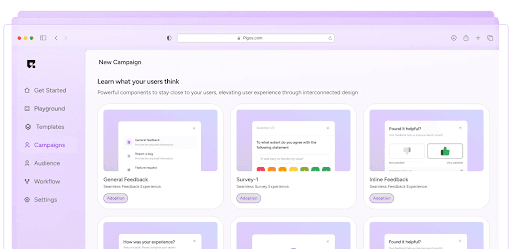
If your product is your biggest marketing channel (hello, product-led growth), then feedback isn’t just useful—it’s everything.
PLG OS is built for this philosophy. It’s not just a feedback management software it’s a complete user feedback engine with automation at its core.
What makes PLG OS stand out?
- Collects feedback at key moments : Onboarding, feature use, friction points—fully integrated.
- AI Feedback Analysis: Instantly parses sentiment, urgency, and user type.
- Built-in surveys and widgets that feel native to your app or site.
- Dashboards made for product teams: Spot what’s working, what’s not, and what’s next.
Bonus: It connects feedback to activation, retention, and growth metrics. So, you're not just hearing your users you’re learning from them.
Perfect for: SaaS companies, PLG startups, and teams tired of juggling 4 tools when 1 will do.
2. Typeforms
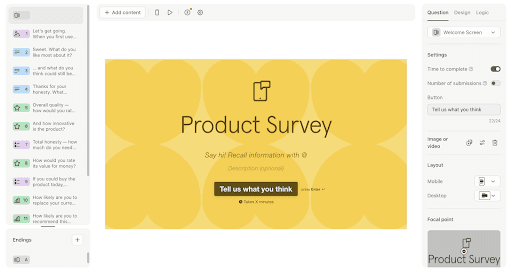
Sure, this one’s a build-it-yourself solution, but if you’re scrappy, it works. Combine Typeform (for sleek, engaging surveys) with Google Sheets and layer GPT-based automation or sentiment models on top. Boom: You’ve built a feedback engine on a budget.
Why it works:
- Typeform’s forms feel more like conversations than surveys.
- Data goes directly into Sheets (which integrates easily).
- Add GPT or sentiment analysis tools for instant emotional tagging and summary.
Pro Tip: Use Zapier to automate everything—survey triggers, tagging, report generation, even Slack alerts.
Best for: Startups, solopreneurs, and product teams in experimentation mode.
3. Hotjar
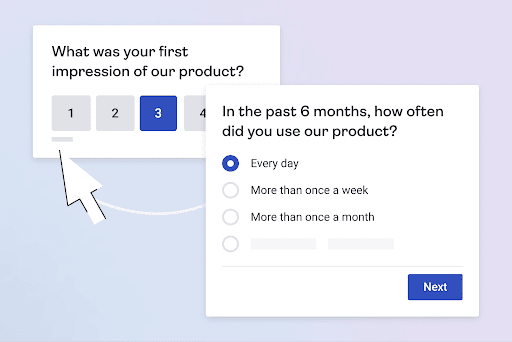
Hotjar started as a behavior tracking tool, but its feedback collection features are underrated gold.
What you get:
- In-app feedback widgets that ask users how they feel—right as they interact.
- Session recordings + feedback = context that matters.
- Net Promoter Score (NPS) tracking baked in.
Want to know not just what users are doing but how they feel while doing it? This is your tool.
Hotjar + AI plugins = instant feedback analysis software.
Great for: UX teams, designers, product managers.
4. Qualtrics
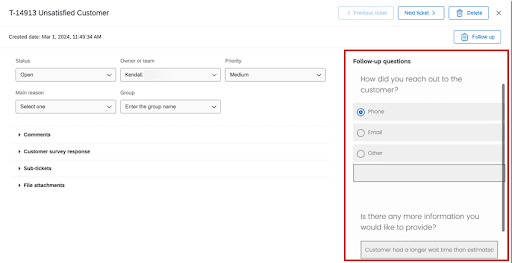
If you’re looking for scale and sophistication, Qualtrics still wears the crown.
Built for enterprise-level feedback management, this tool goes way beyond surveys.
Why big brands swear by it:
- Advanced sentiment analysis tools and predictive analytics.
- Omnichannel feedback collection: web, mobile, SMS, email, and more.
- Customer journey tracking tied to feedback touchpoints.
And yes, it’s expensive. But if you’ve got 100,000+ customers, multiple products, and a global team—it’s worth every penny.
Best for: Enterprises, banks, global SaaS companies, large-scale eCommerce.
5. UseResponse
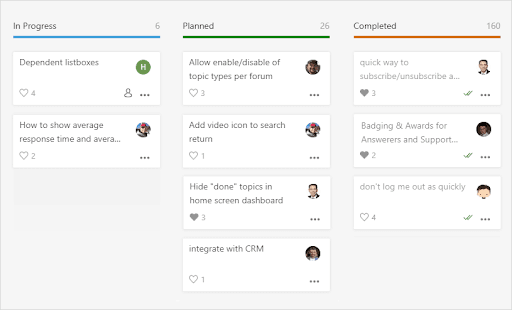
UseResponse does something clever: It doesn’t just collect feedback—it helps you build a feedback community.
Key features:
- Public or private feedback boards.
- Voting systems so users surface the most pressing issues
- In-built AI to analyze themes and sentiment.
- Ties into a support ticketing system for faster resolution.
If you want feedback to be a conversation, not a form submission, UseResponse hits the sweet spot.
Ideal for: B2B SaaS, open-source platforms, and teams building in public.
6. Survicate
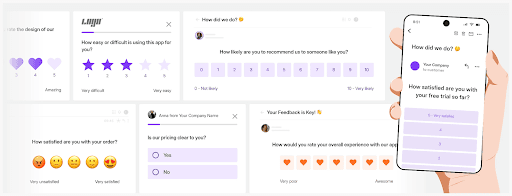
Survicate is fast becoming a favorite for marketers and product teams alike.
Why?
It excels at targeted feedback collection, right when the customer is experiencing your product.
How it helps:
- Trigger surveys on websites, emails, or apps.
- Responses sync with your CRM, analytics, and support tools.
- Fast setup. No code. No drama
Use Survicate to optimize customer journeys with laser-targeted surveys, then plug the responses into your favorite AI feedback analysis tools.
Best for: Growth teams, customer experience (CX) managers, and agile product squads.
7. Canny
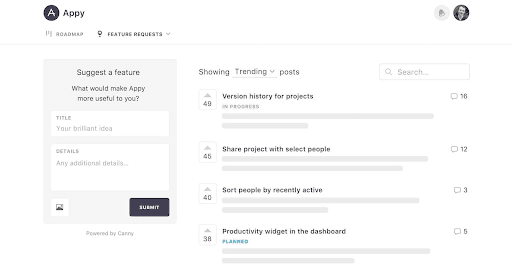
Canny isn’t just a user feedback software it’s a prioritization system disguised as a simple tool.
What’s awesome:
- Users submit and upvote feature requests.
- You get instant visibility into what your audience actually wants.
- Roadmap and changelog management are built-in.
- Slack + Jira + Intercom integrations = seamless workflow.
Canny turns feedback into a living product strategy, so you’re not just collecting—it’s fueling action
Perfect for: Product teams, early-stage SaaS, community-led growth.
8. MonkeyLearn
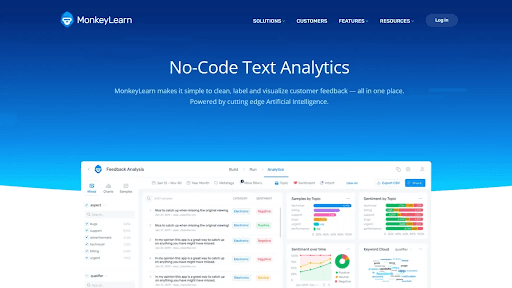
If your team is overwhelmed with open-ended feedback support tickets, reviews, comments MonkeyLearn helps you make sense of the chaos.
What it offers:
- Powerful feedback analysis software powered by custom-trained AI models.
- Drag-and-drop interface for non-tech teams.
- Sentiment, topic, keyword, and intent analysis.
MonkeyLearn isn’t a survey tool. It’s an AI layer that plugs into your existing sources and surfaces trends you didn’t even know to look for.
Pair it with other tools like PLG OS or Survicate, and your feedback loop just leveled up.
Great for: Data teams, support analytics, and businesses that live in text-based feedback.
Which Feedback Tool Is Right for You?
Organizations using automated feedback systems report a 40% faster response time to customer issues. Let’s break it down:
| Use Case | Recommended Tool |
|---|---|
| All-in-one PLG-ready feedback + analytics | PLG OS |
| Budget + DIY + GPT power | Typeform + Sheets + GPT |
| UX + behavior feedback | Hotjar |
| Enterprise-scale analysis | Qualtrics |
| Community + customer collaboration | UseResponse |
| Targeted in-product surveys | Survicate |
| Product feedback + roadmap | Canny |
| AI-driven open-text analysis | MonkeyLearn |
Final Thoughts: Listen Smarter, Not Harder
You don’t need more feedback
You need smarter feedback systems. Ones that collect at the right time, analyze with precision, and surface real patterns.
And most importantly? Ones that help you act, before it’s too late.
Start with PLG OS if you’re serious about feedback fueling your product growth. Pair it with one or two other tools, depending on your stack, and you’ll never look at feedback the same way again.
FAQs
1. How much time can automated feedback tools save per week?
By eliminating manual survey analysis and reporting, automated feedback tools can save up to 10–15 hours/week.
2. What’s the average response rate for in-app surveys?
Around 20–25%, significantly higher than email surveys (5–10%).
3. How accurate is AI sentiment analysis?
Depending on the training data and complexity, the accuracy typically ranges from 80 to 90 percent.
4. How many feedback sources can a tool like PLG OS handle?
More than 5 integrated sources, including in-app, email, CRM, and support tools.
5. How fast can AI-powered tools deliver insights from raw feedback?
Real-time trend and sentiment reports can be generated in as little as 60 seconds.