13 Best Customer Feedback Tools for SaaS Companies
In 2025, customer expectations are sky-high—and you're already losing if you’re not listening. With 90% of consumers saying they expect brands to respond to feedback instantly, companies can no longer afford to guess what users want. Feedback isn’t just a nice-to-have; it’s the heartbeat of product-led growth. Whether you’re a startup fine-tuning your MVP or a scaling SaaS with thousands of users, real-time insights can make or break your next big move.
The good news? You don’t need to build a complex feedback loop from scratch. There’s a wave of powerful, intuitive tools designed to help you collect, analyze, and act on customer feedback—without slowing your team down. In this guide, we’re breaking down the 13 best customer feedback tools of 2025 to help you pick the right one for your product.
What Is A Customer Feedback Tool?
Tools for customer feedback are meant to help product teams see how users connect with their product(s) and find out what they think, mainly what works and what doesn't. With 79% of customers expecting brands to act on their input and 90% demanding fast responses, collecting and using feedback smartly is non-negotiable. With polls, forms, ratings, comments, and community conversations, these tools help you discover what many people like and don't like about your product or service.
Types of Customer Feedback Tools
These are the four main types of SaaS customer feedback tools:
1. In-app customer feedback software
As their name suggests, in-app feedback tools are set up to add polls to the experience of using an app, whether on the web or a phone. You can use conditional logic to make them happen when users reach specific goals.
2. Traditional survey tools
Customers can take simple Q&A quizzes with traditional survey tools like Momentive, Jotform, Typeform, and more. They can answer via text, a metric scale (On a scale of 1 to 10...), or other funky options like images, etc.
3. Customer review generation and management tools
Most review management tools are connected to popular sites like G2, Google Business, Facebook, and Yelp. This makes it easy for customers to leave reviews that show up on those sites. They can also be used to manage your image by disputing negative reviews and getting them taken down.
4. Tools for end-user analysis and opinion
Sentiment analysis tools use AI and machine learning to determine what many customer reviews, messages, and notes are really about. The goal is to find themes that run through all the data so that you can focus on the most critical problems that come up repeatedly instead of working on every minor issue.
Why are customer feedback tools essential?
You can get customer feedback, look it over, and react to it with customer feedback tools. They can look like polls, comment boxes, or online review sites, among other things.
65% of businesses expect customer feedback to impact product development. For many reasons, this kind of tool is very important.
- Insight into what customers want: By actively asking for feedback, you can figure out how to improve your products or services and meet your customers' wants.
- More satisfied customers: Customers are more likely to feel valued and happy if they see that you take their comments into account and act on it. This can make people more loyal and spread good word of mouth.
- Faster problem resolution: tools for collecting customer feedback help you quickly find and fix problems. This could help keep bad things from getting worse, which could hurt your image.
- Advantage in the market: Companies that ask for and act on customer comments often have an advantage. They can quickly change based on what customers want and how the market is doing. 77% of customersview brands more optimistically if they seek customer feedback and implement them.
- Better customer retention: Customers who are happy with your business will stick with it. Tools for getting feedback from customers help you find problems quickly and take steps to keep customers.
13 Customer Feedback Tools for SaaS Companies
1. Zonka Feedback
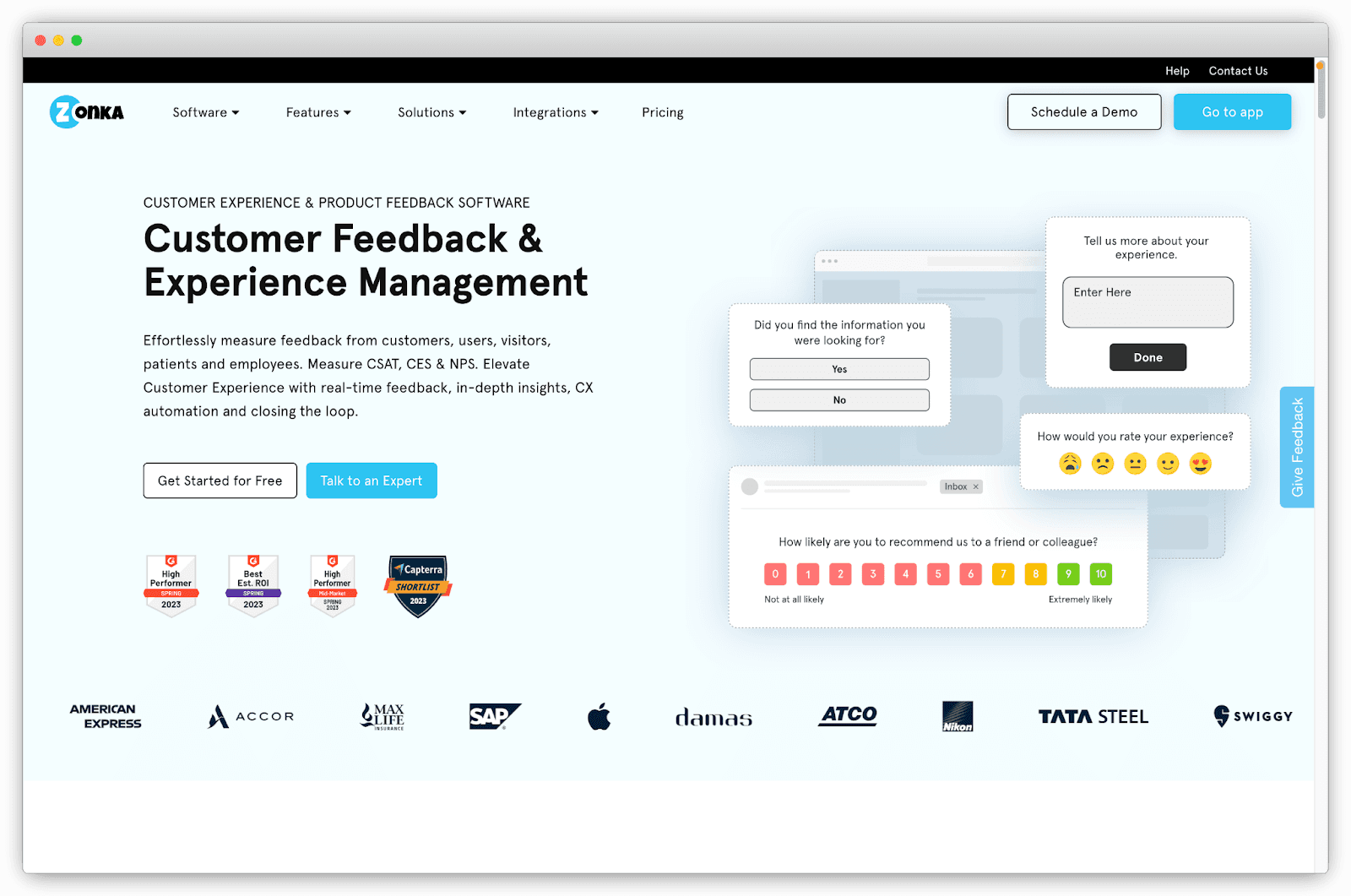
Zonka Feedback is an AI-driven platform that enables businesses to collect feedback across multiple channels, including email, SMS, WhatsApp, and in-app surveys. It offers real-time alerts, automated workflows, and deep integrations with CRM systems, making it ideal for businesses seeking comprehensive feedback solutions.
2. SurveySparrow
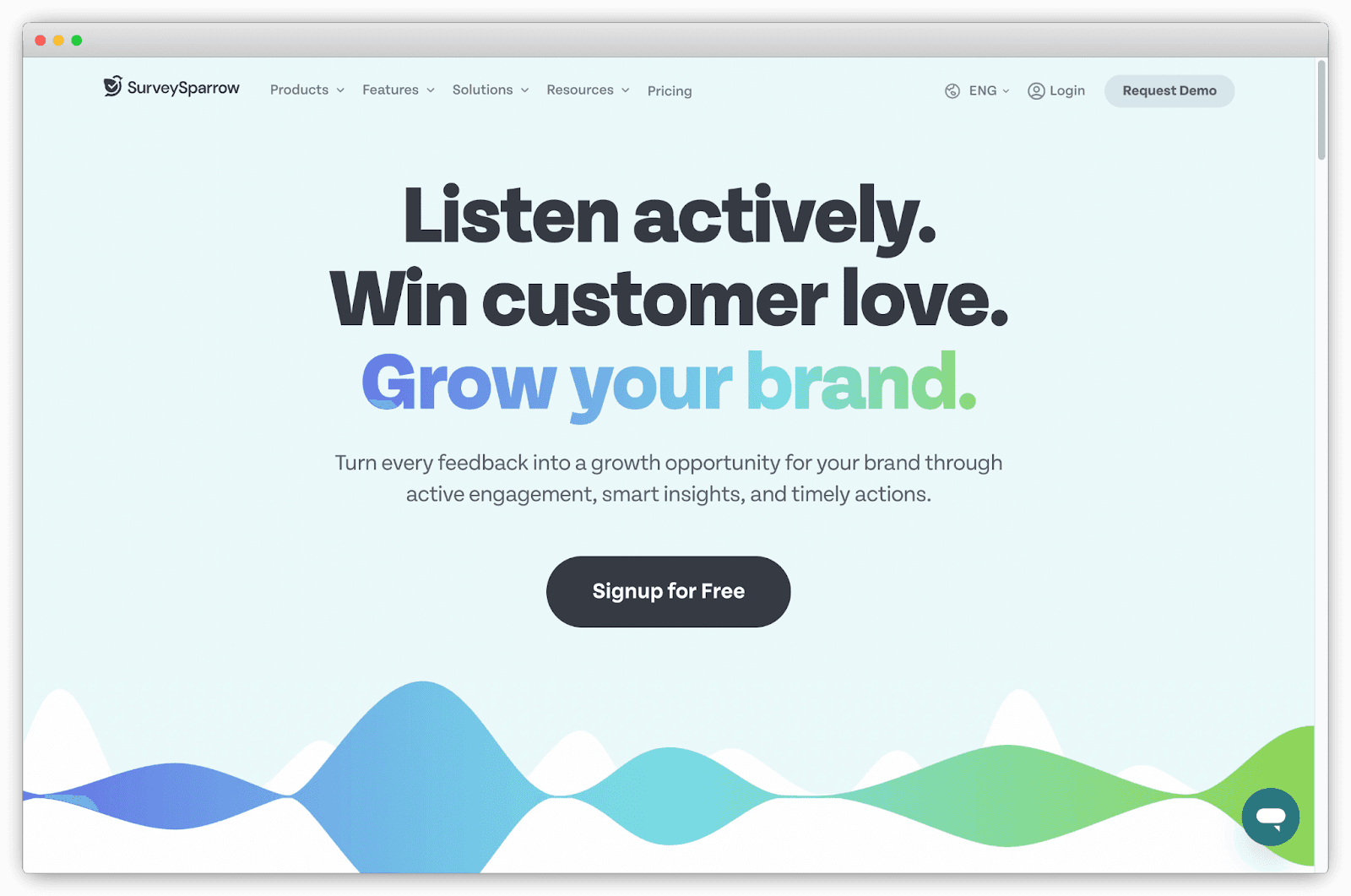
SurveySparrow provides conversational surveys that engage respondents, leading to higher completion rates. Its features include recurring surveys, offline data collection, and integration with various third-party applications, making it suitable for businesses aiming for continuous feedback loops.
3. Qualtrics
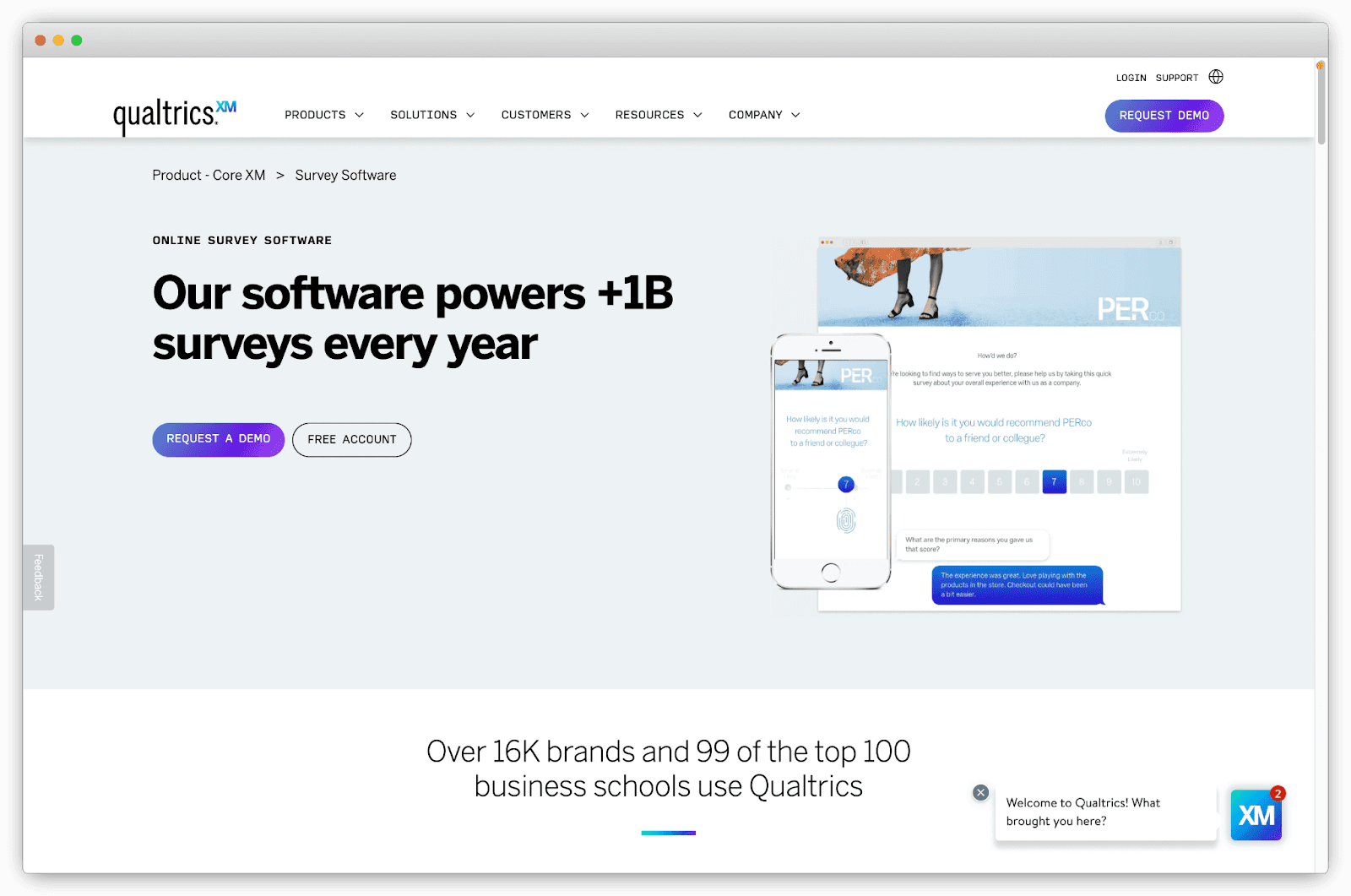
Qualtrics is a robust experience management platform that offers advanced survey capabilities, predictive analytics, and real-time insights. It's particularly beneficial for enterprises looking to delve deep into customer sentiments and drive strategic decisions based on data.
4. Hotjar
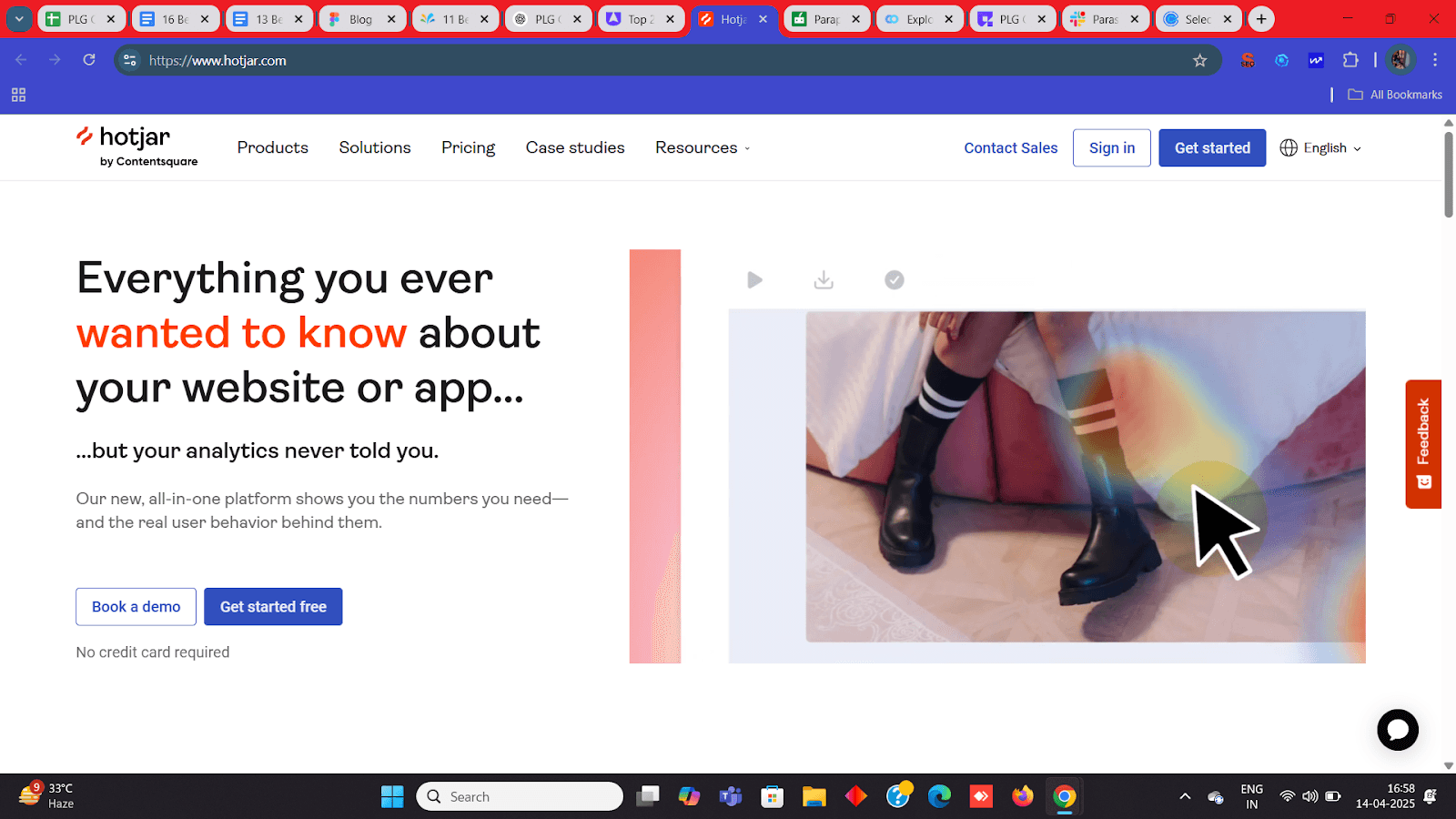
Hotjar combines feedback tools with behavior analytics, offering features like heatmaps, session recordings, and feedback polls. This combination allows businesses to understand not just what users say, but how they interact with their websites.
5. Userback
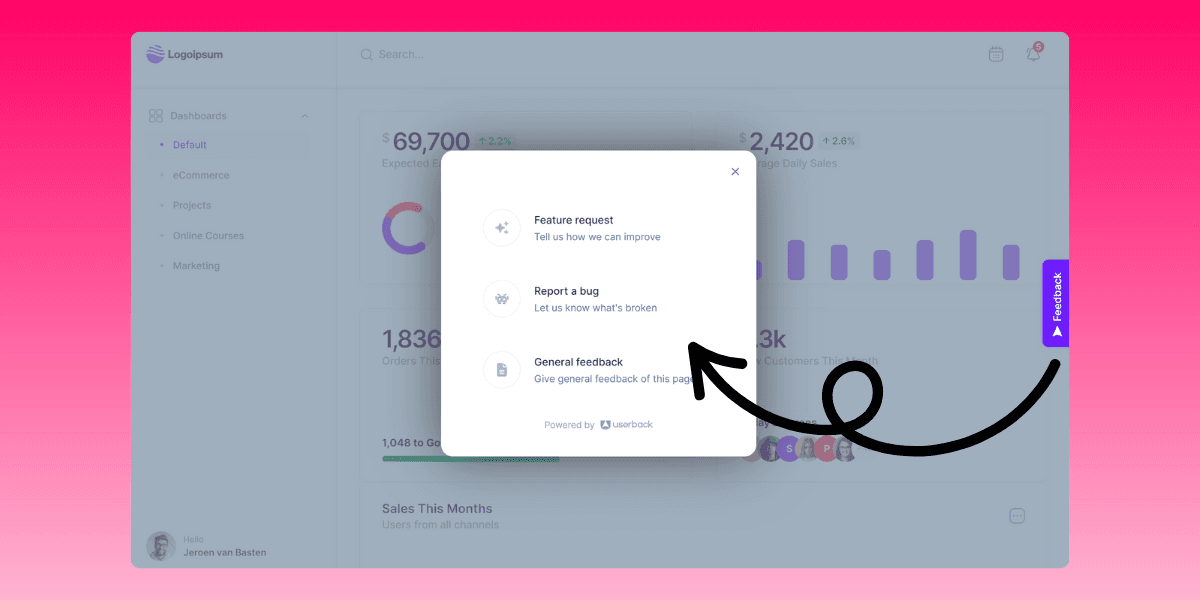
Userback specializes in visual feedback, enabling users to provide annotated screenshots and videos. It benefits SaaS companies and web developers aiming to streamline the bug reporting and feedback process.
6. Typeform
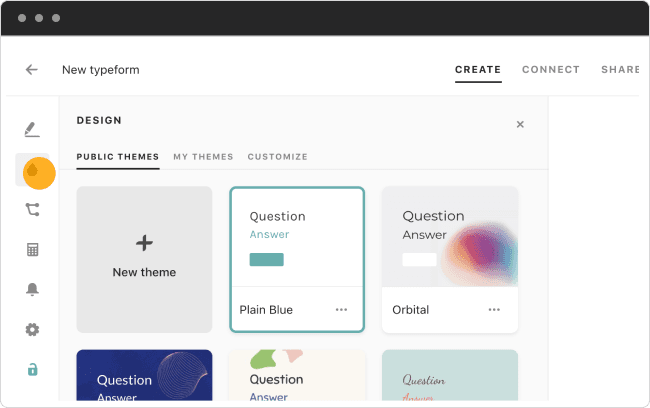
Typeform offers aesthetically pleasing and interactive forms and surveys. Its user-friendly interface and customizable templates make it a favorite for businesses looking to enhance user engagement during feedback.
7. Survicate
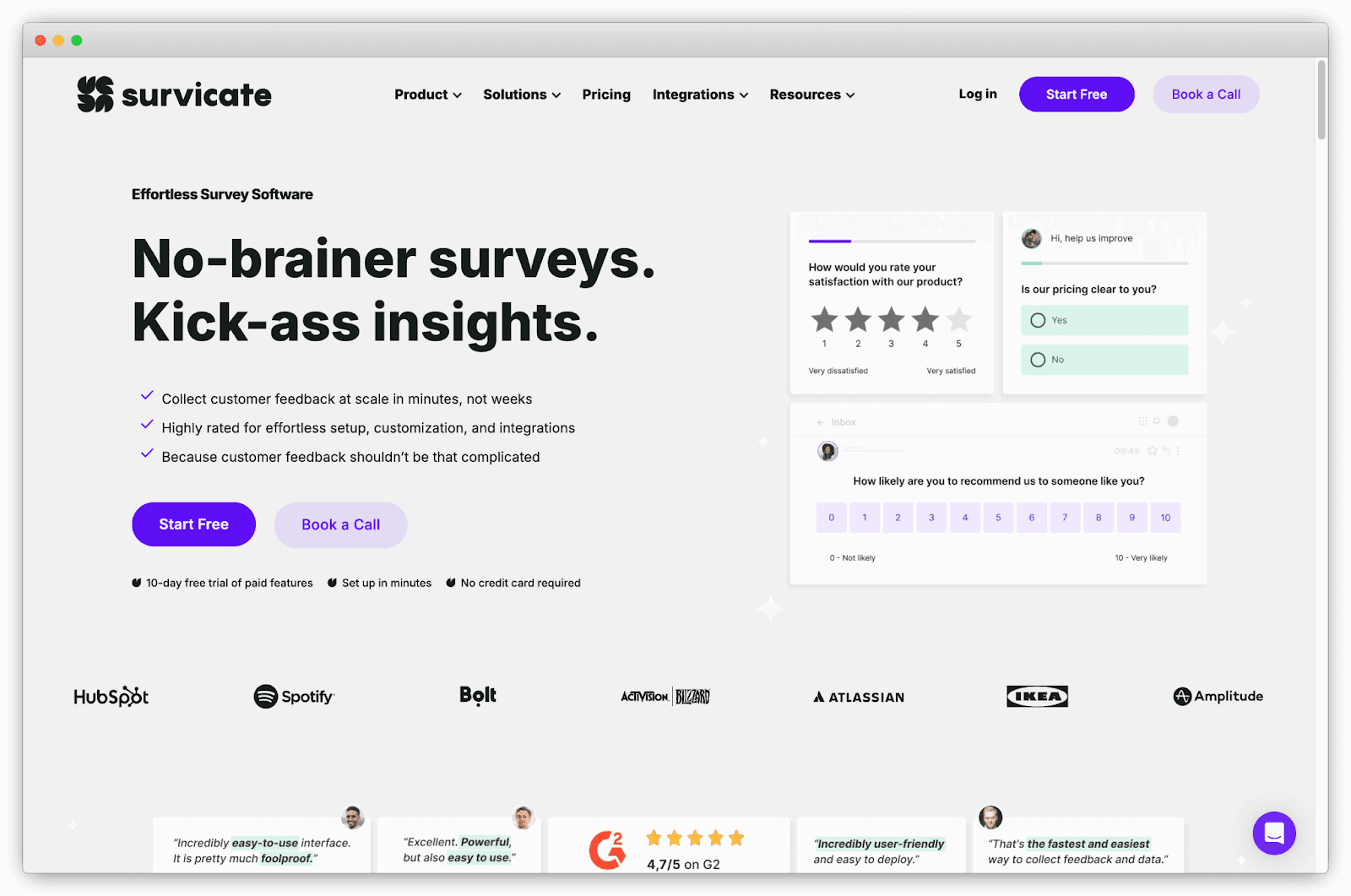
Survicate allows businesses to collect feedback through various channels, including web surveys, email, and mobile apps. It offers features like NPS, CSAT, and CES surveys and integrations with popular marketing and CRM tools.
8. Canny
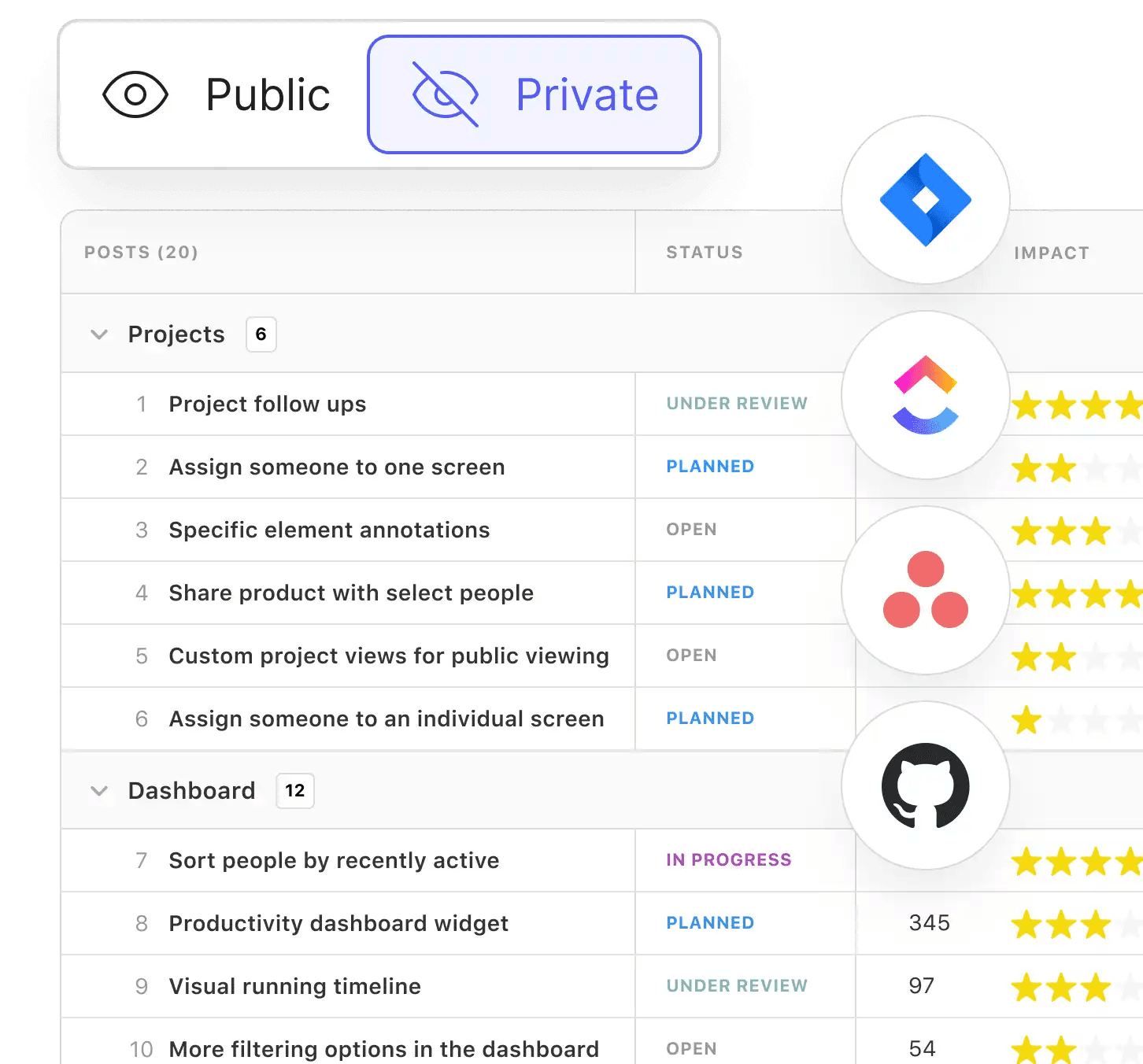
Canny is designed to collect and manage user feedback for product development. It enables users to submit feature requests, vote on them, and track their progress, making it ideal for SaaS companies focusing on product improvement.
9. Pendo
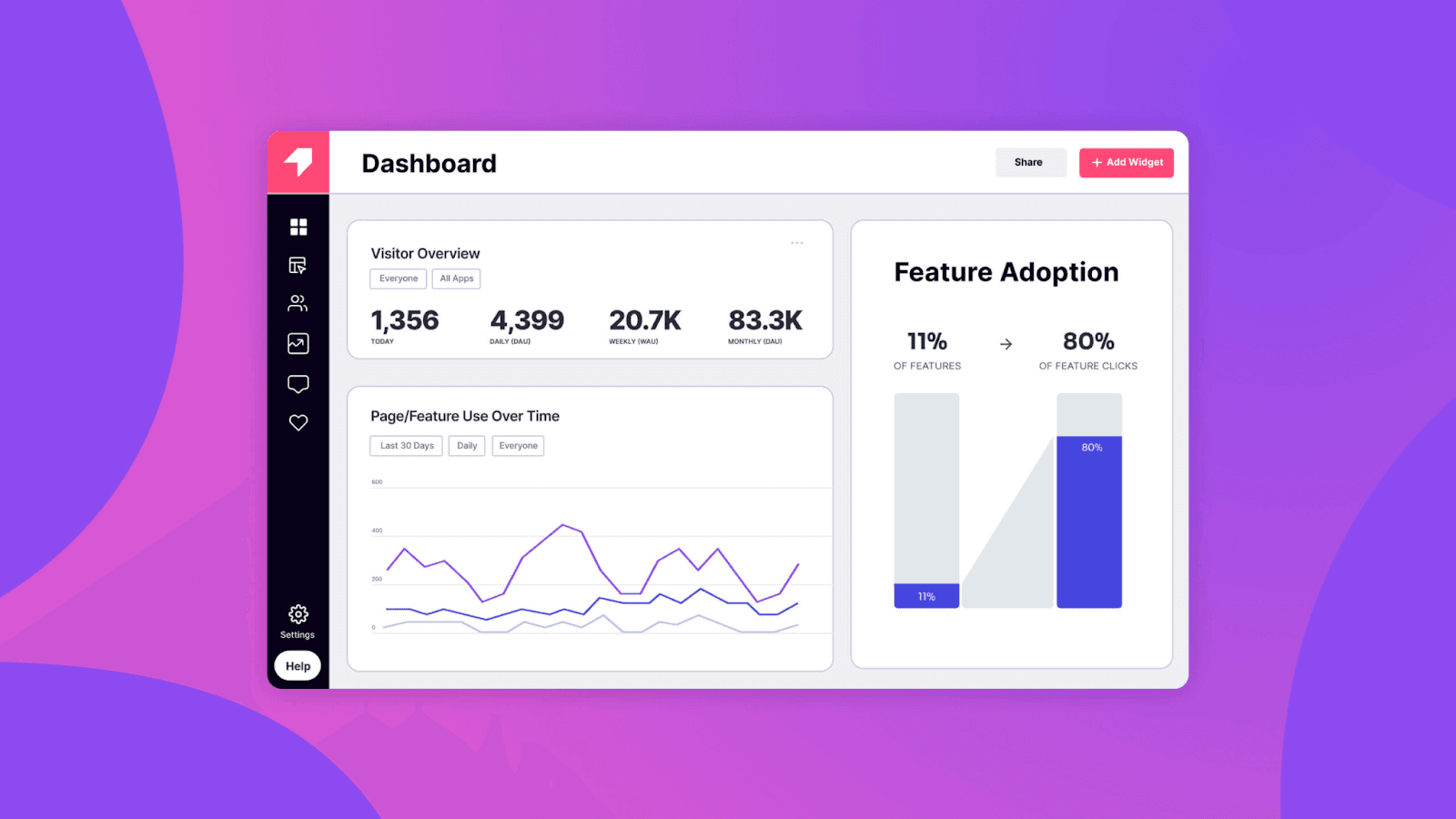
Pendo combines product analytics with user feedback, allowing businesses to understand user behavior and gather insights directly within their applications. It's particularly beneficial for product teams aiming to enhance user onboarding and feature adoption.
10. AskNicely
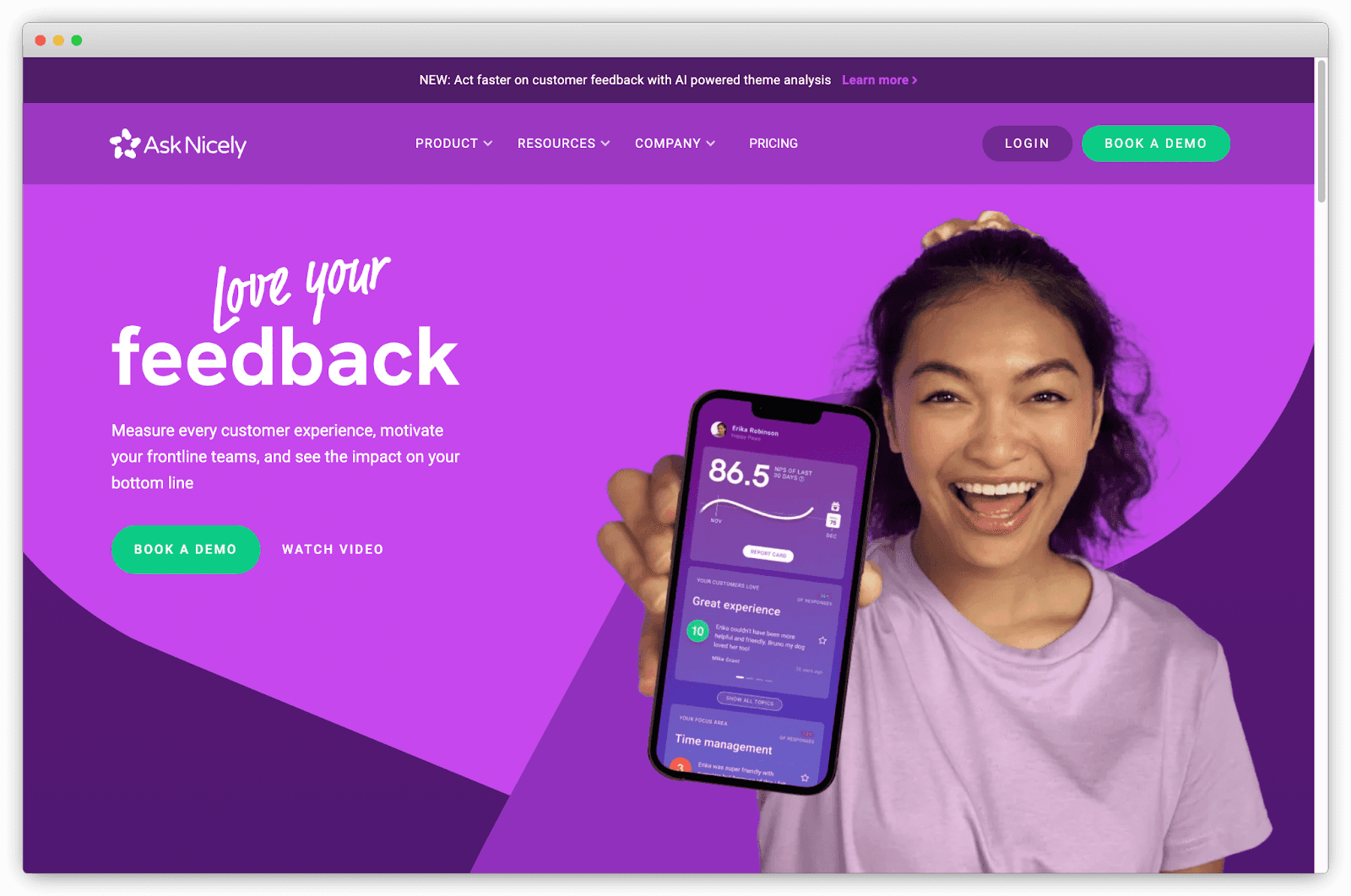
AskNicely focuses on collecting real-time customer feedback through NPS surveys. It integrates with CRM systems and provides actionable insights to frontline teams, promoting a customer-centric culture within organizations.
11. Mopinion
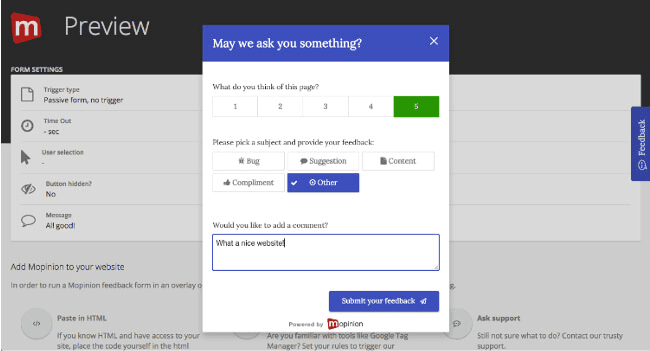
Mopinion offers a comprehensive feedback solution with customizable dashboards, real-time analytics, and advanced targeting options. It suits businesses aiming to collect feedback across digital channels and drive data-informed decisions.
12. InMoment
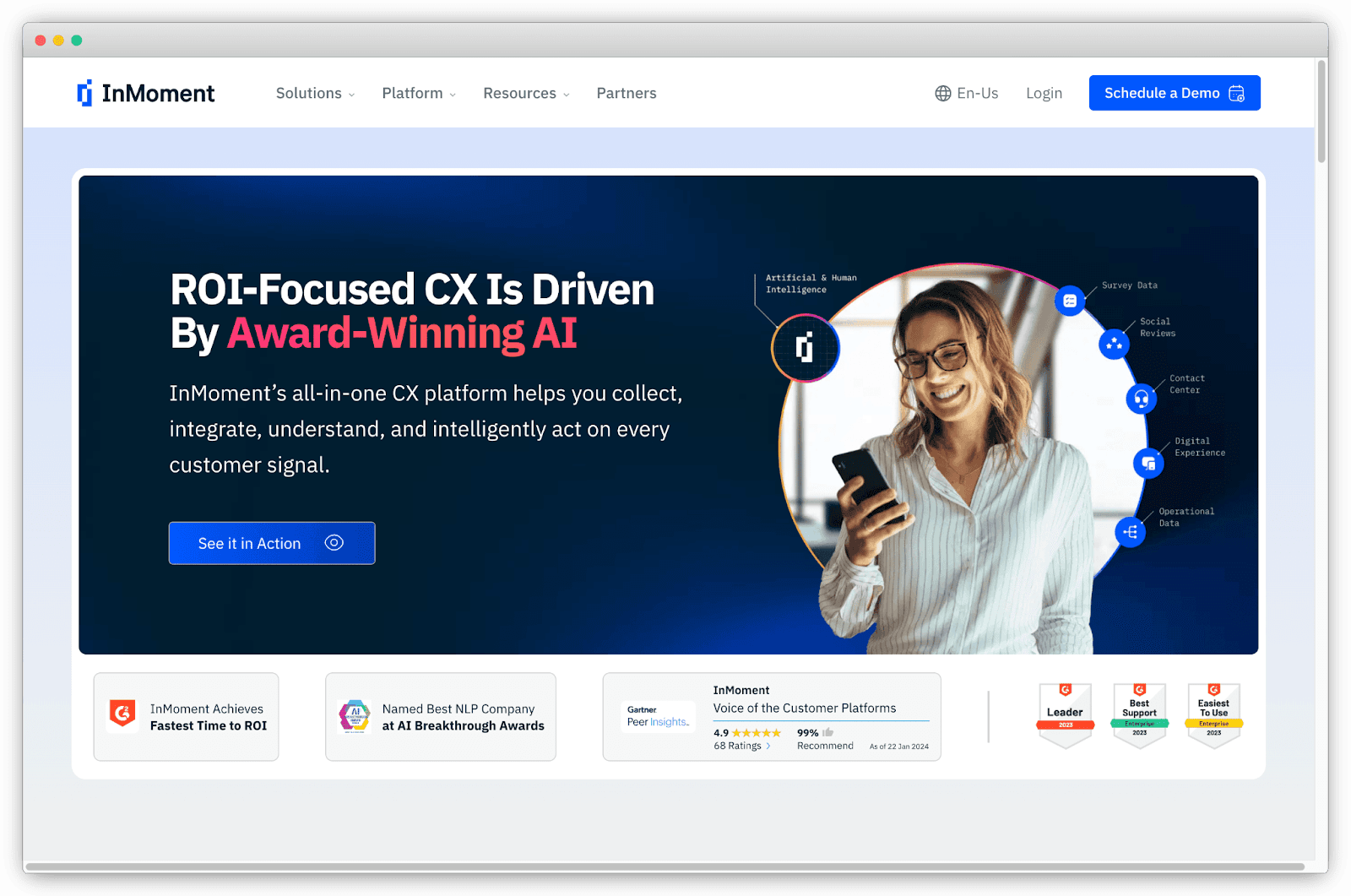
InMoment provides a cloud-based customer experience platform that combines feedback collection with advanced analytics. Its features include text analytics, sentiment analysis, and real-time alerts, helping businesses promptly act on customer insights.
13. PLG OS by Questera
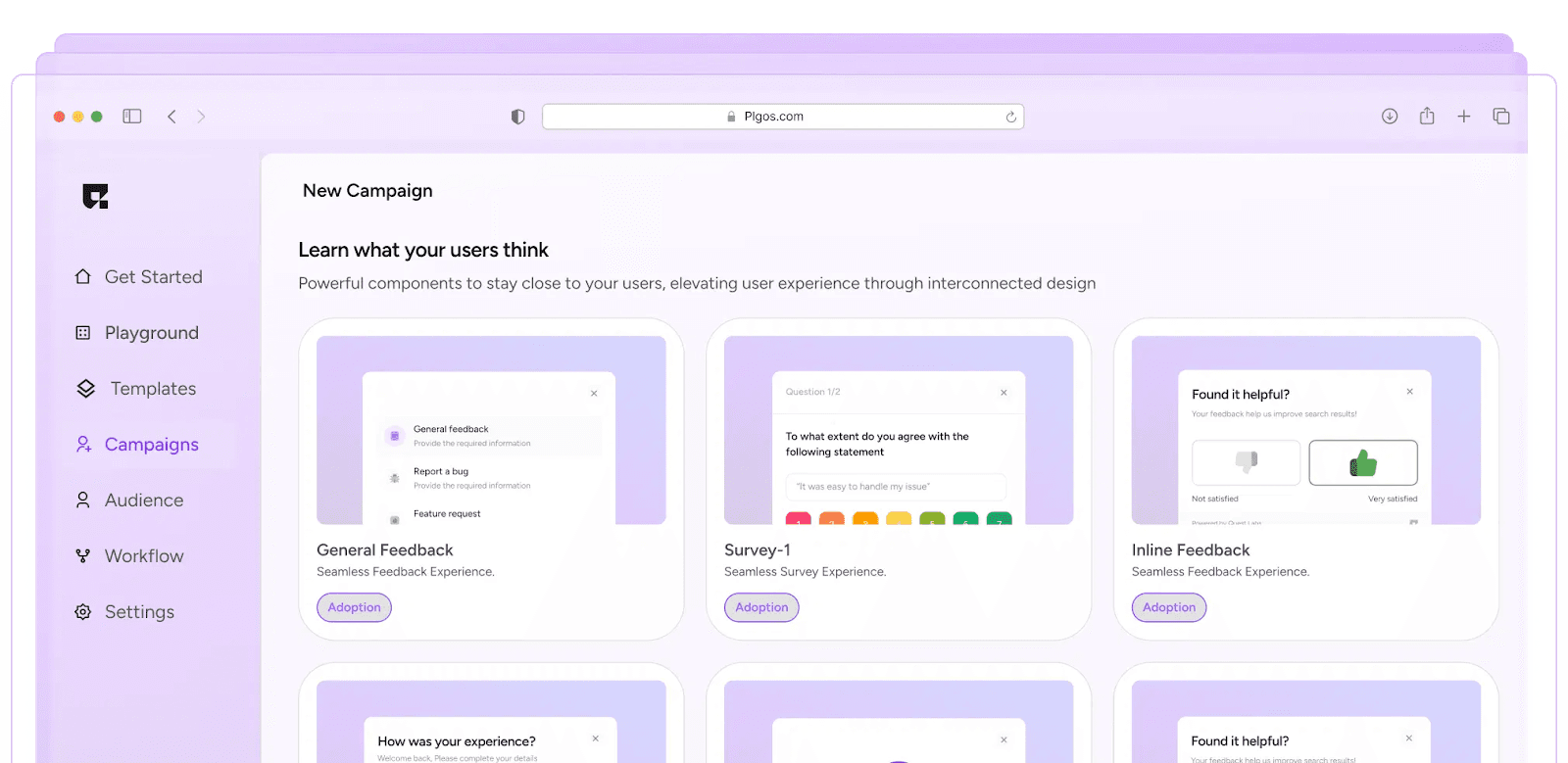
PLG OS is a versatile platform designed to enhance product-led growth strategies. It swiftly enables businesses to deploy personalized in-app user experiences, including user onboarding, gamification, and loyalty programs. With real-time feedback capabilities, PLG OS helps businesses understand user behavior and drive engagement effectively.
How to choose the correct customer feedback solution?
There are many options, so it's important to find a customer feedback system that works for your business. If you choose the right option, it should do more than just collect data.
- Actionable insights
- Seamless integration with existing systems
- Flexibility to adapt and scale
You can be sure that your solution will allow your team to make data-driven choices that keep customers happy and loyal by focusing on features, scalability, and scalability.
How customer feedback tools will change in 2025?
For customer feedback tools in 2025, you should not only think about the test conditions, but also the following customer trends:
Working with AI
AI is becoming an essential part of customer feedback tools, making gathering and analyzing feedback easier. Platforms powered by AI because you could give personalized surveys and more in-depth data analysis.
Easy access on mobile devices
As mobile users grow, customer feedback tools are being made more mobile-friendly by using flexible design and in-app feedback. It will help get more people to respond and get more accurate info.
Remote Support Trends
Feedback tools have changed to help with remote involvement as more people work from home and talk to each other online. Video feedback and virtual help should be added to customer feedback tools to make them more personal and give more useful information.
AI (automation)
Automation is making it easier to get feedback by using triggers that are based on what users do, like after a purchase or after talking to customer service. This lets companies get real-time information. You can set up automatic feedback widgets to show up when a user does something, like finish a checkout, so you can get feedback without getting in the way of the user's experience.
Conclusion
Incorporating the right customer feedback tool is pivotal for businesses aiming to enhance customer experience and drive growth. Each tool listed above offers unique features tailored to different business needs. By leveraging these tools, businesses can gain valuable insights, foster customer loyalty, and stay ahead in the competitive market.
Book a call today to understand more about us!
FAQs
1. What is a customer feedback tool?
A customer feedback tool helps businesses collect and analyze feedback from users to improve products, services, and overall customer experience.
2. Why is customer feedback important in 2025?
With increasing competition and rising customer expectations, feedback helps companies stay user-focused, make data-driven decisions, and boost retention.
3. What types of feedback can these tools collect?
They can collect NPS, CSAT, CES scores, bug reports, feature requests, survey responses, and more—via web, mobile, email, or in-app.
4. Are these tools suitable for startups?
Yes, many tools like PLG OS, Survicate, and Typeform are beginner-friendly and scalable, making them ideal for startups and small teams.
5. How does PLG OS stand out from the rest?
PLG OS combines real-time user feedback with customizable in-app experiences like onboarding, gamification, and loyalty programs—all in one platform.