How to collect product feedback for better customer service?
Imagine launching a product you’ve worked on for months, only to realize users aren’t loving it as much as you expected. Maybe they find it hard to use, a key feature is missing, or they just don’t see the value. The only way to know for sure? Ask them.
Product feedback is the secret ingredient to building something your customers want. It helps you improve your offering, retain users, and stay ahead of the competition. But collecting feedback is just the first step. What you do with it is what truly matters.
Let’s get started!!
What is Product Feedback?
Product feedback tells you what people who have used your product think and feel about it, how they felt about their general experience with it, what they need and expect from it, and how well it meets those needs and expectations. 93% of customers expect a response from businesses to their online reviews.
Any comment or suggestion regarding the product is welcome. Everything that characterises your product and the users' experience—a request, a complaint, a rating, a review, a comment—is welcome. It might range from lengthy testimonials to brief social media comments or likes or dislikes.
Whether your product is still in its early stages or has reached maturity, feedback is essential. The objectives of the feedback may vary depending on the product’s development stage. To develop a product that is focused on the needs of its consumers, it is important to get feedback from both internal teams and end users. This will help you identify areas for improvement.
What is customer feedback?
Customer feedback includes the thoughts, feelings, and problems that people who use your goods have.
Gaining insight into your users’ thoughts and feelings to identify their wants and requirements is the main objective of user feedback. What is the reason behind their utilization of your product? What aspects do they find most appealing, and which ones do they wish to change? Which ones aren’t necessary for them?
Listening to customer feedback can answer all those questions and more, and it can also help you develop your product over time.
Types of Product Feedback
Solicited feedback and unsolicited feedback are the two basic categories of feedback. Solicited feedback occurs when you reach out to consumers via text message, email, website pop-up, feedback button, or any other method to ask for their opinions or share surveys.
However, unsolicited feedback occurs when customers share their opinions independently without being asked to do so. Unwanted input can come from anywhere: requests, complaints, concerns, social media remarks, or even word of mouth in the marketplace.
Getting solicited feedback is better than waiting for consumers to complain. Speaking of solicited feedback, the best approach to getting the most replies is to collect in-product feedback (via feedback buttons and survey popups) by asking the proper questions in a survey.
How to collect useful product feedback
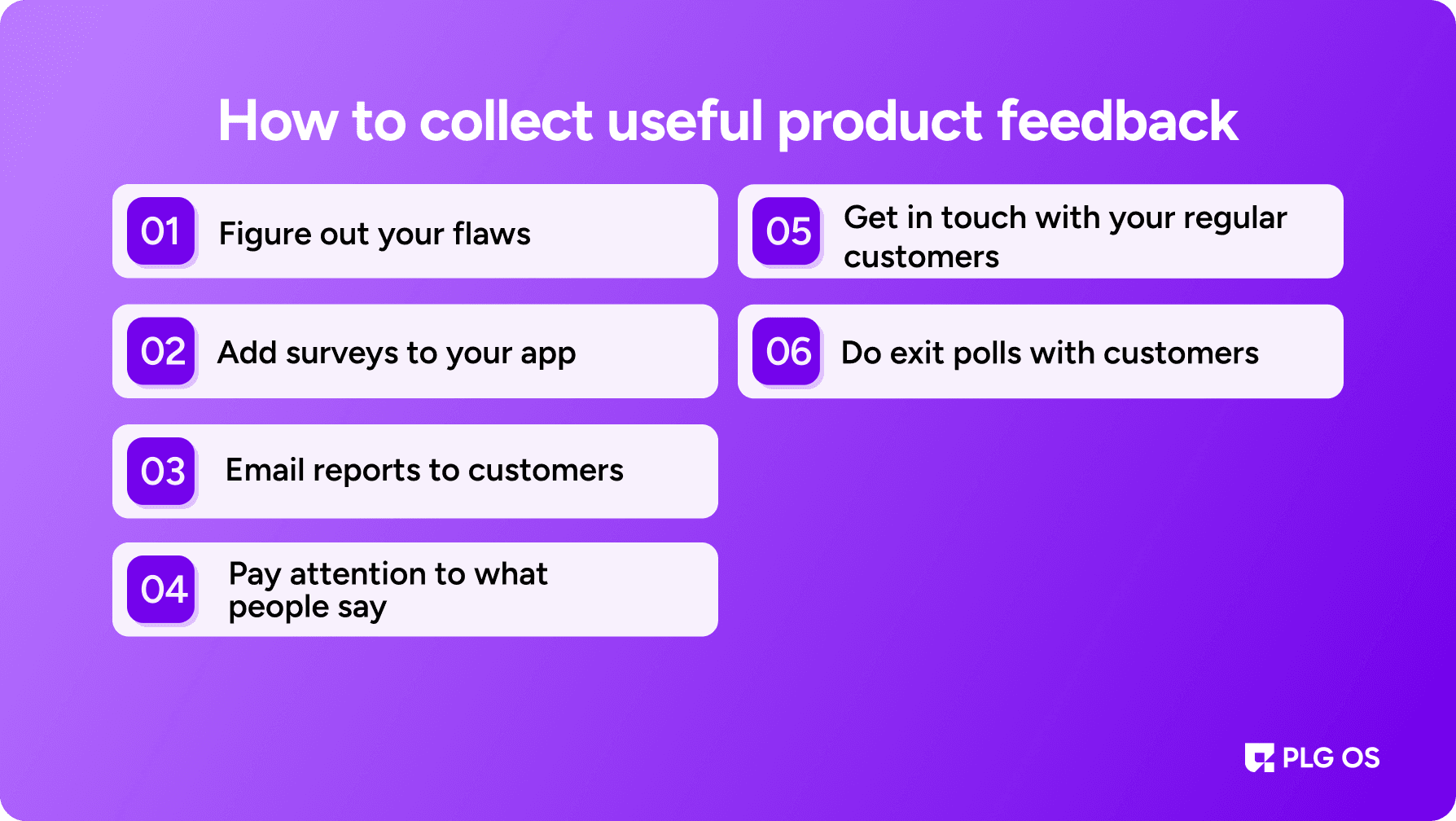
Here are six ways to get feedback on your products that you can use:
1. Figure out your flaws
Before you start receiving feedback, you need to know what you want to learn. What is the main issue you want to fix by getting comments on your product?
53% of online customers expect businesses to respond to negative reviews within a week.Is it a lack of customers or a failure to use new features? Getting feedback from many people can solve almost any problem your product team is having. But you need to find the main problem first.
You can start studying once you know your pain point. There may be more than one, but you need to hone in on one at a time. Just don't make polls right away, though. First, learn more about the problem so that you can ask better questions.
2. Add surveys to your app
Quizzes inside an app are a great way to get users' opinions. You can use tools like Survicate and Intercom to create in-app poll widgets that let you get real-time feedback from customers. They also come with a lot of question forms to get you started if you get lost.
Use micro-surveys built into your product to find out how users feel about certain processes or to see how satisfied your customers are. If you use a good survey tool, you can pick from different questions and choose when and where your polls show up. Tools like PLG OS helps to automate your survey process.
3. Email reports to customers
Loyal customers are the only ones who will open your emails, so you can trust them to give you honest feedback.
So people don't leave after the fifteenth page, keep your surveys short and simple and focus on specific parts of your product. You can also get more information here than from a short question in the app, so make the most of it!
To get to the real Voice of the Customer, make sure you ask a lot of open-ended questions.
4. Pay attention to what people say
There are already many very helpful comments on the product. This includes comments you didn't ask for from sales conversations, reviews on G2 or Capterra, mentions on social media, and customer service tickets.
You can get customer feedback on topics or features you're studying by checking customer communication channels. You might learn useful things without having to do more research.
5. Get in touch with your regular customers
Want to know more? Meet with your best customers in person. These people have used your product before, so they are more likely to give you feedback that will help you make it better.
First, find your most loyal customers by looking at facts about how often they buy, how much they spend over their lifetime, and how long they stay with your business. Then, contact them and ask if they’d be ready to give you feedback on the phone.
Ask them open-ended questions during the call so they can go into more detail. What kinds of questions you ask will rely on what you want to find out, but here are some ideas to get you started:
- What does the item make you like most?
- What does the product bother you?
- What is stopping you from using our product?
- In what other ways would you like this tool to help you?
6. Do exit polls with customers
Finally, don’t forget to ask people why they are leaving your service or product. Exit polls can help you learn why your customers leave and what you can do to improve the overall product experience.
When someone stops their subscription, set up an automated process that sends them an exit survey. To get more responses, sending these surveys along with a confirmation message that they’ve cancelled is best.
If they are happy with your product, ask them why they left and what could have been done better. Also, find out how likely they are to tell others about your product. Look at the answers you get and try to find themes or problems that keep coming up that need to be fixed.
Conclusion
Collecting product feedback is just the beginning. The real magic happens when you listen carefully, act on what you learn, and close the loop with your users. Remember, feedback is not criticism; it’s a roadmap to improving your product. Be open, be consistent, and most importantly, be quick to show customers their opinions matter.
Whether it’s a small tweak or a big feature update, letting your users know they had a hand in shaping your product builds loyalty like nothing else. Keep your feedback channels open, prioritize smartly, and always look for patterns instead of one-off comments. In the end, great products aren’t built in a vacuum; they’re built by the people who use them daily. So stay curious, stay responsive, and let feedback guide your next big win. Book a call with us today!!
FAQs
1. Why is collecting product feedback important?
Collecting feedback helps you understand user needs, spot problems early, and make smarter decisions. It keeps your product evolving in ways that matter most to your customers.
2. What are the best ways to collect product feedback?
You can collect feedback through surveys, in-app prompts, user interviews, reviews, support tickets, and social media listening. Using multiple channels helps you get a full picture.
3. How often should you collect product feedback?
Feedback should be collected regularly. It’s a good idea to ask after key moments like onboarding, product updates, or customer support interactions to keep insights fresh and relevant.
4. What should you do after collecting feedback?
Sort feedback by themes, prioritize action items based on impact, and communicate back to users. Acting on feedback shows customers you value their input and helps build stronger loyalty.
5. How do you handle negative product feedback?
Treat negative feedback as an opportunity. Listen without getting defensive, dig deeper to understand the real issue, and respond quickly with solutions or future improvements to show you care.