Customer Journey Mapping: Understanding your customers
In the fast-evolving SaaS world, delivering an exceptional customer experience is essential. At the heart of this experience lies customer journey mapping, a strategic approach that helps SaaS businesses understand, visualize, and improve every customer interaction with their product and brand. Let's dive into what customer journey mapping is, why it's so important in SaaS, and how you can create an effective map for success.
What is Customer Journey Mapping?
Customer journey mapping is about visually representing every touchpoint a customer has with your SaaS product. Think of it as telling your customer's story—from discovering your solution to becoming a loyal advocate. This map captures their experience, actions, emotions, pain points, and moments of delight throughout their journey.
Unlike traditional businesses, SaaS companies face unique challenges: customer relationships are ongoing, and value must be delivered continuously. This makes journey mapping essential in highlighting opportunities to improve, innovate, and prevent churn.
Why Customer Journey Mapping Matters in SaaS
For SaaS businesses, customer journey mapping is crucial due to the subscription-based model. Unlike one-time purchases, SaaS requires companies to earn customer loyalty every month, making each interaction impactful for retention.
Mapping this journey helps SaaS businesses pinpoint critical moments in the customer lifecycle, like:
Value Recognition:
The first 'aha moment' when a customer experiences value
Upgrade Opportunities:
Potential upgrade opportunities
Risk Points:
Risk points where customers might consider leaving
Understanding these touchpoints helps companies proactively address issues and optimize experiences to drive customer growth and retention.
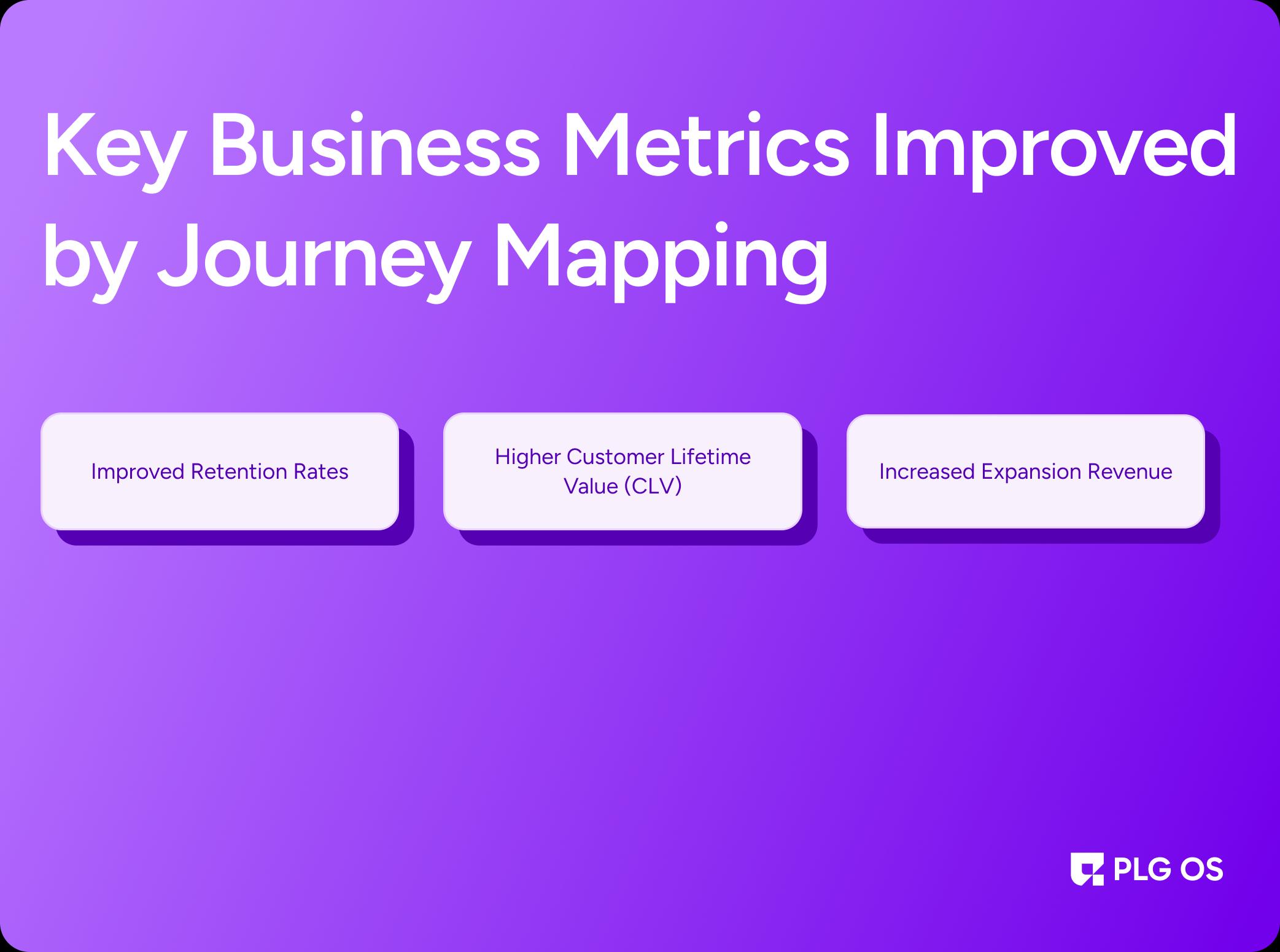
Key Business Metrics Improved by Journey Mapping
Effective journey mapping can directly improve important business metrics:
Higher Customer Lifetime Value (CLV):
A clear understanding of customer needs leads to greater satisfaction and increased CLV
Improved Retention Rates:
Identifying pain points early on can reduce churn
Increased Expansion Revenue:
By recognizing upgrade opportunities, companies can grow revenue from existing customers
Additionally, journey mapping can help align teams around a shared customer experience. When every team understands how they impact the customer journey, they're better equipped to make decisions that enhance customer success.
How to Create an Effective Customer Journey Map
1. Data Collection
Begin by gathering comprehensive data:
Quantitative Data:
Usage stats, feature adoption, and churn rates
Qualitative Insights:
Customer interviews, support conversations, and feedback surveys
This gives you a full picture of how customers interact with your product and company.
2. Define Customer Personas
Identify key personas since different customers have different journeys. For each persona, outline key stages such as:
Awareness:
Initial discovery stage
Consideration:
Evaluation phase
Decision:
Purchase decision
Onboarding:
Initial setup and learning
Adoption:
Regular usage phase
Retention:
Long-term engagement
Within each stage, document customer goals, actions, emotions, and challenges.
3. Focus on Transition Points
Pay attention to transitions between stages, which often reveal where customers either progress or encounter friction. Optimizing these transitions is crucial for enhancing the overall customer experience.
Best Practices for Implementing Customer Journey Mapping
Involve Cross-Functional Teams
Involve customer success, product, marketing, sales, and support teams in the mapping process. Each team brings unique insights that create a more accurate view of the customer journey.
Keep Maps Actionable
Each pain point identified should have a corresponding improvement plan. Prioritize based on potential impact, assign ownership, and track progress.
Make it a Living Document
Update your journey map regularly with new insights to keep it relevant. SaaS landscapes and customer expectations change, so continuous updating ensures the map remains a valuable tool.
Leveraging Technology and Data for Journey Mapping
Analytics Platforms:
These track user behavior and reveal patterns in real-time
Customer Success Platforms:
Monitor customer health scores and trigger interventions at key moments
AI and Machine Learning:
These technologies can help predict customer behavior, personalize journeys, and identify at-risk customers before they churn
Common Pitfalls to Avoid
Treating Mapping as a One-Time Task
Customer journey maps should evolve. Updating them regularly ensures they stay aligned with customer needs and market dynamics.
Focusing on Company Processes Instead of Customer Experiences
Ensure your map reflects the customer's perspective, focusing on their thoughts, emotions, and goals—not just your internal processes.
The Future of Customer Journey Mapping
The future of journey mapping in SaaS is data-driven and increasingly personalized. Advanced analytics and AI are enabling real-time journey maps that adapt to customer behavior, delivering more tailored experiences and better outcomes for both companies and customers.
Conclusion: Making Customer Journey Mapping a Priority
Customer journey mapping is more than just a business exercise—it's a powerful tool to understand and enhance customer experience in SaaS. When done right, journey mapping provides actionable insights that drive product development, improve customer success, and accelerate growth.
PLG OS takes customer journey mapping a step further by offering features that streamline activation and engagement. With its customizable onboarding flows, progress tracking, and data-driven insights, PLG OS empowers SaaS companies to provide users with a seamless, valuable experience from day one. By leveraging these tools, you can optimize each touchpoint to ensure users quickly realize your product's value, fostering higher retention and satisfaction. Integrating PLG OS into your journey map strategy can help turn new users into loyal advocates, laying a solid foundation for sustainable growth.
Keep your maps dynamic, updated, and customer-focused to leverage their full potential in a competitive SaaS landscape.