How to build an app marketing growth loop with product-led strategies?
Dropbox's referral program led to a staggering 3,900% growth in just 15 months, skyrocketing from 100,000 to 4 million users. Do you know why?
Consider the following example: instead of merely helping users, your product actively seeks them out. Herein lies the brilliance of viral app marketing growth loops: these virtuous cycles sustain exponential expansion through user-generated content. Viral loops are scalable and cost-effective since they use the product itself to drive growth, unlike traditional marketing funnels that frequently demand continual investment.
Reinvesting the output of one stage as input to the next is a self-sustaining method known as a growth loop. So, increasing user base and income through compounding without breaking the bank on acquisition channels. Similarly, Slack has experienced remarkable growth, reaching 38.8 million daily active users in 2024, by creating a platform that encourages seamless collaboration and communication.
What is Viral App Marketing Growth Loop?
A viral loop occurs when your current customers are incentivized to recommend your product to their friends and family.
To rephrase, a viral loop is a strategy that encourages your current customers to tell their friends, coworkers, and family about your product. Your product has a powerful viral loop if your current users enthusiastically tell their friends about it and get them to install it.
Yeah, sort of? To call them close cousins would be more accurate. Viral loops rely on trust, just like word-of-mouth marketing. One distinguishing feature of viral loops is the inherent "virality" of the product.
You aren't relying solely on word of mouth, then. To create a viral loop, you need to find a way to encourage your current customers to tell others about your business. The viral infection can progress exponentially once this process sets the feedback loop in action.
The flow of a viral app marketing growth loop is as follows:
- An individual tries out your product, finds it useful, and continues to do so.
- An incentive is offered to the user in return for referrals.
- The user invites others after finding value in the incentive offer.
- The user's friends will get the invitations.
- The user's friends accept the invitations and sign up as users.
- The cycle continues by returning to step 1. (This is why it's called a "loop," right?)
What are the Benefits of app marketing growth loops?
For the reasons listed below, growth loops have largely replaced funnels as the preferred method of structure for product-led growth companies.
1. One way that funnels work is by increasing the investment at the top in order to attract more paying customers. This won't work in the long run because: Your cost-per-acquisition will go up if the channel decides to raise ad costs or change their algorithm. You hit saturation levels quickly.
A decline in sign-up quality, as measured by an increase in non-ICP sign-ups, will lead to a rise in churn.
2. The second tenet of the funnel method is the continual addition of new users at the very top. It can take a long time to figure out the best marketing approach and put it into action to gain new consumers, which makes the funnel a slower method.
3. While funnels work better for linear growth, app marketing growth loops allow PLG organizations to invest in every step of the customer journey, creating a compounding effect.
4. The funnel structure reinforces silos as teams focus on their own objectives and then pass the buck to the next group to ensure progress in the following stage. With the product serving as the principal and shared growth channel, all GTM teams work together in a loop architecture to achieve common goals at each level.
5. A app marketing growth loop presents opportunities for income at each stage since customers receive value at every stage.
6 Types of App Marketing Growth Loops
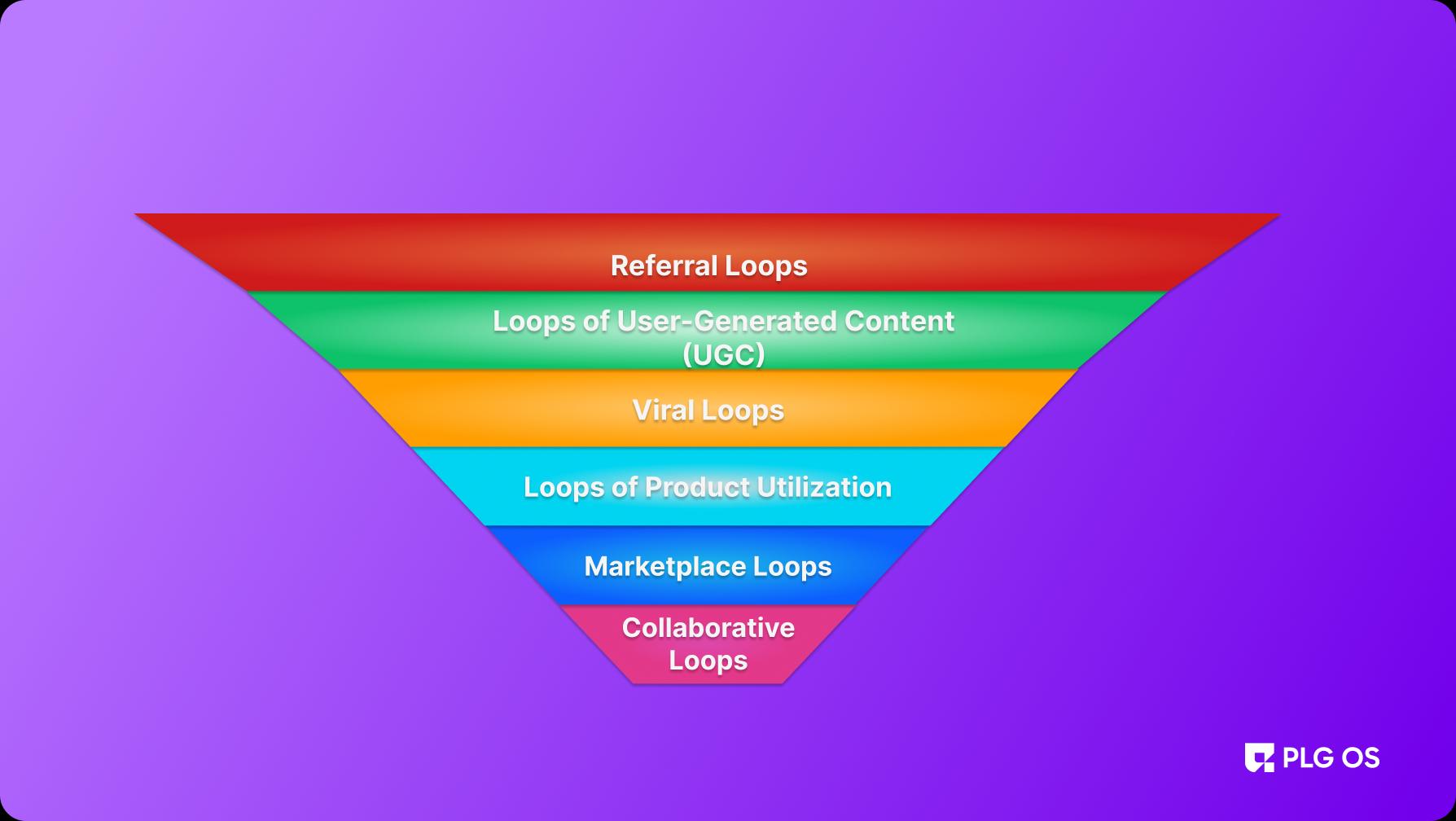
1. Referral Loops
This represents one of the most prevalent forms of growth cycles. The primary focus is on users extending invitations to others to participate.
Consider the growth trajectories of companies such as Dropbox and Uber. The process operates as follows: a user experiences the product, develops a strong affinity for it, and subsequently disseminates information about it to their acquaintances in order to receive a recompense, such as complimentary storage or a discount. New users replicate this behavior, perpetuating the cycle and attracting additional individuals without necessitating further marketing initiatives.
2. Loops of User-Generated Content (UGC)
This particular type of loop operates effectively when users generate content that inherently attracts additional users.
For instance, on Instagram, users upload images, which are subsequently disseminated and viewed by individuals who have not yet joined the platform. The innate curiosity and aspiration to engage motivate new users to register. Product app marketing growth loop managers frequently employ this strategy to expand their audience reach. Indeed, Apple developed one of the most notable instances of growth loop marketing using this methodology.
As users generate an increasing amount of content, a greater number of individuals are exposed to it and subsequently feel motivated to participate, thereby perpetuating the cycle of growth.
3. Viral Loops
Viral loops bear resemblance to referral loops; however, they propagate more rapidly and extensively through the mechanism of social sharing. You may benefit at every step with a app marketing growth loop because your consumers benefit from it. Users' active participation is crucial for this to succeed. Personalized tooltips and other small, interactive nudges can strengthen engagement and encourage users to continue.
Consider the operational mechanics of TikTok: an individual produces a video, disseminates it, and as a result, that video is able to engage a significantly broader audience. Individuals observe, download the application, and subsequently produce and disseminate their own recordings, thereby perpetuating the cycle. As the volume of content disseminated increases, a greater number of individuals are inclined to participate in the prevailing trend.
This app marketing growth loop is highly prevalent within the affiliate marketing and Software as a Service (SaaS) sectors, as it significantly accelerates the rate of product adoption.
4. Collaborative Loops
This app marketing growth loop is driven by users who extend invitations to others for collaboration, typically within team-oriented tools.
Consider Slack as a pertinent illustration. A user configures Slack for their professional environment and subsequently extends invitations to their colleagues to join and engage in collaborative efforts. Each team member is designated as a new user and is permitted to extend invitations to others for the establishment of new workstations. Collaboration fosters increased utilization and attracts new users, thereby perpetuating the cycle.
5. Loops of Product Utilization
Certain cycles are primarily influenced by the engagement generated by the product itself. For example, applications such as Zoom derive significant advantages from this. Utilizing Zoom for a meeting necessitates that your colleagues, clients, or acquaintances also engage with the platform. Product Managers frequently design the product experience with intentionality to stimulate cycles of product utilization.
Upon experiencing the simplicity of the process, they may begin to utilize it for their own meetings, thereby fostering a natural cycle of growth.
6. Marketplace Loops
App marketing growth loops, like marketplace loops, occur when a platform facilitates interactions between two distinct categories of users, such as buyers and sellers.
Consider the examples of Amazon or Airbnb. An increase in the number of vendors listing items or properties correlates with a greater influx of buyers to the platform. An increase in the number of buyers incentivizes a greater number of vendors to list their offerings, thereby perpetuating the cycle. Each sector of the marketplace draws the other, establishing an equilibrium that fosters sustained growth.
Case Studies of Viral Growth Strategies
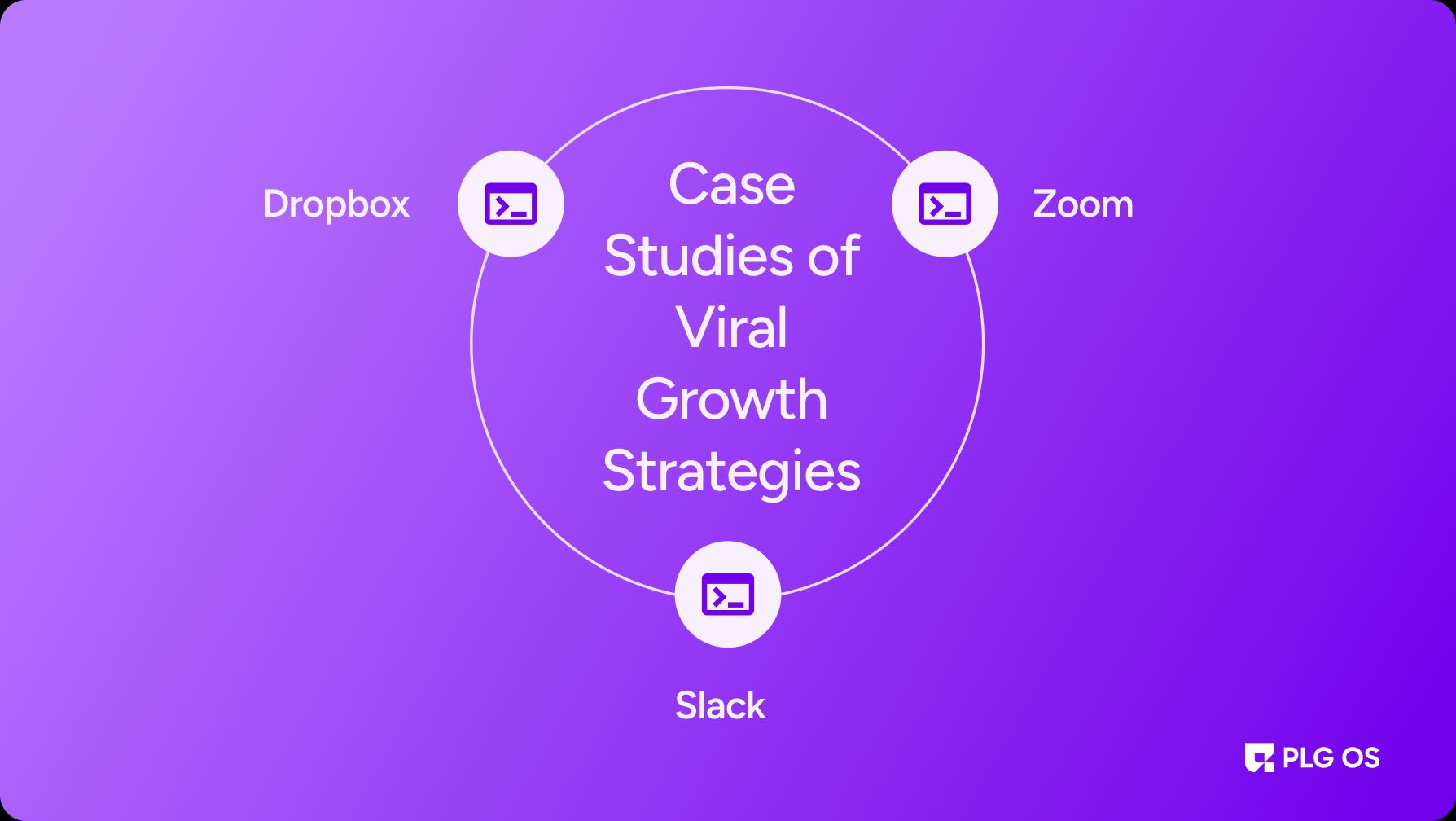
Several successful technology companies have developed their app marketing growth loop strategies around viral cycles. Here is the methodology they employed:
1. Dropbox: Incentivizing Referrals through Concrete Advantages
Dropbox, a cloud storage service, exemplifies a quintessential case of a successful viral growth cycle. The referral program provided existing users with additional storage capacity for each new user they successfully referred. Similarly, the aforementioned user was granted additional storage, establishing a mutually beneficial incentive for both parties involved.
Acquisition:
New users were encouraged to register by offering complimentary storage incentives.
Engagement:
Users utilized the platform to store and share files.
Referral:
The perceived benefit of additional space incentivized users to extend invitations to their acquaintances.
Repeat:
The users who were referred subsequently engaged in the cycle once more.
This straightforward yet highly effective cycle resulted in a 60% increase in signups at its zenith and facilitated the exponential growth of Dropbox.
2. Slack: Collaboration as the Driving Force for Advancement
Slack, the workplace communication platform, has integrated virality into its fundamental features. Upon joining Slack, users extended invitations to their team for collaborative engagement, thereby rendering solitary use of the platform unfeasible.
Acquisition:
Individuals registered to enhance communication within the workplace.
Engagement:
Teams commenced utilizing Slack to enhance the efficiency of their workflows.
Referral:
As collaboration expanded, teams extended invitations to other departments and external partners to participate.
Repeat:
These newly acquired users embraced Slack, thereby augmenting its reach.
By facilitating effortless collaboration, Slack established an organic viral cycle in which users transformed into advocates for the platform.
3. Zoom: Simplifying Access to Drive Invitations
Zoom, the preeminent video conferencing platform, leveraged simplicity and accessibility as key drivers of its ubiquitous growth. Users have the capability to invite others to participate in meetings simply by sharing a link, thereby eliminating obstacles to participation.
Acquisition:
Individuals have registered to facilitate video conferencing.
Engagement:
The meetings facilitated a seamless and dependable experience.
Referral:
Participants recognized the intrinsic value of the experience and subsequently registered to facilitate their own meetings.
Repeat:
The cycle persisted as new users extended invitations to additional participants for their meetings.
Throughout the pandemic, this strategy facilitated remarkable growth for Zoom, as the number of daily meeting participants surged from 10 million to in excess of 300 million.
How do you build a high-performing product-led app marketing growth loop?
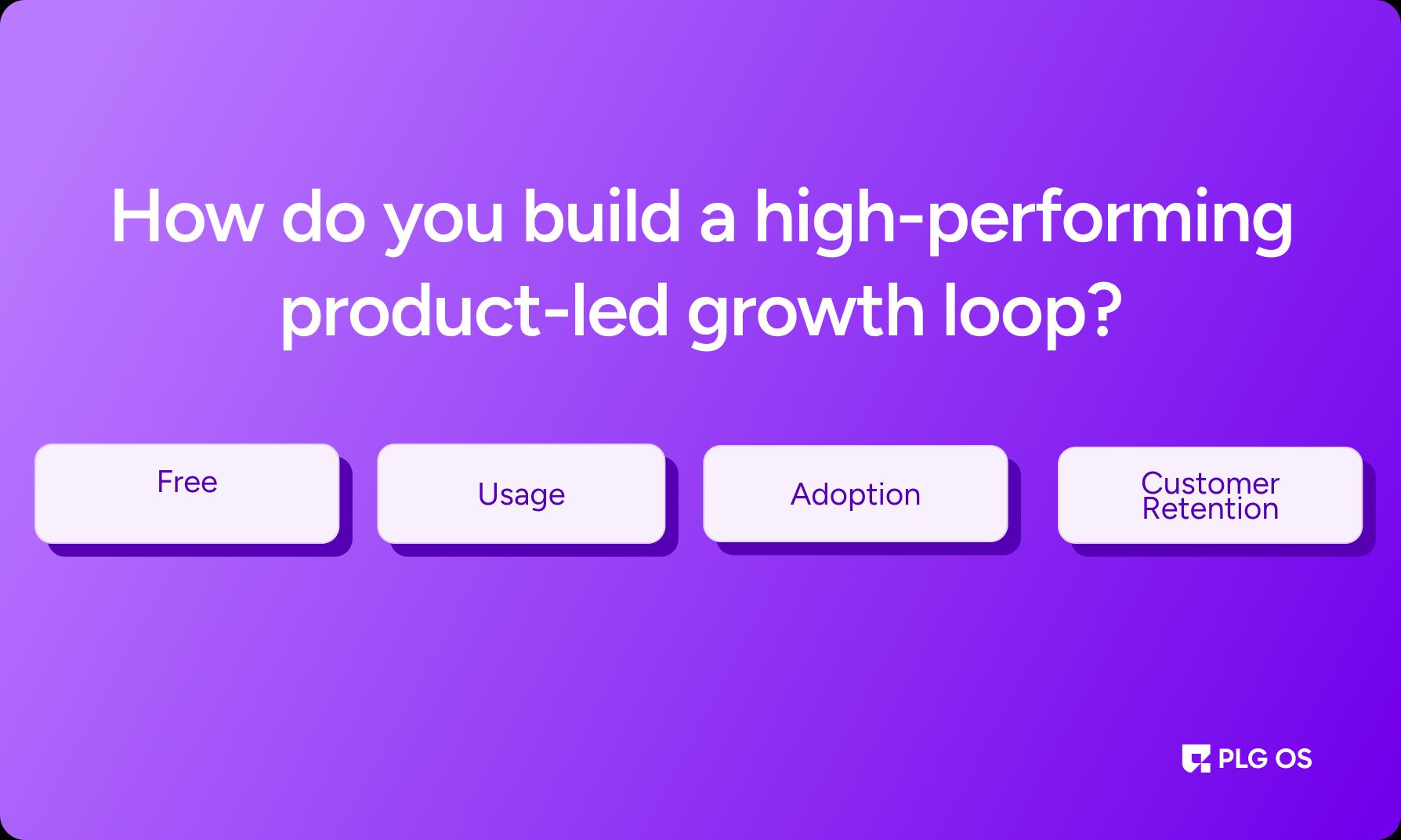
1. Free
If you want your onboarding to be effective, you need to stop using a cookie-cutter approach.
You can personalize the experience, for instance, according to the user's job (administrator, manager, individual contributor), with more knowledge about your clients and their objectives.
By asking a series of concise questions, Typeform effectively learns about the user and their use cases, allowing for a more personalized product experience.
2. Usage
A consumer started using your product because of a fantastic onboarding process or because a colleague invited them. They are still in the early stages of using the product, therefore they need to see immediate benefits in order to keep using it.
Now is the time to measure product engagement and take action to improve it. Such as sending out reminders about the product's next great step after the consumer reaches a certain milestone.
Adding shareability to campaigns is another great way to make it easy for users to show off their accomplishments to the world. This starts people talking about your product.
3. Adoption
Following the first successes and "aha!" moments, consumers and users are eager to explore the product's capabilities further. They are interested in conducting use case focused product testing.
The recently introduced or unlocked features have aroused their interest. Help documentation and assistance with utilizing these functionalities should be made available. Notify inactive users of all the great things they're missing out on to get them to wake up.
The value will be shown rather than told through a review of product usage and hyper-personalized value measurements. Acquire devoted customers, increase product utilization, and get them involved in the next phase.
This is precisely why Stack Moxie's Weekly Metrics ads are so well-received by their clientele.
4. Customer Retention
Sticky users are already present at this stage. Demonstrate how your premium and advanced features can help them. Make it easier to upgrade to a paid account and automate campaigns that are triggered depending on product behavior.
As an excellent example of customer retention is Smartsheet. The free trial will expire soon, and they'll email customers all the information they need to upgrade.
To notify Sales of any attempts to cross a usage/seat threshold or access a feature behind the paywall, set up internal alerts for product-qualified leads (PQLs) and product-qualified accounts (PQAs). Salespeople can contact valuable accounts with information about how they use the product.
The next step is to reward your most loyal customers, who are also your best product advocates. They should be a part of your product plan and the process of making content that is more helpful. For the next new user, they are an example of your success story.
Maximize your current accounts' income and user base. Get your Success team involved for upselling and cross-selling chances or automate your campaigns with direct links to upgrade. Notify the Success team of PQLs and PQAs to contact using the internal alerts. Be prepared to share the users' product activity report.
Dropbox encourages its users to try out a team account and offers a free trial to sweeten the deal.
Final Takeaway
Some of today's most meteoric corporate success stories include viral app marketing growth loops as their secret ingredient. They create a self-sustaining growth cycle by transforming happy customers into your product's best advocates.
When your product is made to be shared by design, your growth becomes unstoppable. This is proven by tactics like Dropbox, which rewards users with storage, Slack, which enables seamless collaboration, and Zoom, which simplifies connections. Construct an engaging loop and witness your business soar to new heights! Unlock the full potential of your product with the right strategy, get started today at PLG OS!
FAQs
1. What is a viral app marketing growth loop?
A viral app marketing growth loop is a self-sustaining cycle where users generate new users through referrals, creating exponential growth for a product or service.
2. How does a viral app marketing growth loop differ from traditional marketing?
Unlike traditional marketing, which relies on constant external efforts (like ads), viral loops leverage user actions and product value to drive organic growth.
3. What types of products benefit most from viral loops?
Products that are shareable, collaborative, or offer referral incentives—like Dropbox, Slack, or Zoom—tend to benefit the most.
4. What makes a viral loop successful?
A seamless user experience, clear incentives for sharing, and a product that solves a real need are key factors for success.
5. Can small businesses implement viral app marketing growth loops?
Absolutely! Even small businesses can design referral programs or create shareable experiences to spark a viral effect.