Product Adoption: What It Is and Why It Matters for SaaS Companies

Having a great product isn't enough these days. To grow and keep customers, it's crucial that users understand, use, and see the value of your product. This process is known as product adoption—and for SaaS companies, it's one of the most important steps toward long-term success. Let's break down what product adoption is, why it matters, and how you can make it easier for users to adopt your product.
What is Product Adoption?
Simply put, product adoption is when users go from trying out a product to making it a regular part of their work or daily lives. It's more than just signing up—it's about users truly seeing the value in your product and deciding it's worth sticking with. In SaaS, product adoption means that customers not only try the product but find it useful and want to keep using it.
Think of product adoption as a journey. Users start by getting to know the basics of the product, then slowly discover features that make it valuable to them, and finally reach a point where they rely on it regularly. For SaaS businesses, guiding users through this journey successfully is key to building a loyal customer base.
Why Product Adoption Matters in SaaS
Keeps Customers Around:
When users adopt a product and make it part of their routine, they're more likely to stay subscribed, which reduces 'churn'—the rate at which customers leave.
Boosts Revenue:
Users who see value in your product are more likely to upgrade to higher plans or pay for extra features, increasing the revenue each customer brings in.
Creates Advocates:
Satisfied customers become fans who tell others about the product, helping spread the word and bring in more users.
Improves the User Experience:
A focus on product adoption encourages companies to simplify features and make them more user-friendly, which benefits all users.
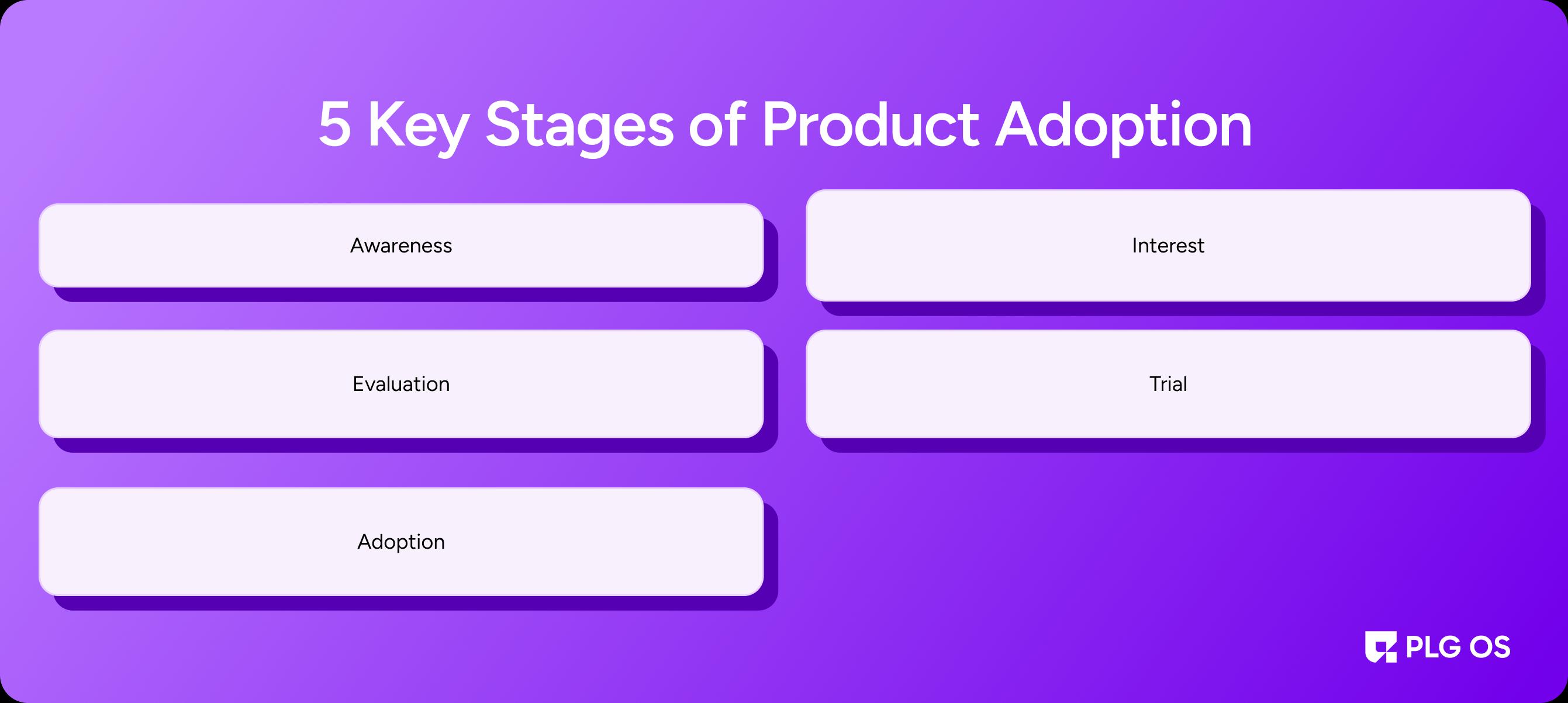
The Key Stages of Product Adoption
The product adoption journey can be divided into five stages. Understanding these stages can help SaaS companies create smoother experiences for users:
Awareness:
Users first learn about the product and start to understand what it does.
Interest:
They explore more about the product and consider if it can solve their needs.
Evaluation:
Users compare it to other options to decide if it's worth their time and money.
Trial:
This is often a free trial or demo, where users test the product to see if it's a good fit.
Adoption:
The user decides to make the product part of their regular workflow, fully embracing its features.
A good adoption strategy helps users move smoothly through each stage, making sure they feel confident and supported as they get to know the product.
Strategies to Encourage Product Adoption
Product adoption doesn't happen by itself. Companies need to make it as easy and enjoyable as possible for users to learn, understand, and get value from their product. Here are some ways to encourage adoption:
1. Simple and Friendly Onboarding
A great first experience is essential. Onboarding should be easy and guide users through the most important features of the product. Tools like step-by-step tutorials, interactive guides, and quick tips can help users get comfortable and excited about what they're using.
2. Personalized Messages
Personalized communication can make users feel valued and understood. Sending tailored emails or in-app messages based on what users are doing in the product can guide them to discover new features or help them with areas they may have missed.
3. In-App Tips and Hints
Giving users helpful tips directly within the product can make learning easier. For example, if a user hasn't tried a feature that could help them, a small pop-up explaining its benefits can encourage them to explore more.
4. Highlight Quick Wins
Show users easy ways to see immediate benefits. For instance, if the product is a task manager, help them organize their first task quickly. Small, positive experiences early on build confidence and help users feel like the product is valuable.
5. Add Some Fun with Gamification
A little bit of fun can go a long way. Gamification, such as progress bars or rewards, can encourage users to explore more features and feel a sense of accomplishment as they use the product.
6. Ask for Feedback
Listening to users is one of the best ways to improve. Asking users for feedback can provide valuable insights into what's working well and what isn't. Adjusting based on this feedback shows users you care and helps create a better experience for everyone.
Metrics to Track Product Adoption Success
Time to Value (TTV):
This measures how long it takes for users to see value in the product. The shorter the TTV, the better.
Product Usage Frequency:
Tracking how often users engage with the product shows if it's becoming part of their routine.
Feature Adoption Rate:
Measures how many users are exploring different features. High feature adoption usually means users are finding more value.
Customer Satisfaction Score (CSAT):
Asking users how satisfied they are after certain interactions can give quick insights into the user experience.
Examples of Successful Product Adoption in SaaS
Slack:
Slack's onboarding process uses interactive guides and even a 'Slackbot' to answer user questions. This makes new users feel welcome and helps them quickly understand the product's value.
Dropbox:
Dropbox has a very intuitive onboarding process. Right from the start, it shows users how easy it is to upload and share files, which demonstrates its value immediately.
Zoom:
Zoom keeps its interface simple, making it easy for new users to host and join meetings. This simplicity encourages users to adopt the product quickly.
Common Challenges in Product Adoption
Complex User Interfaces:
If the product is too complicated, users might get discouraged. Simplifying the interface and guiding users through essential features first can help.
Lack of Support:
If users have questions but can't find answers, they might give up on the product. Offering easy access to FAQs, live chat, or customer support can make a big difference.
Overloading Features:
Too many features can overwhelm users. Introducing core features first helps users ease into the product without feeling lost.
Conclusion
Product adoption is a key ingredient in SaaS success. When users fully adopt a product, they become loyal customers who stay longer, contribute to higher revenue, and even help bring in new users through word-of-mouth. It's not just about making a sale; it's about creating a positive, ongoing experience that turns new users into lifelong customers. By focusing on an easy onboarding process, providing helpful guidance, and listening to feedback, SaaS companies can drive better product adoption and build a strong foundation for growth.
PLG OS can make product adoption easier with tools designed to engage users and guide them through the product journey. PLG OS offers in-app messaging, personalized onboarding, and insights into user behavior, making it easier for companies to track adoption, reduce churn, and improve user experiences. By using PLG OS, SaaS businesses can create a smooth, welcoming experience that encourages users to explore and embrace the product. PLG OS helps companies turn new users into loyal, engaged customers, setting the stage for long-term success.