What is Conversion Rate? Why Does It Matter?
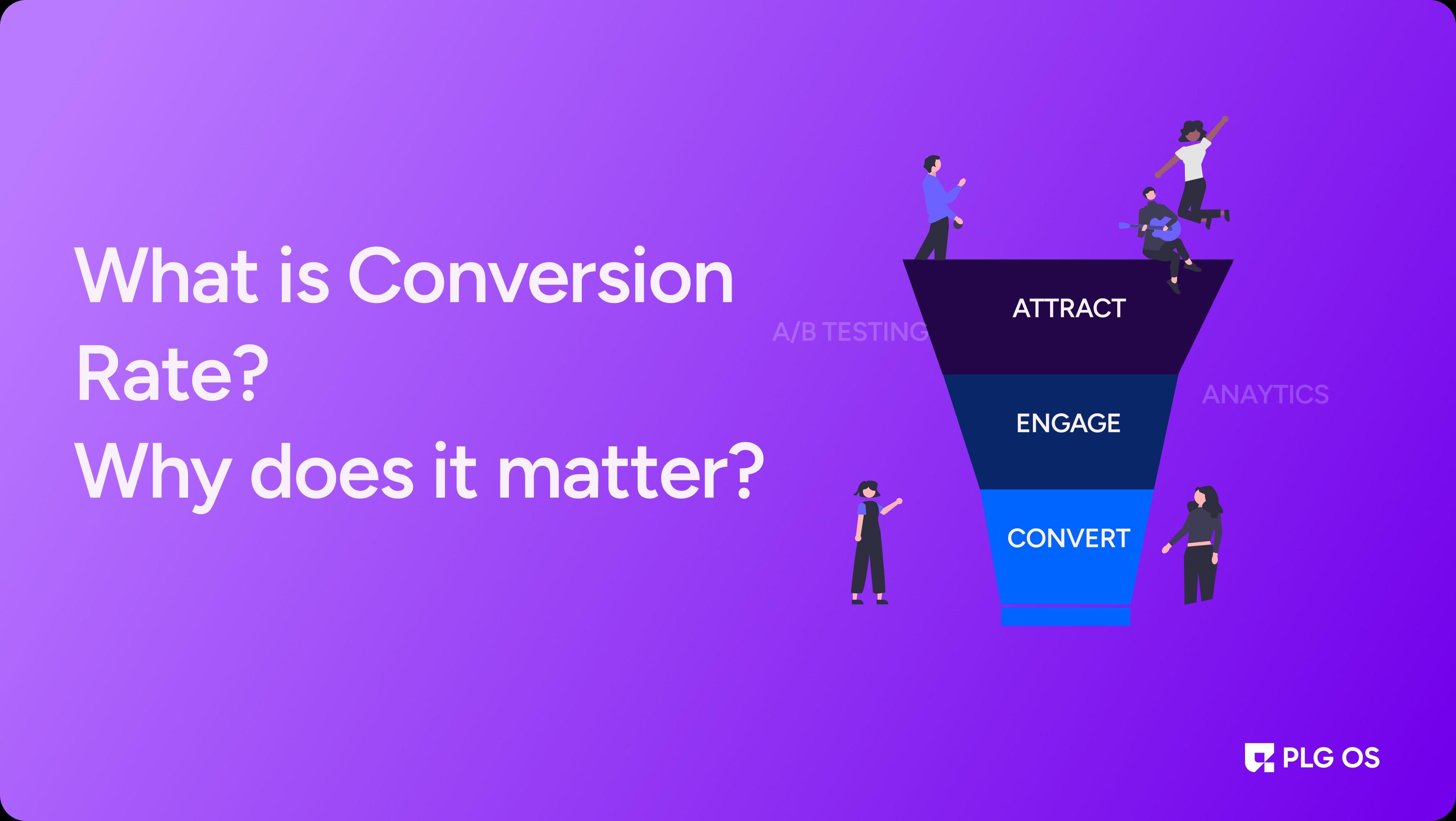
Conversion rate refers to the percentage of visitors to your website or application who take a desired action. This action varies depending on your business goals but often includes:
- Signing up for a free trial
- Creating an account
- Upgrading from a free plan to a paid plan
- Making a purchase
In essence, a conversion rate reflects how well your marketing and sales efforts are working to engage potential customers. A higher conversion rate indicates that your visitors find value in what you offer, while a lower rate may suggest areas for improvement.
How to Calculate Conversion Rate
Calculating your conversion rate is straightforward and can be done using the following formula:
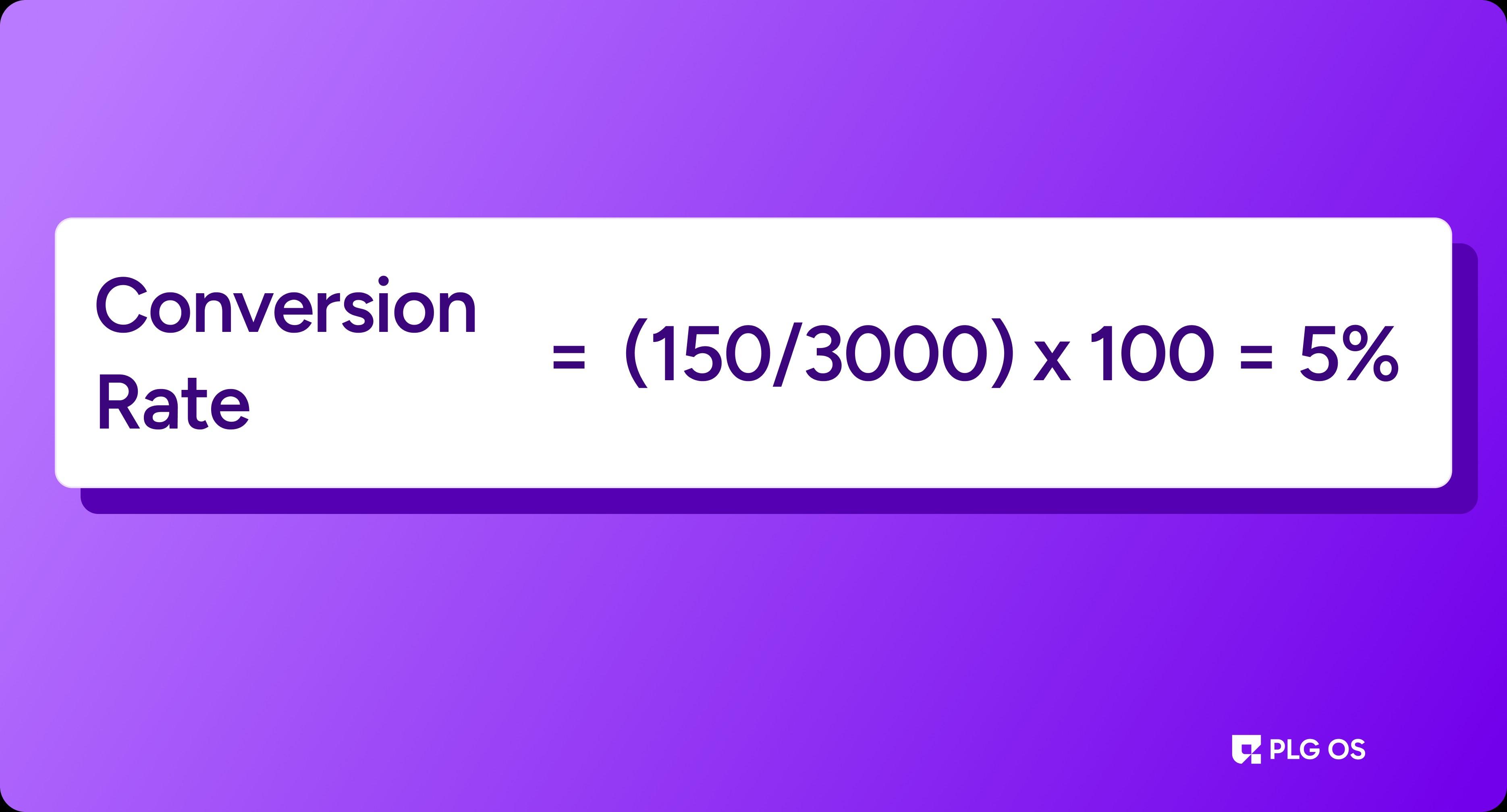
Conversion Rate = (Total Conversions / Total Visitors) × 100
For example, in a given month, you ran a marketing campaign that directed potential customers to a free trial sign-up page:
Total Visitors to the Free Trial Sign-Up Page: 3,000
Total Sign-Ups for the Free Trial: 150
Breaking It Down
You can also calculate conversion rates at different stages of your funnel, providing deeper insights into where improvements can be made:
- Visitor to Free Trial Sign-Up: Measures how many visitors signed up for a free trial.
- Free Trial to Paid Conversion: Tracks how many free trial users became paying customers.
- Landing Page to Lead Capture: Evaluates how effectively your landing pages capture leads.
By analyzing these specific conversion rates, you can pinpoint strengths and weaknesses in your customer acquisition process.
What is a Good Conversion Rate?
Determining a “good” conversion rate can be challenging, as it varies widely based on several factors, including:
- Industry
- Product type and pricing
- Target audience
- Marketing channels used
That said, here are some general benchmarks for SaaS companies:
Website Visitor to Free Trial:
A conversion rate of 2-5% is considered average, while top performers may see rates of 10% or higher.
Free Trial to Paid Customer:
A common range is 25-60%, with some successful companies achieving over 60%.
Overall Website Visitor to Paid Customer:
This can vary significantly but typically falls between 1-3%.
While these figures serve as a guideline, it’s essential to focus on establishing your own baseline and continuously striving for improvement.
How to Boost Conversion Rate for SaaS Startups
Improving your conversion rate can lead to substantial growth for your SaaS startup. Here are several effective strategies to consider:
1. Optimize Your Website
Your website is often the first point of contact with potential customers. Ensure it works hard for you by:
- Improving page load speed: A fast-loading site keeps visitors engaged.
- Ensuring mobile responsiveness: Many users browse on mobile devices, so your site must look and function well on all screens.
- Using clear, compelling copy: Speak directly to your audience’s pain points and explain how your product solves their problems.
- Implementing strong calls-to-action (CTAs): Use clear CTAs to guide visitors toward the desired action.
- Incorporating high-quality images and videos: Visual content can effectively showcase your product’s benefits.
2. Streamline Your Sign-Up Process
The easier it is for visitors to sign up, the more likely they are to convert:
- Minimize form fields: Keep your sign-up forms as simple as possible.
- Offer social sign-up options: Allow users to sign up using their social media accounts for added convenience.
- Implement progressive profiling: Collect information gradually rather than asking for everything upfront.
- Enable product exploration before sign-up: Allow users to interact with your product without requiring immediate registration.
3. Provide a Compelling Free Trial
A well-structured free trial can significantly enhance conversion rates:
- Determine the optimal trial length: Consider what duration allows users to experience the full value of your product.
- Offer key features: Give users enough access to see the value, but reserve premium features for paid plans.
- Send onboarding emails: Guide users through essential features during the trial period to maximize engagement.
4. Use Social Proof
Building trust through social proof can encourage conversions:
- Display customer testimonials: Highlight positive feedback prominently on your site.
- Showcase logos of well-known clients: Associating with reputable brands can enhance your credibility.
- Highlight user reviews and ratings: This can reassure potential customers about the quality of your service.
- Share case studies: Show how your product has helped other customers achieve specific results.
5. Implement Live Chat Support
Providing immediate assistance can help convert hesitant visitors:
- Use chatbots for initial engagement: They can answer basic questions and guide users.
- Offer human support for complex queries: Ensure that users can reach a real person when needed.
- Analyze chat transcripts: This can help identify common questions and improve your FAQ section.
6. Create Targeted Landing Pages
Designing specific landing pages can increase conversion rates:
- Align messaging with visitor intent: Ensure that the content matches the ad or link that brought them there.
- Focus on a single call-to-action: Avoid overwhelming visitors with too many options.
- A/B test different elements: Experiment with headlines, images, and CTAs to optimize performance.
7. Leverage Content Marketing
Creating valuable content can attract and convert visitors:
- Produce blog posts and whitepapers: Address your audience’s pain points and position your product as a solution.
- Use gated content: Offer premium resources in exchange for contact information.
- Educate potential customers: Show the value of your product through informative content.
8. Optimize Your Email Marketing
Email can be a powerful tool for nurturing leads:
- Set up drip campaigns: Automate emails for new sign-ups to keep them engaged.
- Use behavioral triggers: Send targeted emails based on user actions.
- Personalize content: Tailor your emails to reflect user data and preferences.
9. Optimize Your Pricing Strategy
Your pricing model can significantly impact conversion rates:
- Consider a freemium tier: This lowers barriers to entry and encourages users to try your product.
- Experiment with pricing structures: Find what resonates best with your audience.
- Make pricing transparent: Clear pricing helps users make informed decisions.
10. Use Retargeting Campaigns
Re-engage visitors who didn’t convert the first time:
- Implement pixel-based and list-based retargeting: Show specific ads to previous visitors.
- Create tailored ads for different stages: Use different messaging based on where users are in the funnel.
- Avoid ad fatigue: Use frequency capping to prevent overwhelming potential customers.
11. Create a Sense of Urgency
Encourage action by making visitors feel like they might miss out:
- Offer limited-time discounts: Scarcity can prompt quicker decision-making.
- Highlight limited availability: Show how many spots or products are left.
- Show real-time data: Display usage statistics or customer counts to create urgency.
12. Continuously Test and Optimize
Conversion rate optimization should be an ongoing effort:
- Conduct A/B tests regularly: Test key pages and elements to determine what works best.
- Analyze user behavior: Use heat maps and session recordings to identify areas for improvement.
- Review your funnel: Continuously monitor drop-off points and adjust accordingly.
Conclusion
Implementing the strategies outlined in this guide can significantly enhance your startup’s ability to convert visitors into loyal customers. Remember, boosting your conversion rate is not a one-time effort; it requires continuous monitoring, testing, and refinement to achieve sustainable success.
PLGOS can help streamline this process by offering powerful tools like personalized onboarding, behavior tracking, and customer success workflows. These features work together to remove friction in the customer journey, enabling you to create a seamless experience from visitor to paying customer.
With PLGOS, you can optimize every stage of the funnel, from sign-ups to retention, helping your SaaS startup grow sustainably and efficiently.