Feature Adoption Rate: Definition and calculation

In the competitive landscape of SaaS, building great features isn't enough, getting users to actually adopt them is what separates successful products from those that struggle to retain customers. Feature adoption rate has emerged as a crucial metric that helps product teams understand how effectively their solutions are meeting user needs and driving value. Let's dive deep into understanding this vital metric and how to optimize it for success.
Understanding Feature Adoption Rate
Feature adoption rate measures the percentage of users who have started using a specific feature after its release. However, it's more than just a simple calculation—it's a window into how well your product is meeting user needs and delivering value. In the SaaS world, where customer retention is paramount, understanding and optimizing feature adoption can mean the difference between growth and stagnation.
The beauty of feature adoption rate lies in its ability to tell you not just how many users are trying new features, but how successfully your product is evolving to meet user needs. It's a direct indicator of product-market fit and can help predict customer satisfaction and retention.
Calculating Feature Adoption Rate
The basic formula for feature adoption rate is deceptively simple:
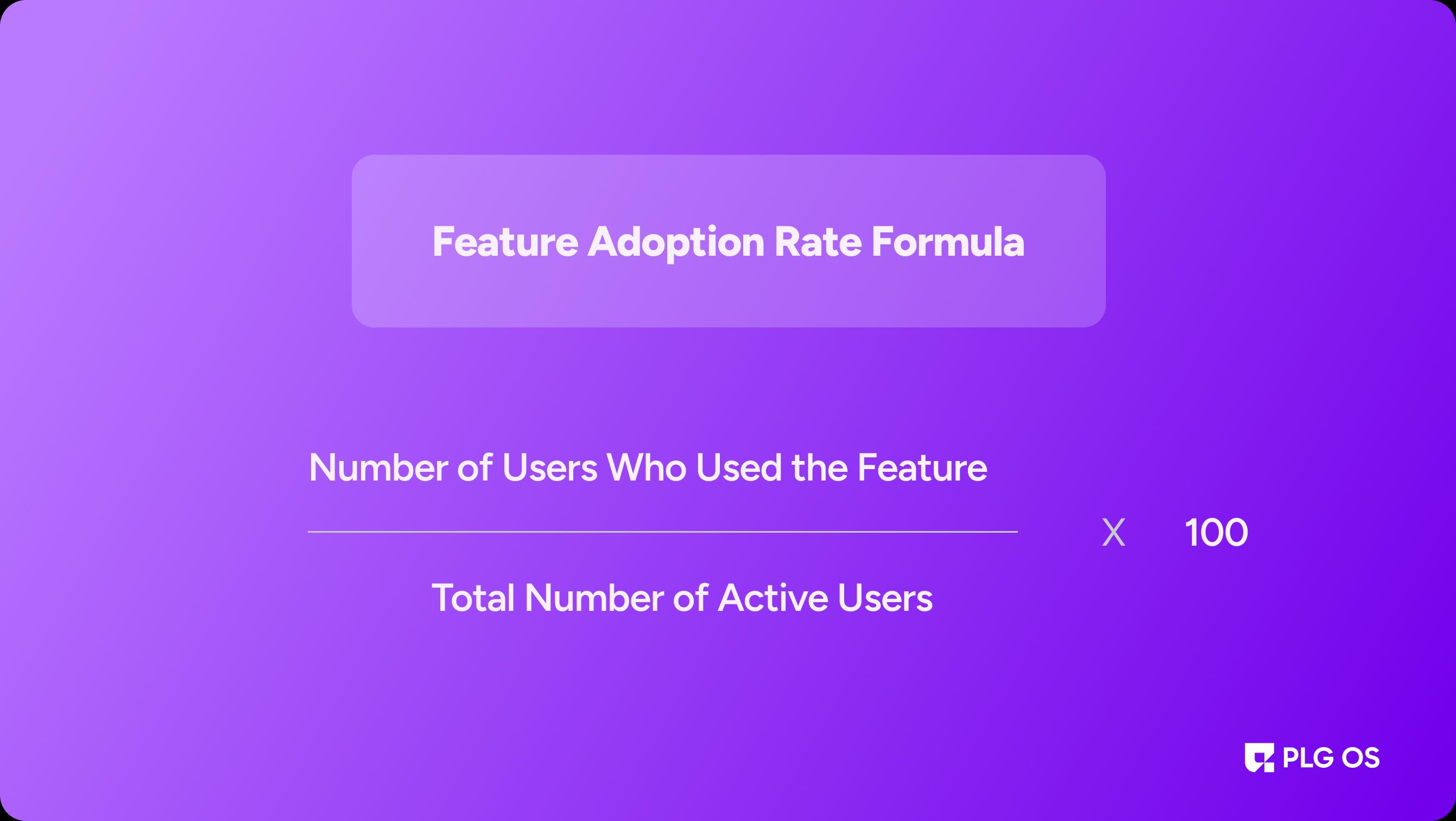
Feature Adoption Rate = (Number of Users Using Feature / Total Number of Active Users) × 100
However, the real complexity lies in defining what constitutes "use" and "active users." Let's break this down with a practical example:
Imagine you've launched a new reporting dashboard in your analytics platform. You have 1,000 active users, and in the first month, 250 users have accessed and interacted with the dashboard at least once. Your initial feature adoption rate would be:
Feature Adoption Rate = (250 / 1,000) × 100 = 25%
But there's more to consider. Many companies use more sophisticated calculations that factor in meaningful usage rather than just initial access. For instance:
Meaningful Feature Adoption Rate = (Users Who Used Feature Multiple Times / Total Active Users) × 100
Or for time-based analysis:
Time-Based Adoption Rate = (Users Who Used Feature Within First X Days / Total New Users in Period) × 100
Why Feature Adoption Rate Matters in SaaS
Feature adoption rate isn't just another metric—it's a crucial indicator of product success and customer satisfaction. High adoption rates typically correlate with better retention rates, increased customer lifetime value, and stronger product-market fit. When customers actively use new features, they're more likely to see value in your product and continue their subscription.
Moreover, understanding feature adoption helps product teams make better decisions about future development. Low adoption rates might indicate that a feature doesn't meet user needs, has usability issues, or hasn't been properly introduced to users. This insight can save considerable resources by helping teams focus on features that truly matter to users.
Factors Affecting Feature Adoption
User Interface and Experience:
The easier a feature is to find and use, the more likely users are to adopt it. Clear navigation, intuitive design, and smooth user flows are essential for high adoption rates. Even the most valuable feature will struggle to gain traction if users can't easily access or understand it.
Feature Value Proposition:
Users need to understand why a feature is valuable to them. The benefits should be clear and relevant to their needs. This means not just building great features, but effectively communicating their value to users through various channels.
User Education and Onboarding:
Proper introduction and education about new features significantly impact adoption rates. This includes in-app guidance, documentation, webinars, and other educational resources that help users understand and implement new features effectively.
Strategies for Improving Feature Adoption
Targeted User Communication
Effective communication about new features should be personalized and contextual. Instead of blasting all users with the same message, segment your audience based on their usage patterns, needs, and preferences. Send targeted communications that explain how specific features can solve their particular challenges or improve their workflows.
Progressive Feature Introduction
Rather than overwhelming users with all features at once, introduce them progressively based on user maturity and needs. This approach, often called progressive disclosure, helps users focus on the most relevant features at each stage of their journey with your product.
In-App Guidance and Education
Implement in-app tutorials, tooltips, and walkthroughs to guide users through new features. These should be contextual and appear when users are most likely to need the feature, increasing the likelihood of adoption. Make sure these guides are unobtrusive and can be easily dismissed or accessed later.
Measuring and Monitoring Feature Adoption
Time to First Use:
Track how long it takes users to try a new feature after its release or after they first access your product. This helps identify barriers to adoption and opportunities for better feature introduction.
Frequency of Use:
Monitor how often users engage with features over time. This helps distinguish between genuine adoption and mere experimentation. Regular, sustained usage indicates true feature adoption.
Feature Retention:
Track whether users continue to use features over time or abandon them after initial trials. This helps identify features that provide lasting value versus those that might need improvement.
Common Feature Adoption Challenges
Poor Feature Discovery:
Users often aren't aware of features that could benefit them. Improve feature discovery through better UI design, in-app announcements, and targeted communications.
Inadequate User Education:
Users might not understand how to use features effectively. Address this through improved documentation, tutorials, and customer success initiatives.
Value Communication Gap:
Users might not understand how features benefit them. Focus on clearly communicating value propositions and real-world use cases.
Future Trends in Feature Adoption
AI-Driven Personalization:
Artificial intelligence is enabling more sophisticated personalization of feature introduction and education, helping ensure users encounter features at the most relevant moments.
Predictive Analytics:
Advanced analytics are helping companies predict which users are most likely to adopt specific features, enabling more targeted promotion and support efforts.
Conclusion
Feature adoption rate is more than just a metric—it's a crucial indicator of product success and customer satisfaction in SaaS. By understanding and optimizing feature adoption, companies can build better products, maintain stronger customer relationships, and drive sustainable growth.
At PLG OS, we recognize that successful feature adoption is essential for our clients to maximize their product's potential. We leverage user feedback and insights to enhance our onboarding processes and ensure that users fully engage with new features. Our focus on user-centric design and personalized communication helps streamline the adoption process, ultimately contributing to higher retention rates and customer satisfaction.
Remember that improving feature adoption is an ongoing process. Continuously gather user feedback, monitor adoption metrics, and refine your strategies to ensure your features are providing maximum value to your users. In the end, successful feature adoption isn't just about getting users to try new features, it's about helping them derive real value from your product.