6 B2B SaaS Products Winning Big with Product-Led Growth
The world of B2B SaaS has evolved drastically. A decade ago, most companies relied on heavy sales teams, cold calling, demos, and multi-step sales funnels to close a deal. Today? The most innovative and fast-growing companies are flipping the script.
They are allowing the product to take the lead in communication. Welcome to the era of Product-Led Growth (PLG), where your users’ experience becomes your most powerful marketing and sales tool.
PLG isn’t just a buzzword anymore. It’s a proven, scalable, and sustainable model. But here’s the catch: Nailing PLG is not easy. It takes precision, obsession with user experience, and a seamless marriage between product, growth, and go-to-market strategies.
Refresher on What Product-Led Growth Is
Product-led growth (PLG) is a business strategy in which the product takes the lead as the driver of customer acquisition, activation, retention, and expansion. This approach places the product at the center of the organization's focus for sustainability and scalability rather than relying on the marketing team or the sales team. Essentially, the product itself becomes the primary means of achieving growth, and its design and functionality are optimized to deliver a self-sustaining growth cycle.
6 B2B SaaS Products with Product-Led Growth
To help you understand how this works in the real world, let’s dive into 6 B2B SaaS companies that are absolutely crushing it with PLG. Leading product-led growth companies are growing 50% year over year, far faster than traditional SaaS companies (21%), according to recent benchmarks. Plus, we’ll break down what they’re doing right and how you can replicate their success.
1. Slack: The Viral Engine
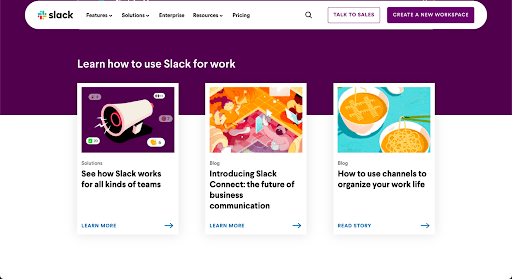
No list of PLG champions is complete without Slack. The workplace communication tool that changed how teams talk, collaborate, and work—all without ever needing a cold call.
What They're Doing Right:
Frictionless Onboarding:
You can start using Slack in minutes. No sales call. No credit card.
Built-In Virality:
Slack grows through teams. The more your coworkers join, the better the experience. That’s product-led distribution in action.
Usage-Based Triggers:
Once teams hit limits on search history or storage, the value gap becomes obvious, making the paid upgrade a no-brainer.
Lesson to Steal:
Design your product to spread naturally. If your users find value, how can they easily invite their colleagues or peers? Make it seamless.
2. Notion: Simplicity Meets Stickiness
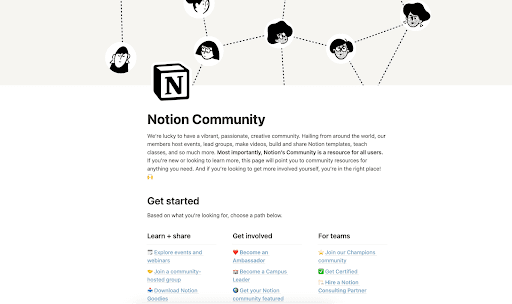
Notion started as a note-taking app, but it quickly became the hub for documents, tasks, wikis, and everything in between. And it grew almost entirely through word of mouth and user love. A majority of B2B SaaS companies have already deployed a product-led growth motion – it exists in 58% of companies surveyed.
What They're Doing Right:
Intuitive UX:
Anyone can create a workspace or page without needing a tutorial.
Community Flywheel:
Notion’s template gallery and passionate user base drove massive content creation and sharing—fueling new user acquisition.
Freemium Model:
Users get hooked with the free plan and naturally expand into teams and paid plans.
Lesson to Steal:
Your product needs to deliver value immediately. Cut the fluff. Make your “aha” moment obvious and fast. And never underestimate the power of community.
3. Airtable: Making Databases Fun
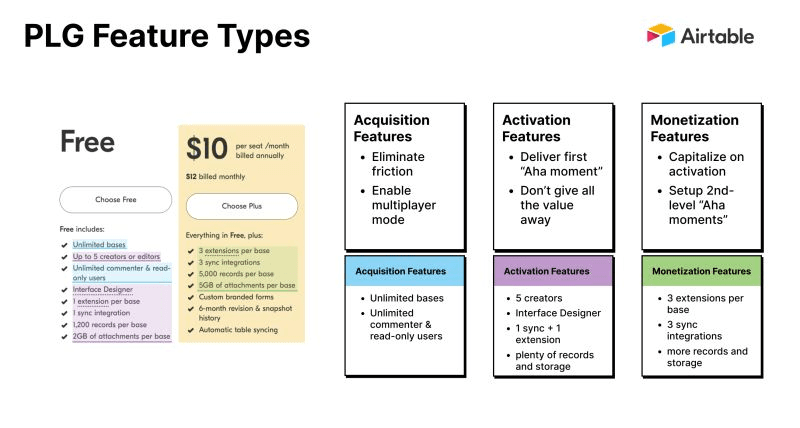
Airtable brought the power of relational databases to the masses—without the learning curve. It looks like a spreadsheet but acts like a powerful no-code tool. And it’s been a quiet giant in the PLG space. Sales is responsible for converting free accounts to paid ones in 23% of companies, while the Product team is next.
What They're Doing Right:
Visual Simplicity:
Airtable lowered the barrier for using powerful tools with a spreadsheet-like UI.
Templates Galore:
Need a CRM? A content calendar? A product roadmap? Airtable has plug-and-play templates that make setup a breeze.
Bottom-Up Adoption:
Individual team members start using Airtable for small use cases. Over time, usage grows across departments, triggering team-wide upgrades.
Lesson to Steal:
Use templates and ready-made solutions to reduce time-to-value. Show your users they don’t need to build everything from scratch.
4. Figma: Design Collaboration Reimagined
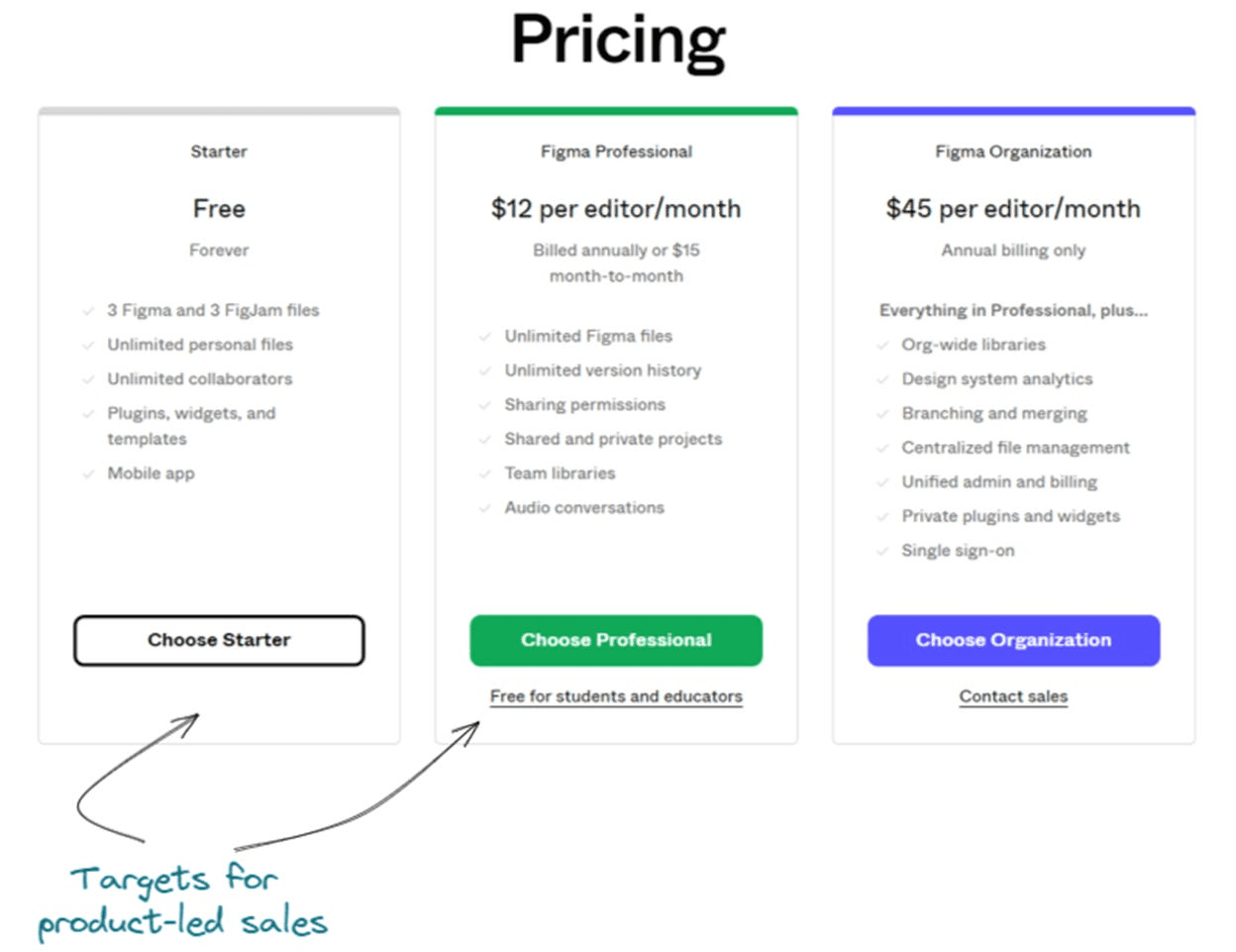
Figma took on giants like Adobe and emerged as the design platform of choice. And guess what? It did it all with a product-first approach.
What They're Doing Right:
Browser-Based:
No installs. No device issues. Just open and start designing.
Real-Time Collaboration:
Designers, product managers, and developers can all work together in the same file—mirroring the magic of Google Docs.
Design Systems and Sharing:
The more a team uses Figma, the more value they unlock—especially in building consistent design systems.
Lesson to Steal:
Think about collaboration as a growth loop. The more stakeholders benefit from using your product together, the faster it spreads.
5. Calendly: The Scheduling King
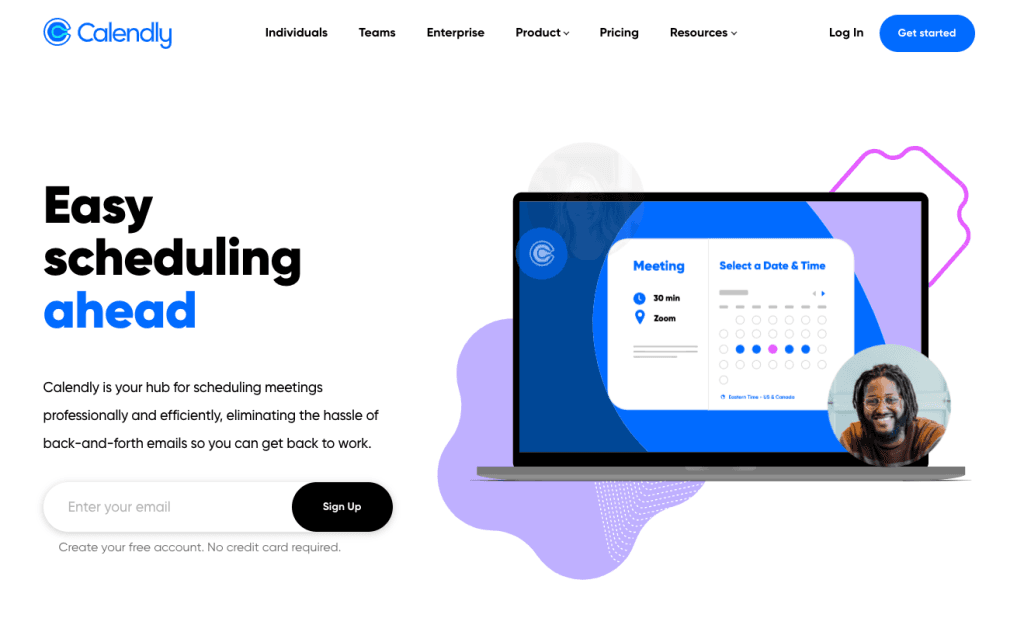
It’s hard to believe Calendly is a B2B SaaS tool—it feels like magic. Just send your link, and meetings appear on your calendar. No email back-and-forth. It’s deceptively simple, and that’s the genius.
What They're Doing Right:
Immediate Utility:
From the first use, Calendly solves a real pain point.
Growth Through Sharing:
Users share their Calendly link, and new users experience the magic first-hand.
Freemium and Upgrade Triggers:
As usage increases, so do the needs for customization, integrations, and branding—which are locked behind paid plans.
Lesson to Steal:
Make your product so useful that users can’t help but share it. If every user becomes a distribution channel, you’ve cracked a core PLG loop.
6. HubSpot: From Sales-Led to Product-Led Evolution
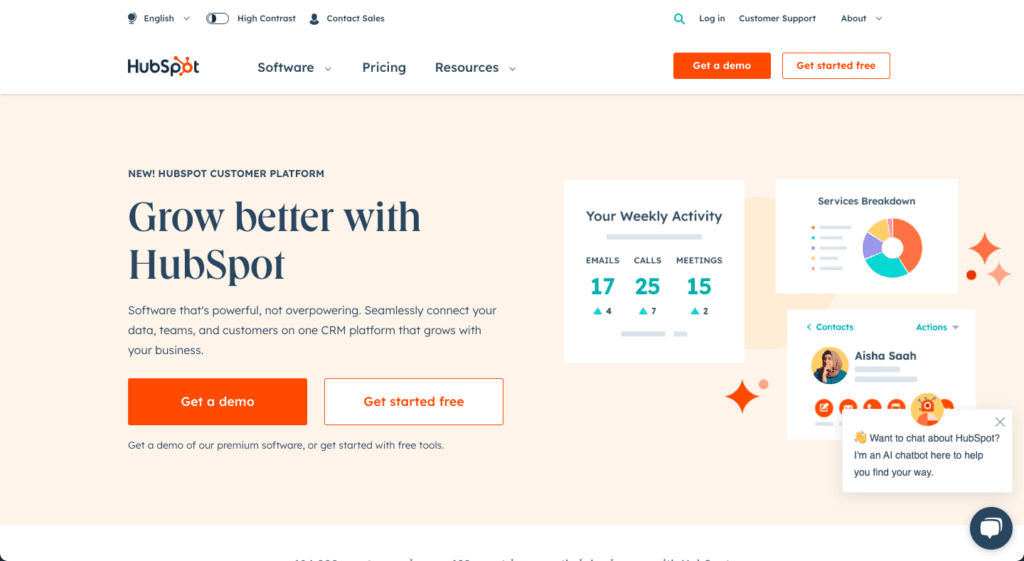
HubSpot started out as a marketing automation giant with a traditional sales-led model. But in recent years, it has embraced product-led principles—especially with its CRM and freemium products.
What They're Doing Right:
Freemium Entry Points:
You can start with HubSpot’s free CRM, then add paid tools as your business scales.
Education and Support:
HubSpot Academy offers tutorials, certifications, and more—helping users succeed with the product.
Cross-Sell and Expansion:
Their modular product suite lets users grow into marketing, sales, and service hubs over time.
Lesson to Steal:
Even if you didn’t start as a PLG company, you can evolve into one. Identify free or low-friction entry points to get users in the door, then deliver value that compels them to stay and grow.
PLG OS: Your Product-Led Growth Operating System
Before we jump into the stars of the PLG show, it’s worth noting that product-led growth isn’t a strategy you slap on your homepage. It’s a system. A way of building, measuring, and scaling your product to drive acquisition, conversion, retention, and expansion—all from within the product itself.
This is where PLG OS comes into the picture.
PLG OS is a comprehensive framework that helps SaaS companies build and scale product-led growth motions effectively. From aligning teams to identifying friction points, from onboarding flows to expansion playbooks—it acts like the operating system behind your product strategy.
If you’re serious about driving PLG, PLG OS gives you the tools, structure, and community to make it work. Think of it as the ultimate companion for SaaS founders, product leaders, and GTM teams trying to put the product at the center of their growth engine.
Okay, now let’s look at who’s doing this brilliantly in the wild.
Conclusion
Product-Led Growth isn't just a strategy—it's a mindset. It's about designing a product that delivers instant value, drives adoption organically, and scales without relying solely on traditional sales tactics. Ask yourself: Can users experience your product’s core value quickly? Is it intuitive enough to spread on its own? Do user actions drive meaningful outcomes? If not, it’s time to rethink your approach. With frameworks like PLG OS guiding the way, building a product that sells itself is no longer a dream; it’s the new standard. Start small, iterate fast, and let your product lead the way. Book a call now.
FAQs
1. What is Product-Led Growth (PLG)?
Product-Led Growth is a go-to-market strategy where the product itself drives user acquisition, activation, retention, and expansion.
2. Can any SaaS business adopt PLG?
Yes, but it works best when your product offers quick value, is easy to try, and supports self-serve onboarding.
3. Is PLG only for startups?
No. Companies of all sizes, including enterprise SaaS giants, are adopting PLG to improve scalability and reduce CAC.
4. What is PLG OS?
PLG OS is a framework and toolkit that helps companies build, optimize, and scale their product-led growth strategies.
5. How do I know if my product is ready for PLG?
If users can experience core value quickly, share the product easily, and upgrade based on usage, you’re on the right track.