PLG OS vs Chameleon: Which Is Better for Your SaaS?

If you’re building a SaaS product in 2025, chances are you’ve heard the phrase “product-led growth” more times than you can count. But here’s the real challenge: Which tool actually helps you do it right? Enter PLG OS and Chameleon, two heavy-hitters in the world of
product-led growth platforms. One promises an all-in-one growth engine, the other a laser focus on in-app onboarding. So, which is the smarter choice for your SaaS? Whether you're scaling fast or just starting out, this guide breaks down what really matters beyond the buzzwords and helps you choose the tool that drives real user growth.
Why Product-Led Growth Platforms Are Essential for SaaS Today
Gone are the days when marketing and sales alone drove growth. In the modern SaaS landscape, the product itself is your most powerful growth engine. Product-led growth platforms are no longer optional; they're your backbone for onboarding, feature adoption, user retention, and revenue expansion. 91% of SaaS companies plan to increase investment in product-led growth in the next 12 months.
1. Your Product Is Your Best Salesperso
In the product-led model, users experience value before they pay. Instead of relying on long sales cycles, your product does the heavy lifting onboarding, demonstrating value, and nudging upgrades.
2. Users Expect Self-Service Journeys
Modern SaaS users prefer to explore at their own pace. PLG platforms help you design onboarding flows, tooltips, and checklists that guide users without forcing human interaction.
3. Scale Without Growing Your Sales Team
As your user base grows, so does the cost of manual onboarding. PLG tools automate the process, letting you scale smoothly without scaling your headcount.
4. Faster Time-to-Value = Higher Retention
The sooner a user experiences value, the more likely they are to stay. Product-led platforms help shorten that “aha!” moment and improve long-term engagement.
5. Data-Driven Growth Becomes Easier
These tools give you real-time insights into what’s working and what’s not enabling quick experiments and continuous improvement based on user behavior.
6. Better Conversion from Free to Paid
Freemium and free-trial models only work when users convert. PLG platforms help you deliver just-in-time nudges, upsell moments, and even native payment flows.
If your SaaS app isn’t guiding users toward value within the product, someone else’s is. And that’s where tools like Chameleon and PLG OS come in.
While Chameleon has long been known for in-app tours and targeted user onboarding, PLG OS is quickly redefining the category by offering a full-stack PLG system, beyond just product adoption.
What Is PLG OS?
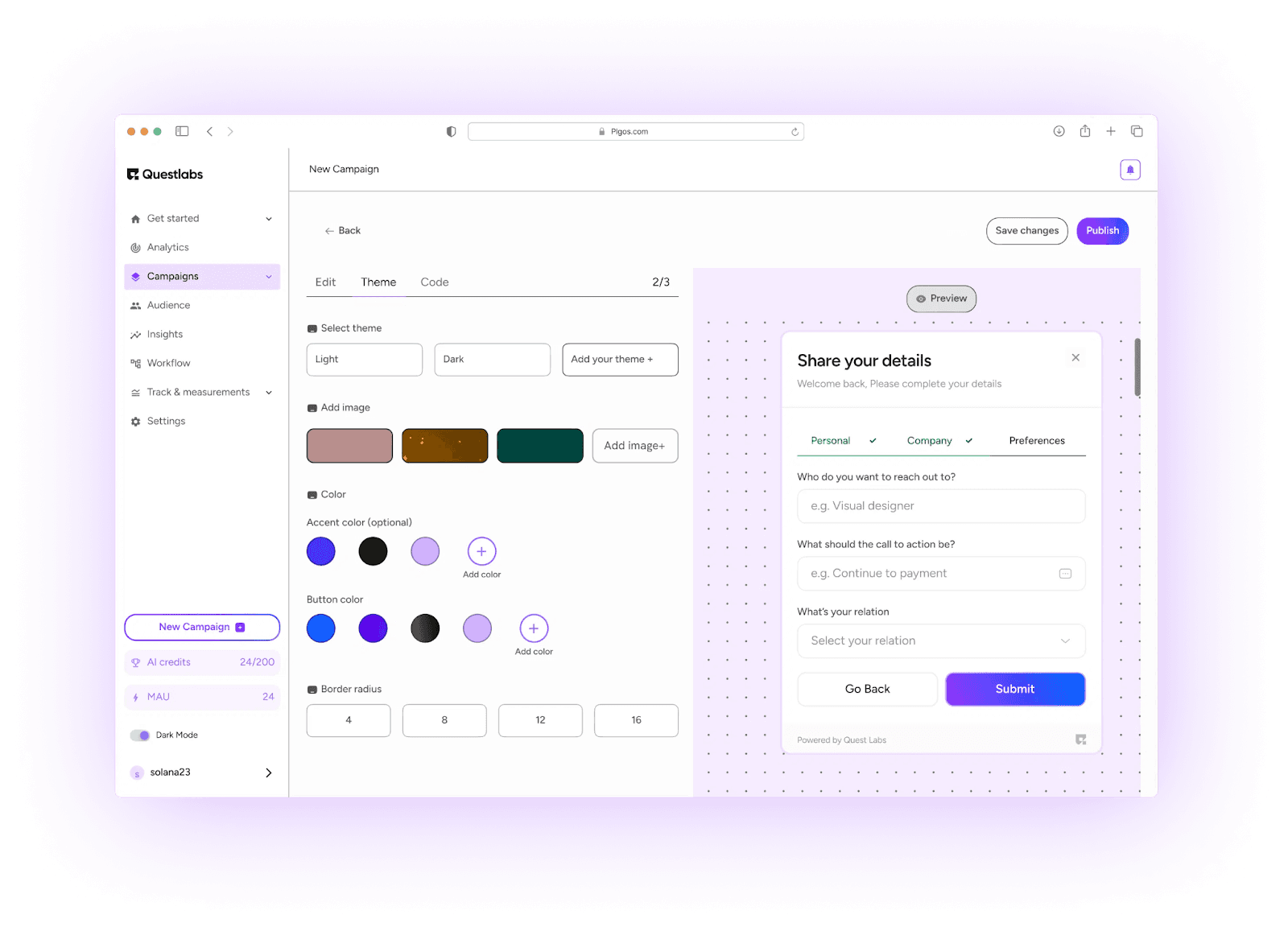
PLG OS positions itself as a complete product-led growth operating system, designed to integrate seamlessly with your SaaS product. Built for speed and scale, it allows teams to launch personalised onboarding, feedback, loyalty, gamification, and even payment flows all from a unified platform.
What Makes PLG OS Different?
Only 29% of companies offer in-app guidance at the point of need, despite it being the most effective engagement tactic. PLG OS isn’t just another onboarding tool; it’s a full-blown product-led growth engine designed to elevate your SaaS product across the entire user journey. Here’s what makes it stand out:
- Optimize Onboarding: Get users to their “aha!” moment faster. With plug-and-play onboarding flows, tooltips, and checklists, PLG OS ensures every new user is guided, not lost.
- Expedite Time to Value: Don't let users wander; lead them directly to your core value. PLG OS shortens the learning curve and accelerates product adoption through personalised in-app experiences.
- User Assistance: Whether it's a first-time user or a returning one, PLG OS provides contextual help at just the right moment. Built-in support widgets and walkthroughs reduce friction and prevent drop-offs.
- Feedback & Surveys: Learn What Your Users Think: In-app surveys, NPS prompts, and feedback forms help you tap directly into the user mindset. Understand what's working, what's not, and how to evolve straight from the source.
- Loyalty & Gamification: Make Your Product Engaging: Turn passive users into power users. PLG OS offers gamified elements, loyalty points, rewards, and referral systems to make engagement feel like a win every time.
- Analytics That Drive Action: Track every click, hover, and interaction. PLG OS brings powerful insights into user behaviour, so you can make data-backed decisions in real time.
- Built-in Payments & Subscription Flows: Convert users inside the product without redirects. PLG OS integrates payments and subscription management, closing the loop between adoption and monetization.
PLG OS is more than a tool, it’s a growth engine designed to scale with your product and your user base.
What Is Chameleon?
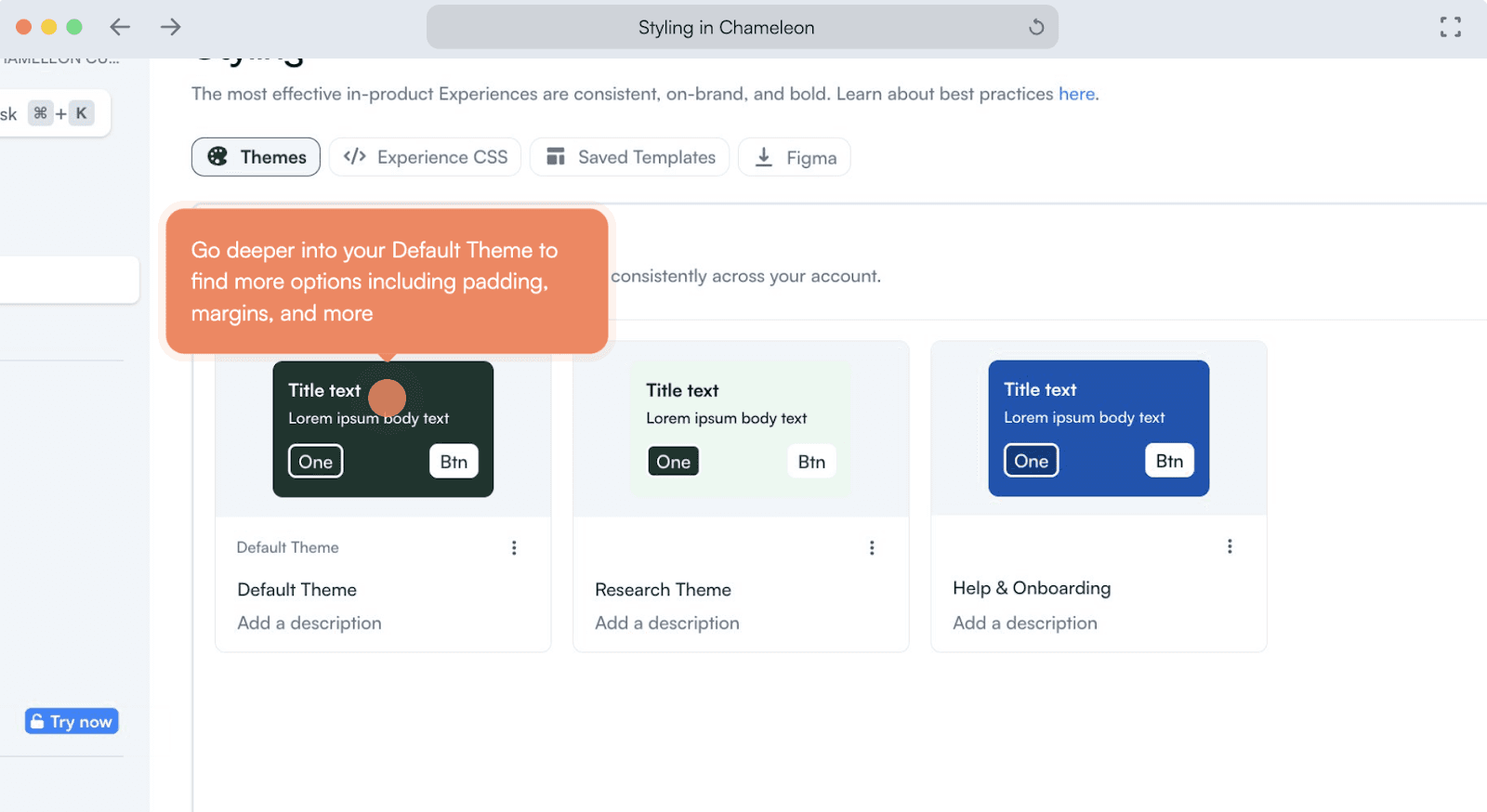
Chameleon is a well-established product adoption platform, focused on empowering product teams to create and deploy in-product experiences that help users learn, engage, and convert. Tools that offer built-in payments and onboarding can reduce user drop-off by up to 35%.
What Chameleon Does Well
- Onboarding Tours & Tooltips: Easy-to-build walkthroughs and tooltips guide users through new features or complex flows.
- Microsurveys & Feedback Tools: Gather contextual feedback right inside your product.
- Checklists & Resource Centers: Help users self-serve and find help without contacting support.
- Segmentation & Targeting: Customize who sees what, based on user behavior, lifecycle stage, or other triggers.
- A/B Testing Capabilities: Optimize onboarding flows and tooltips for maximum effectiveness.
Chameleon is perfect for teams looking to build highly segmented, deeply customized user experiences especially for onboarding and product education.
PLG Tools Comparison: PLG OS vs Chameleon
Let’s break down this PLG tools comparison across key dimensions that matter most for SaaS teams.
| Feature | PLG OS | Chameleon |
|---|---|---|
| Onboarding Flows | Yes, with AI & no-code SDKs | Yes, manually built with segmentation |
| Tooltips & Checklists | Built-in and deeply customizable | Extensive support for both |
| Feedback Collection | In-app surveys, NPS, CSAT, open feedback | Microsurveys and user input |
| Analytics | Native event tracking and funnel analytics | External integrations are needed for depth |
| Payments Integration | Native support via Stripe and others | Not supported |
| Loyalty Programs | Gamified rewards and referral mechanics | Not available |
| Experimentation Tools | AI-based flow suggestions and optimisation | Manual A/B testing in higher tiers |
| Mobile SDK Support | Web and mobile SDKs are available | Web-only |
| Campaign Automation | Rule-based orchestration engine | Limited to behavioural segmentation |
| Pricing | Starts at ~$49/month | Starts at ~$279/month |
Chameleon vs Other PLG Tools
Chameleon often competes with tools like Appcues, Pendo, Userpilot, and WalkMe. It remains a top pick for teams that want best-in-class onboarding design and deep segmentation without needing a large engineering team. 67% of B2B SaaS buyers now prefer self-service onboarding and exploration before contacting sales.
However, it’s worth noting that Chameleon focuses solely on in-app experiences. If you’re also looking for native payments, gamification, loyalty loops, and feedback management all in one stack, Chameleon doesn’t offer that.
That’s where PLG OS stands apart in the Chameleon vs other PLG toolsdebate.
Chameleon Product Adoption vs PLG OS: Which Drives Real Growth?
Speed to Value
- PLG OS helps users hit the "aha!" moment faster through guided onboarding, interactive tours, and automated nudges all powered by AI and built-in analytics.
- Chameleon is powerful for building tailored experiences, but the creation process can be more manual and fragmented.
Feature Adoption
- PLG OS tracks which features users are adopting, and lets you build flows to increase engagement with underused features using gamification and loyalty triggers.
- Chameleon relies on checklists and tooltips, which are great but not as comprehensive or incentivised.
User Feedback & Improvement Loops
- PLG OS collects user feedback at multiple touchpoints and uses it to automatically suggest optimisation tweaks to user journeys
- Chameleon supports microsurveys but requires manual synthesis and action.
Conversion and Monetisation
- PLG OS shines here. Its payment and subscription flows are built in, making it one of the only PLG platforms that also helps convert users natively.
- Chameleon does not support any payment features.
The Pricing Factor: Budget Considerations for Scaling SaaS
- PLG OS offers a flexible pricing model that starts around $49/month, making it ideal for early-stage startups and teams experimenting with PLG for the first time.
- Chameleon begins at $279/month and scales quickly depending on MAUs and features. You’ll need higher plans for A/B testing and localisation.
If you're just starting your PLG journey, the cost barrier for Chameleon may slow experimentation.
Use Case Scenarios: Who Should Choose What?
For Startups or Budget-Conscious Teams
Choose PLG OS
It offers a wide array of tools in one package: onboarding, surveys, payments, analytics, and even gamification. Perfect for lean teams that want to test, iterate, and scale all without hiring a full dev team.
For Mid-Market SaaS with Established Analytics Stack
Choose Chameleon
If you're already using Segment, Mixpanel, Amplitude, or similar tools and only need a solid in-product experience layer, Chameleon slots in well.
For Global Enterprise with Localisation Needs
Still PLG OS has the edge, unless your analytics and CRM ecosystem is deeply established. With mobile support and payment integration, PLG OS offers a future-proofed experience for international scaling.
PLG OS as a Tool: Why It’s Redefining the Game
PLG OS doesn’t just add tours or surveys it provides an entire growth architecture inside your product.
What you get:
- Unified dashboard to manage user onboarding, feature engagement, retention, and monetisation.
- Built-in gamification and loyalty tools that motivate users.
- AI-generated onboarding experiences and messaging that optimise over time.
- No need for third-party surveys or feedback tools
- The no-code setup allows anyone on the product or marketing team to run experiments
This positions PLG OS not just as an alternative, but as a category-defining product-led growth platform.
Hidden Factors Most PLG Vendors Won’t Mention
1. The cost of stacking tools adds up
Chameleon needs integrations with feedback tools, payment systems, and analytics to provide a full PLG experience. That gets expensive.
2. PLG isn’t just onboarding, it’s conversion
Only PLG OS supports a payment flow. If your freemium strategy depends on trial-to-paid conversion, PLG OS enables that natively.
3. Time-to-launch matters
PLG OS allows teams to build entire onboarding flows, survey logic, and loyalty loops in minutes. Chameleon often requires a lot of planning and segmentation logic upfront.
4. PLG maturity matters
If your company is just starting with product-led strategies, PLG OS can help build the whole journey. Chameleon is ideal when you’ve already matured your analytics and growth stack.
Final Verdict: PLG OS or Chameleon?
Choose PLG OS if:
- You want one tool that manages onboarding, feedback, payments, and loyalty.
- You’re a fast-moving startup or scaling SaaS with a lean team.
- You want the ability to run dozens of experiments with minimal code.
- You're looking for mobile and web support, plus built-in analytics.
Choose Chameleon if:
- You have an existing growth stack and just need in-app experiences.
- You want highly customised and segmented product tours.
- You don’t need payment integration or loyalty functionality.
- You can afford a higher monthly spend for more focused tooling.
Final Thoughts
The decision between PLG OS vs Chameleon isn’t just about features it’s about how you think about growth.
- PLG OS is for teams ready to embrace PLG as an operating model.
- Chameleon is for teams looking to improve the polish and precision of their onboarding layer.
Either way, investing in the right product-led growth platform will pay dividends in user activation, retention, and revenue.
So the real question is: Are you building just a better onboarding tour or a growth engine inside your product?
The answer will point you to the tool that truly fits your SaaS DNA.
FAQs
1. What is a product-led growth platform?
A product led growth platform helps SaaS companies onboard users, drive feature adoption, collect feedback, and convert users using the product itself as the primary driver of growth.
2. Is PLG OS suitable for early-stage startups?
Yes. PLG OS offers an affordable, all-in-one suite with no-code setup ideal for startups that want fast deployment without managing multiple tools.
3. Does Chameleon support in-app payments?
No. Chameleon focuses on user onboarding and adoption. It does not offer native payment or subscription features.
4. Can I use PLG OS on mobile apps?
Yes. PLG OS supports both web and mobile SDKs, allowing consistent onboarding and engagement across platforms.
5. Which is better for feature adoption, Chameleon or PLG OS?
Chameleon excels in segmentation and targeting for adoption campaigns, while PLG OS combines onboarding, feedback, and gamification to drive ongoing feature usage across the user journey.