PLG OS vs Intercom: 6 Key Differences Driving Product-Led Growth
To expand in the modern SaaS industry, one must stop trying to sell the product and instead focus on making the product speak for itself. Delivering value in product, encouraging adoption, and transforming users into advocates are the pillars of this ideology called Product-Led Growth (PLG). Your tool selection has a significant impact on the onboarding, engagement, support, and monetization processes.
That’s why the showdown between PLG OS vs Intercom is more than a comparison it's a lens into two fundamentally different approaches:
- Intercom: A top-tier customer engagement platform built around messaging, support, and sales‑assist features.
- PLG OS: A new breed of PLG software designed exclusively for product-led growth needs.
In this blog, we’ll dive into 6 key differences that impact your ability to build an effective PLG motion. If you're searching “Intercom alternatives” or want a comprehensive SaaS onboarding tool comparison, you’re in the right place.
1. Messaging vs Product Engagement
Intercom: Messaging‑First, Broad Use Cases
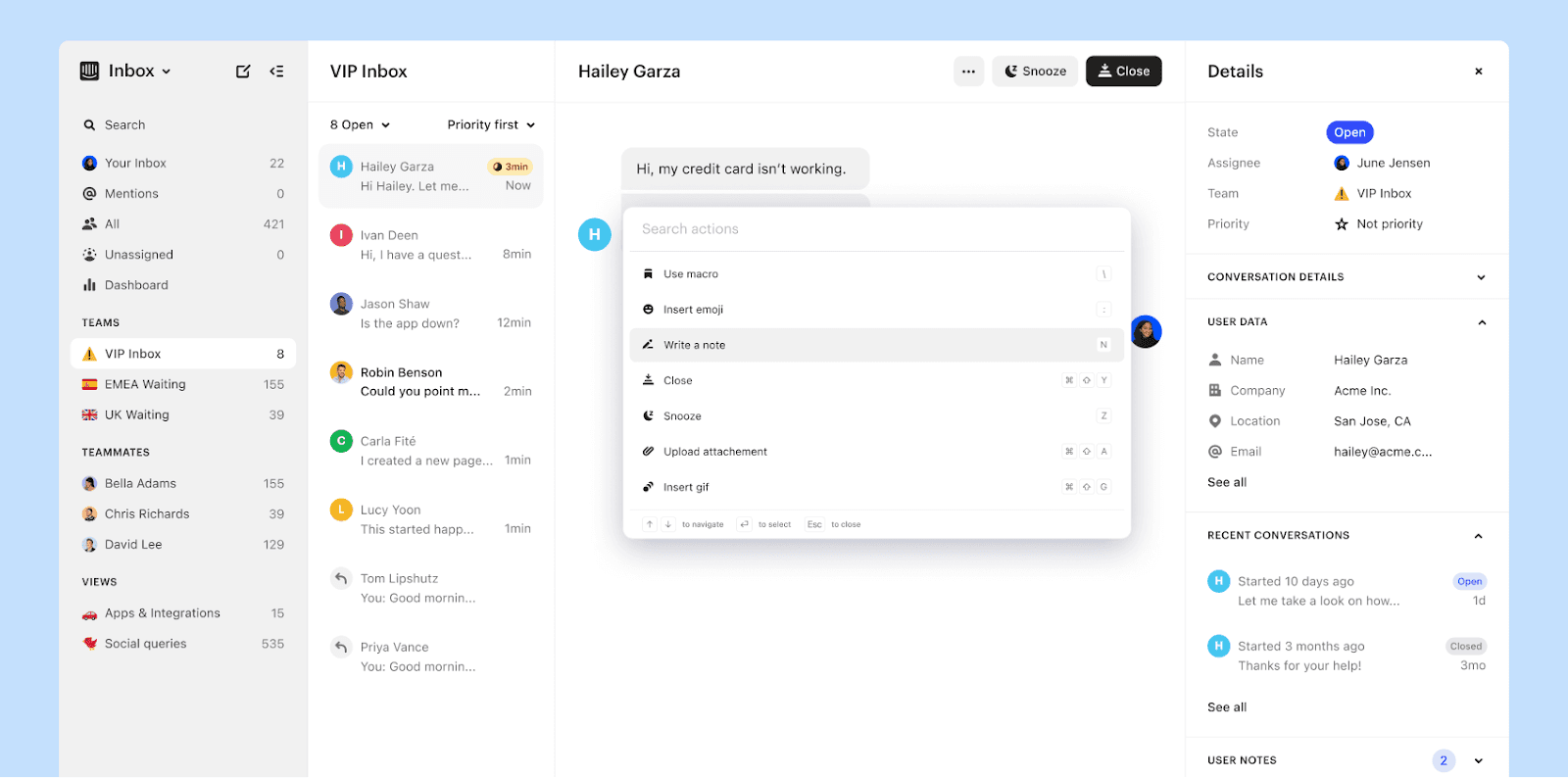
Intercom has always excelled as a customer engagement platform, offering chat, bots, email campaigns, and Help Center support. Think of it as a marketing and support hub—perfect for newsletters, chat support, product announcements, and lead capture.
✅ Great for:
- Support teams needing robust help desk and chat tools
- Marketers running targeted email/announcements from within one platform
PLG OS: Product‑Native, Engagement‑First
PLG OS is purpose-built for product-led growth. It integrates directly into the product experience—letting users self‑serve during onboarding, explore features via in-app guides, trigger conversions based on usage, and collect feedback at key milestones. It’s product-native, meaning every interaction happens inside the product interface, not in an external chat window. PLG companies grow 2x faster than sales-led companies on average, according to OpenView’s Product-Led Growth Index.
✅ Ideal for:
- Teams focused on in-product activation, adoption, and expansion
- Engineers/PMs who want full control over the in-app UX
- Product-led growth orgs that want to align messaging, analytics, and automation
2. Onboarding & Feature Discovery
Intercom: Chatbots, Tours, and Manual Workflows
Intercom includes Product Tours, Chatbots, and Custom Bots that can trigger messages or questions when users reach specific pages or take actions. It’s flexible, but:
- Setting up tours requires manual effort.
- Feature adoption tracking is basic—like “visited feature X” flags, not deeper in-app behavior.
- Onboarding flows live alongside support and messaging layers. You have to actively connect them for PLG strategies.
PLG OS: Built‑In Product Journeys with Context
PLG OS offers a fully integrated onboarding framework:
- Product Playbooks: Sequence in-app flows that trigger automatically based on user behavior.
- Contextual prompts highlight features at just the right moment (e.g., after X account creations or project completes).
- Usage-based gating lets you introduce premium features only when users qualify by usage—an automated upgrade nudge.
- Turnkey analytics track completion of onboarding milestones, feature adoption, time-to-value, and who’s stuck.
Intercom gives you the toolkit; PLG OS gives you the playbook—with data baked in from day one.
3. Analytics & Data-Driven Activation
Intercom: Base Messaging Metrics, with Premium Analytics
Intercom's analytics focus on message performance:
- Impressions, click-through rates, replies, resolution times.
- Its premium “Product Tours analytics” show completion rates and drop-off steps
- For deeper, element‑level usage analytics, you'll need to integrate third-party tools or sacrifice context.
PLG OS: Feature-Centric, Intent-Focused Analytics
PLG OS is built around in-app behavior analytics:
- It measures feature usage norms (who’s using what and when).
- Contextual prompts highlight features at just the right moment (e.g., after X account creations or project completes).
- It highlights behavioral triggers (e.g., user reaches 3 out of 5 key actions).
- It surfaces “Activation Health Scores” based on user journeys.
This data fuels automation (e.g., trigger guide X when users have done Y) and lets product managers pinpoint drop-offs in onboarding or adoption phases. With PLG OS, usage is the heartbeat of your growth lever. In-app guidance can increase feature adoption by 68%, as per a user experience report.
4. Automation & Personalized Nudges
Intercom: Bots, Rules & Chat Campaigns
Intercom empowers you to build automated flows, like:
- Chatbots that collect user info or guide through setup.
- Rules to auto-route chat messages to specific teams or fire emails.
- Custom Bots that ask qualifying questions, then nudge users via email or messenger.
Solid for communication-led workflows—but still messaging centric.
PLG OS: Workflow Automation Inside the Product
Automations with PLG OS go deeper:
- Behavioral triggers – product usage, feature access, time‑based conditions.
- In‑app actions – launch a tour, show a tooltip, lock/unlock features, open modal dialogue.
- Cross‑channel outreach– optional email nudges tied to in‑product behavior.
- Revenue triggers– prompt in-app upgrade modals only when users clearly need premium features.
This cohesive in-product automation flow ensures your nudges are both timely and contextual—without forcing users to open an email or chat. Customer acquisition costs (CAC) drop by up to 40% when businesses implement product-led onboarding instead of relying solely on email or chat-based tours.
5. Support vs Self-Serve Growth
Intercom: Universal Support & Chat First
Intercom’s claim to fame is real-time, omni-channel support:
- Live chat, inbox routing, internal notes, teams, SLAs.
- Help Center integration: self-serve knowledge base content.
- Product Tours that can be triggered from chat.
You get a full support infrastructure and self-serve articles.
PLG OS: Self‑Serve & Support Layers in One
PLG OS focuses on reducing support load through:
- Intuitive in-app guides addressing usage rather than just knowledge articles.
- Progressive disclosure—features unlocked only when relevant, reducing friction and confusion.
- In-app surveys and feedback to identify pain points before they hit support.
You can layer on Intercom chat on top—but the goal is fewer support spikes by enabling users to help themselves.
6. Pricing & Total Cost of Ownership
Intercom: Value for Scale, but Can Balloon
Intercom pricing typically includes:
- Billing by active users/conversations or seats.
- Add-ons for advanced analytics, product tours, and custom bot flows.
- Chat support features at higher tiers.
For churn-obsessed startups, this can be worthwhile—until usage grows. Suddenly you’re paying for every chat, messengers and tour.
PLG OS: Usage‑Built, Value‑Built
PLG OS operates with usage-based tiers tied to actions, not seats. You pay based on:
- Monthly active users engaging with guides or tours.
- Volume of features unlocked or triggered journeys.
- Optional add-ons for deeper integrations.
Since it’s specialized for PLG, you won’t overpay for unrelated chat or CRM features.
Intercom vs PLG OS: Feature Comparison Table
Let’s align the tools side-by-side for clarity:
| Feature / Dimension | Intercom | PLG OS |
|---|---|---|
| Core Idea | Customer messaging & support | In‑product activation & adoption |
| Onboarding | Product Tours + Chatbots | Product Playbooks + contextual guidance |
| Analytics | Messaging metrics, completion tracking | Feature usage, behavioral analytics, scoring |
| Automation | Bots + email rules | Behavioral triggers + in‑app workflows |
| Support | Real‑time chat, Help Center | Self‑serve playbooks built into the product UI |
| Pricing | Seat tiers, message volumes, add‑ons | Usage‑based, PLG‑aligned, streamlined |
PLG OS as a better Intercom Alternative
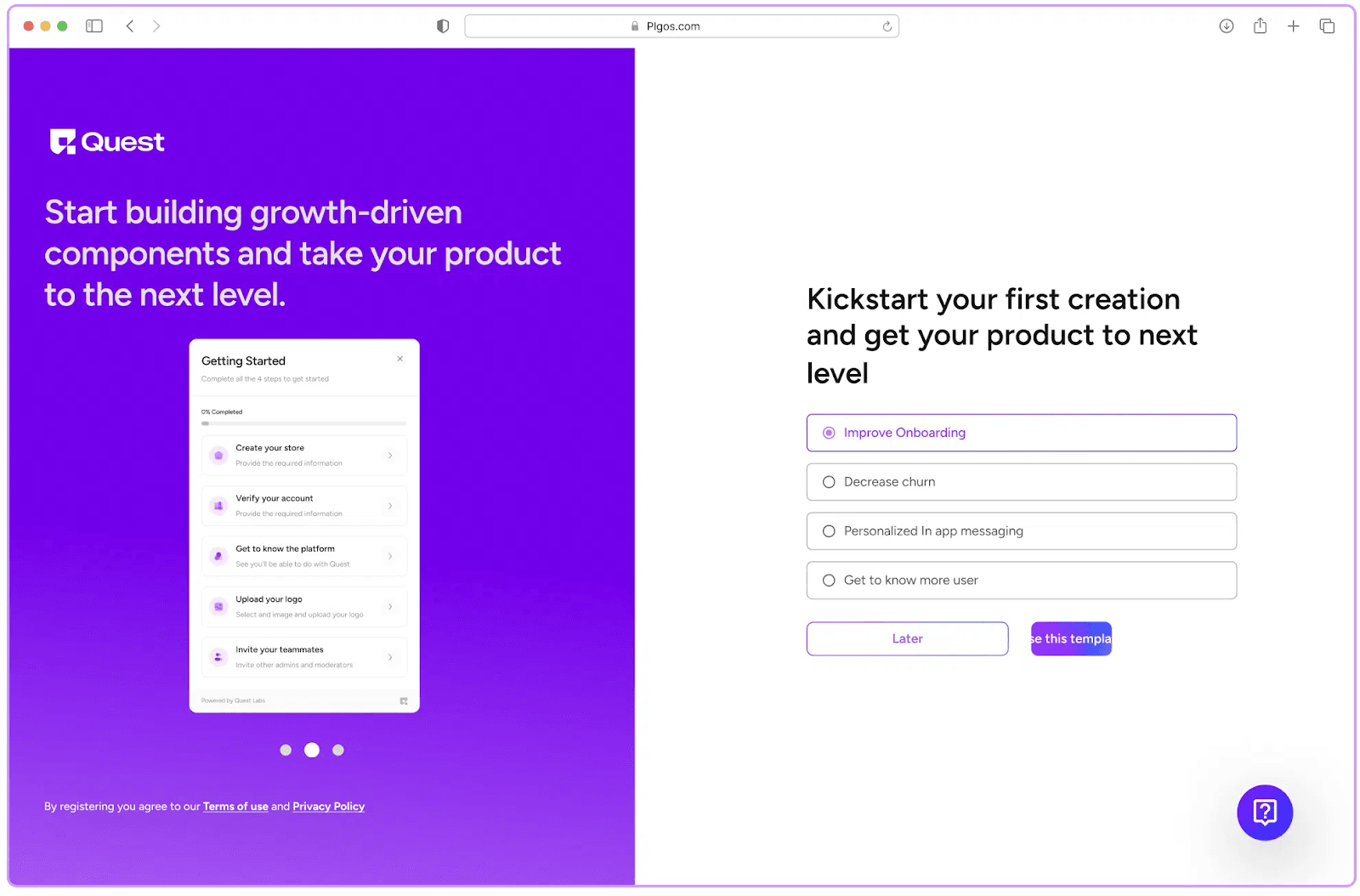
Let’s go out of the box. Here’s how a truly product-led organization could rethink growth using PLG OS instead of (or alongside) Intercom:
- Dynamic Free Tier that Scales with Behavior
- Use PLG OS to let users unlock features temporarily for high-intent behaviors. They get taste of premium features based on engagement—but to keep them, they upgrade.
- Contextual, Not Canned, Onboarding
- Imagine a whiteboard tool where user A is building org charts, user B is brainstorming. PLG OS automatically surfaces “Smart Nodes” feature when user draws first node, and “Export to PDF” when they finish chart—rather than generic “tour me” flows.
- Upgrade Triggers Based on Usage Patterns
- Analytics reveal that teams hitting 30 charts per month are 60% likely to upgrade. Blast them with a mid‑tier value proposition right inside the product, highlighting the ROI: “30 charts this month? Try our Pro export pack.”
- Cross-Channel & In-Product Harmony
- Send a Slack nudge to workspace admins: “3 free users have shared files. Expand team plan to unlock file permissions.” While other users see discreet in‑product notifications.
- Intelligent De‑Activation of Guides Post Adoption
- PLG OS learns who has completed onboarding tasks and suppresses tips thereafter. This respect for experienced users enhances satisfaction vs chatbots that keep re‑surfacing.
- 360° Usage-Based Persona Mapping
- Build personas around actual behaviors (e.g., “Power Analyst” vs “Casual Dabbler”) and tailor both product and message. PLG OS feeds persona‑based insights into email tools or Slack outreach.
Takeaway: This kind of growth automation can’t be scripted in a chat-first tool. It needs behavior intelligence + layered UI—exactly what PLG OS delivers.
Real-World Scenarios: When to Choose What
You're a PLG-native SaaS Startup
Focus: Quick activation, user-led adoption, and self-upgrade.
Choose PLG OS because it’s optimized for:
- Onboarding automation
- Feature-triggered growth
- Usage behavior tracking
- In‑product monetization nudges
You’re Support‑Heavy or Conversational‑Centric
Focus: high-touch support or chat-led sales.
Choose Intercom for:
- Real‑time chat, inbox collaboration, team routing
- Rich Help Center content
- Email announcements, newsletters, and product tours
You Want Both
Use PLG OS for product engagement and Intercom for chat support. The two can coexist:
- PLG OS handles onboarding, feature adoption, and upgrades
- Intercom powers chat support, live demos, and drip email campaigns
Beyond the Comparison – The Future of PLG Technology
The Rise of PLG‑First Platforms
The PLG wave is maturing. Expect to see more tools like PLG OS—specialized, behavior-aware, UX-first. The edges of product, growth, and marketing are blurring, with the product itself as the front line.
AI-Driven Growth Assist
AI will soon power:
- Automated guide recommendations based on usage patterns
- Natural‑language assistants that live inside the app, teaching features
- GPT-powered chatbots that connect in-app queries to actual feature triggers
Tools like PLG OS are architected to adopt these next-gen capabilities—whereas messaging tools will need major overhauls to catch up.
PLG OS Vs Intercom Software Comparison
| Category | PLG OS | Intercom |
|---|---|---|
| Core Focus | Product-led growth platform focused on in-product activation, adoption, and monetization. | Customer engagement platform focused on chat, support, and messaging |
| Onboarding | Behavior-driven in-app playbooks, contextual feature prompts, progressive guidance. | Guided tours and chatbots; manual setup for most onboarding workflows. |
| Analytics | Tracks feature usage, behavioral patterns, activation milestones, and health scores. | Tracks message performance (CTR, opens) and tour completion; deeper analytics needs add-ons. |
| Automation | Advanced workflow automation tied to user behavior, feature triggers, and revenue cues. | Bots and messaging rules for chat and email; not natively product-behavior driven. |
| Customer Support | Focuses on self-serve product guidance to reduce support needs. | Strong live chat, Help Center, and team inbox for high-touch support. |
| Upgrade & Monetization | Usage-based upsell prompts triggered in-app, based on milestones and intent. | Relies on email or chat outreach; less integrated with product usage triggers. |
| Pricing Mode | Usage-based pricing (active users, feature triggers); scales predictably for PLG teams. | Seat- and conversation-based pricing; costs can balloon as user or chat volume grows. |
| Ease of Setup for PLG | Purpose-built for growth teams, product managers, and PLG-native orgs. | Requires custom workflows to achieve PLG strategies (extra time/resources). |
| Best For | SaaS companies focused on activation, adoption, upsell, and lowering CAC via PLG. | Businesses prioritizing real-time chat, heavy support, and conversational sales. |
Final Thoughts: What's Right for You?
- If your feature adoption rate is low, and you struggle with “activation drop-off,” PLG OS gives you targeted and automated mechanisms to nurture adoption.
- If support, FAQs, and chat are your bread & butter, Intercom remains a strong foundation.
- If you're in rapid PLG scale mode, a dual-stack approach makes sense: PLG OS at the experiential layer and Intercom for support and messaging when needed.
FAQs
1. What is the biggest difference between PLG OS and Intercom?
PLG OS is built for in-product growth and automation, while Intercom is primarily a messaging and support platform. PLG OS focuses on activation and adoption, not just communication.
2. Can PLG OS replace Intercom completely?
It depends. If your focus is product-led growth, PLG OS can handle onboarding, engagement, and upgrades. For live chat and heavy support needs, Intercom may still complement it.
3. Are there other Intercom alternatives for product-led growth?
Yes, but most alternatives focus on messaging. PLG OS stands out as a product-led growth tool with analytics, automation, and in-app journeys built-in.
4. Which tool is better for SaaS onboarding?
PLG OS. It delivers behavior-based, contextual onboarding and feature adoption playbooks, while Intercom relies on tours and chatbots that need more manual effort.
5. Is PLG OS cost-effective compared to Intercom?
Yes. PLG OS uses usage-based pricing focused on product actions, while Intercom can get costly with seat- and conversation-based tiers as you scale.