What Is Customer Acquisition Cost & Why Is It Important to Measure CAC?
Customer Acquisition Cost is simply the total amount you spend to gain a new customer. This includes all the marketing and sales expenses involved in turning a prospect into a paying customer. Think about costs like advertising, the salaries of your sales and marketing teams, the software tools you use, and any other expenses directly tied to acquiring customers.
Why Is CAC Important for SaaS Startups?
Understanding and managing CAC is vital for several reasons:
Profitability
If you’re spending more to acquire customers than they’ll bring in over their lifetime, you’re in trouble. A sustainable business model needs a healthy CAC.
Scalability
A lower CAC enables you to grow faster without sacrificing profitability.
Investor Appeal
Investors often scrutinize CAC when considering a SaaS company. A favorable CAC to Customer Lifetime Value (CLV) ratio can make your startup much more attractive to potential backers.
Resource Allocation
Knowing your CAC helps you allocate resources more effectively across various marketing and sales channels.
Pricing Strategy
Insights into CAC can inform your pricing strategy, ensuring you set prices that allow for profitability after acquisition costs.
Competitive Edge
Companies that can acquire customers more efficiently gain a significant market advantage.
How to Calculate CAC
To calculate CAC, you can use this straightforward formula:
CAC = Total Cost of Sales and Marketing / Number of New Customers Acquired
To get a more accurate picture, consider:
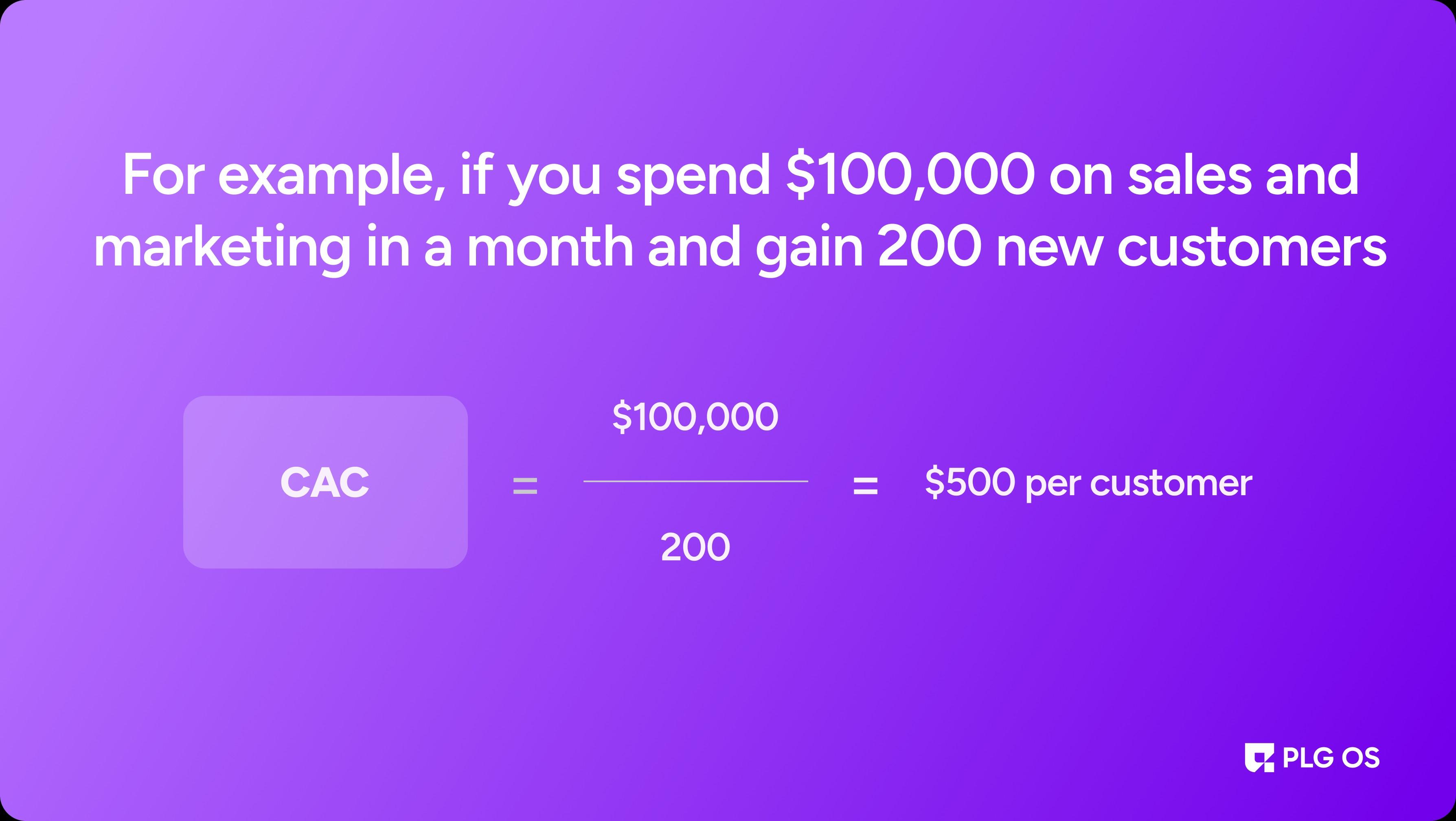
Defining a specific time period (monthly, quarterly, etc.)
Including all relevant costs:
- Advertising and marketing expenses
- Salaries and commissions for your sales and marketing teams
- Software and tools for sales and marketing
- Creative costs (like content creation and design)
- Any other direct costs associated with acquiring customers
Segmenting your CAC by marketing channel or customer type can also provide valuable insights.
How to Improve Customer Acquisition Cost
Lowering your CAC can have a substantial impact on your startup's growth and profitability. Here are some actionable strategies:
1. Optimize Your Marketing Funnel
Look for bottlenecks in your marketing funnel and work to eliminate them. This might involve improving landing page conversion rates or refining your ad targeting.
2. Leverage Content Marketing
Create valuable, SEO-optimized content that addresses your audience's pain points. This can attract organic traffic and establish your thought leadership.
3. Implement a Referral Program
Encourage existing customers to refer new ones. Referral leads typically have lower CAC and higher conversion rates. Offer incentives to motivate customers to spread the word.
4. Focus on Customer Retention
Improving customer retention boosts the lifetime value of each customer, making acquisition costs more worthwhile. Implement strategies to reduce churn and enhance customer satisfaction.
5. Utilize Marketing Automation
Automate repetitive marketing tasks to cut down on labor costs and increase efficiency. This can include automating email marketing, social media scheduling, and lead scoring.
6. Enhance Product Virality
Design features in your product that encourage users to invite others. Collaboration tools or social sharing options can significantly amplify your reach.
7. Streamline Your Sales Process
Make your sales process as efficient as possible. Qualify leads before they reach your sales team and provide the necessary tools and training to your salespeople.
8. Experiment with Different Marketing Channels
Be open to testing new marketing channels and tactics. What works for one startup may not work for another, so stay adaptable and ready to pivot.
9. Leverage Partnerships
Partner with complementary businesses or integrate with popular tools in your niche. This can help you tap into existing user bases and lower your acquisition costs.
10. Define Your Ideal Customer Profile
The more accurately you can target your ideal customer, the more effective your marketing will be. Regularly refine your ideal customer profile based on data from your best customers.
11. Improve Onboarding
A smooth onboarding process can reduce early churn, effectively lowering your CAC by keeping more customers engaged long enough to see value.
12. Utilize Retargeting
Engage potential customers who’ve shown interest but haven’t converted yet. Retargeting these warm leads often costs less than acquiring new ones.
The Balance: CAC and Customer Lifetime Value (CLV)
While reducing CAC is essential, it’s just as important to consider it alongside Customer Lifetime Value (CLV). The goal isn’t to have the lowest CAC possible, but to achieve a healthy balance between CAC and CLV. A common benchmark in the SaaS industry is to aim for a CLV to CAC ratio of 3:1 or higher. This means that a customer should bring in at least three times what it costs to acquire them.
Conclusion
For SaaS startups, Customer Acquisition Cost should be a guiding metric. By understanding, tracking, and continuously improving your CAC, you pave the way for sustainable growth and profitability. Remember, reducing CAC is an ongoing journey. As your startup evolves, keep reassessing and fine-tuning your strategies.
PLG OS can significantly aid in this effort by offering features that streamline both customer acquisition and retention processes. From simplifying onboarding to gathering real-time feedback, PLG OS is designed to enhance the user experience, which can ultimately help reduce acquisition costs. Its robust tools support effective customer engagement, allowing you to quickly address pain points and foster loyalty. Plus, with a quick integration process, getting started with PLG OS is seamless, enabling startups to focus on growth without unnecessary hurdles. Embrace a smarter approach to CAC with PLG OS and set your startup on the path to success!