Top 5 Customer Success Management Software for SaaS
Customer success is no longer a “nice-to-have” function for SaaS businesses. It is the growth engine. In an era where switching costs are low and competition is relentless, your ability to onboard users effectively, help them realize value quickly, and keep them engaged determines whether your company scales—or stalls. This is why customer success management software has become foundational infrastructure for SaaS teams. But with dozens of tools claiming to be the best customer success software, the real challenge isn’t adoption. It’s choosing the right platform for your business model, stage, and growth strategy.
What Is Customer Success Software
Customer success software is a category of SaaS tools designed to help businesses ensure that their customers achieve the desired outcomes while using their products. At its core, customer success software helps teams answer three critical questions:
- Are customers adopting the product in a meaningful way
- Are they realizing value fast enough?
- Are there early signals of churn or expansion
Unlike support software, which reacts to problems, or CRM systems, which manage relationships, customer success management tools are proactive. They monitor usage, guide users, and surface insights that help teams intervene before problems escalate. Modern SaaS customer success software goes a step further by embedding success directly into the product through onboarding, in-app guidance, feedback collection, and engagement mechanisms.
Key Benefits of Using Customer Success Software
Implementing the right customer success management software delivers measurable benefits across the organization.
Reduced Churn
By identifying risk early and guiding users proactively, teams can prevent avoidable churn.
Faster Product Adoption
In-product onboarding and assistance accelerate learning curves and reduce friction.
Improved Customer Experience
Users receive help in context, without needing to ask for it.
Better Expansion Opportunities
Usage insights help identify accounts that are ready for upselling or cross-selling.
Scalable Growth
Customer success software allows teams to support thousands of users without linear headcount growth.
Why Customer Success Software Is a Strategic Decision
Before jumping into any customer success software comparison, one thing needs to be clear.
Customer success software does not create customer success. It enables teams to deliver it consistently and at scale.
The right SaaS customer success software helps you:
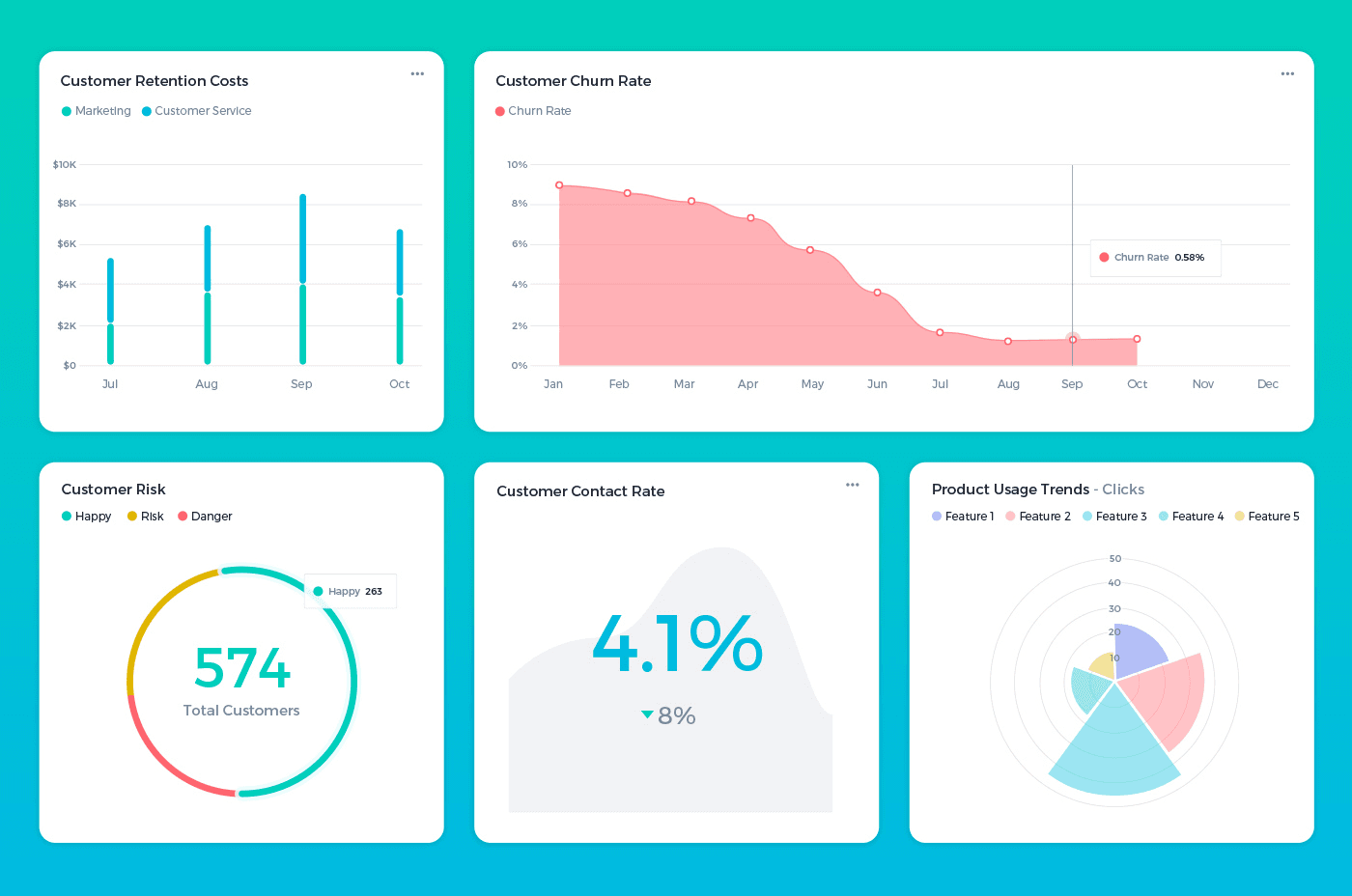
- Detect churn risk before it becomes visible
- Shorten time to first value
- Guide users to meaningful outcomes
- Capture actionable user feedback
- Align product, support, and revenue teams
The wrong tool becomes shelfware. Expensive, underused, and disconnected from how your product actually grows. This distinction matters even more today as SaaS companies move away from purely sales-led motions and toward product-led growth.
Evolution of Customer Success Platforms in SaaS
From High-Touch Account Management to Product-Led Success
Traditional enterprise customer success software was built for high-touch relationships. It assumed:
- Named CSM ownership
- Manual health scores
- CRM-centric workflows
That model still works for large enterprise contracts. It breaks down quickly when you have thousands of users, self-serve onboarding, and usage-driven expansion. Modern customer success tools for SaaS must operate where users actually engage. Inside the product. This is where product-led platforms, such as PLG OS, fundamentally change the equation.
What to Look for in the Best Customer Success Software
Before evaluating tools, it is helpful to define what truly matters in practice, rather than in marketing decks.
Time to Value Acceleration
How quickly can a new user experience a meaningful outcome?
In-Product Guidance and User Assistance
Can the platform help users without requiring constant human intervention?
Behavioral Insights Over Account-Level Guesswork
Does it track what users do, not just who they are?
Feedback and Sentiment in Context
Can you collect feedback at the moment of experience, not weeks later?
Scalability Across Growth Stages
Will the platform support you as you grow from startup to enterprise? These criteria are essential for evaluating modern customer success management tools.
Why PLG OS is the Best Customer Success Software Built?
PLG OS is not a traditional customer success management tool bolted onto a CRM.
It is designed from the ground up for product-led growth.
Rather than managing customers outside the product, PLG OS embeds customer success directly into the product experience.
It does not replace CRMs or support tools. It complements them by solving the hardest part of customer success at scale. Helping users succeed without friction.
Optimize Onboarding Where Retention Begins
Onboarding is not a checklist. It is the moment users decide whether your product is worth their time. PLG OS enables SaaS teams to:
- Build contextual onboarding journeys
- Adapt onboarding flows based on real user behavior
- Remove unnecessary steps that delay value realization
Instead of static tutorials, onboarding becomes responsive and outcome-driven. This approach is especially valuable for customer success software for startups and PLG-first SaaS companies with limited CSM resources.
Expedite Time to Value Without Human Bottlenecks
Time to value is one of the strongest predictors of retention. PLG OS helps teams:
- Identify key activation events
- Guide users toward those events naturally
- Reduce friction during early product usage
By focusing on progress instead of completion, PLG OS ensures users feel momentum early. This reduces dependency on manual outreach and scales customer success efficiently.
User Assistance That Prevents Frustration
Most users do not churn because they dislike your product. They churn because they get stuck. PLG OS provides real-time user assistance through:
- Context-aware guidance
- Behavioral nudges when users hesitate
- Proactive help before frustration turns into abandonment
Instead of waiting for support tickets or churn signals, the product itself intervenes. This is what modern customer success software should do by default.
Feedback and Surveys That Capture Real Insight
Traditional surveys often arrive too late to be of any use. PLG OS allows teams to:
- Trigger feedback based on user actions
- Collect in-context micro-surveys
- Combine sentiment with behavioral data
This makes feedback actionable instead of anecdotal. It also creates a continuous loop between product experience and customer success strategy.
Loyalty and Gamification That Reinforce Value
Engagement does not happen by accident. PLG OS uses loyalty mechanics and gamification to:
- Highlight progress and milestones
- Reinforce successful behaviors
- Encourage continued product exploration
This is not superficial gamification. It is behavioral design aimed at driving long-term adoption and retention. Few customer success platforms approach engagement this deliberately.
How PLG OS Fits into a Modern Customer Success Stack
PLG OS works best as part of a broader ecosystem. It integrates naturally with:
- Analytics tools for deeper usage insights
- CRMs for account-level context
- Support platforms for issue resolution
Rather than attempting to replace everything, PLG OS strengthens the most fragile part of customer success. The user experience inside the product.
Customer Success Management Software for SaaS
Gainsight
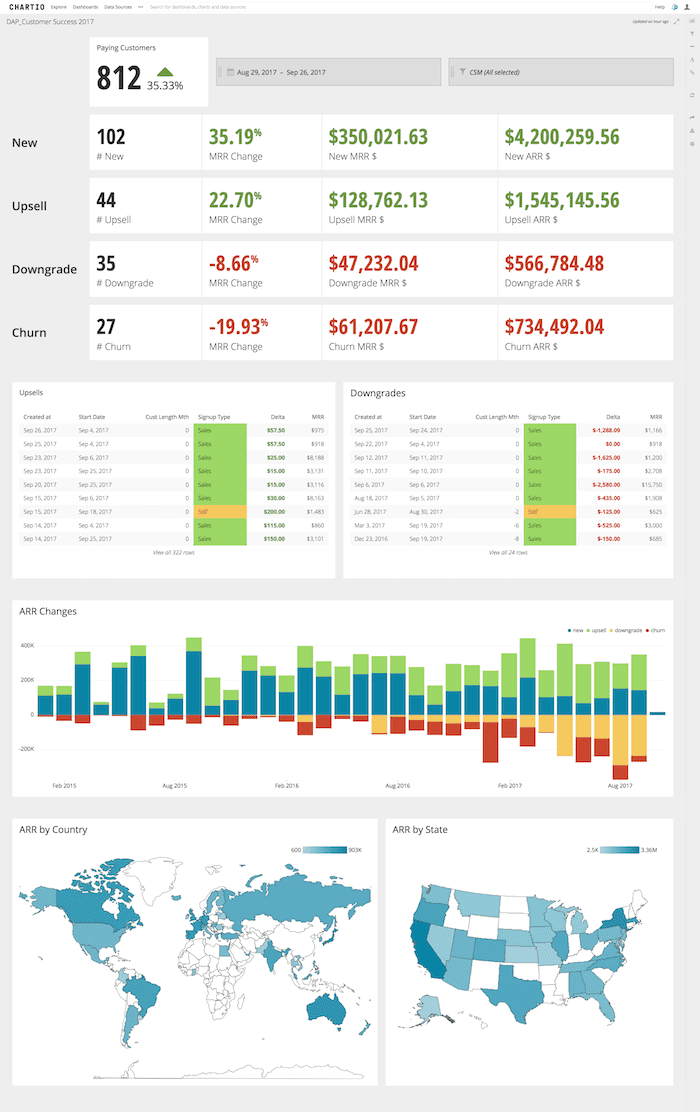
Gainsight is widely recognized as a leader in enterprise customer success software. Strengths include advanced health scoring, deep CRM integrations, and robust reporting. Limitations include high complexity, significant configuration effort, and limited in-product guidance. It is best suited for large, high-touch enterprise teams.
ChurnZero
ChurnZero places a strong emphasis on real-time customer engagement. Its strengths include event-based alerts, segmentation, and automated communication workflows. However, it relies heavily on disciplined data practices and offers less in-product user assistance compared to platforms that are PLG-first.
Totango
Totango emphasizes flexibility and customization. It works well for organizations with dedicated customer success operations teams but requires thoughtful setup and ongoing maintenance.
Pendo
Pendo bridges product analytics and in-app guidance. While powerful for product teams, it is not a complete customer success management software and is often paired with other tools.
Choosing the Right Customer Success Software for Your SaaS Business
If you are an early-stage SaaS startup, prioritize customer success software that accelerates onboarding, reduces manual effort, and scales with your growth. PLG OS fits this stage well. If you are a mid-market SaaS company, a hybrid approach often works best. PLG OS for in-product success combined with a broader CS platform for account management. If you are enterprise-focused, traditional enterprise customer success software remains critical, with PLG OS enhancing product adoption and depth of usage.
Final Thoughts: Customer Success Is Now a Product Responsibility
The best customer success management software is not defined by the volume of features. It is defined by alignment with how your product grows. As SaaS continues to shift toward product-led growth, customer success must occur continuously, quietly, and in a contextually relevant manner. Platforms like PLG OS represent the next evolution of customer success software. One where success is embedded into the product experience itself. For SaaS leaders evaluating customer success management tools today, the question is no longer whether you need customer success software; the question is how to effectively implement it. The question is whether your software actually helps users succeed.
Frequently Asked Questions
1. What is customer success software used for?
Customer success software is used by SaaS companies to help ensure that customers adopt the product, realize its value, and continue using it over time. It supports onboarding, engagement, feedback collection, and churn prevention.
2. Is customer success software only for large companies?
No. Many customer success tools for SaaS are designed specifically for startups and mid-market companies. Product-led platforms, such as PLG OS, are particularly effective for small teams.
3. How is customer success software different from CRM?
CRM systems manage relationships and sales data. Customer success management tools focus on usage, adoption, and outcomes after the sale.
4. Do product-led companies still need customer success software?
Yes. Product-led growth amplifies the need for customer success software, as success must scale without requiring human intervention.
5. What is the best customer success software?
There is no single best customer success software for every business. The right choice depends on your growth model, customer segment, and whether success is driven by people or by the product itself.
6. Can customer success software reduce churn?
Yes. By identifying risk early, guiding users proactively, and collecting contextual feedback, customer success software significantly reduces preventable churn.