Top 5 UserGuiding Alternatives & Competitors in 2025
The competition to deliver exceptional product experiences is more intense than ever in 2025. Businesses aren’t just building apps or software—they’re building journeys. Every touchpoint, from a user’s first login to their 100th feature exploration, needs to feel seamless, intuitive, and engaging. That’s where User onboarding tools and product experience platforms come in.
While UserGuiding has long been a go-to solution for building product tours and guiding new users, it’s not the only game in town. In fact, for many scaling companies, UserGuiding alternatives can deliver deeper customization, better analytics, and more innovative product-led growth tools.
If you’re searching for the best alternatives to UserGuiding that can level up your user onboarding software strategy and offer more than just simple tours, this guide is for you.
Let’s explore five Userguiding alternatives that can completely transform how you approach no-code onboarding tools, product tour software, and customer activation in 2025.
Why You Should Rethink Your User Onboarding Stack in 2025
The SaaS landscape has changed dramatically. It’s not enough to simply “show users around.” 48% use third‑party onboarding software to boost feature adoption. Your product experience must:
- Guide users toward their ‘aha’ moment faster
- Encourage feature adoption beyond onboarding
- Personalize experiences for different user segments
- Support ongoing learning and engagement, not just first use
Traditional user onboarding software often falls short because it focuses narrowly on in-app checklists or tooltips. But modern product experience platforms combine onboarding, analytics, A/B testing, and growth strategies to keep users engaged long after day one.
That’s why many growing teams are turning to no-code onboarding tools and integrated product-led growth tools to drive revenue and retention.
What Is UserGuiding?
UserGuiding is a no-code onboarding software built to help product teams guide new users through their product using step-by-step walkthroughs. Its core goal is to shorten the time it takes for new customers to realize value—so they can start experiencing and appreciating your product faster. Global customer‑onboarding software market was valued at roughly USD 2.9 billion in 2023, expected to grow at 11.5% CAGR to USD 9.3 billion by 2033.
UserGuiding Features
UserGuiding includes multiple features designed to help product companies educate, onboard, and engage new users while simplifying their product experience.
1. Resource Center and User Support
With UserGuiding, you can create a centralized resource hub that hosts all your key product-related materials—documentation, tutorials, blogs, webinars, and help guides—so users can easily find what they need.
However, these hubs can sometimes become overloaded with outdated materials like old webinars or obsolete docs, making it harder for customers to navigate and locate the most relevant content.
2. Onboarding and User Experience Analytics
UserGuiding offers built-in product analytics that give product teams insights into how users interact with their product—highlighting where they face issues, what actions they complete, which resources they access, and which features get the most attention.
These insights can help you optimize the product experience, reduce churn, and boost retention rates. By 2025, 65–70% of organizations are expected to adopt gamification (badges, leaderboards) in onboarding.
3. Net Promoter Surveys
UserGuiding lets you run Net Promoter Score (NPS) surveys directly within your product interface. These typically start with the question: “On a scale of 1–10, how likely are you to recommend our product?”
Follow-up questions—multiple choice or open text—allow users to explain their score and suggest improvements. The platform automatically calculates your NPS score (promoters minus detractors) and tracks how it changes over time.
4. Onboarding Checklists
For new users, learning a product can feel overwhelming. Onboarding checklists help simplify the process by breaking down your product into clear, bite-sized actions users can complete to quickly get familiar with your UI and core features.
These guided lists ensure that new customers gain the confidence and understanding they need before fully diving into your product.
5. User Segmentation
UserGuiding supports segmented onboarding, letting you tailor experiences for different audiences based on role, subscription plan, location, language, or usage preferences.
This is particularly valuable for products with diverse user bases or multiple use cases (like Notion or ClickUp), where a one-size-fits-all onboarding experience wouldn’t make sense.
UserGuiding Pricing
- Basic: $69 per month, for up to 2,500 monthly active users
- Professional: $299 per month, for up to 20k monthly active users
- Corporate: $499+ per month with custom user counts —enterprise users get service level and data processing agreements, personalized coaching, and unlimited access to all UserGuiding’s features
What Makes a Great UserGuiding Alternative?
Before diving into the top five tools, let’s quickly define what to look for when exploring UserGuiding alternatives:
- Ease of Use (No-Code First)
- Can non-technical teams create flows, checklists, and guides without heavy developer involvement?
- Scalability
- Will the tool grow with your user base, supporting thousands—or millions—of users without performance drops?
- Advanced Personalization
- Can you target onboarding experiences based on user behavior, plan tier, or lifecycle stage?
- Analytics and Optimization
- Beyond showing tours, does it help you measure activation, retention, and feature adoption?
- Integration with PLG Strategy
- Can it plug into your product-led growth tools to fuel upsell, cross-sell, and retention?
4 Reasons to Consider a UserGuiding Competitor in 2025
While UserGuiding helps create simple product tours, growing SaaS companies often need more from their user onboarding software. In 2025, teams are turning to UserGuiding alternatives for deeper insights, scalability, and growth-focused features. Here’s why.
1. You Need More Than Tours
UserGuiding covers basic walkthroughs, but tools like PLG OS combine onboarding, analytics, and growth nudges. You can track feature adoption, personalize experiences, and drive revenue, not just clicks.
2. Scalability Is Key
As your user base grows, flexibility matters. Competitors like Whatfix and Userpilot offer no-code onboarding tools with enterprise-ready performance and integrations to scale with your product.
3. You’re Focused on Growth
Modern product-led growth tools do more than guide users. Platforms such as PLG OS help convert trials to paid users, promote feature adoption, and boost customer expansion—all within the same system.
4. Data Drives Decisions
Onboarding should fuel insights, not just show tooltips. Tools like Pendo and PLG OS let you connect onboarding actions to activation, retention, and revenue, so you know what’s working.
The Top 5 UserGuiding Alternatives in 2025
1. PLG OS
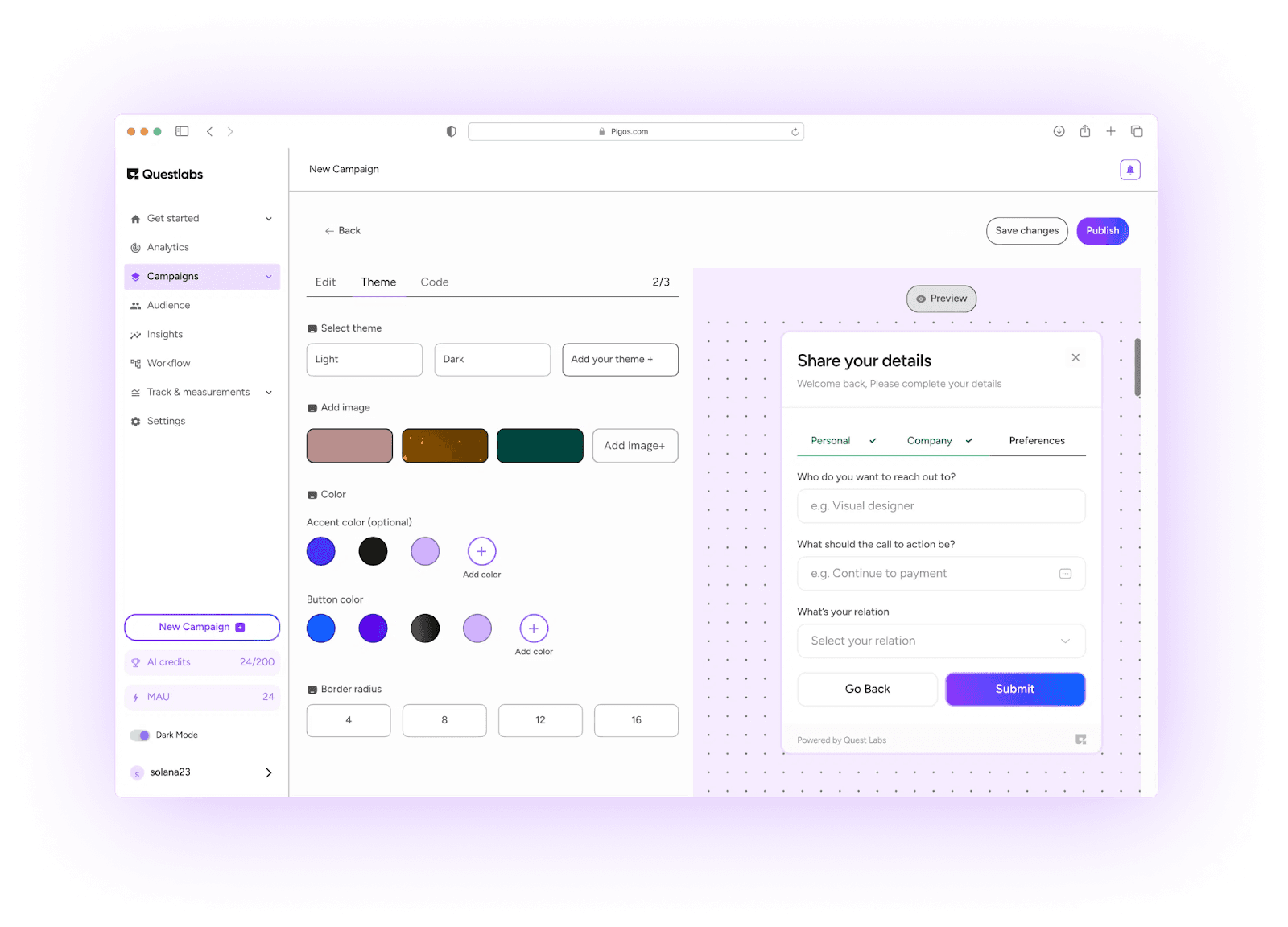
If you’re serious about product-led growth, PLG OS isn’t just a tool—it’s a game-changer.
Unlike typical product tour software, PLG OS acts as a central operating system for product experience. It merges user onboarding tools, growth analytics, and conversion automation into one unified platform.
Why It Stands Out:
- Dynamic Onboarding Flows: Design personalized user journeys that evolve as customers interact with your product.
- Deep Analytics: Track not just completion of tours but how onboarding drives activation and revenue.
- No-Code Flexibility: Marketers and product managers can build flows without coding.
- PLG-Centric Features: Integrate upsell nudges, trial-to-paid conversion prompts, and customer expansion playbooks.
Best For:
Startups and scale-ups aiming to drive activation, adoption, and revenuein one place without juggling multiple platforms.
2. Appcues
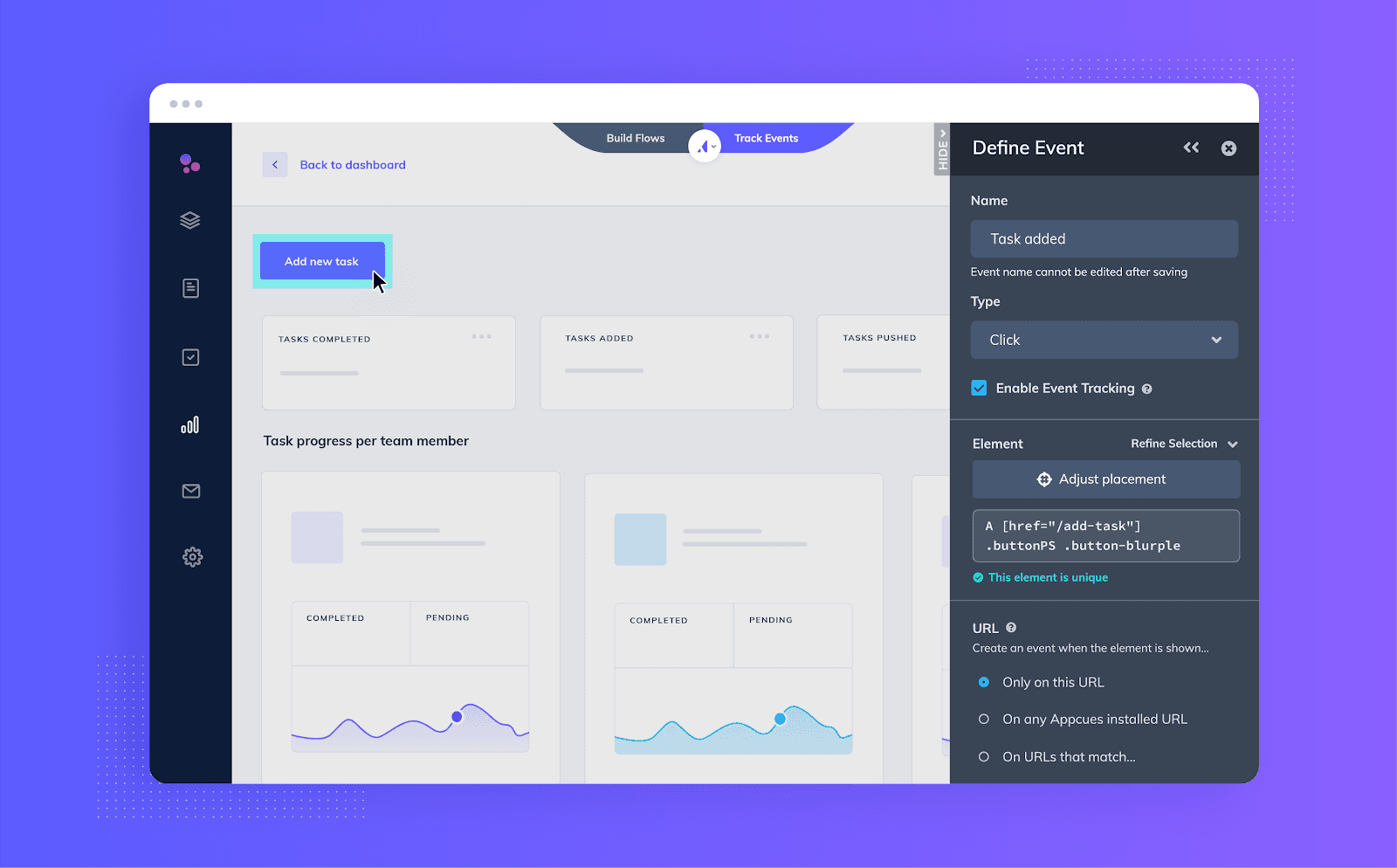
Appcues remains a heavyweight in the product experience platforms category for companies seeking robust no-code onboarding tools.
What Makes It Powerful:
- Highly Customizable UI Patterns: Tooltips, modals, banners, and checklists built visually.
- Segmentation Power: Trigger tours based on user roles, subscription tiers, or product activity.
- Robust A/B Testing: Optimize every onboarding flow for conversions.
Appcues is ideal if you want a strong mix of user onboarding software and ongoing engagement campaigns. However, it can be on the pricier side for startups.
3. Userpilot
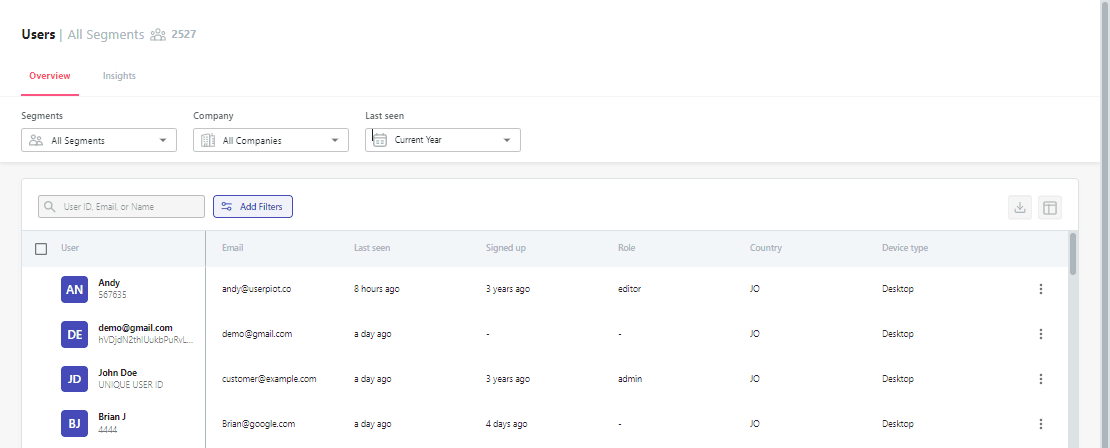
While many tools focus only on first-time onboarding, Userpilot helps drive ongoing product engagement.
Why It Works:
- Behavior-Based Triggers: Deliver contextual in-app experiences when users need them most.
- Survey and Feedback Tools: Understand what’s blocking adoption in real-time.
- Growth Experimentation: Run micro-experiments on your user base to improve retention.
If your product has complex features or a long adoption curve, Userpilot ensures users keep discovering value long after sign-up.
4. Pendo
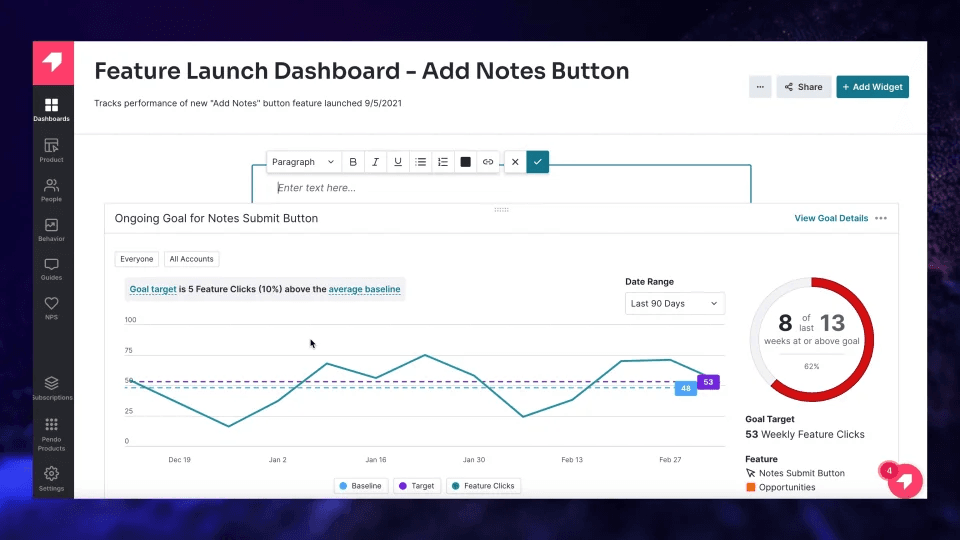
Pendo isn’t just a product tour software it’s a full-scale product analytics and experience platform.
Why Teams Choose Pendo:
- Analytics-First Approach: Understand which features drive retention before crafting guides.
- Feedback Loops: Gather user input and iterate quickly.
- Enterprise-Level Scalability: Perfect for SaaS companies with massive user bases.
While powerful, Pendo’s complexity can be overkill for smaller teams who just want quick, no-code onboarding tools.
5. Whatfix
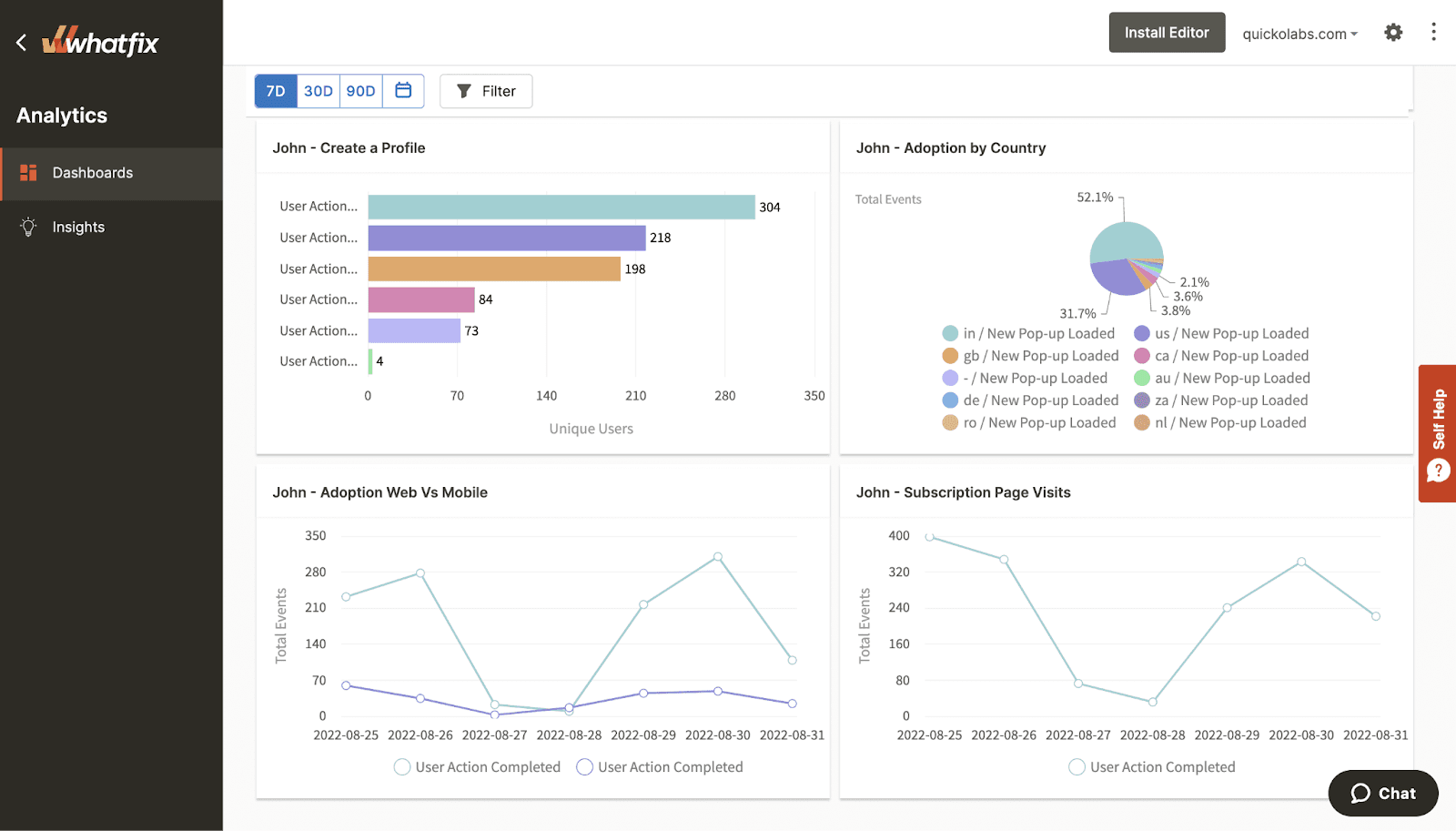
For companies rolling out not just one app, but entire digital ecosystems, Whatfix delivers at scale.
Features You’ll Love:
- Multi-App Tours and Training: Onboard users across multiple tools (internal and external).
- Learning Management Integration: Combine tours with structured training modules.
- AI-Powered Insights: Spot friction points and recommend improvements automatically.
Whatfix is ideal for enterprises but might feel heavy for lean SaaS teams compared to lighter UserGuiding alternatives like PLG OS or Userpilot.
Comparing Top 5 UserGuiding Alternatives
| Tool | Best For | Key Strengths | Pricing Fit |
|---|---|---|---|
| PLG OS | Startups & Scale-Ups | Unified growth + onboarding + analytics | Flexible (Scales easily) |
| Appcues | Product Teams with Budget | Personalization & A/B Testing | Mid to High Tier |
| Userpilot | Ongoing Engagement | Behavior-based onboarding, feature nudges | Mid Tier |
| Pendo | Data-Driven Enterprises | Analytics + Product Intelligence | High Tier |
| Whatfix | Enterprise Digital Adoption | Cross-app training & AI insights | Enterprise Tier |
How to Choose the Right Tool for Your Product
When weighing the best alternatives to UserGuiding, ask yourself:
- Is my priority quick, no-code setup or deep analytics?
- Am I focused on just onboarding, or ongoing growth and retention?
- How important is integration with our PLG strategy?
- Do I need enterprise-level complexity or startup-friendly agility?
For most SaaS companies in 2025, especially those embracing product-led growth tools, a unified platform like PLG OS can simplify operations and accelerate results by consolidating onboarding, analytics, and revenue-driven nudges into one workflow.
Final Thoughts
The days of simple tooltips and static tours are over. In 2025, winning software companies are embracing product experience platforms that double as growth engines.
While UserGuiding has served as a solid starter solution, theseUserGuiding alternatives especially PLG OS—are setting a new standard by combining no-code onboarding tools with actionable insights andproduct-led growth tools that fuel revenue, not just retention.
If your goal is to supercharge your product experience this year, consider adopting one of these five tools, with PLG OS leading the way for teams ready to turn onboarding into a growth powerhouse.
FAQs
1. Why should I consider a UserGuiding alternative?
If you need more advanced analytics, personalized onboarding, or growth-focused features beyond basic product tours, a competitor may offer better scalability and flexibility.
2. What are the best UserGuiding alternatives in 2025?
Top options include PLG OS, Appcues, Userpilot, Pendo, and Whatfix each offering different strengths for onboarding, analytics, and product-led growth.
3. Are these tools no-code?
Yes, most modern user onboarding tools like PLG OS and Appcues areno-code onboarding platforms, so product managers and marketers can build experiences without developers.
4. Can these tools help with product-led growth?
Absolutely. Tools like PLG OS integrate product-led growth tools—such as upsell prompts, trial conversion strategies, and feature adoption campaigns—directly into onboarding flows.
5. Which tool is best for startups?
For startups, PLG OS is ideal because it combines user onboarding software, analytics, and growth playbooks in one scalable platform without requiring multiple tools.