7 User Adoption Strategies for Your SaaS Growth

Any effective SaaS company starts from user adoption. It goes beyond merely registering individuals for a free trial or onboarding a new customer. It's about ensuring people regularly utilize your program, value it, and become devoted champions.
The difficulty, though, is that users are inundated with choices. No matter how strong a new tool is, they lack the patience to battle it. Users will drop off before they even understand your SaaS product has actual potential if it does not present a flawless experience from the beginning.
So, how do you make sure your users stick around? The key lies in effective user adoption strategies that drive engagement, retention, and growth. Let’s dive into actionable steps to help you win the adoption game.
What is user adoption?
When new customers begin utilizing your product and commit to it, this is known as user adoption. They've opted to ditch the old product in favor of the new one because it's more tailored to their needs and will get them closer to their goals.
To improve user adoption, there are two core areas to consider:
Customer onboarding:
The goal should be to begin delivering value to new users as soon as possible by setting them up and using your product.
Change management:
New customers will only stick with your product if it outperforms their previous system or product. This is true regardless of whether they used a competitor's product, a spreadsheet, or manual methods.
The Importance of a User Adoption Strategy for SaaS Companies
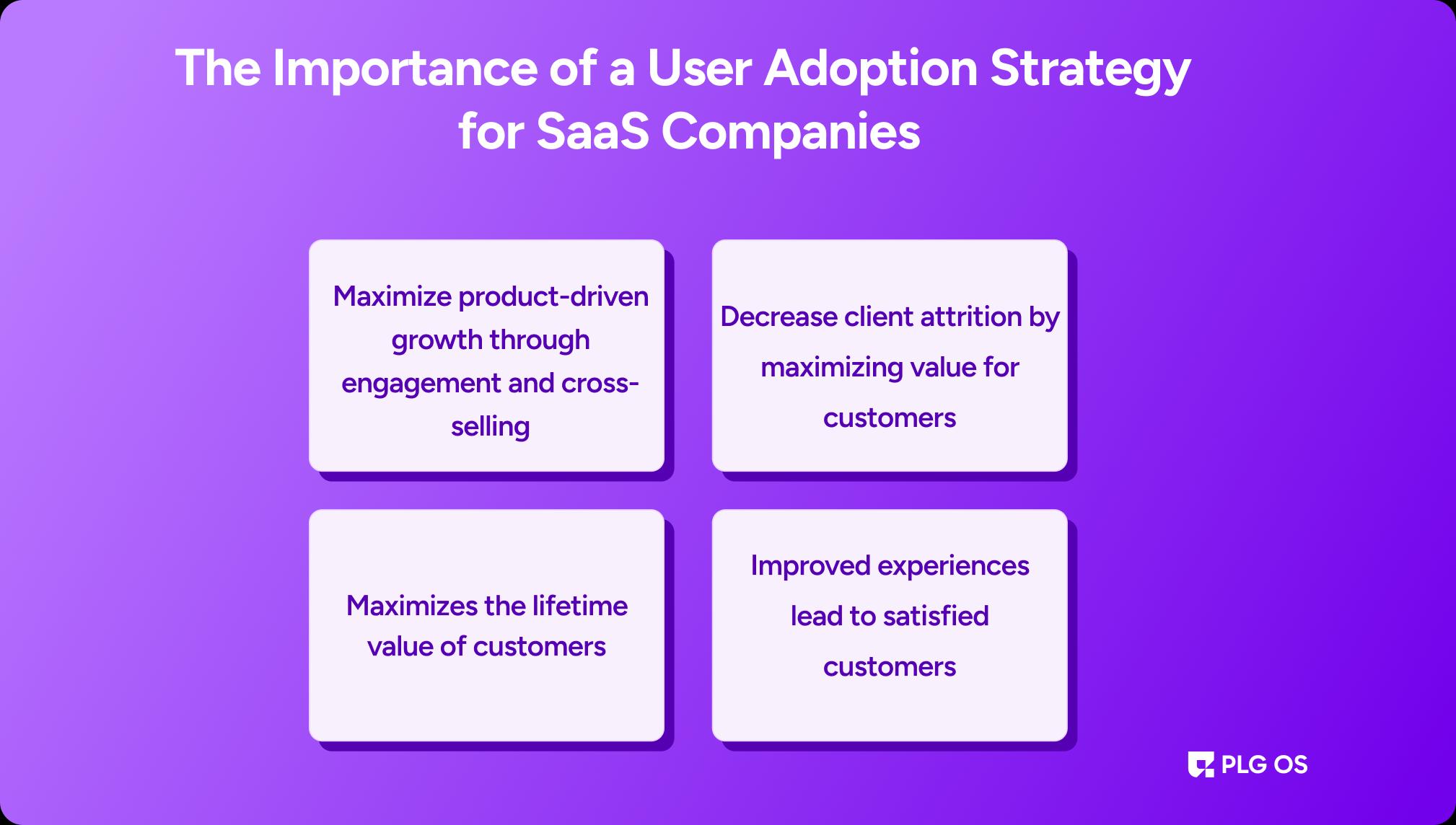
Many SaaS companies believe user adoption is a logical consequence of user onboarding. Although a well-executed product-led onboarding process can increase user adoption, having an adoption plan beyond the typical onboarding process is crucial.
The benefits to your SaaS business of an effective user adoption strategy are as follows:
1. Maximize product-driven growth through engagement and cross-selling
The cost of acquiring new customers is high. Depending on the industry, acquiring a single new customer for enterprise-level SaaS firms mightcost about $15,000. Stop losing out on those expensive clients before you even get a return on your investment with a solid user adoption plan.
A high user adoption rate makes upselling and cross-sell users easier, improving customer retention. Customers are more inclined to buy more of your items and listen to your advice if they have a positive impression of your brand.
2. Decrease client attrition by maximizing value for customers
A high rate of client cancellations, or churn rate, indicates dissatisfaction with your product or service among your target audience; nevertheless, it does not necessarily indicate that your offering is inappropriate. Customer attrition could suggest that your SaaS isn't valuable to them.
One way to keep customers from defecting is to let them see the value in your product. To ensure the continued success of your platform, it is important to implement a user adoption plan that will guide users in making the most of its features and functions.
3. Maximizes the lifetime value of customers
Client lifetime value (CLV) is essential for subscription-based platforms to measure profitability. For most SaaS organizations, CLV needs time to surpass acquisition costs and other company expenses. This happens not immediately after a new user signs up. According to Harvard Business Review, increasing customer retention rates by just 5% can increase profits by 25% to 95%, highlighting why CLV is central to sustainable business growth.
A user adoption strategy boosts customer lifetime value by equipping users with the tools they need to thrive on your platform. Customer lifetime value also improves when client retention is strong, and churn is low.
4. Improved experiences lead to satisfied customers
Without an excellent user experience, not even the most robust SaaS platform can take off. Even with state-of-the-art features and technology, your platform will lose consumers who cannot maximize its potential.
When you put money into user adoption, you’re putting money into user experience. Customer assistance is at the heart of a successful user adoption strategy, improving overall experiences and making customers happy.
7 User Adoption Strategies for SaaS Growth
1. Determine your activation criteria

Activation criteria are specific tasks or tasks that a new user must perform before receiving value from your product. For example:
- Twitter: Follow 30 individuals and get some of them to follow you back.
- Uber: complete your first ride.
- Gmail: Send your first message.
Your activation criteria are actions that customers take to increase the possibility that they will return to your product for the second, third, and fourth time. Guiding a new user through these activities is critical for driving long-term user adoption, but you can't do so unless you know what the requirements are for your product.
The activation requirement is to begin utilizing your product. A defined task should provide value to the user and explain why they should continue to use it. If new consumers can't readily grasp the value of your product, they won't stick around long.
2. Understand why customers utilize your product
Why do people utilize your product? To answer this, you'll need to collaborate with your sales team to determine what real-life difficulties your prospects are facing that lead them to seek a solution like yours. This can help you understand their motivations and goals, which are useful when promoting user adoption.
To truly understand why people start and continue using your product, consider your current customers and potential prospects.
Consider your top consumers, whether they are power users or outspoken advocates. Examine common patterns in how people use your product, how they discuss it, and what they provide in product feedback. Even better, contact them directly.
Understanding prospects’ goals and customer data will allow you to understand better how your users see the value of your product and how it might benefit them.
Understanding why people use your product is the first step toward increasing user adoption. It allows you to define your customers’ first use, onboarding experience, and how you connect with them during their subscription.
3. Offer a trial period
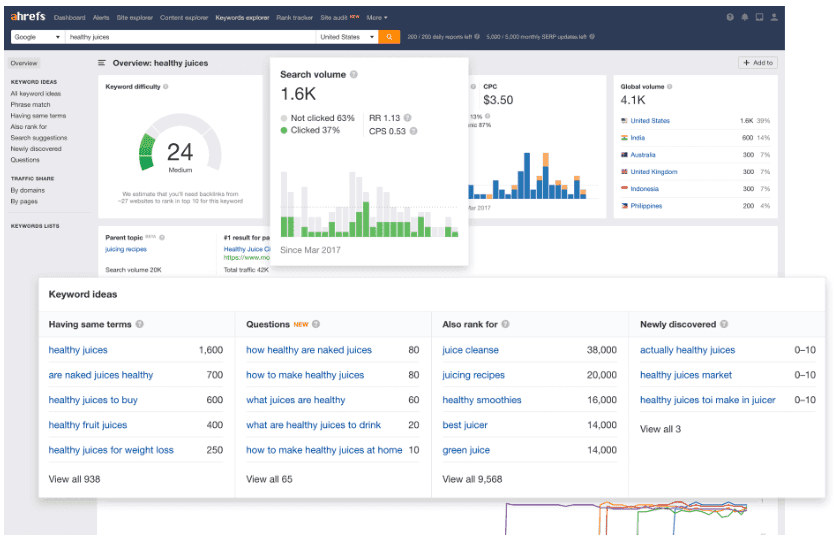
A free (or low-cost) trial period is an excellent approach to introduce and engage new people with your product. Most SaaS companies see around 15-25% free trial conversion rates, meaning about one in four or five trial users convert to paid customers.
Ahrefs, for example, offers a 7-day trial for $7, however they advise potential trial customers to wait until they understand how the tool might benefit their business.
A trial allows potential users to learn how to use your product before committing to a monthly or annual membership. And, while providing a free trial may not be appropriate for all SaaS companies, it is worth considering if you are seeing low user adoption rates.
4. Optimize your customer onboarding procedure
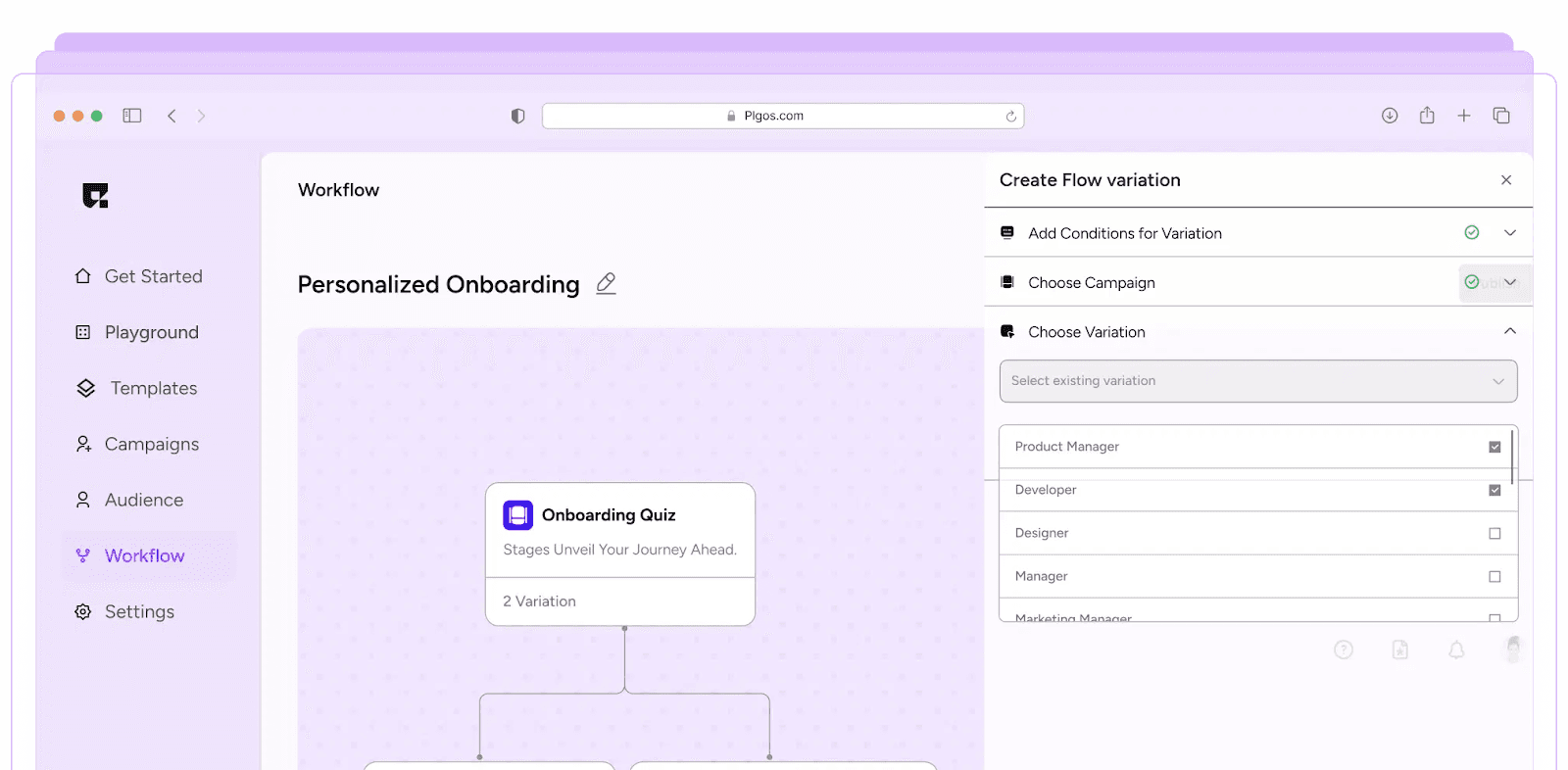
Customer onboarding is the process that new users go through to begin utilizing your product. It covers the first steps of the customer journey, from sign-up to product activation and initial use. Your onboarding process seeks to provide value to your consumer as soon as feasible and is critical for promoting long-term adoption.
As part of your customer onboarding process, you should take your new users through the following six steps:
- Your sign-up flow.
- A welcoming email.
- First, log in.
- Integrations and inviting other users.
- A product walkthrough.
Send follow-up emails.
The ultimate goal of customer onboarding is to encourage users to return to your product, which is why it is such an important user adoption technique.
Take the time to assess your onboarding process. Are there any points of friction that you can identify? Optimizing your customer onboarding process can enhance user adoption rates by assisting new users in achieving their goals with your product early on, allowing them to experience its real benefits. Tools like PLG OS make your customer onboarding seamless.
5. Analyze feature and product utilization
When it comes to user adoption, many organizations focus on the first onboarding process, which involves getting clients to start using their product. However, user adoption is an ongoing struggle - you want customers to use your product consistently in the long run — which is why evaluating product usage data is an important user adoption approach.
The issue of "at-risk" users is an important one to consider. A clear symptom of this is when a user gradually loses interest in your product: they don't log in as frequently as they used to, they don't use as many features as they once did, or only one person on the account logs in at any given time.
The amount of time they spend using your product and the value they derive from it decreases, which can be an early warning sign that they're about to churn.
It is difficult to re-engage a consumer once they have stopped using your product, therefore, evaluating product usage can help you identify users who have effectively accepted your product and others who may require additional assistance to get started fully.
6. Market to your current clients, not just prospects
Investing in customer marketing is critical for getting new customers to use your product and encouraging existing customers to add more users to their accounts.
Most businesses use their marketing expenses to acquire new consumers. However, just as you nurture new leads, you must also nurture your customer relationships to keep them engaged with your product and service and increase the likelihood that they will renew their contract for another year.
There are numerous ways to market to existing consumers, such as:
- New feature announcements
- Product updates
- When you detect a decrease in their product consumption or activity
Customer marketing aims to keep your product at the forefront of your users' minds and attract them to return. Get enthused about a new feature or encourage them to continue their onboarding process to set themselves up for success.
7. Build a Strong Customer Support System
Even the best-designed SaaS products will have users who need help. Responsive and effective customer support can turn a frustrated user into a loyal advocate.
- Offer Multiple Support Channels: Some users prefer live chat, while others want email support or self-help resources. Provide multiple options, including a knowledge base, FAQs, community forums, and one-on-one support for complex queries.
- Create a Customer Success Team: Customer support is reactive, but customer success is proactive. Assign a dedicated customer success team to check in with users, provide strategic guidance, and ensurpe they get the most out of your product.
- Use AI-Powered Chatbots: AI chatbots like PLG OS can handle common queries instantly, reducing user wait times. They can also provide personalized recommendations based on user activity and preferences.
Conclusion
Driving user adoption does not require luck. It is a deliberate process requiring ongoing effort, refinement, and a thorough understanding of user behavior. The objective is to reduce friction, provide a flawless onboarding experience, keep users engaged, and ensure they find value in your SaaS product from the start.
By applying these actionable techniques, you may increase adoption rates and convert your consumers into devoted advocates that help your SaaS business flourish. Book a call with us to start your user adoption journey.
FAQs
1. What is user adoption in SaaS?
User adoption refers to how successfully customers integrate and use a SaaS product in their workflow. It includes onboarding, engagement, and long-term retention.
2. Why is onboarding crucial for user adoption?
Onboarding is the first experience users have with your product. A smooth, interactive onboarding process helps users see value quickly, reducing drop-offs and increasing engagement.
3. How can I reduce churn and improve user retention?
Focus on continuous engagement through personalized messaging, in-app guidance, proactive customer support, and regular updates based on user feedback.
4. What metrics should I track to measure user adoption?
Key metrics include activation rate, time-to-value, feature usage, churn rate, and Net Promoter Score (NPS) to gauge customer satisfaction and retention.
5. How can I encourage users to become product advocates?
Build a strong community, offer referral incentives, showcase user success stories, and actively engage with customers to turn them into loyal brand ambassadors.