8 Ways Product Teams Can Leverage AI Customer Support
Artificial Intelligence (AI) has revolutionized the way digital products interact with their users. From instant assistance to predictive analytics, AI customer support now serves as an operational backbone for product-led organizations aiming to deliver efficiency at scale.
Yet, for product teams, the real value of AI in customer service isn’t just faster response times; it’s the ability to turn every support interaction into data that drives smarter decisions. But AI support isn’t just about cutting costs or deflecting tickets. It’s about accelerating product value, understanding users at scale, and empowering teams to make smarter, data-driven decisions.
TL;DR
- AI customer support is reshaping service delivery by automating repetitive tasks, enabling 24/7 assistance, and improving resolution accuracy across digital channels.
- Product teams leverage AI in customer service to identify user friction, optimize onboarding, and make data-driven improvements that enhance product experience.
- AI customer service tools, such as chatbots, predictive analytics, and sentiment analysis, help teams proactively resolve issues before customers escalate them.
- The benefits of AI in customer service for product teams include reduced ticket volume, faster time-to-value, stronger feedback loops, and improved customer retention.
- Successful companies use AI chatbots for customer support in product management to collect insights, personalize user journeys, and continuously refine their product roadmap.
Benefits of AI in Customer Support
One of the most practical ways to leverage AI customer support in product development is by using AI-driven analytics to prioritize feature updates based on real user data. 70% of leaders are already implementing AI, while 80% of consumers believe AI has become essential in customer service. The real benefits of AI in customer service for product teams include gaining deeper user insights, achieving faster feedback loops, and allocating resources more efficiently.
- 24/7 Availability: AI-powered systems provide round-the-clock assistance without requiring additional staffing.
- Faster Response Times: Chatbots and virtual assistants deliver instant replies, reducing wait times for customers.
- Cost Efficiency: Automating repetitive queries reduces operational costs and frees human agents to handle more complex issues.
- Improved Accuracy: AI minimizes human error by using data-driven responses and consistent communication.
- Personalized Support: Machine learning analyzes customer behavior to tailor responses and recommendations.
- Scalability: AI can handle large volumes of customer interactions simultaneously without compromising performance.
- Proactive Problem Solving: Predictive analytics can identify potential issues before customers report them.
- Enhanced Agent Productivity: AI assists agents with suggested responses and knowledge retrieval, thereby speeding up resolution times.
- Data-Driven Insights: AI tools deliver actionable analytics to enhance service quality and inform product decisions.
- Customer Satisfaction: Combining efficiency and personalization yields a better overall experience and fosters stronger loyalty.
Intelligent Onboarding
In traditional onboarding, every user receives the same walkthrough —a fixed series of steps that rarely adapts to individual user behavior.AI customer support has transformed how companies deliver service at scale, reducing response times while improving accuracy and personalization. This static approach overlooks real-world variation: some users grasp workflows instantly, while others struggle with setup.
How AI Changes This
AI systems can process behavioral data in real-time to segment users dynamically and personalize onboarding experiences.
For example:
- If a new user repeatedly pauses on a configuration screen, AI identifies a friction point and deploys contextual guidance.
- Machine learning algorithms analyze user interaction data (click paths, time on page, feature engagement) to adjust tutorial difficulty and sequence.
- Predictive models estimate a user’s likelihood of successful activation and trigger interventions accordingly.
PLG OS Application
PLG OS applies this principle through itsOptimize Onboarding module. By continuously monitoring user activity, it detects engagement gaps and triggers appropriate assistance flows, such as micro-tutorials, embedded tooltips, or contextual nudges.
Technically, PLG OS leverages event-based tracking to model onboarding health and uses AI-driven pattern recognition to reduce “time to first value.”
The result is a measurable improvement in activation rates without human escalation, a direct efficiency gain for product teams.
Automated Customer Assistance
A common bottleneck in scaling SaaS products is the cost of human support. As the user base grows, ticket volume expands linearly, unless automation intervenes.
Technical Foundations
AI customer support tools use natural language processing (NLP) andintent classification to handle repetitive or predictable queries.
These systems typically rely on:
- Transformer-based language models (e.g., GPT-style architectures) to interpret context.
- Knowledge retrieval layers that connect the model’s understanding to structured data (FAQs, documentation, or product schemas).
- Human-in-the-loop pipelines to continuously refine accuracy through supervised feedback.
AI assistants can now resolve over 60% of common issues autonomously, providing consistent answers across time zones. According to Zendesk CX trends, the majority of CX leaders believe AI can be empathetic, provide “warmth”, and humanize service interactions.
Integration with Product Workflows
For product teams, integrating AI support agents provides two technical advantages:
- Reduced MTTR (Mean Time to Resolution): Automated triage routes complex issues faster.
- Operational data capture: Every query contributes to a labeled dataset for product analysis.
PLG OS Example
In PLG OS, the User Assistance module incorporates AI-based pattern detection to trigger help sequences proactively.
If a user appears “stuck”, for example, repeatedly interacting with a non-functional component, the system surfaces relevant guidance in real-time, reducing the need for manual support tickets.
This embedded AI assistance functions as aself-correcting feedback mechanism, continuously learning from user outcomes.
3. Data Extraction from Support Interactions
Every support interaction holds diagnostic value. Yet in traditional systems, conversation data remains unstructured, buried within chat logs or ticket archives.
Technical Insight
AI changes this through automated data extraction and semantic analysis. By applying unsupervised clustering and sentiment modeling, AI systems can:
- Detect recurring complaints or feature requests.
- Quantify sentiment trends across user cohorts.
- Correlate support themes with product release cycles or user retention metrics.
This transforms qualitative data into actionable intelligence.
PLG OS Implementation
PLG OS integrates feedback and survey analytics to automatically aggregate and interpret user sentiment. By connecting AI-derived insights with product analytics, teams can map support themes directly to UI/UX adjustments or roadmap priorities.
This tight feedback loop enables what’s called closed-loop learning, where every resolved support case informs future product design decisions.
4. Reducing Time to Value (TTV) Through Predictive Intervention
Time to Value, the duration between initial sign-up and first meaningful product success, is a critical metric for product-led teams. AI’s capacity for predictive modeling enables earlier identification of users at risk of delayed value realization.
Mechanism
AI systems use historical behavior modeling and sequence analysis to detect patterns correlated with delayed activation. For instance:
- A user who skips tutorial steps or fails to complete core workflows is automatically flagged as “stalled.”
- Predictive models score users based on similarity to previous churned profiles.
- Automated actions are triggered: contextual prompts, email nudges, or chat engagements.
PLG OS Functionality
PLG OS’s Expedite Time to Value module applies these same predictive techniques. It continuously evaluates event streams to pinpoint where friction arises and automatically executes corrective guidance.
In practice, this reduces manual onboarding follow-up by product or success teams and increases user activation velocity.
5. AI Feedback Loops
Traditional feedback collection—surveys, forms, and NPS—is limited by participation bias and frequency. AI customer support systems remove these limitations throughpassive sentiment capture andreal-time interpretation.
How It Works
- Sentiment analysis models evaluate linguistic tone from chat interactions or open-text survey responses.
- Entity recognition algorithms extract product-specific keywords or feature mentions.
- Topic modeling groups feedback by functional areas without manual tagging.
This creates a high-resolution map of user perception that evolves continuously with new data.
Use Case in PLG OS
PLG OS’s Feedback & Surveys suite integrates AI text analysis to detect shifts in sentiment automatically. Teams can filter insights by version, geography, or account type, improving precision in prioritizing improvements.
For example, a product team could see that negative sentiment around “report generation” spiked after the update, guiding an immediate root cause analysis. This structured listening replaces guesswork with statistically meaningful insight.
6. AI and Gamification
Sustained engagement requires more than usability—it requires motivation. Gamification systems powered by AI can tailor reinforcement mechanisms based on individual behavioral data.
Technical Framework
AI-driven gamification relies on reinforcement learning and user clustering:
- Models observe user behavior to estimate the propensity for engagement.
- Reward structures (badges, progress bars, milestones) are dynamically adjusted to maintain optimal challenge levels.
- Algorithms strike a balance between short-term incentives and long-term retention goals by utilizing multi-armed bandit optimization techniques.
PLG OS Capability
PLG OS’s Loyalty & Gamification engine integrates behavioral scoring models that measure user progression and adapt gamification mechanics in real time. By aligning AI support with gamified engagement, PLG OS increases user motivation while simultaneously reducing support dependency. Users learn through guided interaction, not reactive problem resolution.
7. Autonomous Knowledge Systems
Static help centers rapidly become outdated as products evolve. AI addresses this through automated knowledge base optimization systems that learn from user queries and documentation usage patterns. The number of support agents using AI tools (knowledge assistants, chatbots) reports a productivity uplift of ~13.8%.
Mechanism
AI models:
- Continuously parse support tickets to identify missing documentation.
- Auto-suggest updates to existing help articles.
- Rank knowledge articles by resolution effectiveness based on user feedback and behavior metrics.
PLG OS Execution
PLG OS’s User Assistance layer acts as an intelligent intermediary between users and knowledge resources. When recurring queries surface, it automatically recommends documentation improvements or new articles, ensuring content relevance.
This AI-governed loop maintains anup-to-date self-service infrastructure, drastically reducing ticket volume and manual curation time.
8. Predictive Customer Success
The final and most advanced application of AI in customer support involves predictive analytics.
How Predictive AI Works
Machine learning models—particularly supervised classification models—are trained on historical engagement data to predict user outcomes such as:
- Churn probability.
- Future support volume.
- Satisfaction trajectory.
Inputs may include product usage frequency, feature depth, sentiment scores, and support response time. Once trained, these models enable proactive intervention—automated outreach, tailored recommendations, or priority routing for high-risk accounts.
PLG OS Implementation
PLG OS integrates predictive intelligence across modules, correlating engagement, feedback, and support data to inform decisions. The system identifies early indicators of churn and triggers preventive workflows, such as personalized check-ins or reward mechanisms, to prevent customer attrition.
This predictive capability transitions support from reactive firefighting to strategic prevention, improving overall retention efficiency.
Technical Benefits of AI in Customer Service for Product Teams
The technical impact of implementing AI customer engagement spans several operational domains:
| Function | AI Impact | Key Metric Improved |
|---|---|---|
| Onboarding | Adaptive guidance via behavior modeling | Activation Rate |
| Support | Automated triage and resolution | MTTR, CSAT |
| Feedback | Real-time sentiment extraction | NPS Accuracy |
| Knowledge Management | Automated article optimization | Self-service Utilization |
| Retention | Predictive churn analysis | Net Retention Rate |
Beyond these measurable outcomes, AI support systems embed observability into customer interactions, enabling more informed decision-making. Each data point, query, sentiment, or behavior, contributes to a continuously improving feedback architecture.
Factors to Consider Before Implementing AI for Customer Service
While AI offers measurable ROI, adoption is not without risks. Successful implementation depends on how well organizations managetechnical, cultural, and ethical factors. Below are critical considerations product teams should evaluate before integrating AI support systems.
Maintaining the Human Touch
AI excels at automating repetitive interactions, but empathy, nuance, and complex judgment remain human strengths. Over-automation can alienate customers.
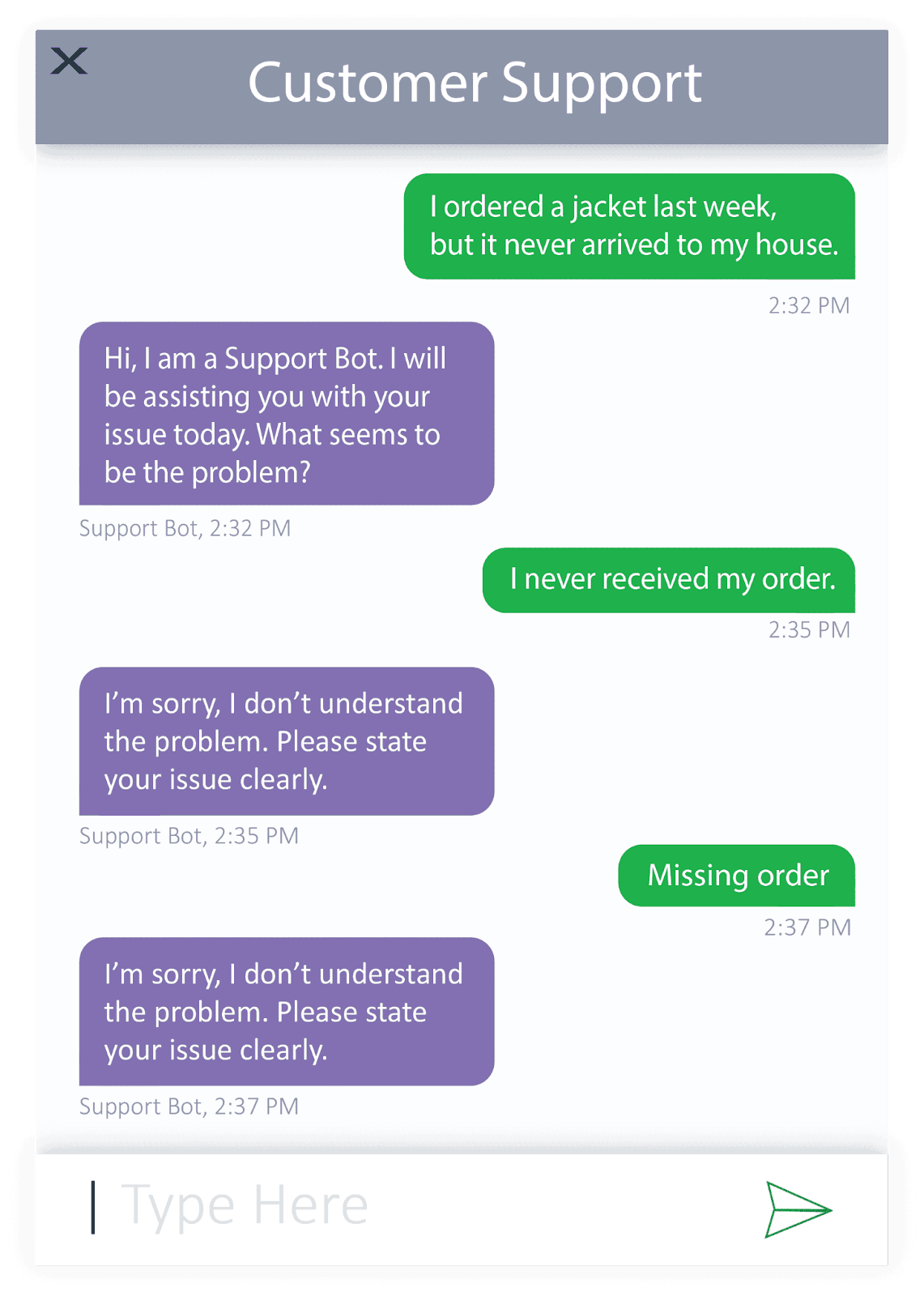
Example: A customer stuck in a chatbot loop with no option for escalation can experience frustration, reducing satisfaction and trust.
Prevention Strategies:
- Set escalation rules for detecting negative sentiment.
- Utilize AI for triage and FAQs, routing complex cases to human agents.
- Continuously monitor chatbot satisfaction scores.
Data Privacy and Security
AI systems process sensitive user data, raising serious privacy and compliance concerns. Poor data governance risks legal penalties and reputational harm. However, around 40% of organizations have reported AI-related privacy incidents, while 70% of adults say they don’t trust companies to use AI responsibly.
Prevention Strategies:
- Audit AI tools for encryption, data storage, and GDPR compliance.
- Implement strict access controls for support transcripts.
- Regularly review and enforce retention policies.
Change Management and Staff Buy-In
Resistance from frontline staff can undermine AI adoption. Agents may perceive AI as a replacement rather than a support system.
Prevention Strategies:
- Involve agents in early stages of AI selection and testing.
- Communicate clearly that AI augments human capabilities.
- Provide continuous training and skill development.
Measuring Success
AI success cannot be judged by a single metric. Overemphasis on ticket deflection, for instance, can overlook declines in customer satisfaction. AI-chatbots are used or planned by ≈80 % of organisations for customer service.
Prevention Strategies:
- Define KPIs across customer (CSAT, NPS), agent (AHT, productivity), and operational (cost per ticket) metrics.
- Conduct quarterly evaluations and model recalibrations.
Customer Expectations and Experience
Deploying AI that doesn’t align with customer preferences, such as long verification steps or irrelevant responses, can harm user experience.
Prevention Strategies:
- Map the customer journey before implementation.
- Gather data on preferred communication channels.
- Test AI workflows in controlled environments before scaling.
Data Quality and System Hygiene
The accuracy of AI depends on the quality of the input data. Inconsistent or outdated datasets lead to unreliable outputs.
Prevention Strategies:
- Run periodic CRM audits to remove duplicates and stale records.
- Standardize categorization and tagging in service systems.
- Validate training datasets before deployment.
Feedback and Model Monitoring
AI models degrade over time as language and customer expectations evolve. Regular maintenance is crucial.
Prevention Strategies:
- Schedule weekly chatbot response audits and monthly routing reviews.
- Include agents and customers in the feedback collection process.
- Retrain models using recent data and update FAQs regularly.
Real-World Examples of AI in Customer Support
AI support for product teams can bridge the gap between customer experience and product innovation by surfacing actionable insights from support interactions. Implementing artificial intelligence customer support ensures 24/7 availability, allowing businesses to maintain consistent service without expanding headcount. Understanding how product teams use AI for customer support also highlights its role in optimizing onboarding and reducing customer churn.Practical adoption examples demonstrate how industry leaders operationalize AI responsibly and effectively.
Delta Airlines
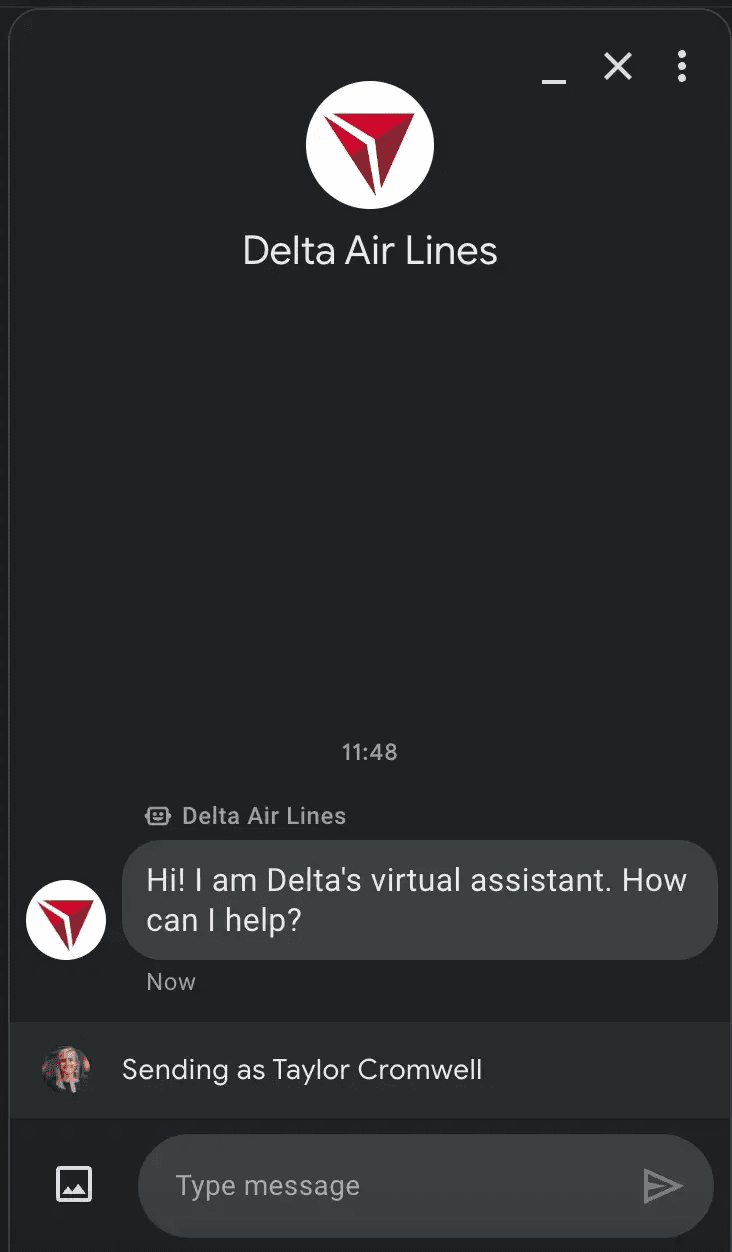
Use Case: Delta leverages AI across customer and internal operations to streamline interactions and improve employee efficiency.
Applications:
- Virtual assistants for flight changes, cancellations, and refunds.
- AI-driven data processing for reservation inquiries and dynamic pricing.
Outcome:
By simplifying processes and integrating AI into both customer and employee workflows, Delta enhanced satisfaction while projecting a potential 2% increase in overall company value.
Lesson: Combine AI efficiency with human empathy. Systems that empower employees ultimately deliver better customer experiences.
Macy’s
Use Case: Macy’s uses cognitive AI technology to improve in-store customer navigation.
Applications:
- “Macy’s on Call” is a smartphone assistant that helps customers find products, brands, and facilities.
- Personalized responses tailored to customer location and context.
Outcome:
The system reduces customer friction, shortens response time, and frees human staff for higher-value tasks.
Lesson: Deploy AI for high-frequency, low-complexity tasks to allow human teams to focus on complex interactions.
Netflix
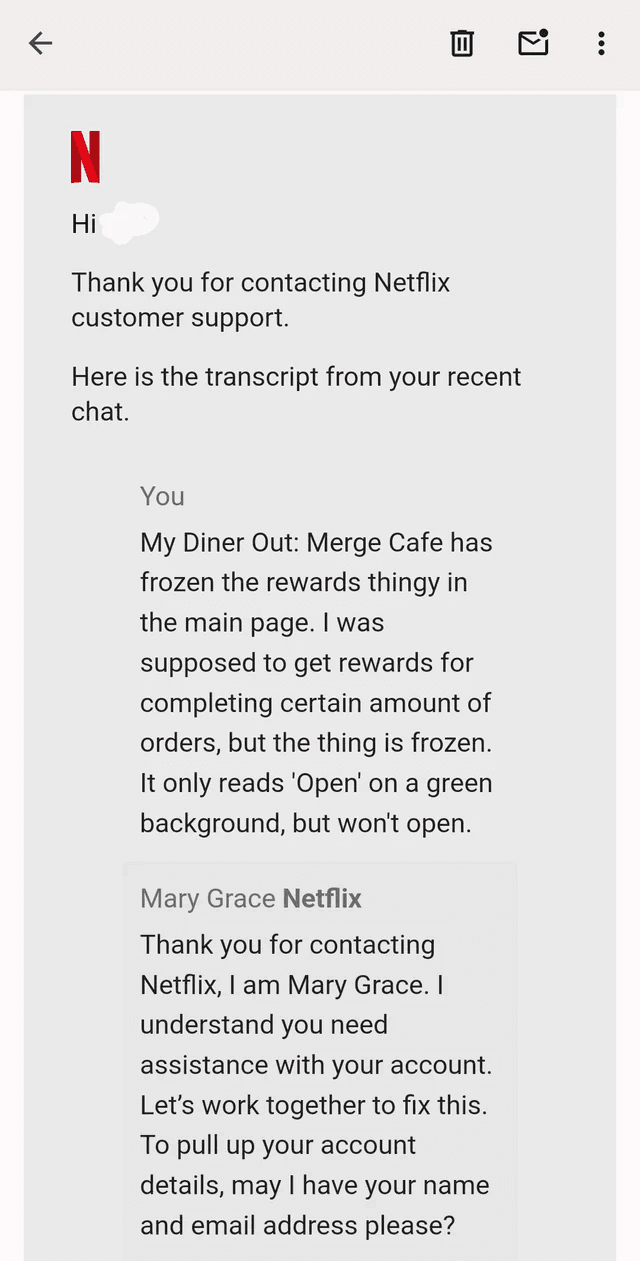
Use Case: Netflix’s AI strategy extends beyond content recommendation, it shapes user satisfaction and engagement.
Applications:
- Machine learning analyzes viewing habits, ratings, and search data to deliver personalized recommendations.
- Predictive models optimize streaming quality based on network conditions.
Outcome:
Personalization keeps users engaged longer and reduces churn. Netflix’s AI models create a seamless experience where users feel “understood.”
Lesson: Use AI to anticipate customer needs and personalize experiences, not just automate responses.
Why PLG OS Represents the Future of AI-Enabled Product Operations
PLG OS unifies these capabilities into a cohesive operating system for product-led teams. Its architecture aligns with the AI lifecycle:
- Data Capture – Behavioral and interaction data collected from product usage.
- Analysis – AI models process signals to detect patterns.
- Intervention – Automated responses or recommendations deployed.
- Learning – Model performance evaluated and refined over time.
By bridging AI support, feedback, and engagement systems, PLG OS provides a closed, adaptive loop, ensuring that user experience continuously improves with minimal manual intervention.
From a technical standpoint, this reduces operational overhead, improves data reliability, and establishes a scalable foundation for continuous user success.
Conclusion
AI in customer service is no longer a peripheral enhancement, it is acore component of modern product operations. For product teams, the shift is from managing support toengineering continuous user enablement.
The integration of AI customer support tools transforms how teams:
- Understand user behavior in real time.
- Prioritize development based on validated data.
- Scale support infrastructure without proportional cost.
Platforms like PLG OS demonstrate how artificial intelligence can be operationalized for customer support, connecting onboarding, assistance, feedback, and engagement into a single data-driven system.
In a competitive SaaS environment, teams that leverageAI support for product management will not only respond to customer needs faster, they will also anticipate them.
That predictive, data-driven mindset defines the next era of product-led growth. Book a call now!
FAQs
1. What is AI customer support
AI customer support uses artificial intelligence tools—like chatbots, virtual assistants, and predictive analytics—to handle customer queries, automate workflows, and improve service efficiency while maintaining accuracy and personalization.
2. How do product teams benefit from AI in customer service?
Product teams use AI to gather user feedback, identify pain points faster, and optimize onboarding experiences. AI helps them understand user behavior, predict churn, and continuously improve product usability.
3. What are some examples of companies using AI in customer service?
Delta Airlines uses AI for intuitive travel assistance and data-driven pricing, Macy’s leverages it to guide in-store shoppers, and Netflix applies machine learning for personalized content recommendations that enhance user satisfaction.
4. Is AI replacing human customer service agents?
No. AI supports, not replaces, human agents. It automates repetitive tasks and triages basic inquiries, freeing up agents to focus on complex or emotionally nuanced issues that require human empathy and judgment.
5. What should businesses consider before implementing AI in customer service?
They should evaluate data quality, privacy compliance, staff readiness, and success metrics. Ensuring human oversight, strong change management, and continuous monitoring are crucial for long-term success.