Product-Led Onboarding: A Fresh Approach to Accelerating Customer Success
Imagine signing up for a new software tool. You’re excited about the possibilities, but you hit a wall within minutes. Confusing interfaces, endless setup instructions, and a flood of emails from customer support make you wonder: “Is this even worth it?”
Now, imagine a different experience. You sign up, and within moments, you’re guided through an intuitive walkthrough that shows you exactly how to get started. The product itself teaches you how to use it. You accomplish something valuable within the first few minutes. No frustrating emails, no complicated setup, just immediate value.
That’s the magic of Product-Led Onboarding (PLO).
Gone are the days when customers had to sit through lengthy demos or wait for a customer success representative to walk them through the product. Today, users expect a self-service, intuitive, and frictionless onboarding experience. And that’s exactly what Product-Led Onboarding delivers.
What is product-led onboarding?
Product-led onboarding, also referred to as in-app onboarding, is the process of fostering the proficiency of new users in your product by utilizing the product as an introductory enablement channel. Another study by Product Led showed that Freemium models, a common product-led strategy, achieved a conversion rate of 12%, 140% higher than free trials.
Training and walkthroughs for new users are conducted inside the product or app during product-led onboarding. By making contextual information available to customers as they navigate and use the product, firms may reduce the time it takes for human-led onboarding with customer success (CS) teams and speed up their time to value.
There are many advantages to product-led onboarding for both customers and users:
- Users can enjoy a tailored experience employing personalized tracks or flows, which allow them to receive only the information that is pertinent to them. For instance, onboarding can be based on use cases, persona groups, titles, permissions, etc.
- The immersive experience helps users focus on their learning rather than getting sidetracked by the constant switching between different contexts when utilizing multiple training channels.
- Users can self-serve their onboarding process and yet have the option to talk to a real person whenever they wish.
- Videos, step-by-step walkthroughs, on-demand resources within an in-app resource center, etc. are examples of how it might accommodate different learning styles.
Remember that product-led onboarding is not the same as onboarding without humans. Many companies use people- and product-led strategies together to make their own unique hybrid method. Product-led businesses and CS teams see the product as a means to create the best onboarding experience, which enables them to provide consumers with quick and relevant value.
Why Traditional Onboarding Falls Short
A lot of businesses still use old-fashioned ways to bring new employees on board, which usually involve:
- Long email chains that show how to use the product
- One-on-one lessons that need to be scheduled and managed by a person
- PDF user manuals that no one actually reads
- Clunky interfaces with little guidance on where to start
These days, people want to look around at their own speed. They expect software to be simple and easy to use. They will give up on the goods if they can't figure it out quickly.
The Benefits of Product-Led Onboarding
Put the "Aha!" moment first
The "Aha!" moment occurs when people finally grasp the value of your product. For training to work, users need to be able to get to this point quickly and easily. Find the most important features that demonstrate your product's value and are easy to use. For example, if your product is a collaboration tool, showing users how to ask team members might be the fastest way for them to see how it works.
Make onboarding self-serve and intuitive
PLG stresses giving users the freedom to discover and use the product on their own. This means that the hiring process should be easy to understand and cause little trouble. Use tooltips, progress checklists, and live walkthroughs to help users get the hang of key features without being too much for them. But also give users ways to go deeper if they want to. For example, you could offer demo material or in-app tutorials.
Leverage personalization
Users are different, so why should their training be the same? Change the onboarding process based on the user's job, goals, or actions. You can make the experience more valuable and interesting by dividing users into groups and giving them contextual help. For instance, a project management tool might give team leads and individual contributors different ways to get started with the tool, highlighting the features that are most useful for each job.
Use data to optimize continuously
Activation isn't the end of onboarding; it's a process that goes on and on. Track user progress, find drop-off spots, and improve your onboarding flows with analytics. For example, if a lot of people give up on a key step like joining an integration, this could mean that the step needs to be made easier or more help should be given. Getting feedback from new users regularly helps you figure out how to make their experience better.
Provide ongoing support
Support is essential even in a self-service setup. Give users easy ways to get help when needed, like community forums, in-app chat, or a list of frequently asked questions. Send onboarding emails or "nudges" to users to tell them of the following steps or give them advice on how to get the most out of their experience. The goal is to make users feel supported throughout their trip, even if they're going it alone.
Types of Product-Led Onboarding
You can't reduce the influence of your channels and external factors just by making your product the priority throughout onboarding.
Building concepts around how customers engage with your product in real-world circumstances allows you to become more focused with your advertising through product-led onboarding. A product-led onboarding process results in a more resourceful, user-driven, and goal- and metric-aligned team.
Staying on top of product-focused research will equip your users with the contextual knowledge they need to launch innovative and original activities.
Listed below are four examples of product-led onboarding strategies used by companies:
1. External marketing triggers for product-led onboarding
To get new users to download your app and go through the onboarding process, you need to use marketing strategies such as email nurture campaigns, webinars, landing pages, and optimizing website copy. Build your marketing playbooks in a way that lets users discover your product or go through the product journeys that lead to activation.
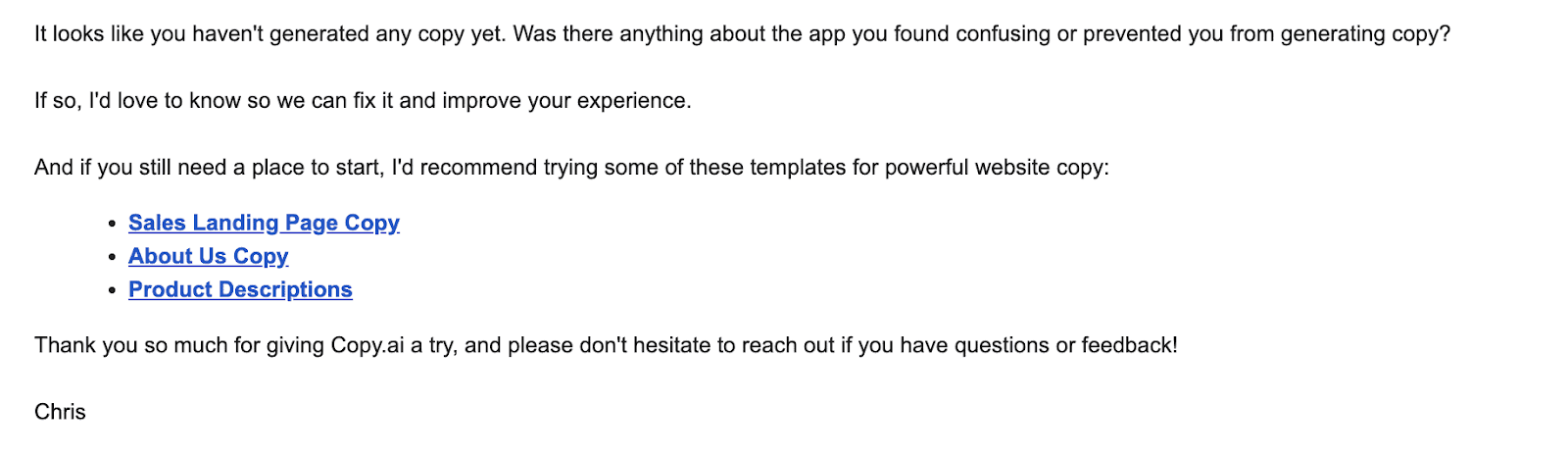
The following email from Copy.ai exemplifies innovative product-led marketing onboarding.
An email will be sent to the user who has signed up for Copy.ai but has not yet created their first project within a particular time frame. The purpose of this email is to inquire as to whether the user has any issues or questions regarding the tool. Afterwards, the email provides three pre-made templates for consumers to utilize immediately.
When users initially log in, they will receive an email with a list of helpful resources, templates, and suggestions. It's a great way to get consumers started with a product during onboarding by recommending a basic action they can execute in response to outside cues.
2. Platform Onboarding
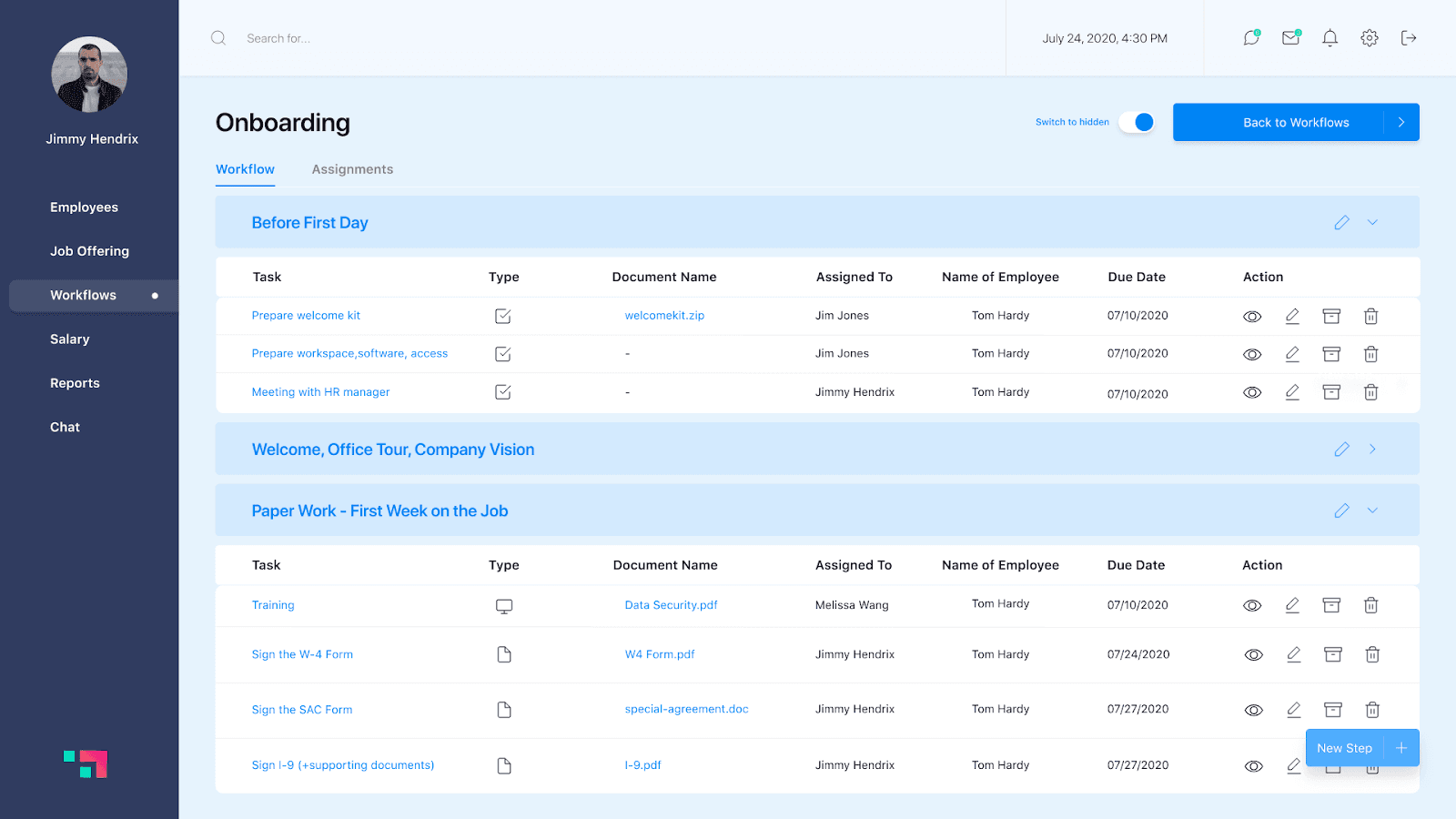
While customers actively explore a product's platform, in-app interactions can provide an effective onboarding process.
Users can learn by using this practical experience. Instructional videos, tours, checklists, and step-by-step guides can be triggered by product teams and shown to users as they interact with the app or with particular pages or features.
There is a correlation between encouraging customers to experiment with processes independently and their continued use of the product.
3. Value Onboarding
If your product offers a free trial, there is no risk to your users if they choose not to continue using it. When a user initially logs into your product, it is your responsibility to make a good impression. This is particularly true if you are competing with "always free" offerings.
You may fight this by drawing attention to your product's most important and comprehensive elements.
You can really bring out the features and benefits of your product for your contextual ideal customers (ICPs) with personalized, role-based onboarding experiences.
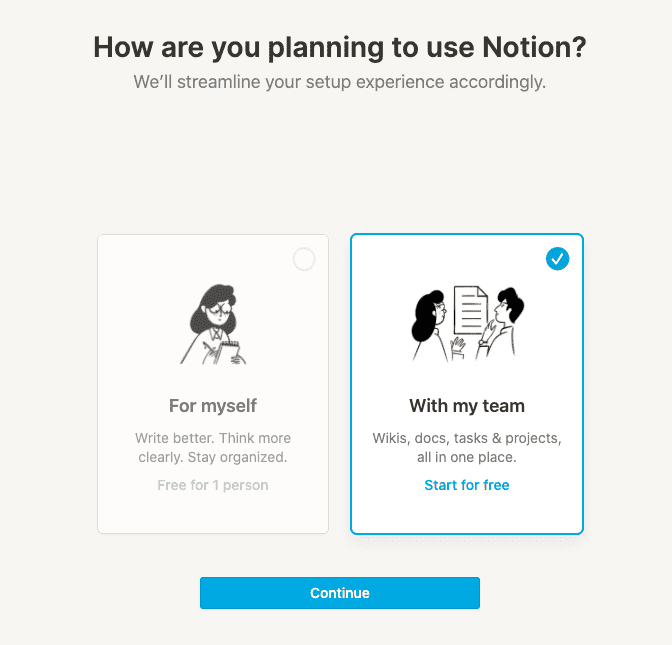
In order to provide different users with the most relevant setup experiences, Notion implemented a value-based onboarding strategy. When new users sign up, they are asked if they will use Notion for individual or team projects. This helps customize the onboarding checklists.
Given Notion's versatility and wide range of applications, new users can better understand how to make the most of its features by creating a personalized starting point.
4. Peer-Led Onboarding
The most critical sign of effective product-led onboarding is happy, delighted consumers.
If your user base is active and invested, you'll have someone else's reliable opinion on your product. With peer-led onboarding, businesses tap into existing customer communities and the knowledge and experience of their members to assist new customers.
By showcasing happy and enthusiastic consumers, you not only build a resource hub that is always available, but you also inspire confidence in your product among potential new users.
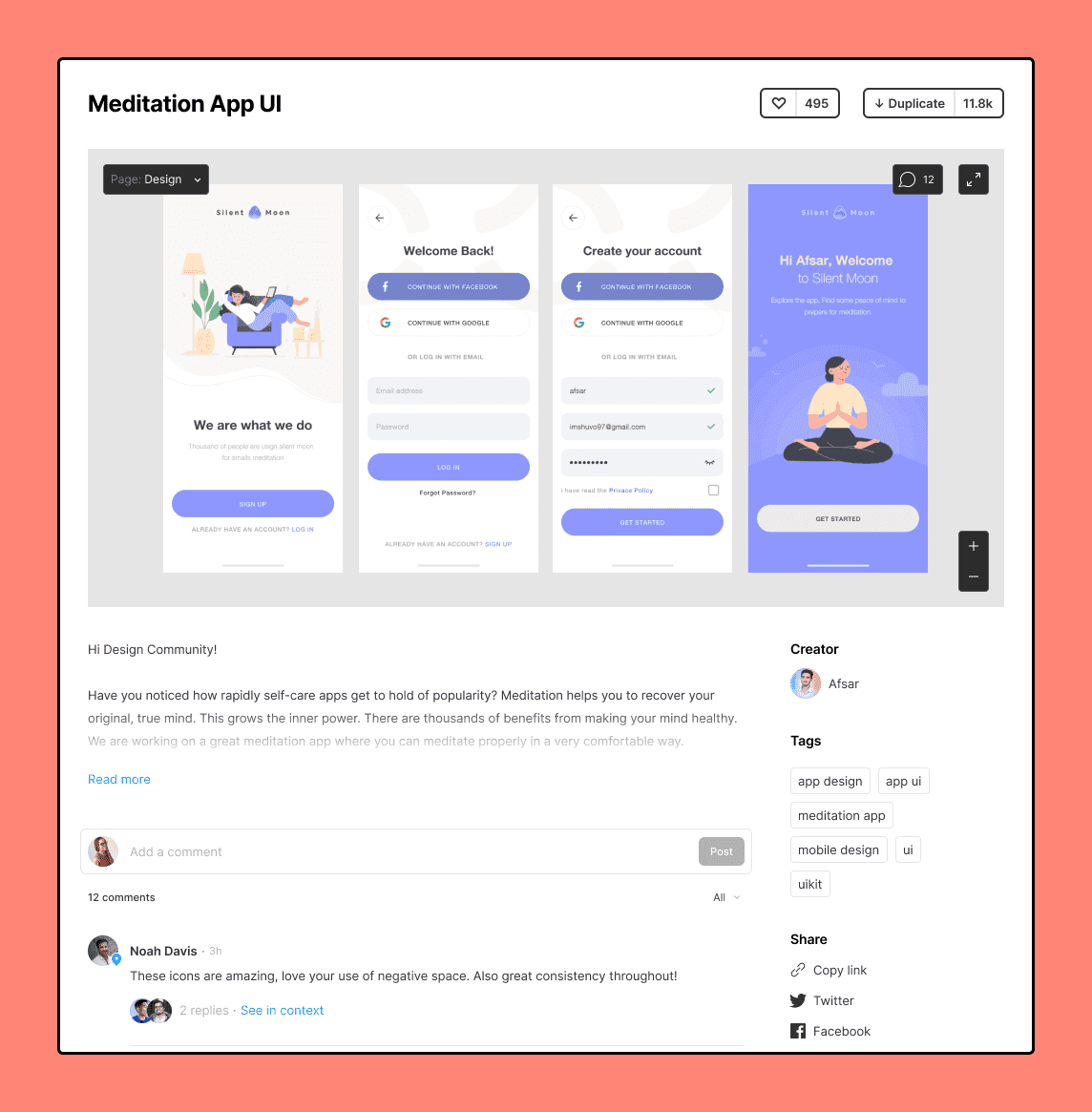
Companies like Figma use their communities to facilitate peer-led onboarding and product adoption.
Files, plugins, and widgets can be shared in the Figma community, which is a forum for individuals, design teams, and entire businesses. Figma promotes a community of positive interactions among its users by allowing them to interact with one another and share remarks to provide design feedback.
To sum it up
The most effective PLG onboarding processes cater to users' needs and enable them to accomplish their objectives in a timely manner through collaborative prompts, personalized workflows, or interactive lessons.
In order to scale a product and stay ahead of the competition, it is vital to invest in a strong onboarding process. The companies that prioritize a seamless, intuitive onboarding experience will see:
- Higher activation rates
- Lower churn
- Better customer satisfaction
If you’re still relying on manual onboarding, it’s time to rethink your strategy. Let your product do the heavy lifting.
So, is your onboarding process truly product-led, or is it still stuck in the past? It’s time to take the leap and accelerate customer success the right way. Book a call with us today to begin your journey.
FAQs
1. How is Product-Led Onboarding different from traditional onboarding?
Traditional onboarding relies on human interaction, such as demos and support teams, while Product-Led Onboarding lets the product itselfguide users with in-app walkthroughs, tooltips, and interactive tutorials.
2. What’s the biggest benefit of Product-Led Onboarding?
It reduces friction and helps users reach their “aha” moment faster, leading to higher activation rates, better retention, and lower support costs.
3. Do all products need a Product-Led Onboarding approach?
Not necessarily. While it works best for self-service SaaS products, even enterprise solutions can combine automated onboarding with human support for a hybrid approach.
4. How do I measure the success of Product-Led Onboarding?
Key metrics include activation rate, time-to-value, onboarding completion rate, user engagement, and churn rate. Tools like Mixpanel and Hotjar can help track these.
5. Can Product-Led Onboarding replace customer support teams?
Not entirely. While it reduces support dependency, human assistance is still valuable for complex queries and premium customers. The goal is to make support more efficient, not eliminate it.