How to Build a SaaS Customer Engagement Model for Retention
Customer engagement has a significant impact on the success of a SaaS business. Unlike conventional software sales, SaaS success hinges on keeping users hooked when the transaction terminates with payment. The difficulty is that users have unlimited choices; if they find value slow, they are gone. Strong engagement models guarantee consumers remain involved, see results, and grow to be devoted champions. So, how do you turn casual users into long-term fans? Perfect onboarding, tailored touchpoints, proactive assistance, and clever incentives define everything.
Improving customer interaction and value can significantly impact user retention, growth prospects, and overall company success. Let's check out how to create one such customer engagement model.
What Is a Customer Engagement Model?
According to a PwC survey, 73% of consumers said their experience is a critical decision-making factor while buying a product from a brand. A continuing relationship, not a succession of one-off transactions, is the goal of customer engagement. Aim to improve the customer's perception of your brand with every engagement.
A customer engagement model is a set of guidelines for increasing participation from existing customers. Trial conversion rates, retention, revenue, and profitability are some of the key performance indicators that these models aim to improve.
Though it's possible to incorporate all client interactions into your customer engagement model, the two main goals should be customer onboarding and retention.
Benefits of a Customer Engagement Model in SaaS
A customer engagement approach drives long-term development, retention, and brand advocacy rather than only making users happy. This explains why it's important.
Increased Client Retention:
A devoted customer is an involved one. You lower turnover and keep users interested in your product by leading them through onboarding, teaching them important features, and providing proactive assistance.
Higher Lifetime Value (LTV):
[object Object], more money the longer they remain interested. More often than not, engaged consumers upgrade to premium plans, buy add-ons, and renew subscriptions.
Improved Product Adoption:
Many SaaS users register but never really investigate the offering. By means of a structured interaction model, they can identify salient aspects, therefore enhancing utilization rates and general satisfaction.
Enhanced Customer Relationships:
[object Object], is about building meaningful relationships rather than just automation. Personalized interactions, timely communication, and first-rate assistance help users to develop trust and transform them into brand champions over time.
Lower Customer Support Costs:
Customers depend less on support workers when they get proactive recommendations from knowledge bases, self-service alternatives, and automatic in-app notifications, therefore lowering running expenses.
Increased Referrals and Natural Expansion:
Satisfied customers spread the word. Referral schemes, community involvement, and word-of-mouth advertising hasten natural development and help you to rely less on sponsored acquisition. A well-organized customer engagement strategy guarantees that users register and stay with your product, develop with it, and start driving force for your company's success.
Best Strategies to Implement in Customer Retention Model
Know your customers.:
It's easy to fall into the habit of treating your consumers as anonymous, faceless individuals. After all, it's unlikely that anyone in your organization has met them. They most likely reside a long distance away and may even speak another language. But you cannot afford to do so. A corporation must create or achieve technologies that will allow them to measure client behavior. These technologies must be able to capture the user's in-app behavior and answer pertinent questions such as:
- Have they used the service more than once?
- How much time do users spend on your service?
- Which features did they use?
- Have they been exposed to your core features, and do they completely grasp the value proposition of your offerings?
- Is momentum increasing or decreasing inside the organization?
- Are they possible purchasers?
Learn to be proactive:
Being attentive to your consumers also entails understanding when to intervene. You need tools to identify and intervene with users who require assistance and are at risk of churn. It is also critical to identify users who have reached the limits of their existing plan and are eligible for an upsell offer. The ability to recognize certain users and conditions is crucial because:
- Your sales and success teams have limited resources and must be laser focused on the accounts that matter.
- Users today prefer self-service and self-paced work. You must be aware of when it is appropriate to contact them, or you risk causing more harm than good.
Enhance your service:
The same technologies that help you analyze and understand client behaviors should also help you develop conclusions about how to enhance your services and goods, such as:
- Do the additional features increase value or complexity?
- Is the new design converting more trials but providing additional hassle for existing customers?
- Are the new tutorials and guides useful to new users, or are they still getting lost?
- Are consumers on the basic plan not engaged enough to upgrade to the premium packages?
- Customer engagement can offer light on some of these complex product and marketing issues. Tracking engagement can not only show you which aspects of your product different users interact with, but it can also indicate the users with whom you should conduct primary market research.
Introduce new features and items in the app:
The best time to engage clients is when they are already engaged in your app. This provides an excellent opportunity to reach out to them via in-app messages. A fantastic strategy to capitalize on in-app chances is to share new features and product offerings that are related to the features your client is already using. You can send automated emails with tutorial links to reinforce your consumers' awareness of key features and goods.
Utilize content marketing to highlight features and upgrades:
Your consumers do not need to be in-app for you to contact them about features and items. Content marketing is another effective strategy for increasing engagement. The content on your blog can be utilized to highlight useful features, product lines, and new product releases. Customers that use your portal will automatically come across this material, and you may also promote it proactively via email.
Automate the engagement with a CS platform.:
The tactics outlined above can be automated with appropriate technology, and your customer success platform can serve as the foundation for effective engagement automation. PLG OS's platform contains solutions to assist you promote engagement throughout the client experience. Modules that correspond to the stages of your customer's lifecycle give KPIs for monitoring activity and triggering relevant automated or manual workflows based on what your client is doing.
Transform customers into advocates.:
You've worked hard to create value for your clients and gain their loyalty. Turn satisfied consumers into brand advocates. If you don't ask to be introduced to another department, you won't get there, so ask for a referral!
5 customer engagement metrics that SaaS companies need to track
These five metrics of SaaS customer interaction will let you know if you're making customers happy and getting them to keep using your software.
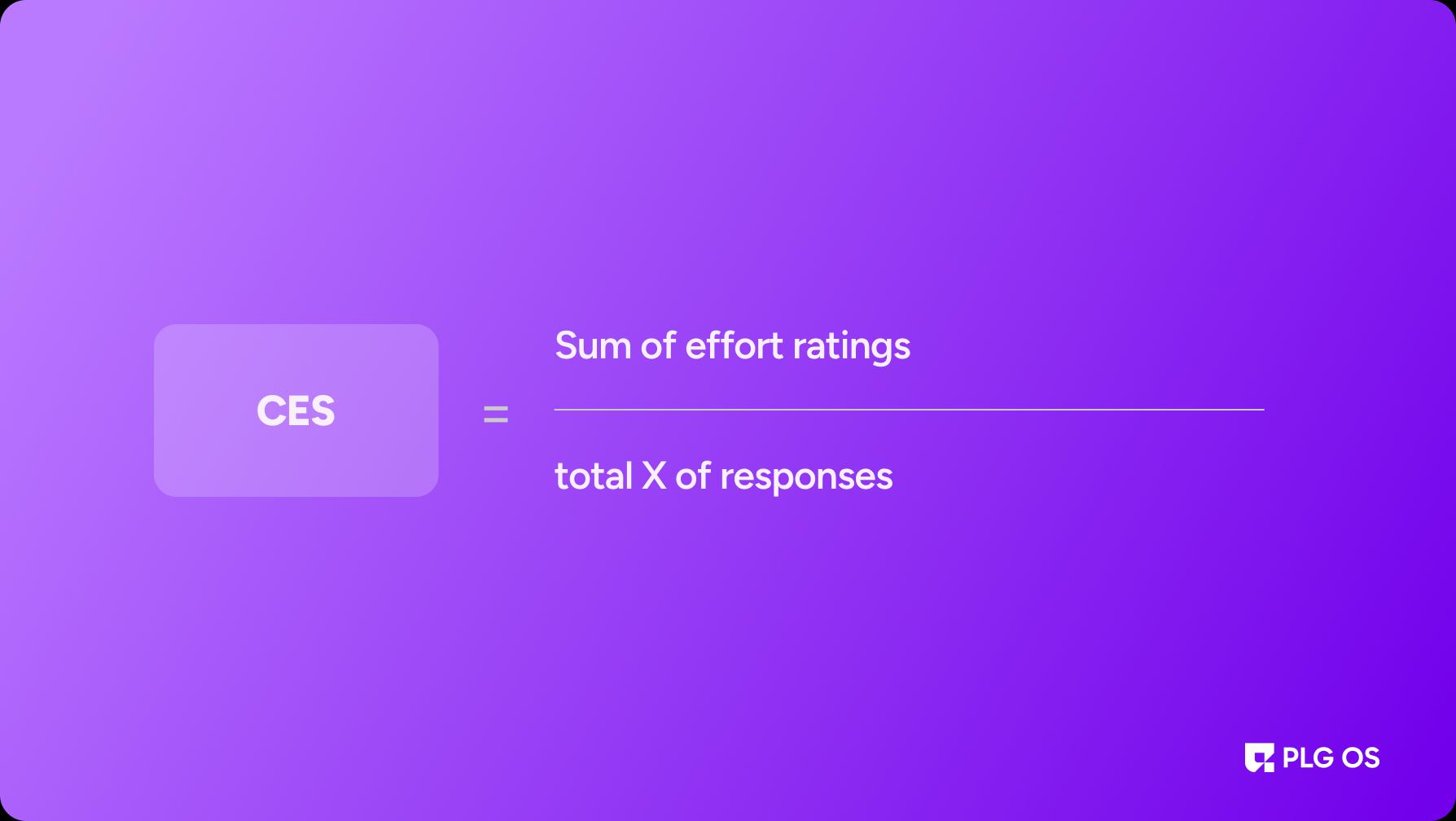
Customer Effort Score (CES)
Gartner's Customer Effort Score (CES) shows that 96% of customers who have to work hard to get help from a business say they are not loyal to it. Only 9% of people who didn't have to do much said they were not loyal.
By monitoring CES, you can determine whether you've simplified the customer experience, a crucial factor in maintaining user interest and satisfaction.
How to figure out the effort score for the customer:
Customers should be asked, "How easy was it for you to do this/solve this problem?" Say something like, "This company made it easy for me to solve my problem," and ask them to rate how much they agree or disagree with it.
Then you give them a number range with feelings from "very difficult" or "strongly disagree" to "effortless" or "strongly agree" and ask them to pick an answer.
Churn Rate
The churn rate tells you how many customers stop using your program in a certain amount of time. This measure should be used as a starting point for further research and testing. If many people leave your business, you should figure out why and what you need to change. Average SaaS churn rates range from 1% to 17%, so it's helpful to compare your churn rate to industry standards.
How to calculate churn rate:
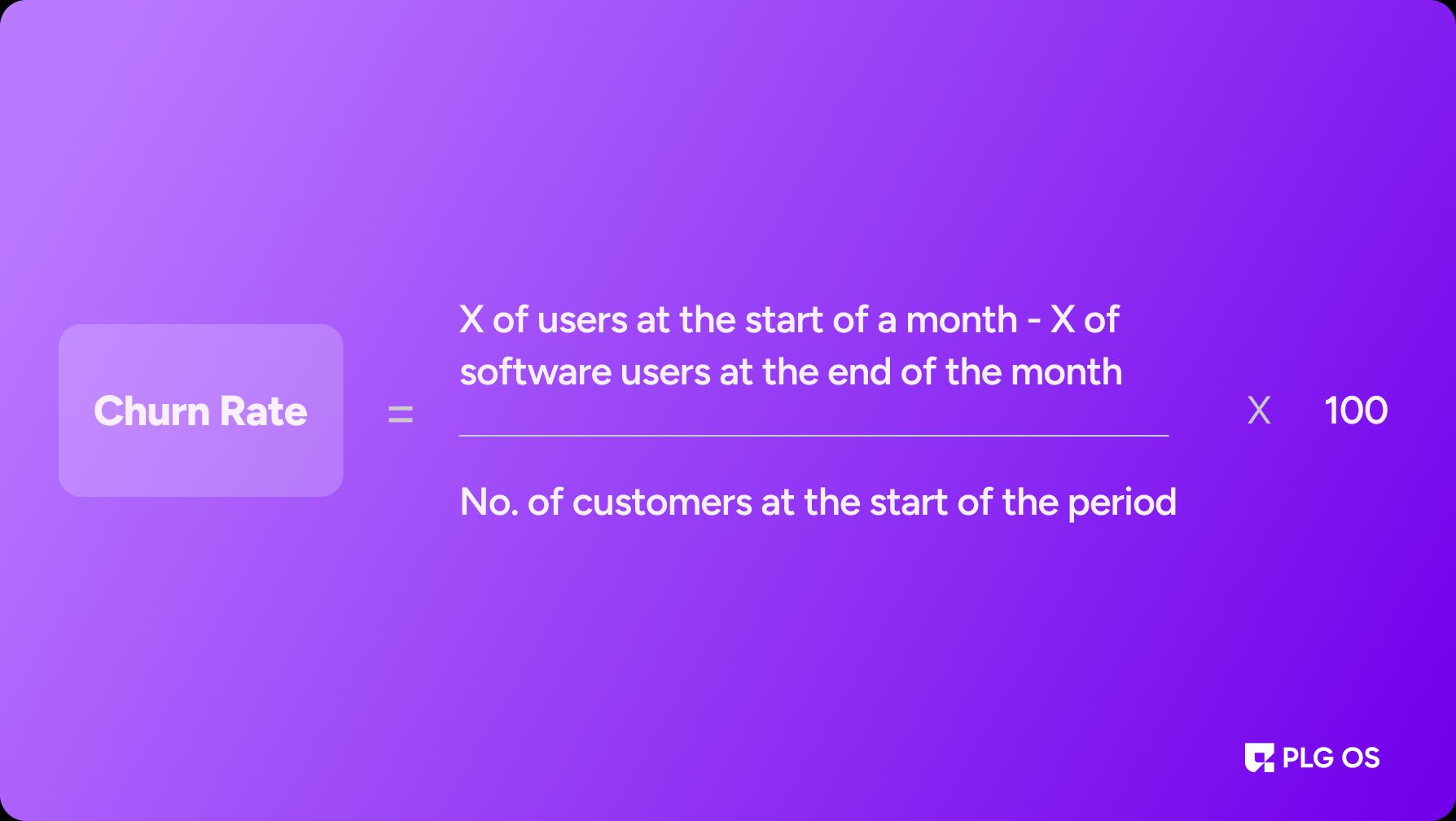
You can also calculate by quarter, year, or custom period
Customer Lifetime Value (LTV)
LTV tells you how much money you can expect to make from a customer over the course of their lives. LTV can help you figure out how much to spend on getting new customers and keeping old ones while still making a good profit. It's a good idea to spend no more than one-third of your LTV on getting new customers.
How to calculate customer lifetime value:
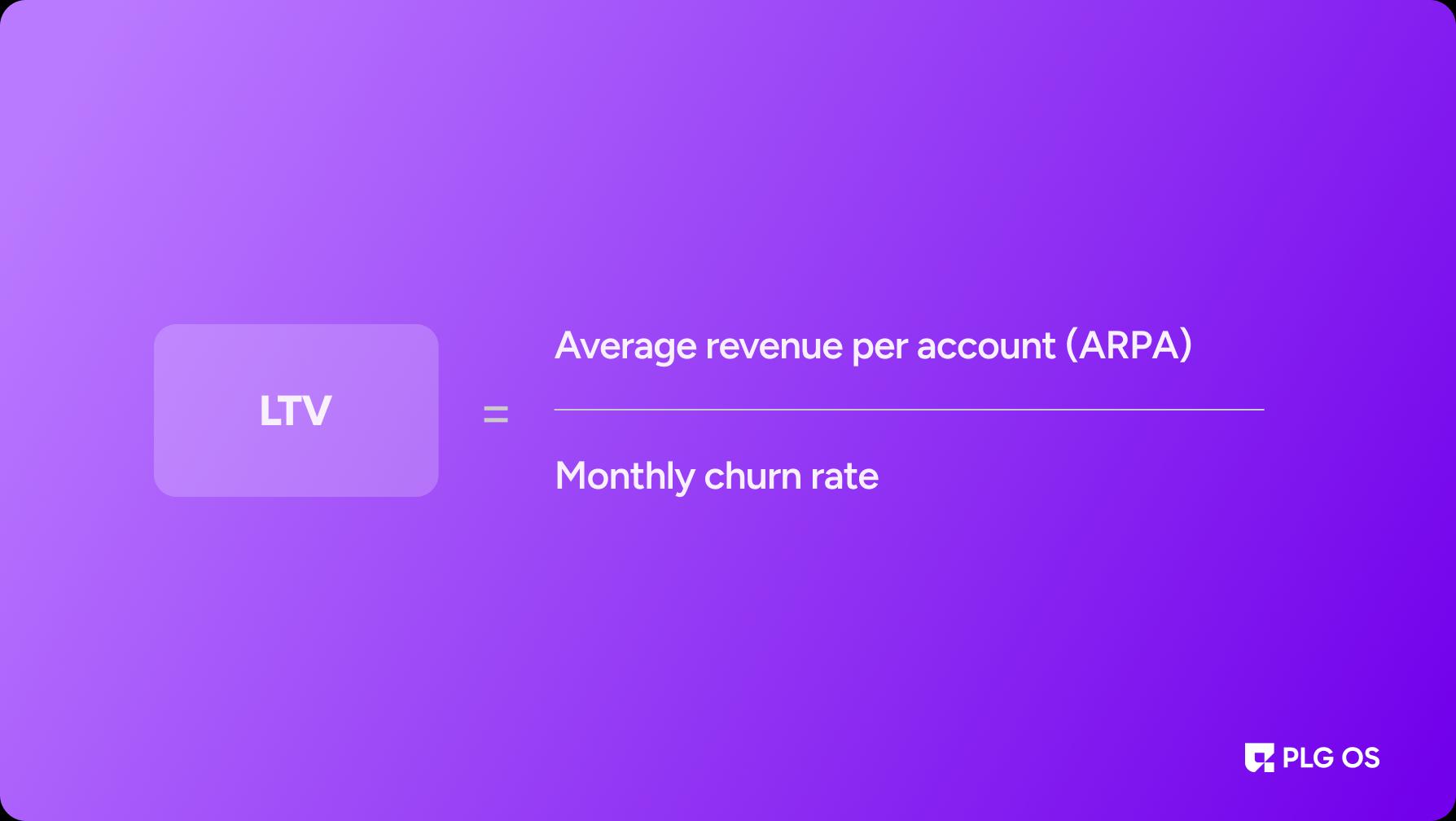
If you compare SMBs to enterprises or B2B to B2C, you can see that LTVs are different for each type of customer. You can find the LTV by customer group as well as the average LTV across all of your customers. You'll know how much to spend on marketing and getting people to use your site for each type of customer.
Active Users (DAU/MAU) every day or every month
This number tells you how many unique people use your software every day or month. When you divide your users into groups, this measure becomes more useful because you can see how much of your DAU/MAU comes from new customers and how much comes from returning customers.
Setting a minimum level of activity can help you connect this measure more closely with how engaged your customers are. To be active on any given day, a user of time-tracking software should not only log in, but also keep track of the time for at least one action.
How to calculate average active users:
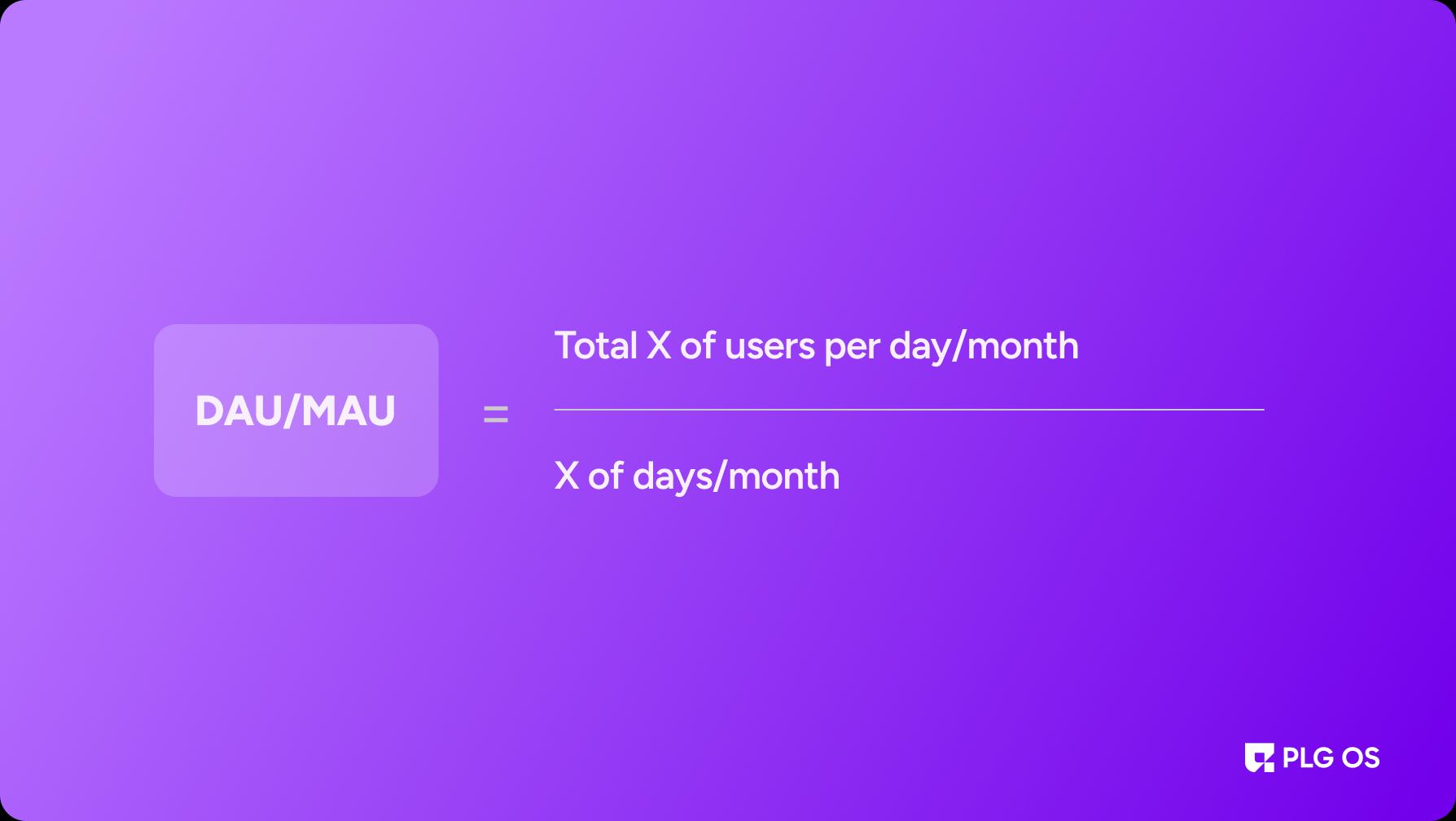
5 Customer Engagement Solutions for SaaS Companies
Building an effective customer engagement model requires the right tools. Here are five powerful solutions that can help SaaS businesses drive engagement, improve user experience, and boost retention.
Live Chat Solutions:
With live chat, you can provide instant, 24/7 support and reduce friction in customer interactions. This ensures users can quickly resolve issues without waiting for email responses. Deploy live chat within your app using ,[object Object],, which seamlessly integrates engagement and support to enhance the user experience.
Email Marketing Solutions:
Email remains one of the best ways to onboard new users, send feature updates, and nurture customers throughout their journey. With ,[object Object],, you can automate personalized email campaigns, trigger messages based on user behavior, and drive engagement at scale.
Personalization Solutions:
Tailor the user experience with dynamic onboarding flows, customized product recommendations, and AI-driven messaging. ,[object Object], allows SaaS businesses to segment users intelligently, ensuring customers receive relevant content and support based on their unique needs.
Feedback & Survey Solutions:
Understanding customer sentiment is key to improving engagement. With ,[object Object],, you can deploy in-app surveys, collect real-time feedback, and analyze customer insights to refine your product and enhance user satisfaction.
On-Page Tracking & Analytics Solutions:
Track user behavior, identify pain points, and optimize the customer journey with ,[object Object],. Detect drop-off points, monitor feature adoption, and uncover engagement trends to improve retention and product usage.
Conclusion
Strong SaaS customer interaction models generate enduring connections that increase retention and income, not only make users happy.
Done well, participation becomes a growth engine, transforming casual users into devoted champions who swear by your product rather than merely using it.
So, start today. Book your call with us and outline your customer journey, maximize your touchpoints, and tailor your involvement. Your SaaS company will flourish more the more actively you participate.
FAQs
What is a SaaS customer engagement model?:
A SaaS customer engagement model is a structured approach to keeping users active, satisfied, and loyal by providing personalized onboarding, proactive support, and continuous value through various touchpoints.
Why is customer engagement important for SaaS businesses?:
Engaged customers are more likely to stay, upgrade, and refer others. A strong engagement model reduces churn, increases customer lifetime value (LTV), and improves product adoption.
How can I improve customer engagement in my SaaS business?:
Use strategies like personalized onboarding, live chat support, automated emails, in-app messaging, and real-time analytics to keep users engaged and help them see immediate value.
What tools can help with SaaS customer engagement?:
Platforms like PLG OS, SendDrip offer live chat, email automation, personalization, feedback collection, and analytics to enhance engagement and retention.
How do I measure customer engagement?:
Track key metrics like active users, feature adoption, session duration, churn rate, and customer satisfaction (CSAT/NPS) to assess engagement levels and make data-driven improvements.